
Driving to Colorado is an adventure that offers breathtaking scenery and the freedom of the open road, but the precise duration of the journey is highly dependent on a multitude of factors. From your starting location within the United States to your specific destination within the Centennial State, and even your chosen driving pace, these elements collectively shape the timeline of your road trip. Understanding these variables is key to planning an efficient and enjoyable drive to this majestic mountain haven.
The Variable Nature of Cross-Country Drives
The question of how long it takes to drive to Colorado doesn’t have a single, straightforward answer. Colorado is centrally located within the United States, making it accessible from nearly every corner of the country, yet the journey can range from a swift single-day trip to an epic multi-day excursion. Key considerations include the total distance, the average speed you maintain, the frequency and duration of your stops, and the time of year, which can significantly impact road conditions and traffic. A typical driving day for long-distance travel is often considered to be around 8-10 hours, allowing for regular breaks and preventing driver fatigue. Pushing beyond this limit can lead to exhaustion, compromising safety and enjoyment. Therefore, a realistic approach to calculating your drive time involves more than just plugging addresses into a GPS.
Calculating Your Route: Key Factors and Considerations
To accurately estimate your travel time, it’s essential to break down the journey into manageable components and account for various influences.
Starting Point and Distance
The most significant determinant of your drive time is your point of origin. Travelers from the neighboring states can reach Colorado relatively quickly, while those from the coasts will embark on a multi-day journey.
- From the Midwest: Cities like Chicago, Illinois, are approximately 1,000 miles from Denver, Colorado. This typically translates to a 14-16 hour drive without significant stops, making it a challenging single-day trip or a comfortable two-day journey.
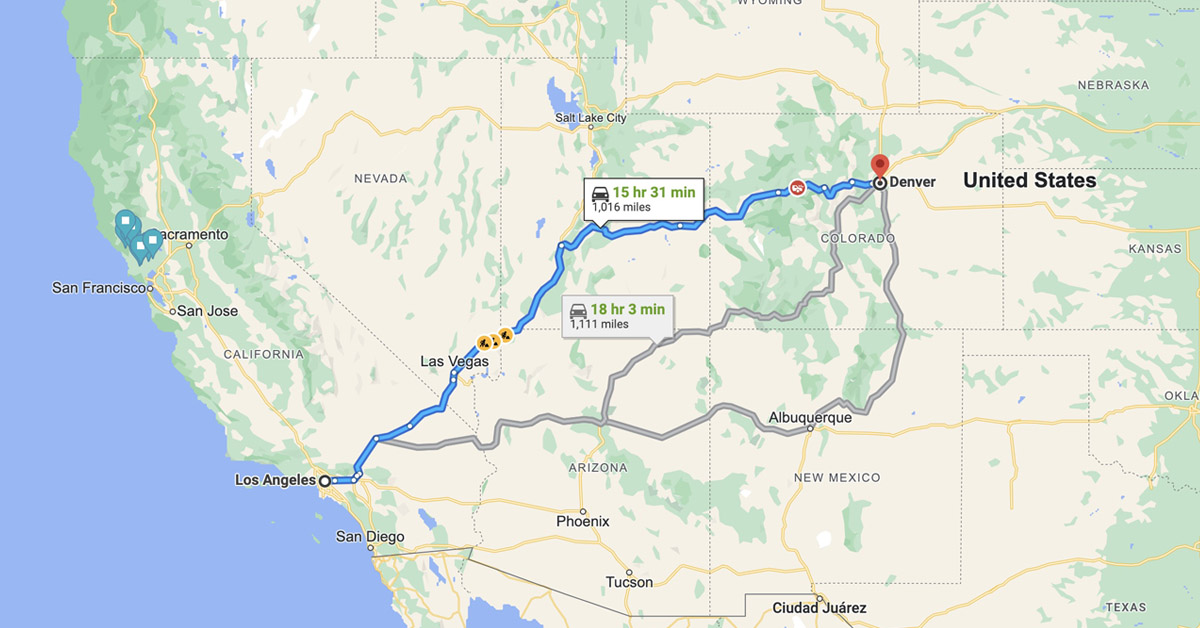
- From the West Coast: Driving from Los Angeles, California, to Denver covers roughly 1,000-1,100 miles, similarly requiring 14-17 hours of pure driving, usually split over two days.
- From the South: Dallas, Texas, is about 800 miles from Denver, making it a 12-14 hour drive. While a long day, it’s often completed in a single stretch or with one overnight stop.
- From the East Coast: Travelers from New York City face a much longer trek, covering over 1,700 miles to Denver. This drive demands at least 26-28 hours of continuous driving, necessitating two to three days on the road with overnight stays. Similarly, a trip from Miami, Florida, would be comparable in length.
Destination Within Colorado
Colorado is a large state, and your final destination greatly impacts the total driving time. While many routes converge on the Denver metropolitan area, traveling to other parts of the state can add several hours to your journey. For instance, if your destination is the ski resort town of Aspen, you’ll need to account for an additional 3.5 to 4 hours of driving past Denver, navigating mountainous terrain that often slows travel. Similarly, heading to Telluride in the southwestern part of the state from Denver can add another 6-7 hours. Destinations like Colorado Springs are an hour south of Denver, while Fort Collins is about an hour north. Driving to Grand Junction on the western slope will add approximately 4 hours from Denver. Planning for these internal state drives is crucial for accurate trip timing.
Driving Pace and Stops
Road trips are rarely continuous driving. Fuel stops, meals, bathroom breaks, and simply stretching your legs are essential for a safe and comfortable journey. These stops can easily add 1-2 hours to an 8-10 hour driving day. Furthermore, traffic, especially around major cities or during peak travel times, can cause significant delays. Construction zones are another common source of unexpected slowdowns. Weather conditions, particularly in the winter months, can dramatically impact travel times, especially when crossing the plains or traversing mountain passes. Blizzards, ice, or heavy rain can necessitate slower speeds or even require an overnight halt. A realistic average speed for long-distance highway driving, including minor slowdowns and quick breaks, is typically around 60-65 mph, not the posted speed limit.
Sample Itineraries and Estimated Times
To provide a clearer picture, let’s look at some common driving routes to Colorado and their estimated durations. These estimates assume a primary destination of Denver, a comfortable driving pace with regular stops, and favorable conditions.
From the Midwest: Chicago to Denver

- Distance: Approximately 1,000 miles.
- Driving Time: 14-16 hours (pure driving).
- Recommended Itinerary: This trip is best spread over two days.
- Day 1: Drive approximately 8-9 hours, reaching a city like Omaha or Lincoln, Nebraska. This leg primarily involves traveling west on I-80 across Iowa and into Nebraska.
- Day 2: Complete the remaining 6-7 hours, continuing on I-80 before connecting to I-76 West directly into Denver.
From the West Coast: Los Angeles to Denver
- Distance: Approximately 1,000-1,100 miles.
- Driving Time: 14-17 hours (pure driving).
- Recommended Itinerary: A two-day drive is ideal for this route.
- Day 1: Drive approximately 8-9 hours, passing through Nevada and into Utah. A good stopping point could be Las Vegas, Nevada, or St. George, Utah, using I-15 North.
- Day 2: Complete the remaining 6-8 hours, continuing on I-15 and then connecting to I-70 East, which takes you directly through the scenic Colorado mountains and into Denver.
From the East Coast: New York City to Denver
- Distance: Approximately 1,700-1,800 miles.
- Driving Time: 26-28 hours (pure driving).
- Recommended Itinerary: This extensive journey warrants a three-day plan for comfort and safety.
- Day 1: Drive 8-9 hours, aiming for a stop near Pittsburgh, Pennsylvania, following I-80 West.
- Day 2: Drive another 9-10 hours, crossing Ohio, Indiana, and into Nebraska. An overnight stay in a city like Omaha would be logical.
- Day 3: Drive the final 7-9 hours, taking I-76 West from Nebraska directly to Denver.
From the South: Dallas to Denver
- Distance: Approximately 800 miles.
- Driving Time: 12-14 hours (pure driving).
- Recommended Itinerary: This can be a very long single-day drive or a relaxed two-day trip.
- Option A (Single Day): Start early and push through, making only essential stops. This is feasible for experienced long-distance drivers. The primary route would involve I-35 North to Oklahoma City, then I-40 West, connecting to I-25 North in New Mexico or Colorado towards Denver.
- Option B (Two Days): Drive 7-8 hours on day one, stopping in Oklahoma City, Oklahoma, or Santa Fe, New Mexico. Complete the remaining 5-6 hours on day two.
Maximizing Your Colorado Road Trip Experience
Beyond just measuring time, a successful drive to Colorado involves smart planning and preparation, ensuring the journey is as much a part of the adventure as the destination itself.
Planning Your Route
Utilize modern navigation apps like Google Maps or Waze for real-time traffic updates and estimated travel times. These tools can also suggest alternative routes to avoid congestion. Always check state transportation department websites, such as CDOT for Colorado, for current road conditions, particularly during winter or severe weather events.
Vehicle Preparation
Before embarking on a long drive, ensure your vehicle is in optimal condition. This includes checking tire pressure, oil levels, fluids, and brakes. An emergency kit with jumper cables, a first-aid kit, blankets, and non-perishable food and water is highly recommended. If traveling in winter, consider snow tires or chains, especially if your destination involves mountain passes, and ensure your vehicle has appropriate all-wheel or four-wheel drive capabilities.
Packing Essentials
For any long road trip, a well-packed car makes a world of difference. Bring an ample supply of water and snacks to minimize unnecessary stops and save money. Entertainment for passengers, such as audiobooks, podcasts, or music playlists, can help pass the time. Don’t forget chargers for all your devices and a portable power bank. Given Colorado’s variable climate, packing layers of clothing is always a wise choice, regardless of the season.

Break Up the Drive
Long drives can be physically and mentally taxing. Schedule strategic overnight stops in interesting cities along your route. This not only allows for much-needed rest but also offers opportunities to explore new places. Cities like St. Louis, Missouri, or Kansas City, Missouri, can serve as excellent midway points for those coming from the East Coast or South, offering unique attractions and dining options. Incorporating a scenic detour or a brief stop at a point of interest can rejuvenate spirits and add memorable moments to your journey, transforming a tedious drive into an integral part of your Colorado experience.
LifeOutOfTheBox is a participant in the Amazon Services LLC Associates Program, an affiliate advertising program designed to provide a means for sites to earn advertising fees by advertising and linking to Amazon.com. Amazon, the Amazon logo, AmazonSupply, and the AmazonSupply logo are trademarks of Amazon.com, Inc. or its affiliates. As an Amazon Associate we earn affiliate commissions from qualifying purchases.