
Navigating the legal system can be a daunting process, especially when personal safety is at stake. In Colorado, a restraining order, officially known as a Protection Order, serves as a vital legal tool designed to prevent abuse, harassment, or threats. Understanding the steps involved in obtaining such an order is crucial for anyone seeking legal protection within the state. This comprehensive guide outlines the process, offering insights into the legal framework and practical advice for navigating this critical aspect of personal safety and lifestyle in Colorado.
Understanding Protection Orders in Colorado
A Protection Order in Colorado is a civil court order designed to protect individuals from various forms of harm. It prohibits specific actions by one person (the “respondent”) against another person (the “protected party”). These orders are not to be confused with criminal no-contact orders, which are typically issued as part of a criminal case. While both aim to prevent contact, a Protection Order is initiated by the victim in civil court.

Types of Protection Orders
In Colorado, the process for obtaining a Protection Order generally involves two stages:
- Temporary Protection Order (TPO): When you first file for a Protection Order, the court will typically consider issuing a Temporary Protection Order. This order can be issued without the respondent being present, based solely on your sworn testimony or affidavit. The purpose of a TPO is to provide immediate protection until a full hearing can be held. It usually lasts until the permanent hearing date, which is typically set within 14 days of the TPO being issued. The court assesses whether there is an immediate and present danger to the applicant or a child.
- Permanent Protection Order (PPO): This order is issued after a full court hearing where both the petitioner (the person seeking protection) and the respondent have an opportunity to present their case, evidence, and witnesses. If granted, a Permanent Protection Order can last indefinitely, or for a specified period, depending on the court’s discretion and the circumstances of the case.
Who Can File for a Protection Order?
An individual can file for a Protection Order in Colorado if they are a victim of:
- Domestic Abuse: This includes acts or threatened acts of violence, intimidation, or coercion, or any other crime against a person or property, committed by a person with whom the victim has been in an intimate relationship. This broad definition covers spouses, former spouses, cohabitants, parents of a common child, or individuals who have had a romantic or intimate relationship.
- Sexual Assault: Any non-consensual sexual act.
- Stalking: A pattern of conduct that causes a reasonable person to fear for their safety or the safety of another.
- Harassment: A course of conduct directed at a specific person that seriously alarms, annoys, or harasses the person and serves no legitimate purpose.
- Any other crime against a person or property: This covers a wide range of offenses that could endanger an individual.
It is also possible to file for a Protection Order on behalf of a minor child if the child is the victim.
The Filing Process: A Step-by-Step Guide
Obtaining a Protection Order in Colorado involves a series of specific legal steps. While the process can seem complex, breaking it down into manageable stages can help you prepare.
Gathering Necessary Information
Before heading to the courthouse, it’s beneficial to gather as much relevant information and evidence as possible. This includes:
- Your personal information: Full name, address, phone number, and date of birth.
- The respondent’s personal information: Full name, any known addresses (work and residential), phone number, date of birth, and physical description. The more identifying information you have, the easier it will be for law enforcement to serve the order.
- Detailed accounts of incidents: Dates, times, locations, and descriptions of all abusive, harassing, or threatening incidents. Be specific and include how each incident made you feel and the impact it had on your safety or well-being.
- Evidence: This can include text messages, emails, voicemails, photographs of injuries or property damage, police reports, medical records, witness statements, or any other documentation that supports your claims.
Completing the Paperwork
You will need to go to the District Court in the county where you or the respondent reside, or where the most recent incident occurred. The court clerk will provide you with the necessary forms, typically titled “Petition for Civil Protection Order.”
The petition requires you to:
- State your relationship to the respondent.
- Describe the acts of abuse, threats, or harassment in detail. This is where your gathered information becomes critical. Be precise and chronological, focusing on facts.
- Explain why you fear for your safety.
- Specify the relief you are requesting, such as no contact, no harassment, staying a certain distance away, or moving out of a shared residence.
Fill out all forms completely and truthfully. Remember that you are signing these documents under penalty of perjury. If you are unsure about any section, ask the court clerk for clarification, or consult with an attorney.
Filing with the Court
Once the paperwork is completed, you will file it with the court clerk. There may be a filing fee, though you can apply for a waiver if you meet certain income requirements. After filing, a judge will review your petition, usually without the respondent present, to determine if a Temporary Protection Order (TPO) should be issued.
The Temporary Protection Order (TPO) Hearing
In many cases, the judge will hold an ex parte hearing (meaning only you are present) to consider the immediate issuance of a TPO. During this hearing, the judge will ask you questions about the information in your petition to assess whether there is an “immediate and present danger” of further domestic abuse, sexual assault, stalking, or harassment.
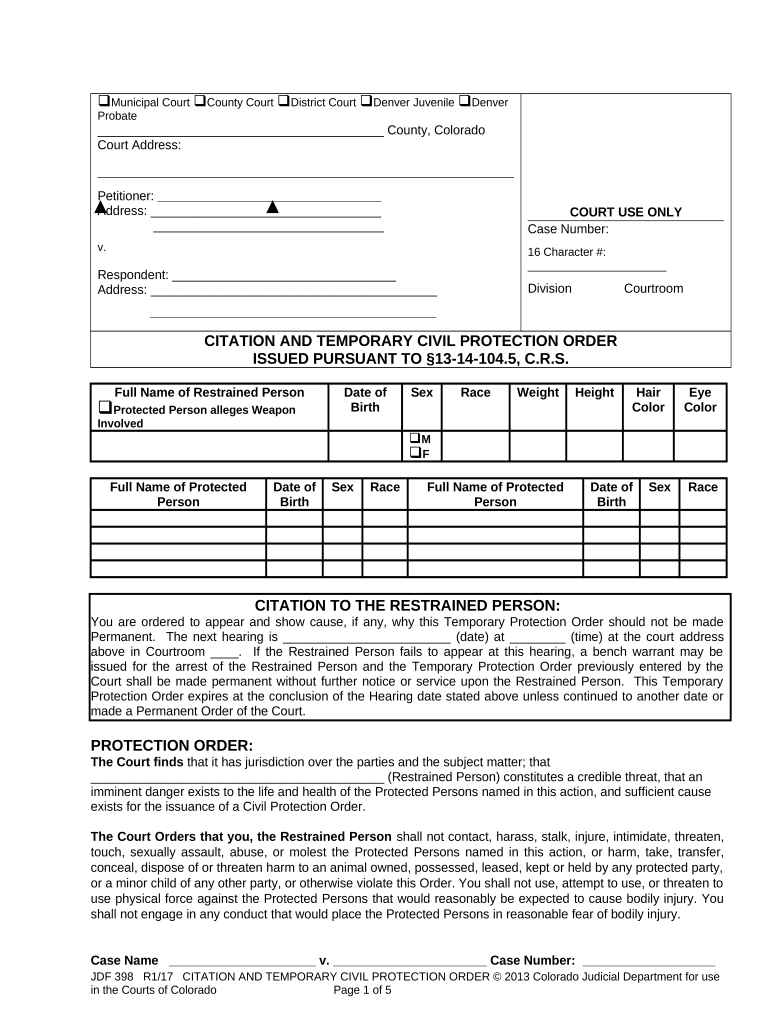
If the judge finds sufficient grounds, a TPO will be issued. This order must then be legally “served” on the respondent. Service is typically performed by a sheriff’s deputy or a private process server. It is crucial that the respondent is properly notified of the order and the upcoming permanent hearing date. Until the respondent is served, the TPO is not enforceable against them.
The Permanent Protection Order Hearing
The TPO will specify a date for a permanent hearing, where both you and the respondent will have the opportunity to appear before a judge. This hearing is your chance to present your full case for why a Permanent Protection Order is necessary.
Presenting Your Case
At the permanent hearing, you will need to present evidence and testimony to convince the judge that the respondent has committed acts that warrant a Protection Order, and that you continue to have a reasonable fear for your safety.
- Testify: You will be sworn in and asked to recount the incidents you described in your petition, providing more details if necessary.
- Present evidence: Introduce any supporting documents, photographs, recordings, or other evidence you have gathered.
- Call witnesses: If you have witnesses who can corroborate your claims (e.g., someone who saw an incident, or heard threats), they can testify on your behalf.
The respondent will also have the opportunity to present their side of the story, including their own testimony, evidence, and witnesses. You or your attorney will have the chance to cross-examine the respondent and their witnesses, and vice versa.
What the Court Considers
The court will consider all evidence and testimony presented by both parties. The standard of proof in a civil protection order case in Colorado is “preponderance of the evidence,” meaning it is more likely than not that the alleged acts occurred and that there is a need for protection. The judge will evaluate:
- The severity and frequency of the alleged acts.
- Any past history of abuse or violence.
- The credibility of both parties and their witnesses.
- Whether there is a continued threat or reasonable fear for safety.
Potential Outcomes
After hearing all the evidence, the judge will make a decision:
- Grant a Permanent Protection Order (PPO): If the judge finds that the petitioner has met the burden of proof, a PPO will be issued. This order will outline specific prohibitions for the respondent, such as no contact, staying away from your home or workplace, and potentially requiring them to surrender firearms. A PPO can last indefinitely or for a specified period.
- Deny the Protection Order: If the judge finds insufficient evidence, or that there is no longer a need for protection, the Protection Order may be denied, and the TPO will be dismissed.
- Modify the Order: In some cases, the judge might issue an order with modified terms agreeable to both parties, or for a shorter duration.
Enforcing a Protection Order in Colorado
A Protection Order is only effective if it is enforced. Once a Protection Order (TPO or PPO) has been served on the respondent, it becomes legally binding.
Police Involvement
If the respondent violates any terms of a Protection Order, you should immediately contact local law enforcement. It is critical to have a copy of your Protection Order readily available. Violating a Protection Order in Colorado is a criminal offense, and law enforcement officers have the authority to make an arrest without a warrant if they have probable cause to believe a violation has occurred.
Penalties for Violation
The penalties for violating a Protection Order in Colorado can be severe. A first violation is typically a Class 1 misdemeanor, punishable by fines and jail time. Subsequent violations can result in harsher penalties, including felony charges, particularly if bodily injury occurs or if the respondent has prior convictions for violating similar orders.
Seeking Support and Legal Assistance
Dealing with the complexities of obtaining a Protection Order can be emotionally and legally challenging. It is often advisable to seek support and professional legal guidance.
Resources in Colorado
Several organizations in Colorado offer support and resources for victims of domestic violence, sexual assault, and stalking. These resources can provide confidential advice, safety planning, and assistance in navigating the legal process. Many local district attorney’s offices also have victim advocates who can assist you.

When to Consult an Attorney
While you can represent yourself in court (pro se), having an attorney can significantly improve your chances of success. An experienced attorney can:
- Help you understand your rights and the legal process.
- Assist in gathering and presenting evidence effectively.
- Cross-examine the respondent and their witnesses.
- Handle legal complexities and objections.
- Ensure that your interests are fully protected.
For situations involving safety and legal recourse in Colorado, understanding how to obtain a Protection Order is a fundamental aspect of maintaining personal security and a stable lifestyle. Taking these steps can provide the crucial legal protection needed to move forward safely.
LifeOutOfTheBox is a participant in the Amazon Services LLC Associates Program, an affiliate advertising program designed to provide a means for sites to earn advertising fees by advertising and linking to Amazon.com. Amazon, the Amazon logo, AmazonSupply, and the AmazonSupply logo are trademarks of Amazon.com, Inc. or its affiliates. As an Amazon Associate we earn affiliate commissions from qualifying purchases.