
Navigating a divorce can be one of life’s most challenging transitions, requiring careful attention to legal procedures and personal well-being. For those living in or needing to file in Colorado, understanding the process of obtaining and filing divorce papers is a critical first step. This guide provides a professional and insightful overview of the Colorado divorce process, offering clarity on the steps involved in securing your dissolution of marriage papers.
Understanding Divorce in Colorado: The Basics
Before delving into the specifics of obtaining papers, it’s essential to grasp the fundamental legal framework governing divorce in Colorado. Colorado is a “no-fault” divorce state, meaning that neither party needs to prove marital misconduct (e.g., adultery, abandonment) to obtain a divorce. The sole requirement is that the marriage is “irretrievably broken,” with no reasonable prospect of reconciliation.

Residency Requirements
To file for divorce in Colorado, at least one spouse must have resided in the state for a minimum of 91 days immediately preceding the filing of the Petition for Dissolution of Marriage. This ensures that the Colorado courts have jurisdiction over the case. For example, if one spouse has recently moved to Denver and meets the 91-day residency requirement, they can file there, even if the other spouse lives out of state.
Types of Divorce Cases
The path to divorce in Colorado can vary based on the level of agreement between spouses:
- Uncontested Divorce: This occurs when both spouses agree on all terms of the divorce, including property division, debt allocation, spousal support (maintenance), and, if applicable, child custody and support. This is typically the quickest and least expensive route.
- Contested Divorce: When spouses cannot agree on one or more key issues, the case becomes contested. These cases often require mediation, negotiations, and potentially court intervention to resolve disputes.
- Default Divorce: If one spouse files the petition and properly serves the other, but the other spouse fails to respond within the legally mandated timeframe (typically 21 or 35 days depending on service method), the filing spouse may be able to obtain a default divorce.
Understanding these distinctions will help you anticipate the complexity and duration of your divorce proceedings. Regardless of the type, the initial steps for obtaining and filing the papers remain largely similar.
Key Steps to Obtaining Divorce Papers
The process of formally initiating a divorce in Colorado begins with obtaining and accurately completing the necessary legal forms. These forms are standardized and provided by the Colorado Judicial Branch.
Locating the Correct Forms
The primary source for all Colorado divorce forms is the official website of the Colorado Judicial Branch. Navigate to their “Forms” section and search for “Domestic Relations” or “Dissolution of Marriage.” Key forms you will need include:
- JDF 1101: Petition for Dissolution of Marriage (with Children) / (no Children): This is the foundational document that officially starts the divorce process. You will select the version appropriate for whether you have minor children.
- JDF 1102: Summons for Dissolution of Marriage (with Children) / (no Children): This document formally notifies your spouse that a divorce action has been filed against them.
- JDF 1104: Sworn Financial Statement: Both parties must complete this comprehensive document detailing their income, expenses, assets, and debts. This is crucial for property division and support determinations.
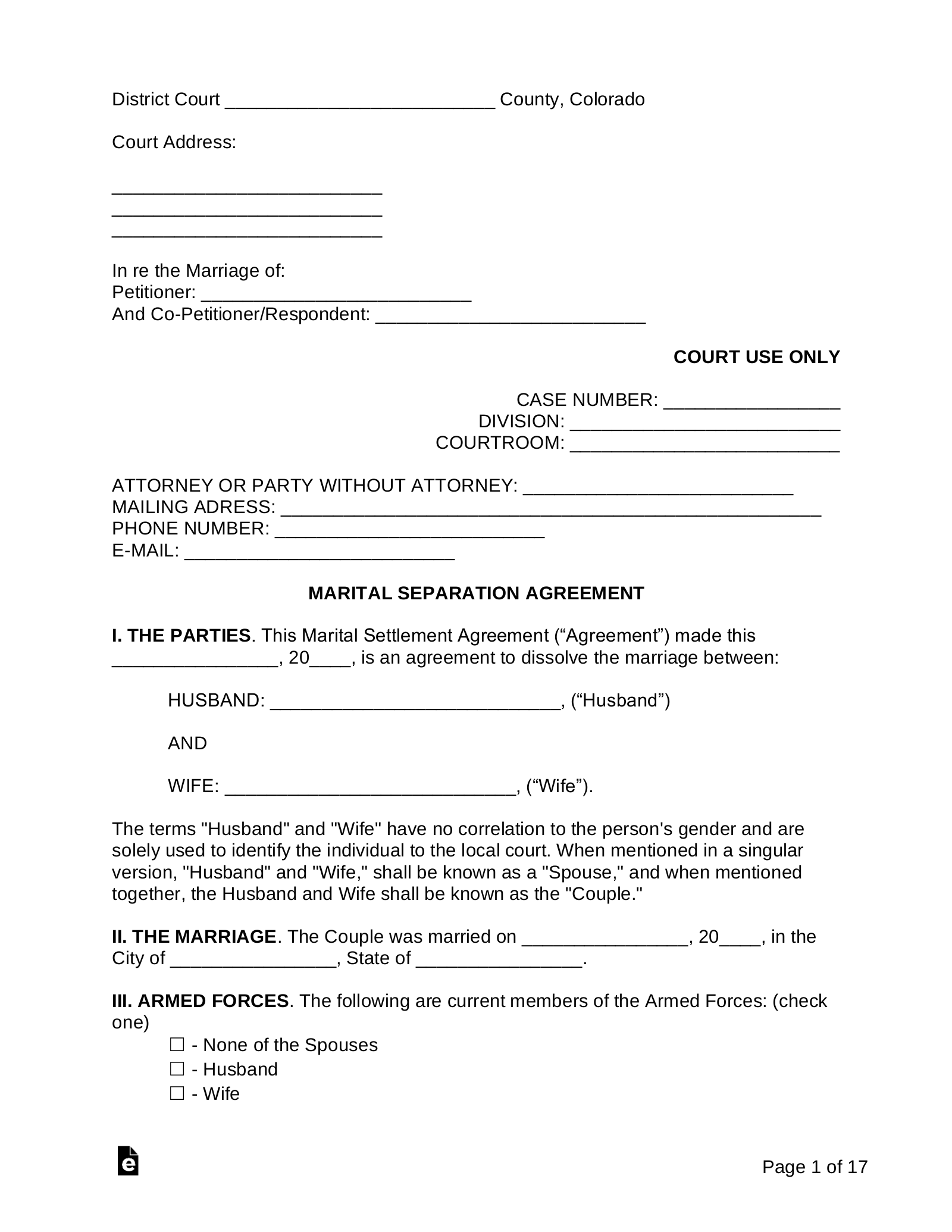
- JDF 1107: Separation Agreement (with Children) / (no Children): If you and your spouse have reached an agreement on all issues, this document formalizes it.
Depending on your specific situation (e.g., requests for temporary orders, motions for protection orders), additional forms may be necessary. It’s recommended to download the entire packet relevant to your case (with or without children) to ensure you have all required documents.
Completing the Forms Accurately
Accuracy is paramount when completing divorce papers. Errors can lead to delays or rejection by the court.
- Read Instructions Carefully: Each form comes with detailed instructions. Read them thoroughly before attempting to fill out any document.
- Provide Complete Information: Ensure all requested information is provided truthfully and completely. This includes personal details, dates of marriage and separation, property descriptions, and financial data.
- Be Specific: When describing assets, debts, or proposed arrangements, be as specific as possible to avoid ambiguity. For instance, list account numbers for bank accounts or VINs for vehicles.
- Seek Legal Advice if Unsure: If you are uncertain about how to answer a specific question or how certain legal terms apply to your situation, consult with a qualified attorney in Colorado. While this guide provides general information, it is not a substitute for legal advice tailored to your unique circumstances.
Many counties, such as those encompassing Colorado Springs or Boulder, may also offer self-help centers or clinics to assist with form completion, especially for pro se litigants (those representing themselves).
Navigating the Court Process and Documentation
Once the initial papers are completed, the next phase involves filing them with the court and ensuring your spouse is properly notified. This stage is crucial for establishing the court’s jurisdiction over your case.
Filing the Papers with the Court
The Petition for Dissolution of Marriage and Summons must be filed with the District Court in the county where either spouse resides. For example, if you live in Fort Collins, you would file in Larimer County.
- Court Clerk: Take your completed forms to the clerk of the District Court. They will review the forms to ensure they are complete and accept them for filing.
- Filing Fees: There is a filing fee to initiate a divorce case. The amount is set by the state and can change, so check the Colorado Judicial Branch website for current fees. If you cannot afford the fee, you may apply for a deferral or waiver by filing JDF 205 (Motion to File Without Payment and Supporting Financial Affidavit).
- Case Number: Once filed, your case will be assigned a unique case number. Keep this number secure as it will be used for all future filings and communications related to your divorce.
Serving the Papers on Your Spouse
Proper legal service of process is mandatory in all divorce cases. This means your spouse must be officially notified that you have filed for divorce.
- Methods of Service:
- Personal Service: A sheriff, a private process server, or any person over 18 who is not a party to the case delivers the papers directly to your spouse. This is the most common and preferred method.
- Waiver of Service: If your spouse is cooperative, they can sign JDF 1103, “Waiver and Acceptance of Service,” acknowledging receipt of the papers and waiving formal service. This is often used in uncontested cases.
- Service by Publication: In rare cases where your spouse cannot be located, the court may allow service by publishing notice of the divorce in a newspaper. This method requires court approval and strict adherence to specific rules.
- Proof of Service: Once your spouse has been served, a “Return of Service” form (JDF 107) must be filed with the court, proving that service was completed according to legal requirements. This form is often completed by the process server or sheriff.
It is critical that service is executed correctly. Improper service can significantly delay your divorce and may even lead to the dismissal of your case.
Beyond the Papers: Next Steps and Considerations
Filing and serving the divorce papers are just the beginning. The subsequent stages involve financial disclosures, potential negotiations, and ultimately, obtaining a final divorce decree.
Mandatory Financial Disclosures
Under Rule 16.2 of the Colorado Rules of Civil Procedure, both parties are required to exchange comprehensive financial information within a specified timeframe (typically 42 days after the Petition is served). This includes:
- Sworn Financial Statement (JDF 1104): As mentioned, this is a detailed breakdown of income, expenses, assets, and debts.
- Supporting Documentation: This includes tax returns, pay stubs, bank statements, retirement account statements, credit card statements, and appraisals of significant assets.
Full and honest disclosure is crucial. Failure to disclose assets or debts can result in severe penalties, including court sanctions or reopening the divorce decree.
Mediation and Temporary Orders
Many Colorado courts mandate mediation in contested divorce cases, especially those involving children. Mediation is an opportunity for spouses to work with a neutral third party (a mediator) to resolve disputes without court intervention.
Additionally, either party may request temporary orders from the court during the divorce process. These orders address immediate needs such as temporary child custody and support, temporary spousal support, and payment of marital debts until a final agreement or court order is in place.
Finalizing the Divorce
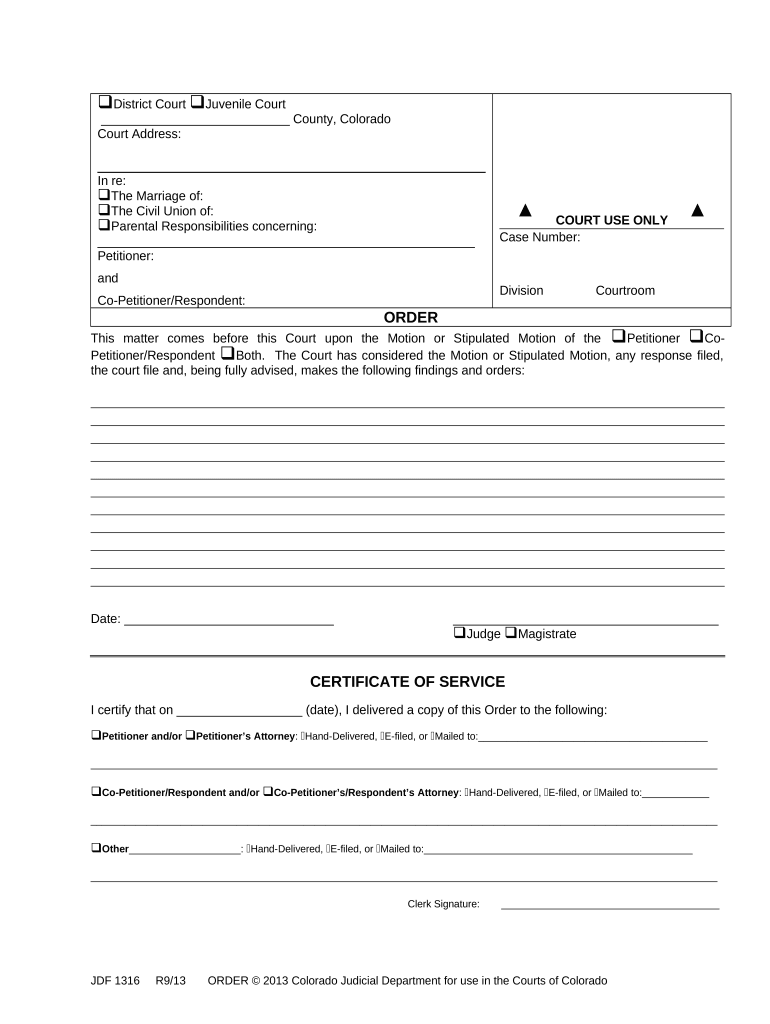
Once all issues—property division, debt allocation, spousal support, child custody, and child support—are resolved, either through agreement or court order, the court can issue a Decree of Dissolution of Marriage.
- Separation Agreement (JDF 1107): In an uncontested divorce, a Separation Agreement formalizes all agreements reached by the parties. This document is submitted to the court for approval.
- Permanent Orders: In contested cases, if parties cannot agree, the court will hold a permanent orders hearing to make final decisions on all outstanding issues.
- Waiting Period: Colorado law requires a mandatory 91-day waiting period from the date the Petition is filed before a divorce can be finalized.
Obtaining divorce papers in Colorado is a structured process that demands attention to detail and adherence to legal requirements. While it can be a challenging period, understanding each step, from locating and completing forms to navigating court procedures and financial disclosures, empowers individuals to manage this significant life transition effectively. Whether pursuing an uncontested or contested divorce, careful preparation and, where advisable, legal counsel, are key to achieving a successful resolution.
LifeOutOfTheBox is a participant in the Amazon Services LLC Associates Program, an affiliate advertising program designed to provide a means for sites to earn advertising fees by advertising and linking to Amazon.com. Amazon, the Amazon logo, AmazonSupply, and the AmazonSupply logo are trademarks of Amazon.com, Inc. or its affiliates. As an Amazon Associate we earn affiliate commissions from qualifying purchases.