
The Front Range of Colorado is more than just a mountain range; it is the defining natural landmark of the state, a majestic wall of peaks that rises dramatically from the eastern plains, forming the easternmost rampart of the Rocky Mountains in North America. This iconic geographical feature not only shapes the climate and hydrology of the region but also cradles the vast majority of Colorado’s population, creating a unique urban-wilderness interface. Understanding the Front Range means delving into its geological grandeur, its diverse ecosystems, and its profound influence on human settlement and culture.
Defining a Majestic Region
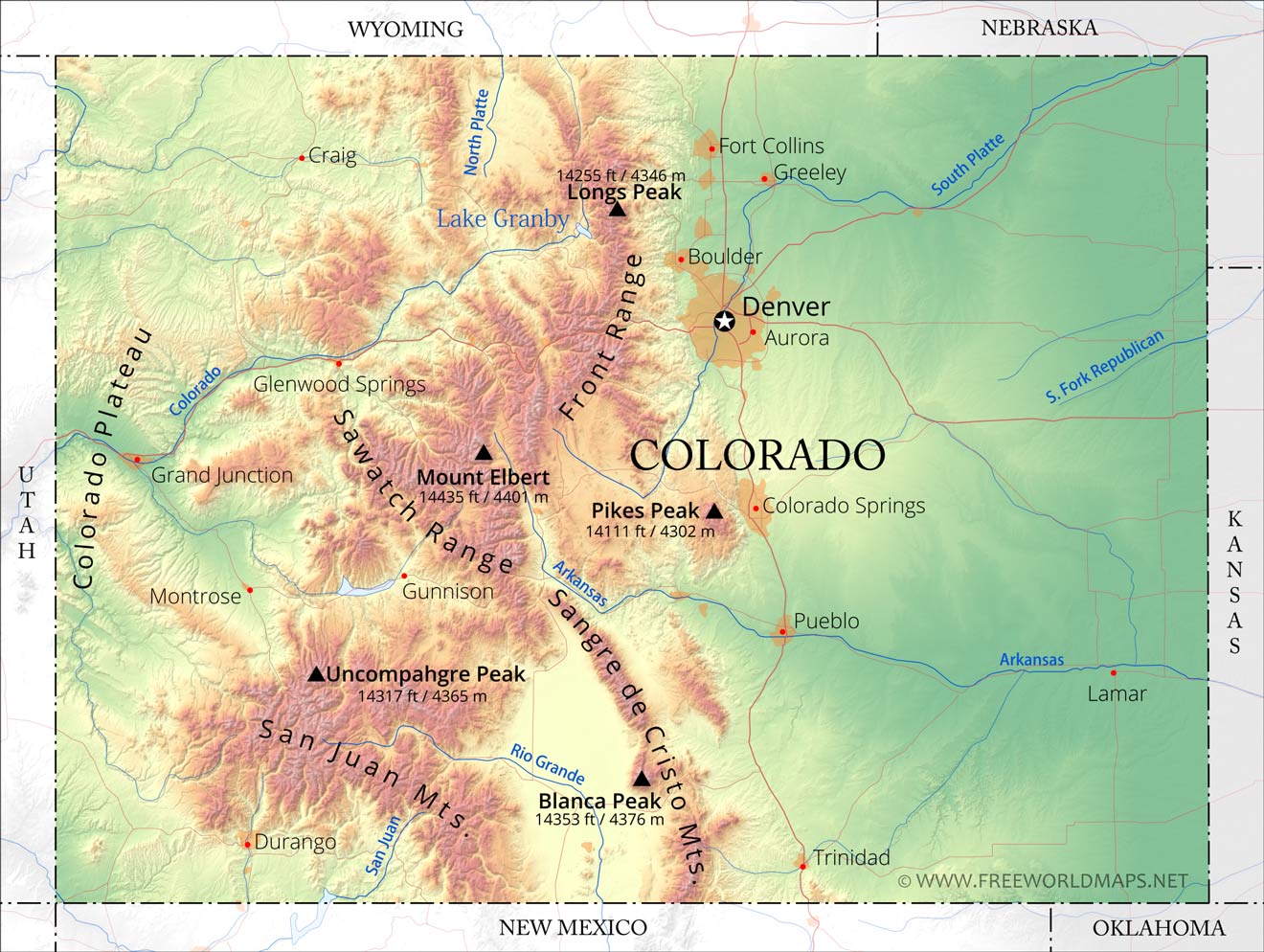
Geographically, the Front Range is a segment of the Southern Rocky Mountains that stretches approximately 175 miles from the Wyoming border near Laramie south to the Arkansas River near Cañon City. It acts as a massive natural divide, separating the high plains to the east from the mountainous interior to the west. Its prominence is striking; within a short distance, elevations can soar from around 5,000 feet on the plains to over 14,000 feet at its highest summits, creating a diverse array of climatic zones and breathtaking vistas.
Geological Formation and Characteristics
The Front Range began its formation hundreds of millions of years ago, with the uplift of ancient Precambrian rocks that are among the oldest exposed rocks in the United States. The current mountainous landscape is primarily the result of the Laramide Orogeny, a period of intense mountain building that occurred approximately 70 to 40 million years ago. During this time, tectonic forces caused the Earth’s crust to buckle and fold, pushing massive blocks of rock skyward. Subsequent erosion by wind, water, and glaciers has carved the jagged peaks, deep canyons, and broad valleys we see today.
Characteristic features include vast exposures of granite and gneiss, evidence of ancient volcanic activity, and the unmistakable “flatirons” near Boulder – tilted, erosion-resistant sandstone formations that represent the upturned edges of sedimentary layers. The Continental Divide often runs along or just west of the highest peaks of the [Front Range], determining whether water flows towards the Pacific or Atlantic Oceans.
The Urban-Wilderness Interface
Perhaps what makes the [Front Range] truly unique is its role as the backdrop and natural playground for Colorado’s largest metropolitan areas. Cities such as Denver, Boulder, Colorado Springs, Fort Collins, and Pueblo are situated along the “Front Range Urban Corridor,” which lies directly at the foothills. This proximity allows millions of residents and visitors unparalleled access to outdoor recreation, from hiking and mountain biking to skiing and rock climbing, often just a short drive from urban centers. This dynamic interface also presents significant challenges, including urban sprawl, wildlife management, and the increasing demand on natural resources and open spaces.
Iconic Peaks and Natural Wonders
Within the expansive reach of the [Front Range] lie some of Colorado’s most famous and revered natural landmarks, each offering its own unique allure and historical significance.
Pikes Peak: America’s Mountain
Pikes Peak, often called “America’s Mountain,” is arguably the most famous peak in the [Front Range], rising to an elevation of 14,115 feet (4,302 meters). Located west of Colorado Springs, it inspired Katharine Lee Bates to write “America the Beautiful” in 1893. Its pinkish granite slopes are accessible by the Pikes Peak Highway, the historic Pikes Peak Cog Railway (one of the highest cog railways in the world), and the challenging Barr Trail for hikers. The summit offers panoramic views that stretch across the eastern plains for hundreds of miles, a testament to the mountain’s commanding presence.
Rocky Mountain National Park: A Crown Jewel
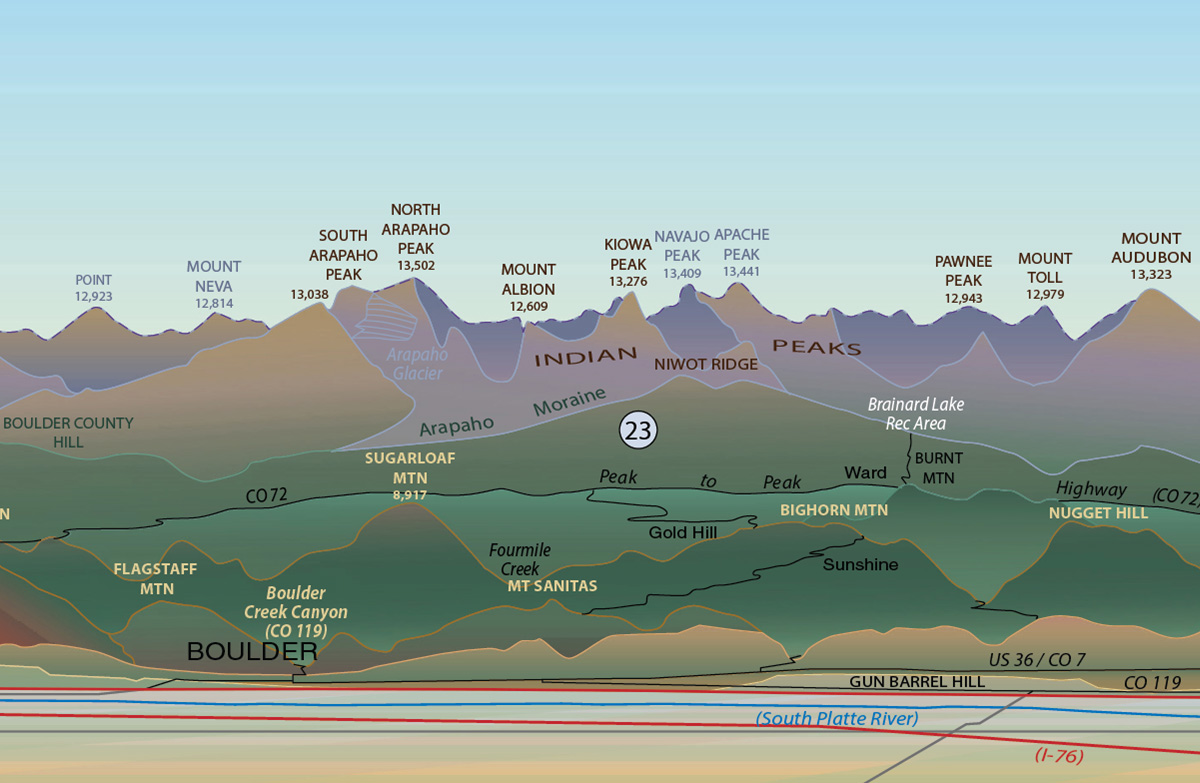
Encompassing a vast wilderness area within the [Front Range], Rocky Mountain National Park is one of the most visited national parks in the United States. Established in 1915, the park protects 415 square miles of spectacular mountain environments, including 77 peaks over 12,000 feet, vast forests, alpine tundra, and glacial lakes. Its iconic Trail Ridge Road (US Highway 34) is the highest continuous paved road in North America, crossing the Continental Divide at over 12,000 feet and offering unparalleled access to the fragile alpine tundra biome. The eastern gateway town of Estes Park serves as a popular base for exploring the park’s diverse landscapes and wildlife.
Mount Evans Scenic Byway
Mount Evans, one of Colorado’s fourteeners (peaks over 14,000 feet), stands at 14,265 feet (4,348 meters) and is home to the highest paved road in North America, the Mount Evans Scenic Byway. This engineering marvel climbs to within a few hundred feet of the summit, offering an accessible way to experience the extreme conditions and unique flora and fauna of the alpine tundra. The byway takes visitors through several ecological zones, from montane forests to subalpine and eventually the treeless expanse of the alpine.
Biodiversity and Ecosystems
The steep elevational gradient of the [Front Range] results in a remarkable diversity of ecosystems, each supporting a unique array of plant and animal life. This “life zone” concept, popularized by C. Hart Merriam, is vividly displayed across its slopes.
From Plains to Alpine Tundra
Starting from the eastern plains, the [Front Range] begins with shortgrass prairie, gradually transitioning into the foothills zone (5,500-8,000 feet), characterized by ponderosa pine forests, scrub oak, and grasslands. This is a critical area for wintering elk and deer. Above this lies the montane zone (8,000-10,000 feet), dominated by dense forests of ponderosa pine, Douglas fir, lodgepole pine, and quaking aspen, interspersed with lush meadows.
Higher still is the subalpine zone (10,000-11,500 feet), where Engelmann spruce, subalpine fir, and limber pine thrive, often forming krummholz (stunted, wind-sculpted trees) at the tree line. Finally, above approximately 11,500 feet, the alpine tundra zone takes over, a harsh environment of thin air, intense sun, high winds, and short growing seasons. Here, only hardy wildflowers, sedges, grasses, and lichens survive, clinging to the rocky terrain.
Flora and Fauna
The [Front Range] is a sanctuary for a wide variety of wildlife. Large mammals like Rocky Mountain elk, mule deer, and the iconic Rocky Mountain bighorn sheep are commonly seen. Predators such as mountain lions, black bears, and coyotes roam its forests. Smaller creatures like marmots, pikas, and various species of squirrels and chipmunks are abundant. Birdlife is equally diverse, from majestic golden eagles soaring overhead to colorful hummingbirds, woodpeckers, and a multitude of songbirds. The state flower, the Colorado blue columbine, blooms vibrantly in the montane and subalpine meadows, adding to the region’s natural beauty.
Historical Significance and Cultural Landscape
The human story of the [Front Range] is as rich and layered as its geology, stretching back thousands of years and continuing to evolve.
Indigenous Heritage
Long before European explorers arrived, the [Front Range] was home to various Indigenous peoples, including the Ute, Arapaho, and Cheyenne tribes. These groups utilized the mountains for hunting, gathering, ceremonial purposes, and as pathways across the continent. Evidence of their presence, such as petroglyphs, tools, and campsites, can still be found in protected areas, reflecting a deep spiritual and practical connection to the land.
Early Exploration and Settlement
European exploration began in the 17th century, but significant settlement only truly took off with the Pikes Peak Gold Rush in 1859. The promise of gold drew thousands of prospectors and settlers, leading to the rapid establishment of towns like Denver City (now Denver). The mountains provided not only mineral wealth but also timber, water, and fertile valleys for agriculture, shaping the early economic and social fabric of Colorado.
Conservation Efforts
Today, the [Front Range] faces increasing pressure from population growth and climate change. However, it is also a testament to ongoing conservation efforts. Numerous national forests (Arapaho, Roosevelt, Pike), state parks (Golden Gate Canyon, Roxborough), and open space preserves (like those managed by Boulder County) work to protect its natural integrity, ensure public access, and preserve its unique biodiversity. These efforts aim to balance human enjoyment with ecological preservation, safeguarding the [Front Range] as a vital natural landmark for future generations.

The Front Range as a Natural Anchor
In essence, the [Front Range] is the geological and cultural backbone of [Colorado]. It is a landmark of immense scale and significance, embodying the rugged beauty and spirit of the American West. Its towering peaks, diverse ecosystems, and the vibrant communities nestled at its base collectively form a region that is both an awe-inspiring natural wonder and a dynamic intersection of wilderness and civilization. From its ancient granite foundations to its windswept alpine summits, the [Front Range] defines [Colorado]’s identity and remains an enduring symbol of its majestic landscape.
LifeOutOfTheBox is a participant in the Amazon Services LLC Associates Program, an affiliate advertising program designed to provide a means for sites to earn advertising fees by advertising and linking to Amazon.com. Amazon, the Amazon logo, AmazonSupply, and the AmazonSupply logo are trademarks of Amazon.com, Inc. or its affiliates. As an Amazon Associate we earn affiliate commissions from qualifying purchases.