
The vibrant metropolis of Denver, Colorado, known today for its stunning mountain views, innovative culture, and thriving economy, traces its origins back to a seminal moment in American history: the Pikes Peak Gold Rush of 1858. It was in this whirlwind of westward expansion and prospecting fervor that the seeds of a future great city were planted at the confluence of the South Platte River and Cherry Creek. While no single date marks the absolute founding, the year 1858 is universally recognized as the birth year of Denver, as competing settlements merged to form what would become Denver City. Understanding the exact circumstances requires a journey back to the rugged frontier, where ambition, resourcefulness, and a dash of calculated opportunism laid the groundwork for one of the West’s most enduring urban centers.
The Gold Rush Catalyst: A New Frontier Emerges
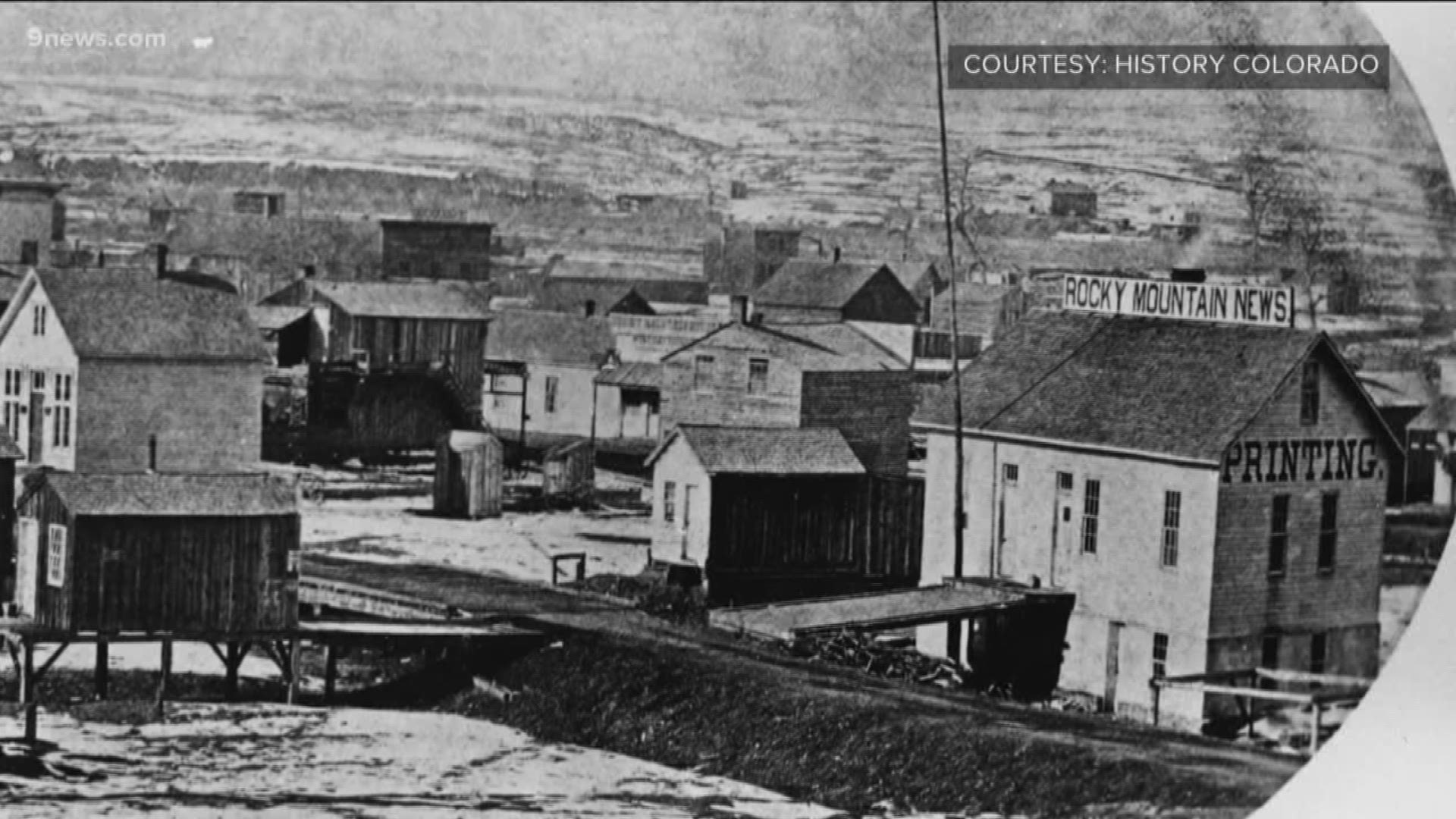
The catalyst for Denver’s founding was the intoxicating promise of gold. Rumors of gold discoveries in the Rocky Mountains had circulated for years, but it wasn’t until the summer of 1858 that substantiated reports sparked a massive influx of prospectors. Led by groups like the Russell Expedition from Georgia, who found modest gold deposits along Cherry Creek near its junction with the South Platte River, the trickle of hopefuls quickly became a flood. The cry “Pikes Peak or Bust!” echoed across the nation, drawing tens of thousands of adventurers westward. These early prospectors, often ill-equipped and unfamiliar with the harsh terrain, quickly realized that the region’s true wealth lay not just in gold, but in the services and supplies needed to support the burgeoning population.
The Lure of the Rockies
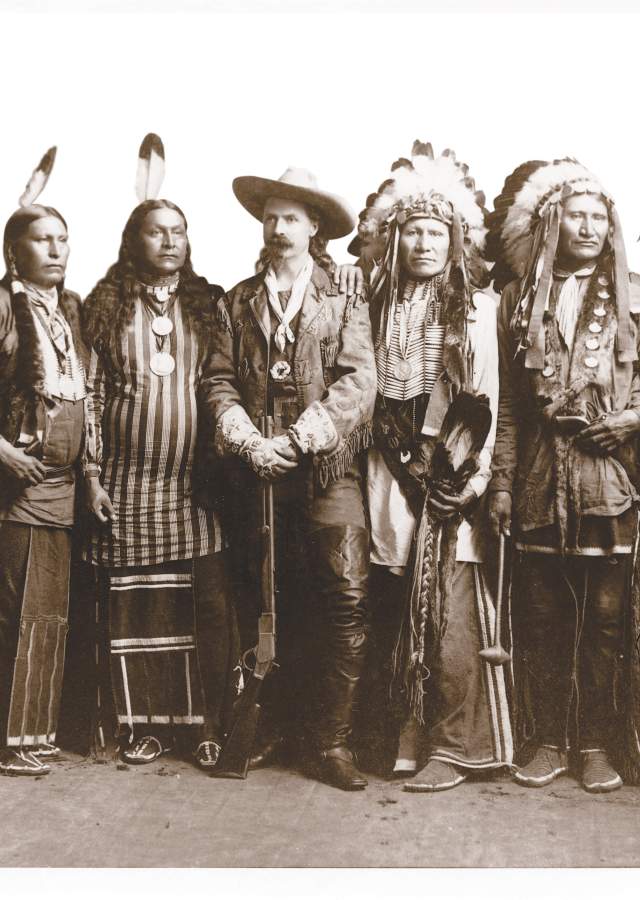
Prior to 1858, the area that would become Denver was largely unsettled by permanent European-American communities. It was traditional territory for various Native American tribes, including the Cheyenne and Arapaho, who had long utilized the fertile river valleys. The passage of the Kansas-Nebraska Act in 1854 had opened up these lands for potential settlement, placing the future site of Denver within the western reaches of the Kansas Territory. However, the vast distances and perceived lack of immediate resources kept large-scale settlement at bay until the gold discoveries. The allure of easily accessible placer gold spurred individuals from all walks of life—farmers, merchants, lawyers, and laborers—to abandon their previous lives and venture into the wilderness, transforming a remote outpost into a magnet for opportunity. This initial surge laid the demographic and economic foundation upon which the city would eventually be built, establishing a critical mass of people and commerce even before formal town organization.
Initial Settlements on Cherry Creek
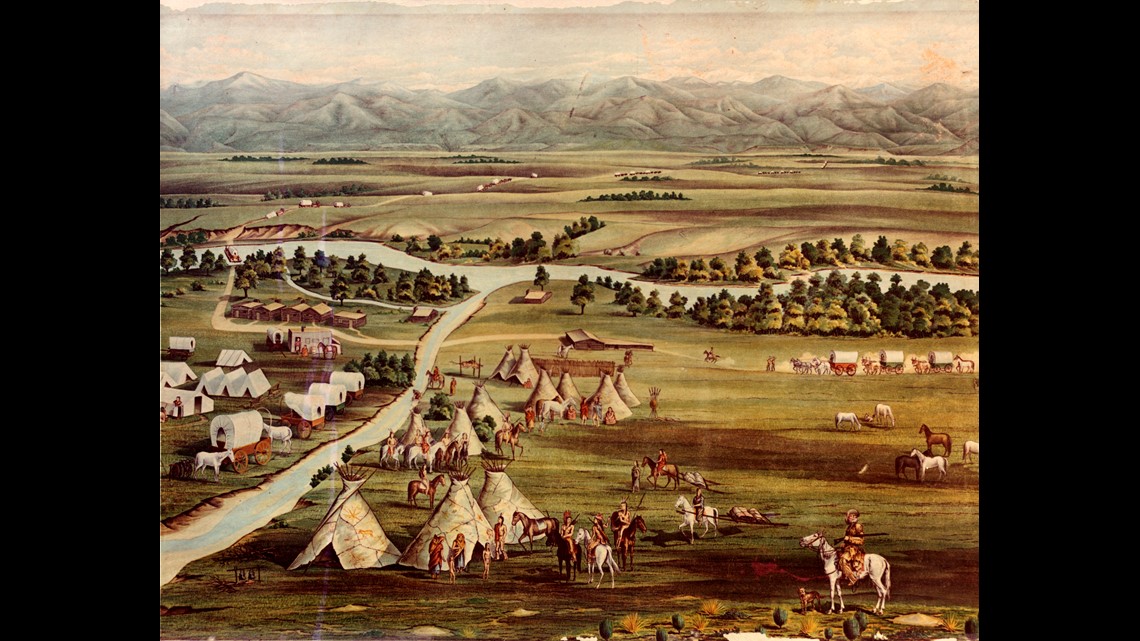
The first makeshift encampments sprang up almost immediately at strategic points along the waterways. The confluence of Cherry Creek and the South Platte River was particularly attractive. It offered a reliable water source, timber, and a natural crossroads for travel. Among the earliest settlements was Montana City, established by the Russell Expedition in late summer 1858, but its residents soon abandoned it for richer prospects or more viable locations. Soon after, two distinct and competing towns emerged near the gold discovery sites, each vying for supremacy as the future commercial hub of the goldfields. These were Auraria, founded by the Auraria Town Company on the west bank of the South Platte River, and St. Charles, established on the east bank of Cherry Creek. The rivalry between these nascent communities, fueled by land speculation and entrepreneurial ambition, set the stage for the dramatic consolidation that would officially bring Denver City into existence.
Birth of a City: From Rival Camps to Denver City
The year 1858 was a period of intense rivalry and rapid transformation on the plains of Kansas Territory. As the number of prospectors swelled, the need for organized towns with established supply lines and services became paramount. This necessity, coupled with the strategic ambitions of various land speculators, led to the formation of the first named settlements, directly paving the way for Denver’s founding. The immediate precursors to Denver were Auraria and St. Charles, two distinct entities whose competition ultimately led to their amalgamation under a new, more prominent name.
The Auraria Town Company and its Vision
In late October 1858, a group from Kansas, including the Russell brothers, established the Auraria Town Company. They laid out a townsite on the west bank of the South Platte River, south of Cherry Creek. Named after the Latin word for “gold,” Auraria quickly became the first significant settlement at the confluence. It attracted a substantial number of miners and merchants, boasting several log cabins, a general store, and even a rudimentary saloon by early winter. Its founders envisioned Auraria as the dominant center for trade and commerce in the goldfields. However, its position was soon challenged by another enterprising group with even grander ambitions and a strategic advantage.
General Larimer’s Strategic Move
Across Cherry Creek, on the east bank, another townsite named St. Charles had been claimed earlier in 1858 by a group associated with the Kansas Territory Governor, James W. Denver. This claim, however, remained largely undeveloped until the arrival of General William Larimer Jr., a land speculator from Kansas, in November 1858. Recognizing the strategic importance of the location, particularly its higher ground which was less prone to flooding than Auraria, Larimer swiftly and decisively acted. Using a combination of negotiation, intimidation, and outright claim-jumping—actions characteristic of frontier land acquisition—he seized the St. Charles townsite. He then formed the Denver City Town Company with associates, intending to establish the preeminent city of the region.
Naming the New Settlement
General Larimer’s shrewd move effectively solidified the claim on the eastern bank of Cherry Creek. To curry favor and gain political legitimacy for his new settlement, Larimer named the town “Denver City” in honor of James W. Denver, who was then the Territorial Governor of Kansas. Ironically, by the time Larimer bestowed the honor, Governor Denver had already resigned and left office. Regardless, the name stuck. Through aggressive marketing and the strategic issuance of land plots, Denver City quickly overshadowed Auraria. By early 1859, the two rival settlements effectively merged, with Auraria gradually becoming absorbed into the expanding framework of Denver City. This consolidation, driven by practical considerations and entrepreneurial vision, marked the definitive founding of Denver in 1858, a strategic hub born from the raw energy of the gold rush.
Early Challenges and Rapid Growth: Forging a Capital
The formal establishment of Denver City in 1858 was just the beginning of a challenging but ultimately successful journey toward becoming a major urban center. The early years were fraught with difficulties typical of frontier settlements, including a harsh environment, tenuous political status, and the ever-present threat of natural disasters. Yet, through resilience and strategic development, Denver not only survived but thrived, transforming itself from a rough mining camp into the capital of a new territory and eventually a state.
Overcoming Adversity: Fires, Floods, and Native American Relations
Early Denver faced immense adversity. Its buildings, primarily constructed from wood and canvas, were highly susceptible to fire. Devastating blazes in 1863 and 1864 wiped out significant portions of the nascent city, forcing residents to rebuild from scratch. The low-lying areas near Cherry Creek were also vulnerable to flash floods, with a particularly destructive event occurring in 1864 that swept away homes and businesses. Beyond natural calamities, relations with local Native American tribes, whose lands were increasingly encroached upon by settlers, were tense and often violent. The Sand Creek Massacre in 1864, though occurring some distance away, profoundly impacted the region, leading to increased conflict and a subsequent loss of life on both sides. Despite these setbacks, the spirit of the early settlers remained unbroken. Each disaster seemed to reinforce their determination, leading to more resilient construction and a stronger sense of community.
Railroads and Economic Diversification
While gold initially fueled Denver’s birth, its long-term survival depended on economic diversification and connectivity. The city’s leaders recognized that reliance solely on mining was unsustainable. A pivotal moment came with the transcontinental railroad’s construction in the late 1860s, which bypassed Denver to the north, favoring Cheyenne, Wyoming. This setback spurred intense local efforts to ensure Denver was not isolated. Under the leadership of figures like David H. Moffat and John Evans, residents raised funds to build the Denver Pacific Railroad, connecting the city to the main line at Cheyenne by 1870. This strategic investment was a game-changer, transforming Denver into a vital transportation and distribution hub for the entire Rocky Mountain region. The arrival of the railroads facilitated the growth of other industries, including agriculture, smelting, manufacturing, and tourism, laying a robust foundation for enduring prosperity.
The Quest for Capital Status
From its inception, Denver City aspired to be more than just a mining supply town. Its strategic location and growing population made it a strong contender for political prominence. When the Colorado Territory was established in 1861, Denver vied with other settlements, such as Golden and Colorado City, for the honor of becoming the territorial capital. After a period of temporary capitals and shifting political allegiances, Denver’s economic power, central location, and burgeoning population ultimately prevailed. In 1867, it was officially designated the capital of the Colorado Territory. This formal recognition cemented its status as the administrative and political heart of the region, attracting further investment, institutions, and people. When Colorado achieved statehood in 1876, Denver naturally transitioned to become the state capital, a position it has held ever since, embodying the fulfillment of its founders’ ambitious vision.
Denver Today: A Legacy of Founding Principles
The Denver of the 21st century stands as a testament to the foresight and determination of its 1858 founders. What began as a rough collection of gold camps on the plains has evolved into a sophisticated urban center, yet many of its defining characteristics can be traced directly back to its earliest days. The city’s enduring spirit of innovation, its strategic importance as a regional hub, and its inherent connection to the natural beauty of the Rocky Mountains are all deeply rooted in its founding history.
The entrepreneurial zeal that spurred prospectors to venture west and land speculators like General William Larimer Jr. to establish towns continues to manifest in Denver’s dynamic economy. Today, it’s a hub for technology, aerospace, renewable energy, and craft industries, drawing individuals seeking opportunity much like the gold rushers of old. The city’s role as a major transportation and distribution center, solidified by the early efforts to connect it to the transcontinental railroad, remains critical, with Denver International Airport serving as one of the busiest in the world and an extensive rail and road network facilitating trade across the West.
Furthermore, the very location that attracted the initial settlements—the confluence of the South Platte River and Cherry Creek, with the majestic backdrop of the Front Range—continues to shape Denver’s identity. This natural setting underpins its thriving outdoor recreation culture and its commitment to environmental stewardship. The resilience demonstrated by early residents in overcoming fires, floods, and other adversities can still be seen in the city’s ability to adapt and grow through economic shifts and societal changes. From the historic buildings in Larimer Square, named after its key founder, to the modern skyscrapers that define its skyline, Denver proudly displays its rich historical tapestry. The question of “When was Denver, Colorado founded?” ultimately points to 1858, a year that sparked a legacy of ambition, adaptability, and enduring growth that defines the Mile High City to this day.
LifeOutOfTheBox is a participant in the Amazon Services LLC Associates Program, an affiliate advertising program designed to provide a means for sites to earn advertising fees by advertising and linking to Amazon.com. Amazon, the Amazon logo, AmazonSupply, and the AmazonSupply logo are trademarks of Amazon.com, Inc. or its affiliates. As an Amazon Associate we earn affiliate commissions from qualifying purchases.