
Embarking on a journey from Cleveland, Ohio, to Detroit, Michigan, is a classic Midwestern road trip, connecting two historically significant cities with vibrant cultures and evolving landscapes. Understanding the distance, available transportation methods, and potential stops along the way is crucial for planning an efficient and enjoyable travel experience. This guide will provide an insightful overview for anyone contemplating this popular route, offering practical advice and highlighting key considerations for a smooth journey.
The Core Distance and Travel Time
The geographic proximity of Cleveland and Detroit makes for a relatively short and manageable trip, ideal for day trips, weekend getaways, or business travel. While the straight-line, or “as the crow flies,” distance might be shorter, practical travel always involves navigating roads and potential detours.

Straight-Line vs. Driving Distance
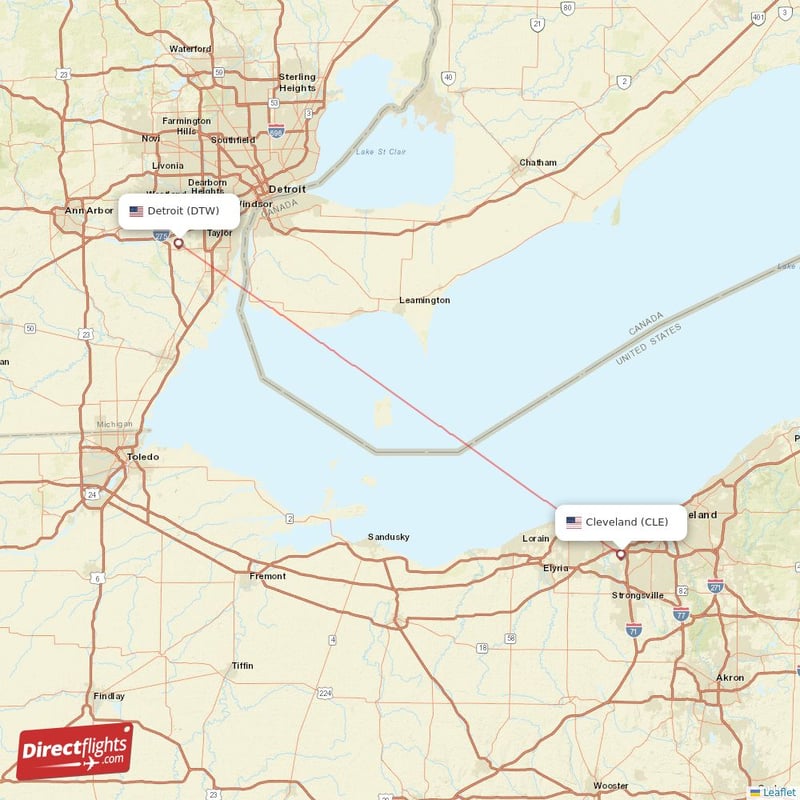
In a straight line, the distance between the city centers of Cleveland and Detroit is approximately 90 to 95 miles (about 145 to 153 kilometers) across Lake Erie. However, since there is no direct bridge or ferry service across the lake connecting these specific points for regular vehicle traffic, the journey necessitates driving around the western tip of Lake Erie, through parts of Ohio and Michigan.
The typical driving distance between the two cities ranges from approximately 160 to 180 miles (257 to 290 kilometers), depending on the exact starting and ending points within each metropolitan area and the specific route taken. The most common and direct route involves heading west from Cleveland on Interstate 90 (I-90) or Interstate 80 (I-80), which merge to form the Ohio Turnpike, then transitioning to Interstate 75 (I-75) North near Toledo, Ohio, which leads directly into Detroit, Michigan.
Factors Influencing Travel Time
Under ideal driving conditions, with minimal traffic and good weather, the journey typically takes about 2.5 to 3 hours. However, several factors can influence this estimate:
- Traffic Congestion: Both Cleveland and Detroit are major urban centers, and traffic can significantly impact travel times, particularly during peak commuting hours (7-9 AM and 4-6 PM on weekdays). Expect delays when traveling through Toledo as well.
- Road Construction: Midwestern states frequently undergo road maintenance, especially during warmer months. Construction zones can lead to lane closures, reduced speeds, and unexpected backups.
- Weather Conditions: Winters in the Great Lakes region can bring snow, ice, and fog, which can slow down travel considerably and make driving hazardous. Summer thunderstorms can also affect visibility and road conditions.
- Planned Stops: Whether for fuel, food, or simply to stretch your legs, factoring in stops will naturally extend the total travel duration.
Navigating the Route: Transportation Options
Travelers have several viable options for making the trip between Cleveland and Detroit, each with its own advantages regarding cost, convenience, and travel experience.
Driving Your Own Vehicle
Driving is by far the most popular and flexible option for this route. It offers the freedom to depart and arrive on your own schedule, make spontaneous stops, and carry more luggage.
- Primary Route: The most direct route begins on Interstate 90 West out of Cleveland, which merges with Interstate 80 West to form the Ohio Turnpike. You will need to take Exit 64 for Interstate 75 North towards Detroit. The Ohio Turnpike is a toll road, so travelers should account for this cost. The Interstate 75 corridor is generally well-maintained and offers multiple service plazas along the way.
- Alternative Route (Toll-Free): For those wishing to avoid tolls, an alternative route involves taking US-20 West from Cleveland through various smaller towns, eventually connecting to Interstate 75 North near Toledo. While scenic in parts, this route adds significant travel time due to lower speed limits and more traffic lights.
Bus Services
For budget-conscious travelers or those who prefer not to drive, intercity bus services offer a convenient option. Greyhound is the primary carrier operating routes between Cleveland and Detroit.
- Frequency and Duration: Bus schedules vary, but several departures are typically available daily. The journey usually takes between 3.5 to 5 hours, factoring in potential transfers or stops in cities like Toledo.
- Pricing: Fares are generally affordable, though they can fluctuate based on booking in advance, demand, and promotional offers.
- Stations: Both cities have central bus terminals, often located close to downtown areas or public transportation hubs, making onward travel relatively straightforward.
Train Travel
Amtrak provides train service between Cleveland and Detroit via its Lake Shore Limited and Capitol Limited routes. However, a direct, seamless journey is not always guaranteed, as both routes pass through Toledo and may require connections.
- Duration and Experience: Train travel can be a more relaxed experience, offering views not always accessible by road. The journey duration can be comparable to bus travel, though less frequent departures might make it less convenient for some itineraries.
- Stations: Cleveland Lakefront Station and the Detroit Amtrak Station are the primary hubs.
- Consideration: While trains offer comfort, the overall travel time, including waiting and potential transfers, often makes driving or bus travel more time-efficient for this specific route.
Air Travel
Given the relatively short distance, flying between Cleveland Hopkins International Airport and Detroit Metropolitan Wayne County Airport is rarely practical for direct point-to-point travel. The time spent on check-in, security, and airport transfers typically outweighs any time saved in the air. This option is generally considered only if connecting flights are part of a longer itinerary or if unusual circumstances dictate it.

Essential Stops and Scenic Detours Along the Way
While the most direct route primarily consists of highway driving, several points of interest can enhance the journey for those with extra time or a desire to explore.
Northern Ohio Highlights
- Toledo, Ohio: Roughly halfway between Cleveland and Detroit, Toledo makes an excellent stop. The Toledo Museum of Art boasts an impressive collection, and the National Museum of the Great Lakes offers insights into the region’s maritime history. The Toledo Zoo is also a highly-rated family attraction.
- Lake Erie Shoreline: For a more scenic (though slightly longer) detour from the Ohio Turnpike, consider driving along US-6 or OH-2 closer to the Lake Erie coast.
- Sandusky and Cedar Point: If traveling during the warmer months and looking for an adrenaline rush, the city of Sandusky is home to Cedar Point amusement park, often hailed as “America’s Roller Coast.” This detour significantly adds to travel time but offers a world-class entertainment experience.
Southeast Michigan’s Gateway
As you approach Detroit, the landscape transitions from agricultural fields to more suburban and industrial areas.
- Dearborn: Just west of Detroit, Dearborn is home to The Henry Ford Museum of American Innovation and Greenfield Village. These attractions offer a deep dive into American history, industry, and ingenuity, making for a captivating stop before reaching Detroit’s core.
Preparing for Your Journey: Tips and Considerations
A well-planned trip enhances the overall experience and minimizes unforeseen issues.
Best Times to Travel
- Avoiding Peak Traffic: For the smoothest drive, aim to travel mid-morning (after 9 AM) or early afternoon (before 3 PM) on weekdays. Weekends can also be busy, particularly on Friday evenings and Sunday afternoons.
- Seasonal Considerations: Late spring to early fall offers the most pleasant weather for driving, though summer weekends can see heavier tourist traffic, especially around popular attractions. Winter travel requires extra caution due to potential snow and ice.
Packing Essentials
- Navigation: While smartphones are ubiquitous, a physical map or a dedicated GPS device can serve as a reliable backup, especially if cellular service is spotty in certain rural stretches.
- Snacks and Drinks: Keep a cooler with beverages and snacks to avoid frequent stops and save money.
- Emergency Kit: A basic emergency kit with jumper cables, a first-aid kit, a flashlight, and blankets is prudent for any road trip.
Vehicle Preparation (if driving)
Before embarking, ensure your vehicle is in good condition. Check tire pressure, fluid levels (oil, coolant, wiper fluid), and brake functionality. A full tank of gas before leaving Cleveland is always a good idea.
Budgeting for the Trip
Account for fuel costs, potential tolls (on the Ohio Turnpike), and any planned stops for food or attractions. Bus and train tickets should be purchased in advance for potentially better rates.
Exploring Your Destinations: What Awaits
The journey culminates in arriving at two distinct and historically rich cities, each offering unique experiences for travelers.
Discovering Cleveland
Before heading to Detroit, or perhaps as part of a return journey, Cleveland presents a vibrant array of attractions. The Rock & Roll Hall of Fame is a magnetic draw for music lovers, while the Cleveland Museum of Art offers world-class collections. The city’s culinary scene, sports teams, and revitalized waterfront along Lake Erie provide diverse entertainment options.
Experiencing Detroit
Detroit offers a compelling narrative of American industry, music, and resilience. Visitors can explore the Motown Museum, delve into automotive history at the aforementioned Henry Ford Museum of American Innovation and Greenfield Village in Dearborn, or marvel at the architecture downtown. The city’s thriving arts scene, innovative restaurants, and rejuvenated neighborhoods make it a fascinating destination for any traveler seeking a blend of historical depth and modern resurgence.
The journey between Cleveland and Detroit is more than just a matter of miles; it’s an opportunity to experience the heart of the Midwest, connecting two dynamic cities through a relatively straightforward and often enjoyable travel corridor. Whether driving directly or taking time for detours, thoughtful planning ensures a memorable trip.
LifeOutOfTheBox is a participant in the Amazon Services LLC Associates Program, an affiliate advertising program designed to provide a means for sites to earn advertising fees by advertising and linking to Amazon.com. Amazon, the Amazon logo, AmazonSupply, and the AmazonSupply logo are trademarks of Amazon.com, Inc. or its affiliates. As an Amazon Associate we earn affiliate commissions from qualifying purchases.