
The allure of a distant horizon, particularly when it beckons from another country, is a powerful draw for any traveler. For decades, the proximity of Florida to Cuba has sparked a common question: Is it possible to see the shores of one from the other? This isn’t merely a geographical query; it’s a romantic notion that speaks to the intertwined histories, cultures, and the persistent human desire to bridge distances. While the two nations stand as close neighbors on the global map, the physical act of sighting one from the other with the naked eye is a fascinating intersection of geography, atmospheric science, and human perception.
The Geographical Reality: A Stone’s Throw or a World Apart?
At first glance, the map suggests an impressive closeness. The southern tip of Florida, specifically Key West, is often cited as being remarkably near Cuba. However, “near” in geographical terms can still be significant when discussing optical visibility.
The Florida Straits: More Than Just Water
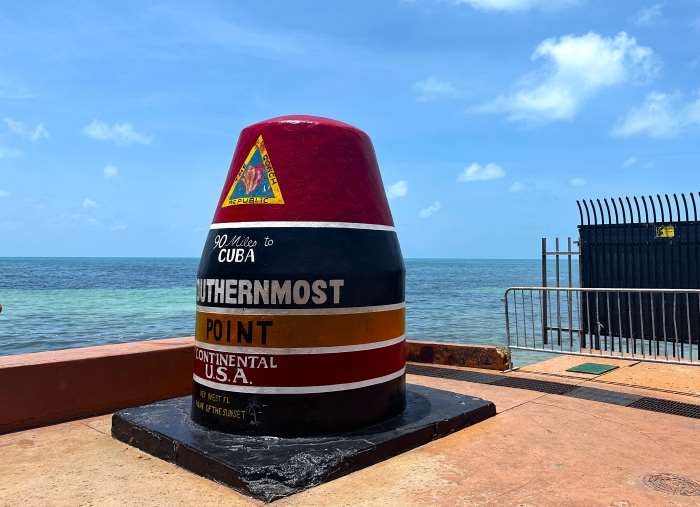
The narrowest stretch separating Key West, Florida, from Cuba’s northern coast (specifically the province of Matanzas, east of Havana) is approximately 90 miles (145 kilometers). From Key West’s famous Southernmost Point Buoy, which boldly proclaims “90 Miles to Cuba,” the destination is the Cuban capital of Havana. This distance, while relatively small in an aerial sense, is immense when considered from a ground-level perspective across an open expanse of ocean.
The Inexorable Curvature of the Earth
The primary reason why Florida cannot be seen from Cuba, or vice versa, from sea level, boils down to basic physics: the curvature of the Earth. Our planet is not flat, and its spherical shape means that at a certain distance, the horizon dips below the line of sight.
For an observer standing at sea level, the horizon is typically around 3 miles (5 kilometers) away. To see an object 90 miles distant, that object would need to be significantly elevated to clear the Earth’s curvature. Calculations show that for an observer at sea level, an object 90 miles away would need to be thousands of feet tall to be visible. Even if both the observer and the object were elevated, the required height quickly becomes impractical for natural landforms. While Cuba does have some modest elevations, and Florida is notoriously flat, neither possesses the monumental scale necessary to overcome this optical barrier from ground level.
Atmospheric Obstacles to Vision
Even if the Earth were flat, or if the landmasses were sufficiently high, the atmosphere itself poses another set of challenges. Haze, humidity, and the natural particulate matter in the air act as a veil, scattering light and obscuring distant objects. The Florida Straits are known for their warm, humid conditions, which frequently lead to significant atmospheric haze. This effect alone would be enough to blur and eventually obscure any distant landmass, even if it were theoretically above the horizon. Light refraction, where light bends as it passes through different densities of air, can sometimes create mirages, but these are optical illusions, not true sightings of distant shores.
The Illusion vs. The Possibility: What Travelers Might Experience
While direct sight across the Florida Straits is scientifically implausible from ground or sea level, the human mind is adept at creating illusions, and technology can overcome natural limitations.
Mirages and Atmospheric Tricks
Travelers on the north coast of Cuba or the south coast of Florida might occasionally report seeing “something” on the distant horizon. These instances are almost certainly superior mirages, a phenomenon where light is bent downward as it passes through layers of air with different temperatures. This can cause distant objects (or even parts of the sky) to appear elevated above their true position, sometimes giving the impression of land. However, these are fleeting and distorted images, not clear views of cities or landscapes. The human eye, ever eager to connect dots, can sometimes interpret these atmospheric phenomena as glimpses of the elusive other shore.
Elevated Perspectives: Overcoming the Curvature
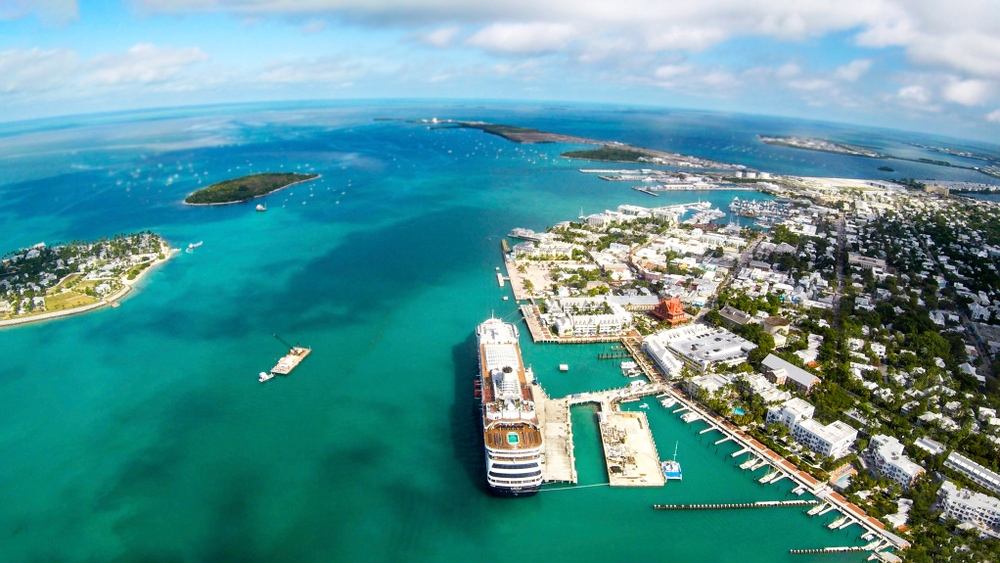
The only practical way to visually bridge the gap between Florida and Cuba is from a significantly elevated vantage point. From an aircraft flying at cruising altitude (e.g., 35,000 feet or 10,000 meters), the curvature of the Earth is far less of an impediment. On a clear day, passengers flying between Miami and Havana might indeed catch glimpses of both landmasses simultaneously, especially near the midpoint of the journey. Satellites and high-altitude weather balloons, of course, offer an unobstructed view, but this is a far cry from “seeing Florida from Cuba” in the sense of a casual observation from the ground.
Bridging the Gap: Travel Experiences Between Florida and Cuba
Despite the lack of direct visual connection, the journey between Florida and Cuba remains one of the most historically and culturally significant in the Western Hemisphere. For travelers, the impossibility of seeing one from the other only adds to the intrigue and the desire to experience both destinations firsthand.
A Rich Tapestry of History and Culture
The Florida Straits may separate the lands, but they have also served as a conduit for centuries of exchange. From Indigenous peoples to Spanish colonizers, and later Cuban émigrés to Florida, the flow of people, ideas, and traditions has created an indelible cultural imprint on both sides. Key West, for example, boasts a vibrant Cuban heritage reflected in its architecture, cuisine, and annual festivals. In Miami, the historic Little Havana neighborhood pulses with the rhythms of Cuban life. These cultural connections offer a far more profound “sight” of Cuba in Florida and vice versa than any distant mirage could provide.
Modern Travel Routes: Beyond the Horizon
Today, traveling between Florida and Cuba is primarily done by air. Regular flights connect major U.S. cities, including Miami and Fort Lauderdale, directly to Havana and other Cuban cities. While legal restrictions for U.S. citizens to travel to Cuba still exist (requiring adherence to one of 12 authorized travel categories), these routes offer direct and efficient passage. Cruise lines also occasionally offer itineraries that include Cuba as a port of call, although these have been subject to policy changes over the years. These travel methods ensure that while you can’t see the other shore, you can certainly experience it.
Iconic Views Evoking Proximity
While you won’t see Florida from Havana, or Cuba from Key West, there are iconic vantage points that powerfully evoke the sense of being on the precipice of another nation. From the ramparts of El Morro Castle overlooking the entrance to Havana Bay, one gazes out at the vast expanse of the Florida Straits, knowing that just beyond the horizon lies the United States. Similarly, standing by the Southernmost Point Buoy in Key West, the symbolic “90 Miles to Cuba” sign creates a palpable sense of proximity, even if the island remains unseen. These spots serve as powerful reminders of the geographical closeness and the historical ties, making the experience no less compelling for the lack of visual confirmation.
Embarking on Your Own Trans-Strait Adventure
For travelers captivated by the mystique of these neighboring lands, the focus shifts from seeing one from the other to experiencing each unique destination.
Planning Your Trip to Cuba
Visiting Cuba is an immersion in vibrant culture, rich history, and stunning natural beauty. For U.S. travelers, understanding the current travel regulations is key. Most visitors fly into José Martí International Airport in Havana. It’s advisable to secure a visa (often called a tourist card) in advance and ensure your travel falls under one of the approved categories, such as “support for the Cuban people.” Once there, explore the colonial architecture of Old Havana, stroll along the Malecón, and savor the local cuisine and music. Beyond Havana, destinations like Viñales Valley offer breathtaking landscapes, while Trinidad provides a glimpse into a perfectly preserved colonial past.

Exploring Key West and the Florida Keys
On the Florida side, the Florida Keys offer a distinct island vibe that subtly echoes its Caribbean neighbor. Key West itself is a melting pot of cultures, with a laid-back atmosphere, historic homes, and legendary sunsets at Mallory Square. Rent a scooter to explore the quaint streets, visit the Ernest Hemingway Home and Museum, and sample key lime pie. The sense of being at the very edge of the U.S., with only a relatively short expanse of water separating you from Cuba, permeates the air. Many of Key West’s restaurants and bars serve Cuban-inspired dishes and drinks, reminding visitors of the cultural bridges that exist despite the physical distance.
In conclusion, while the dream of seeing Florida from Cuba (or vice versa) with the naked eye remains largely a romantic impossibility due to the Earth’s curvature and atmospheric conditions, the desire to connect these two intriguing destinations persists. For the intrepid traveler, the true adventure lies not in a distant glimpse, but in the immersive experience of exploring the vibrant cultures, rich histories, and stunning landscapes that define both Cuba and Florida, bridging the gap through travel itself.
LifeOutOfTheBox is a participant in the Amazon Services LLC Associates Program, an affiliate advertising program designed to provide a means for sites to earn advertising fees by advertising and linking to Amazon.com. Amazon, the Amazon logo, AmazonSupply, and the AmazonSupply logo are trademarks of Amazon.com, Inc. or its affiliates. As an Amazon Associate we earn affiliate commissions from qualifying purchases.