
For couples considering a move to the Sunshine State, or those already residing within its vibrant communities, understanding the legal intricacies of relationship recognition is paramount. Florida, a destination renowned for its beaches, theme parks, and diverse cultural landscape, also presents a distinct legal framework concerning marital status. One question that frequently arises, particularly for individuals accustomed to varying state laws, is whether Florida acknowledges common law marriage. The answer, while seemingly straightforward, carries nuances that significantly impact lifestyle, financial planning, and legal standing for many couples.
Understanding Common Law Marriage: A Brief Overview
Common law marriage is a legally recognized marriage between two people who have not participated in a formal marriage ceremony but consider themselves married and present themselves as such to the public. Historically, this form of marriage emerged in times and places where access to formal ceremonies was difficult or impractical. Its existence is rooted in a shared intention and public representation, rather than a certificate.

Historical Context
The concept of common law marriage traces its origins back to medieval England, where formal ceremonies were less commonplace than they are today. As the legal systems in the United States developed, many states initially adopted this tradition. Over time, however, the trend shifted towards requiring formal solemnization to ensure clarity in legal status, particularly concerning property, inheritance, and spousal rights. The move away from common law marriage reflects a broader legal effort to standardize and simplify the identification of marital unions.
Key Elements for Recognition
In the states that do still recognize common law marriage (which are now a distinct minority), specific criteria must typically be met. These usually include:
- Mutual Agreement: Both parties must have a present intent to be married. This isn’t about an intention to marry in the future, but a current, mutual understanding that they are married.
- Cohabitation: The couple must live together as husband and wife. This shared residence is a tangible demonstration of their marital relationship.
- Public Representation (Holding Out): The couple must present themselves to the public as married. This could involve using the same last name, referring to each other as “my husband” or “my wife,” filing joint tax returns, or generally conducting their lives as a married couple would.
Without these elements, even in states where common law marriage is recognized, a de facto relationship does not automatically confer marital status.
Florida’s Stance: The Legal Reality
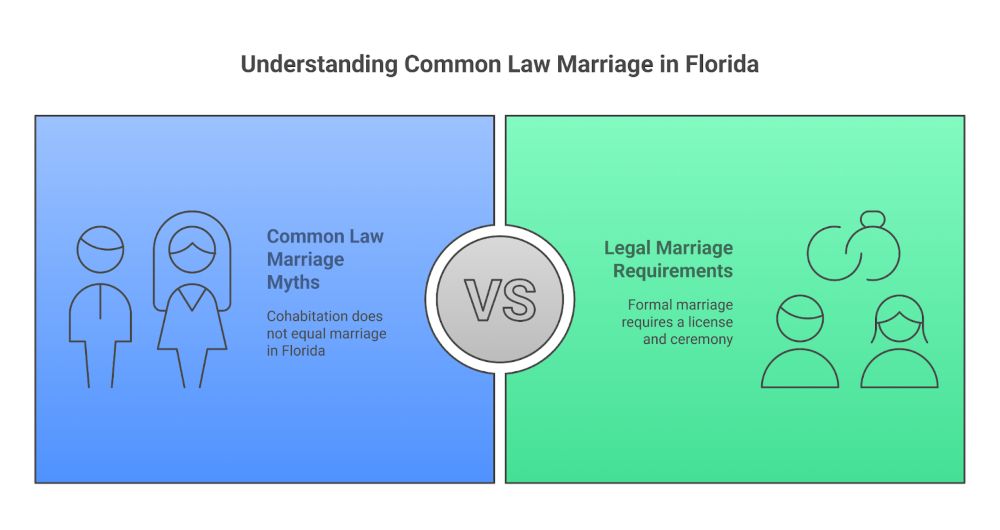
Florida is unequivocally not one of the states that currently permit common law marriage to be created within its borders. This legal position has been firmly in place for decades, having significant implications for residents and those planning long-term stays.
The 1968 Cutoff
The critical date in Florida’s legal history regarding common law marriage is January 1, 1968. On this date, Florida officially abolished the creation of common law marriages within the state. This means that for any common law marriage to be recognized as having originated in Florida, it must have been formed before January 1, 1968. Such cases are exceedingly rare today, given the passage of time, but they illustrate the historical context of the law. Any relationship that began after this date, regardless of how long the couple has lived together or how they represent themselves, is not considered a common law marriage under Florida law. Instead, to be legally married in Florida, couples must obtain a marriage license and have a formal ceremony performed by an authorized official.
Recognition of Out-of-State Common Law Marriages
While Florida does not allow for the creation of new common law marriages within its jurisdiction, it does recognize valid common law marriages that were legally established in other states or jurisdictions where such unions are permitted. This is based on the principle of “comity,” where states generally respect the laws and judicial decisions of other states.
For a common law marriage created elsewhere to be recognized in Florida, the couple must be able to demonstrate that they met all the legal requirements for a common law marriage in the state where it was formed. This often requires presenting evidence of their mutual intent, cohabitation, and public representation as a married couple from their time in that other state. If a couple legally established a common law marriage in a state like Colorado, Iowa, Kansas, Montana, New Hampshire (for inheritance purposes only), Oklahoma, Rhode Island, South Carolina, Texas, or the District of Columbia (as of my last update), Florida courts would generally treat them as legally married for all purposes, including divorce, property division, and inheritance, should they later move to Florida.
Implications for Florida Residents and Visitors
For couples living in or planning to move to Florida who believe they are in a common law marriage, or who simply live together without a formal ceremony, understanding the lack of recognition for newly formed common law unions is crucial. This legal reality has profound implications for various aspects of their lifestyle and financial security.
Property Rights and Inheritance
Without legal marriage status, partners in Florida do not automatically benefit from the property rights and inheritance protections typically afforded to married spouses. For example, if one partner passes away without a will, the surviving partner may not inherit any assets unless specifically designated. Jointly owned property might be subject to complex legal battles, and there’s no automatic right to a share of assets acquired during the relationship. This contrasts sharply with formally married couples, where spousal rights to marital property and inheritance are clearly defined by law.
Healthcare Decisions and Benefits
In medical emergencies, an unmarried partner generally does not have the automatic legal authority to make healthcare decisions for an incapacitated partner. Such authority is typically reserved for spouses, next of kin, or individuals designated through formal legal documents. Furthermore, unmarried partners do not automatically qualify for spousal benefits related to health insurance, social security, or employer-sponsored plans. This means that careful pre-planning with legal documents is essential to ensure that a partner’s wishes are honored and their well-being is protected.
Dissolution and Divorce Considerations
If an unmarried couple in Florida decides to separate, they do not undergo a formal divorce process. This means there are no legal mechanisms like equitable distribution of marital assets or spousal support (alimony) that apply by default. Disputes over jointly owned property or shared debts can become highly contentious and complicated, often requiring separate legal actions that do not offer the same comprehensive protections as divorce proceedings. Without proper legal agreements in place, partners may find themselves in a vulnerable position with limited recourse.
Navigating Relationships in Florida Without Common Law Status
Given Florida’s non-recognition of newly formed common law marriages, couples wishing to establish legal and financial protections similar to those of married couples must proactively create formal legal documents. This proactive approach is a cornerstone of responsible lifestyle planning in the state.
Domestic Partnership Agreements
A Domestic Partnership Agreement, sometimes referred to as a “cohabitation agreement,” is a legally binding contract between two individuals who live together but are not married. This agreement can outline rights and responsibilities regarding:
- Shared Finances: How bills are paid, bank accounts are managed, and assets are accumulated.
- Property Ownership: Who owns what, how jointly acquired property will be divided upon separation, and responsibility for joint debts.
- Support: Whether one partner will provide financial support to the other if the relationship ends.
- Healthcare Decisions: Establishing decision-making authority in medical emergencies (though a separate healthcare proxy is also advisable).
While these agreements cannot replicate all the benefits of legal marriage, they provide a robust framework for managing a shared life and can significantly mitigate potential disputes upon separation.
Estate Planning and Wills
For unmarried couples, a comprehensive estate plan is indispensable. Without a will, Florida’s intestacy laws would dictate that assets go to legal heirs (children, parents, siblings) rather than an unmarried partner. Therefore, creating a legally valid will is essential to ensure that an unmarried partner is provided for according to the deceased’s wishes. This also includes designating beneficiaries for retirement accounts, life insurance policies, and other assets, as these designations often supersede a will.
Power of Attorney and Advance Directives
To grant an unmarried partner the authority to make critical decisions, specific legal documents are required:
- Durable Power of Attorney: Appoints a partner to manage financial and legal affairs if one becomes incapacitated.
- Designation of Health Care Surrogate (Healthcare Power of Attorney): Grants a partner the authority to make medical decisions if one is unable to do so.
- Living Will (Advance Directive): Outlines specific wishes regarding end-of-life medical treatment.
These documents are vital for ensuring that an unmarried partner can act on behalf of the other in times of crisis, providing peace of mind and respecting individual autonomy.
Legal Counsel: An Indispensable Resource
For any couple in Florida seeking to clarify their legal standing or to establish protections for their partnership, consulting with an experienced Florida family law attorney is highly recommended. Legal professionals can provide tailored advice based on individual circumstances, draft necessary documents, and explain the intricacies of state law regarding domestic partnerships, property rights, and estate planning. Navigating these legal landscapes without expert guidance can lead to unintended consequences, financial instability, and emotional distress, underscoring the value of professional legal assistance in shaping a secure lifestyle in Florida.
LifeOutOfTheBox is a participant in the Amazon Services LLC Associates Program, an affiliate advertising program designed to provide a means for sites to earn advertising fees by advertising and linking to Amazon.com. Amazon, the Amazon logo, AmazonSupply, and the AmazonSupply logo are trademarks of Amazon.com, Inc. or its affiliates. As an Amazon Associate we earn affiliate commissions from qualifying purchases.