
An Unintended Migration: From Exotic Pet to Invasive Species
The story of how Burmese Pythons established themselves in Florida is a peculiar tale of unintended migration, a journey that transformed a foreign species from exotic pet to a deeply problematic invasive presence in a treasured destination. Unlike typical travel narratives that highlight human exploration or commercial routes, this chronicles an ecological journey with significant repercussions for one of the United States‘ most unique and sensitive ecosystems. Their initial arrival was not through deliberate ecological introduction, but via the burgeoning exotic pet trade of the latter half of the 20th century.

The Allure of the Exotic
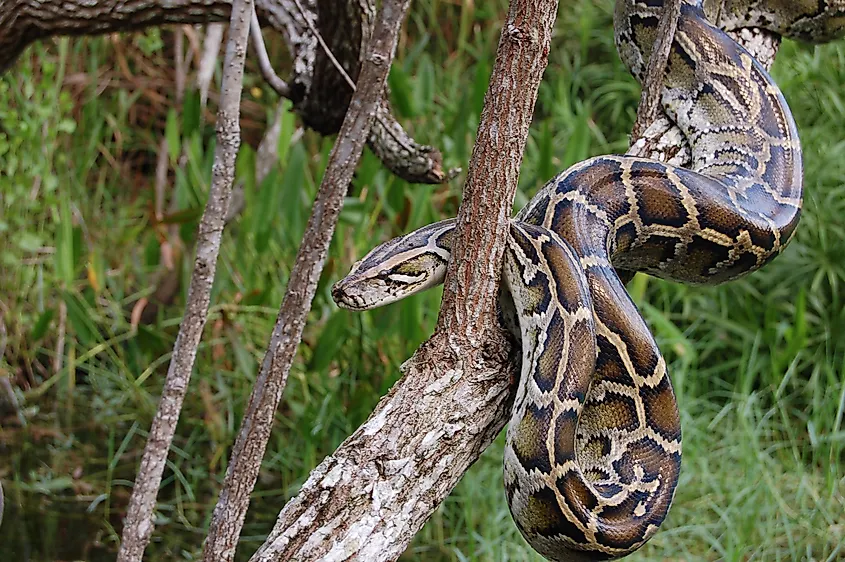
In the decades leading up to the 2000s, there was a growing fascination with exotic animals as pets. Among these, the Burmese Python (Python bivittatus) stood out. Young Burmese Pythons are relatively small, docile, and possess striking patterns, making them appealing to reptile enthusiasts. Their natural habitat spans a wide range of Southeast Asia, from India to China and the Malay Archipelago. Breeders and distributors imported thousands of these snakes into the United States annually to meet this demand, a journey facilitated by global trade networks. This commercial travel, focused on meeting consumer desires, inadvertently laid the groundwork for a future ecological crisis in a distant land.
The Transatlantic Passage
The primary mode of transport for these nascent invaders was commercial cargo, often through major ports of entry such as Miami, Florida. Imported as hatchlings or juveniles, these snakes were then distributed across the country to pet stores, reptile shows, and private buyers. The process was largely unregulated in its early stages, with little foresight into the potential long-term environmental consequences should these powerful constrictors escape or be released into a compatible climate. This “travel” for commercial purposes brought a species adapted to tropical and subtropical climates directly into a destination that would prove alarmingly similar to its native home.
The Great Escape: From Captivity to the Everglades
The transition of Burmese Pythons from confined pets to free-roaming apex predators in the Florida Everglades was not a single event but a confluence of factors, each contributing to their successful establishment in this unique destination. This phase of their journey is marked by human error, natural disaster, and the unfortunate suitability of their new surroundings.
Overwhelmed Owners and Deliberate Release
A significant pathway for pythons entering the wild was the direct result of pet ownership. Burmese Pythons grow rapidly, often reaching lengths of 10 to 20 feet and weighing over 200 pounds. What starts as an adorable, manageable hatchling quickly becomes a powerful, demanding animal requiring specialized care, large enclosures, and substantial feeding. Many owners, overwhelmed by the size, cost, and responsibility of their adult pythons, opted for the seemingly humane but ecologically disastrous solution of releasing them into nearby wilderness areas. These individuals often believed they were “giving the snake a chance” in nature, unaware of the profound harm they were inflicting upon Florida’s delicate ecosystem. This act of “release” essentially charted an irreversible course for these serpents within their new destination.
Nature’s Unforeseen Assist: Hurricane Andrew
While pet releases contributed steadily to the wild population, one catastrophic event is widely cited as a major accelerant: Hurricane Andrew in August 1992. This Category 5 storm tore through south Florida, causing immense destruction. Among the many structures destroyed were reptile breeding facilities and private homes housing exotic pets. Reports indicate that a significant number of pythons escaped from a damaged breeding facility near the Everglades during the storm. This unplanned mass exodus, triggered by a natural phenomenon, injected a critical number of breeding individuals into the wild, greatly accelerating their establishment and territorial expansion within the Everglades National Park and surrounding areas. It was a brutal “welcome” for some, but a liberatory event for the pythons, shaping their travel itinerary irrevocably.
The Perfect Destination: Florida’s Subtropical Paradise
Once free, the pythons found Florida to be an exceptionally hospitable destination. The state’s subtropical climate, particularly in the southern regions, closely mimics their native Southeast Asia. The vast, interconnected wetlands of the Everglades offer an ideal habitat: warm temperatures year-round, abundant water, dense vegetation for camouflage, and a seemingly endless supply of prey. Critically, the Florida ecosystem lacked natural predators capable of controlling a large, powerful constrictor like the Burmese Python. Alligators, while formidable, primarily prey on smaller pythons, and larger adults often fall outside their typical prey range, sometimes even preying on alligators themselves. This absence of checks and balances allowed the python population to explode, turning Florida into a thriving, if unintended, new home for the invasive species. It proved to be a travel destination with all the necessary amenities for their survival and expansion.
The Ecological Journey: Impact on a Unique Ecosystem

The pythons’ successful colonization of the Everglades has instigated a profound and devastating ecological journey for Florida’s native wildlife, turning the state’s famous wetlands into a battleground for survival. This transformation has significantly altered the ‘experience’ of the destination for its indigenous inhabitants and, by extension, for human visitors who cherish its natural beauty.
Vanishing Natives
The most dramatic and well-documented impact of the python invasion is the catastrophic decline in native mammal populations within the Everglades National Park. Studies have shown staggering decreases: a 99% reduction in raccoons and opossums, 90% in bobcats, and a complete absence of marsh rabbits and foxes in areas where pythons have been established for sufficient time. These medium-sized mammals are easy prey for the pythons, which are ambush predators with an insatiable appetite. The loss of these animals doesn’t just reduce biodiversity; it impacts the intricate food web, altering the ecological landscape of this iconic destination. Bird populations, too, have suffered, with pythons observed preying on wading birds and even eggs in nests. This widespread predation means that a key ‘attraction’ of [Florida](https://lifeoutofthebox.com/florida]—its diverse and abundant wildlife—is literally disappearing.
A Ripple Effect Through the Food Web
The removal of key prey species creates a ripple effect throughout the entire ecosystem. With fewer raccoons and opossums, for example, their own predators might struggle for food. Changes in mammal foraging habits can impact vegetation, seed dispersal, and nutrient cycling. This cascade of effects can fundamentally change the structure and function of the Everglades. The pythons, as new apex predators, have fundamentally redrawn the ‘travel guide’ for survival in the Everglades, creating a harsh new reality for everything from the smallest rodent to the largest wading bird. The long-term health and stability of this precious destination are under severe threat from these unwelcome travelers.
Navigating the New Reality: Efforts to Manage the Invasive “Travelers”
Confronted with an ecological crisis of unprecedented scale, Florida has had to adapt its ‘destination management’ strategies to address the python invasion. The state, along with federal partners and conservation organizations, has launched multi-pronged efforts to understand, control, and ultimately reduce the python population, aiming to restore balance to the ecosystem.
Python Hunts and Bounty Programs
One of the most visible efforts is the implementation of public python removal programs. The Florida Fish and Wildlife Conservation Commission (FWC) and the South Florida Water Management District (SFWMD) manage the Python Elimination Program, which employs trained contractors to actively hunt and remove pythons from specific areas, particularly within the Everglades. These programs offer financial incentives for python removal, encouraging public participation while ensuring ethical and effective methods. The annual Python Challenge further engages the public, turning the daunting task into a competitive event to raise awareness and remove as many snakes as possible. These initiatives act as direct ‘guides’ to mitigating the impact of these invasive arrivals.
Scientific Research and Tracking
Beyond direct removal, extensive scientific research is underway to understand python behavior, reproductive patterns, and movement. Researchers utilize advanced tracking techniques, including surgically implanting transmitters into “scout snakes” or “Judas snakes.” These tracked pythons lead researchers to other pythons, particularly during breeding season, facilitating the removal of more individuals. Thermal imaging technology, detector dogs, and eDNA sampling are also being employed to locate the elusive snakes in the dense Everglades terrain. This systematic ‘reconnaissance’ aims to map the invaders’ travel patterns and develop more targeted and efficient removal strategies, crucial for safeguarding the destination’s future.
Public Awareness and Prevention
A crucial aspect of managing the invasion is public education. Efforts focus on informing Florida residents and visitors about the severe threat pythons pose to native wildlife and the ecosystem. Campaigns emphasize responsible pet ownership, urging individuals not to release exotic pets into the wild and to report python sightings immediately. The goal is to prevent future introductions of invasive species and to enlist the public as vital allies in the ongoing struggle against the established python population. This acts as an essential ‘travel tip’ for any visitor or resident of Florida, highlighting the importance of protecting the unique natural attractions that define the destination.
Florida’s Enduring Challenge: A Destination Transformed
The saga of how Burmese Pythons arrived in Florida serves as a stark reminder of the unintended consequences that can arise from human actions and the interconnectedness of global ecosystems. What began as an exotic pet craze in a distant land ultimately led to an ecological catastrophe in one of the United States’ most treasured natural destinations. The Everglades, once defined by its delicate balance of unique flora and fauna, has been irrevocably altered by these powerful, invasive ‘travelers’.
The journey of the pythons to Florida is not just a biological curiosity; it is a profound lesson in destination stewardship and the perils of ignoring the potential impacts of introduced species. As Florida continues its arduous battle to manage this unwelcome population, the story underscores the critical need for stricter regulations on exotic pet trade, robust biosecurity measures, and sustained efforts in conservation. The future of Florida’s natural heritage, its unique charm as a destination, hinges on the ability to mitigate the ongoing impact of these unintended migrants. The Everglades remains a breathtaking destination, but its ‘experience’ is now forever marked by the silent, slithering presence of a creature that should have never called it home.
LifeOutOfTheBox is a participant in the Amazon Services LLC Associates Program, an affiliate advertising program designed to provide a means for sites to earn advertising fees by advertising and linking to Amazon.com. Amazon, the Amazon logo, AmazonSupply, and the AmazonSupply logo are trademarks of Amazon.com, Inc. or its affiliates. As an Amazon Associate we earn affiliate commissions from qualifying purchases.