
Changing one’s name is a significant personal decision, often marking a new chapter, solidifying an identity, or adapting to major life events. For those establishing or redefining their lifestyle in the Sunshine State, understanding the legal process in Florida is essential. This guide delves into the nuances of a name change, framing it within the broader context of personal identity and administrative clarity for your Florida lifestyle.
Understanding the Landscape of Name Changes in Florida Lifestyle
A name is more than just a label; it’s a cornerstone of personal and professional identity. In Florida, the reasons individuals choose to change their name are as diverse as the state’s vibrant population. Marriage and divorce are perhaps the most common catalysts, allowing individuals to align their legal name with their new family status. However, a growing number of people seek a name change for deeply personal reasons, such as reaffirming their gender identity, adopting a name that better reflects their heritage, or simply choosing a name they feel more accurately represents their evolving self.
Embracing a new name is a profound lifestyle choice, impacting everything from how you interact with society to your personal sense of self. It necessitates a careful, systematic approach to ensure all legal and administrative facets of your life are updated seamlessly. This process, while sometimes perceived as daunting, is a manageable journey when approached with clarity and foresight, ensuring your legal identity aligns perfectly with your desired Florida lifestyle. Whether you’re a long-term resident or recently moved to Florida to embark on a new phase of life, navigating this process correctly is paramount to establishing your updated persona.
Navigating the Legal Pathways for Your Florida Lifestyle
The method for changing your name in Florida largely depends on the circumstances motivating the change. There are primarily two distinct legal pathways: those associated with marriage or divorce, which are generally more straightforward, and those requiring a formal petition to the court for other reasons. Understanding which path applies to your situation is the first critical step in updating your identity to match your Florida lifestyle.
Name Change by Marriage or Divorce
For individuals undergoing a name change due to marriage or divorce, the process is typically streamlined and integrated into the family law proceedings.
When getting married in Florida, you have the option to change your last name to your spouse’s, hyphenate it, or adopt a new last name composed of both surnames. This is typically indicated on the marriage license application. Once the marriage is solemnized and the marriage certificate is issued and recorded, this document serves as sufficient proof of your legal name change for most purposes. You won’t usually need a separate court order for this specific type of name change. This ease reflects the commonality of adjusting one’s identity to reflect a new marital status, a significant component of many individuals’ lifestyle evolution.
Similarly, during a divorce in Florida, a spouse can request to revert to a maiden name or any previously used legal name. This request is typically included in the divorce petition and subsequently granted within the Final Judgment of Dissolution of Marriage. The certified divorce decree then acts as the official legal document authorizing the name change. This legal provision simplifies the process for individuals seeking to re-establish their pre-marital identity as they transition into a new phase of their Florida lifestyle post-divorce.
Petition for Change of Name (General Process)
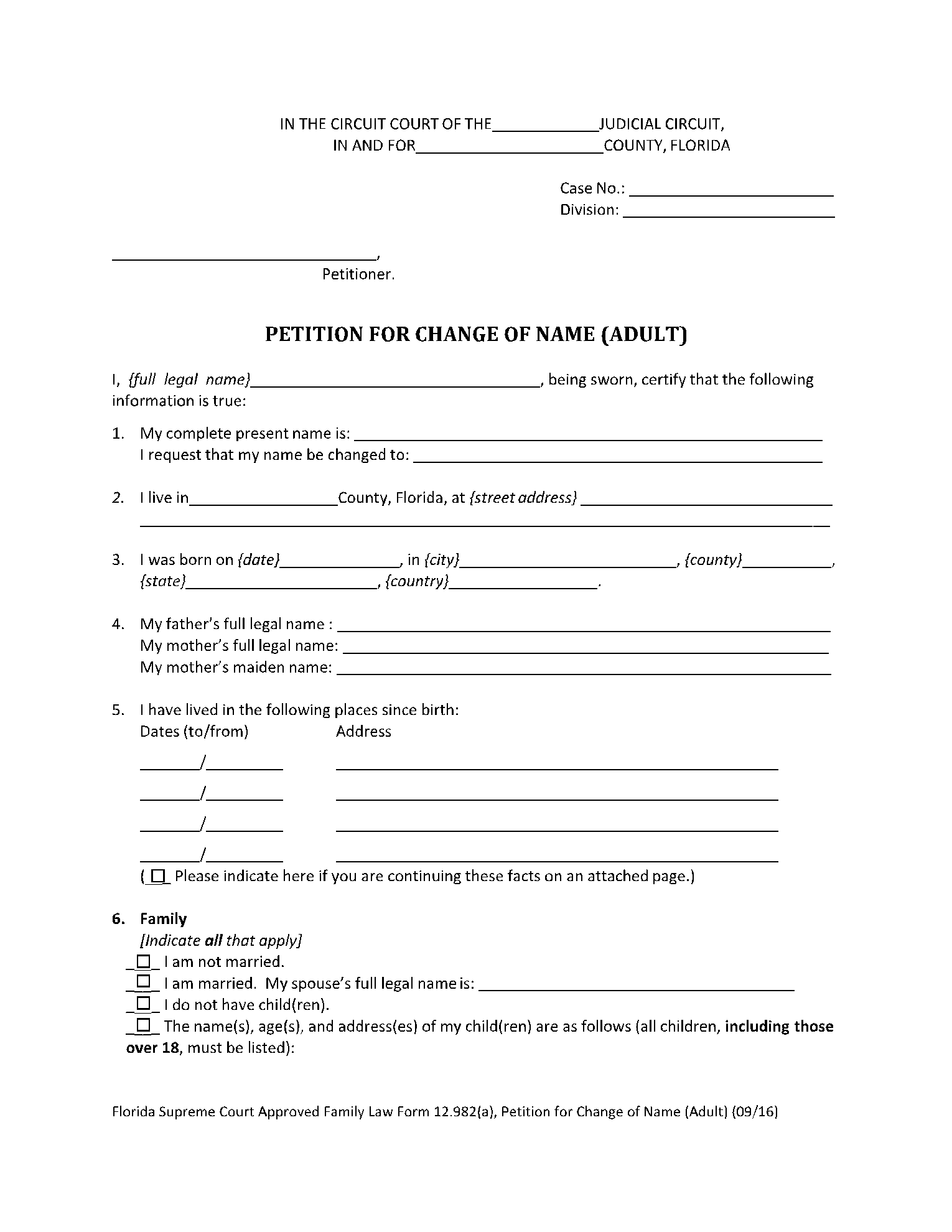
For any other reason beyond marriage or divorce—such as personal preference, gender affirmation, or correcting an error—a formal “Petition for Change of Name” must be filed with the circuit court in the county where you reside. This process is more involved, requiring judicial review and approval.
To initiate this, you must file the petition with the Clerk of the Court in your county. The petition must include specific information, such as your current name, the desired new name, the reasons for the change, and details about your residence history. Importantly, if you are changing the name of a minor, both parents must typically consent, or the petition must demonstrate why one parent’s consent is not required (e.g., sole custody).
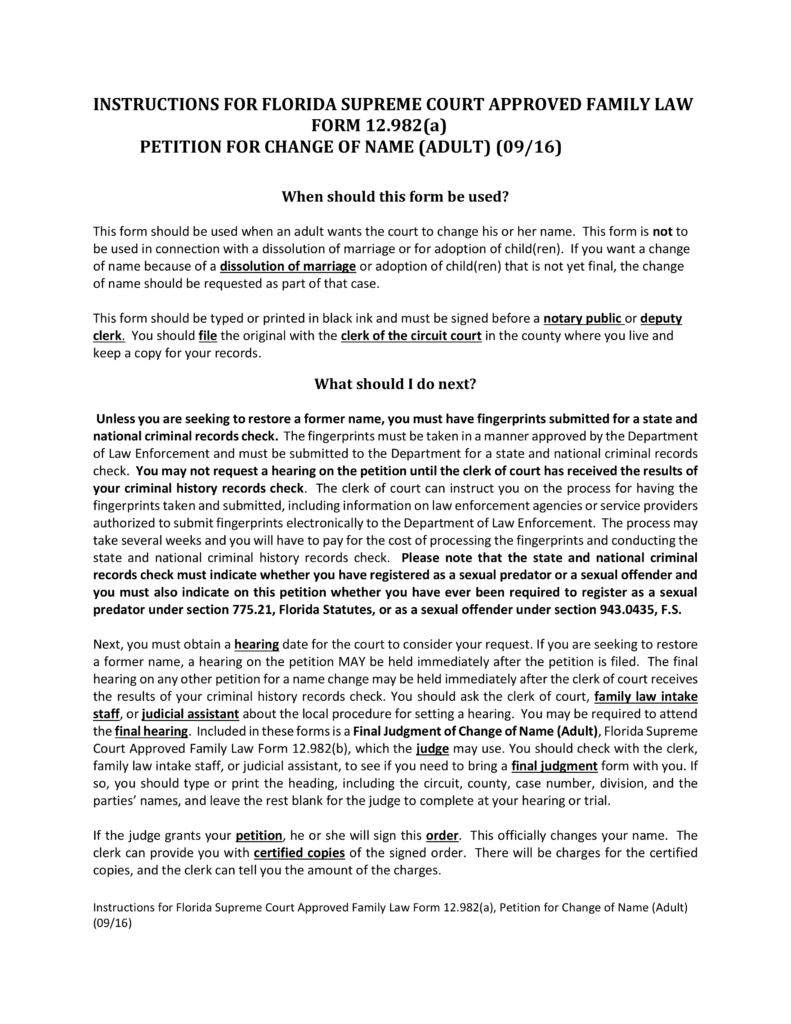
A crucial component of this pathway for adults is a mandatory fingerprint-based background check. This is conducted to ensure that the name change is not being sought for fraudulent purposes, to avoid criminal prosecution, or to escape creditors. Once the background check clears, a hearing will be scheduled before a judge. During this hearing, the judge will review your petition, consider your reasons, and formally grant or deny the name change. This judicial oversight ensures the integrity of public records and protects against potential misuse, underscoring the responsibility that comes with managing your legal identity within the Florida legal framework.
Essential Steps for a Smooth Transition in Florida
Once you understand the appropriate legal pathway, executing the name change in Florida involves several practical steps. Diligence in following these procedures will ensure a smooth and effective transition to your new identity, minimizing future administrative hurdles and supporting your updated Florida lifestyle.
Filing Your Petition and Attending Hearings
For those pursuing a name change through the formal petition process, the journey begins at the county courthouse. You will need to obtain the correct forms, which are often available on your county’s Clerk of the Court website or from the Self-Help Center. These forms, typically labeled as “Petition for Change of Name,” require careful completion, detailing your current and desired names, your birth date and place, residency information, and the legitimate reasons for the change. Accuracy is paramount, as errors can cause delays.
After completing the petition, it must be filed with the Clerk of the Court in the circuit court for the county where you have established residency. A filing fee will be required, though waivers may be available for individuals meeting specific financial criteria. Following the filing, adults will generally be directed to undergo fingerprinting for a mandatory background check. This usually involves visiting a local law enforcement agency or an authorized vendor, and the results are sent directly to the court.
Once the background check clears and all necessary documentation is submitted, a court hearing will be scheduled. This hearing is your opportunity to present your case to a judge. While the process is generally straightforward for legitimate reasons, it is crucial to attend, be prepared to answer questions about your petition, and demonstrate that the name change is not for illicit purposes. Upon approval, the judge will issue an Order Changing Name, which is the official legal document solidifying your new identity. Obtain several certified copies of this order, as they will be indispensable for updating your records.
Updating Your Identity: Post-Court Order Essentials
The court order is merely the first step; the real work of integrating your new name into your Florida lifestyle begins after receiving it. This phase requires meticulous attention to detail to ensure all official documents and accounts reflect your updated identity. Missing even one crucial update can lead to complications down the line.
The first and most critical update is with the Social Security Administration (SSA). Visit your local SSA office or apply by mail to receive a new Social Security card reflecting your changed name. You will need your certified court order and proof of identity. This update is foundational, as your Social Security record is linked to nearly every other official document.
Next, head to the Florida Department of Highway Safety and Motor Vehicles (FLHSMV) to update your driver’s license or state identification card. You’ll typically need your certified court order, your current driver’s license, and potentially other proofs of identity and residency. Having an updated driver’s license is vital for travel, identification, and numerous daily transactions within your Florida lifestyle.
If you possess a passport, this also requires an update. The process varies slightly depending on how recently your current passport was issued, but generally involves submitting the certified court order, your current passport, and a new application form to the U.S. Department of State. Ensure your travel documents are consistent with your new name to avoid issues during international travel.
Beyond these core documents, systematically update all other important records:
- Financial Institutions: Banks, credit card companies, investment accounts.
- Employment Records: With your employer’s HR department.
- Educational Institutions: Schools, colleges, and universities for transcripts and diplomas.
- Professional Licenses: Any state or federal licenses pertinent to your career.
- Utilities and Services: Gas, electric, water, internet, phone providers.
- Insurance Policies: Health, auto, home, and life insurance.
- Voter Registration: Ensure your right to vote in Florida remains unimpeded.
- Medical Records: With your healthcare providers and pharmacies.
Creating a checklist and tackling these updates methodically will help ensure a smooth, comprehensive transition to your new name across all aspects of your life. This diligent effort solidifies your updated identity and allows you to fully embrace your Florida lifestyle with confidence and clarity.
Key Considerations for Your Florida Name Change Journey
While the process of changing your name in Florida is well-defined, understanding some broader considerations can help manage expectations and streamline your journey. A name change, whether simple or complex, touches many aspects of your life, making careful planning an integral part of responsible lifestyle management.
Costs and Timelines: Be prepared for associated costs. These typically include court filing fees (which can vary by county), fees for certified copies of your court order, fingerprinting costs, and potential fees for updating documents like your driver’s license or passport. The timeline for a court-ordered name change can also vary significantly. While some cases are resolved within a few weeks, others might take several months, depending on court dockets, the completeness of your petition, and the speed of background checks. Name changes due to marriage or divorce are often quicker, aligning with the timing of those respective legal events.
Legal Counsel: While many individuals successfully navigate the name change process independently, especially for straightforward cases, engaging legal counsel can be highly beneficial, particularly for more complex situations. This includes instances involving minor children, objections from other parties, or if you have a criminal record that might complicate the background check. An attorney can provide expert guidance, ensure all forms are completed accurately, represent you in court, and anticipate potential challenges, thereby minimizing stress and accelerating the process. For those seeking a seamless transition into a new Florida lifestyle, legal expertise can be an invaluable investment.
Information Resources: The Florida Courts website provides a wealth of self-help information and forms for various legal procedures, including name changes. Additionally, most county Clerk of the Court offices offer online resources, frequently asked questions, and sometimes even in-person assistance at Self-Help Centers. Leveraging these official resources can significantly aid in understanding specific local requirements and ensuring compliance with Florida statutes.
Changing your name in Florida is a journey that intertwines legal procedures with personal evolution. By understanding the pathways, meticulously executing each step, and considering the practical implications, you can successfully navigate this process. This careful administrative adjustment paves the way for a fully aligned and authentically expressed Florida lifestyle, where your identity, both legal and personal, is truly your own.
LifeOutOfTheBox is a participant in the Amazon Services LLC Associates Program, an affiliate advertising program designed to provide a means for sites to earn advertising fees by advertising and linking to Amazon.com. Amazon, the Amazon logo, AmazonSupply, and the AmazonSupply logo are trademarks of Amazon.com, Inc. or its affiliates. As an Amazon Associate we earn affiliate commissions from qualifying purchases.