
Navigating the eviction process in Florida can be a complex undertaking for landlords. While it’s a necessary legal procedure in certain circumstances to regain possession of a long-term rental property, it requires strict adherence to state statutes to ensure a lawful and efficient outcome. Understanding the intricacies of Florida landlord-tenant law is paramount, as any misstep can lead to significant delays, financial losses, or even legal repercussions for the property owner. This guide delves into the step-by-step process, common pitfalls, and best practices for landlords seeking to evict a tenant in the Sunshine State, focusing on the legal framework governing long-term residential accommodation.
Understanding Florida’s Eviction Landscape
Before initiating any eviction proceedings, landlords must have a clear understanding of the legal landscape governing rental agreements in Florida. The state’s eviction laws are primarily outlined in Florida Statutes Chapter 83, Part II, known as the Florida Residential Landlord and Tenant Act. This act defines the rights and responsibilities of both landlords and tenants and establishes the specific grounds and procedures for eviction.
Key Legal Frameworks
The Florida Residential Landlord and Tenant Act emphasizes fairness and due process, meaning landlords cannot simply remove a tenant without proper legal justification and judicial oversight. Self-help evictions, such as changing locks, turning off utilities, or removing a tenant’s belongings, are strictly prohibited and can result in severe penalties for the landlord. All evictions must proceed through the court system, culminating in a judge’s order and the involvement of the local sheriff’s office. Landlords must also be aware of any local ordinances that might supplement state law, although state law generally supersedes local regulations regarding the core eviction process.
Common Grounds for Eviction
Eviction in Florida typically stems from specific, legally recognized violations of the lease agreement or statutory duties. The most common grounds include:
- Non-payment of Rent: This is by far the most frequent reason for eviction. If a tenant fails to pay rent on time, the landlord can initiate proceedings.
- Lease Violations: This encompasses a wide range of breaches, such as unauthorized pets, unauthorized occupants, property damage, illegal activities on the premises, or violating specific rules outlined in the lease.
- Holdover Tenancy: When a tenant remains in the property after their lease term has expired and without the landlord’s consent, they become a “holdover” tenant, subject to eviction.
- Termination of Tenancy (Without Cause for Month-to-Month): For month-to-month tenancies, landlords can terminate the lease without specific cause by providing proper written notice, typically 15 days, prior to the end of a monthly period. This is not strictly an eviction based on a violation but rather a termination of the rental agreement.
Understanding the specific ground for eviction is critical, as it dictates the type of notice that must be served to the tenant.
The Pre-Eviction Phase: Notices and Communication
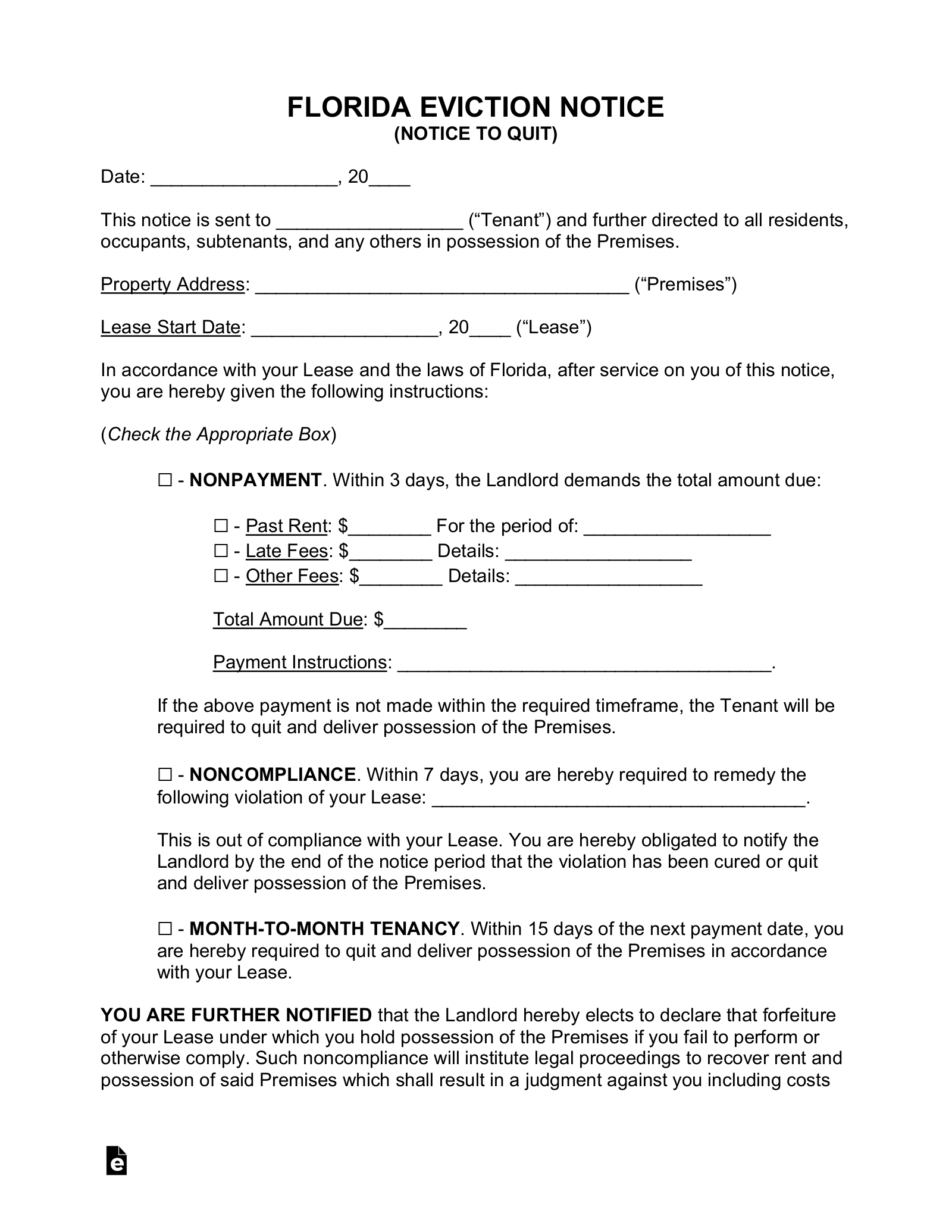
Before a landlord can file an eviction lawsuit in a Florida court, they must first provide the tenant with a formal written notice. This pre-eviction notice serves as a warning, giving the tenant an opportunity to rectify the issue or vacate the premises.
Types of Eviction Notices
The type of notice required depends directly on the reason for eviction:
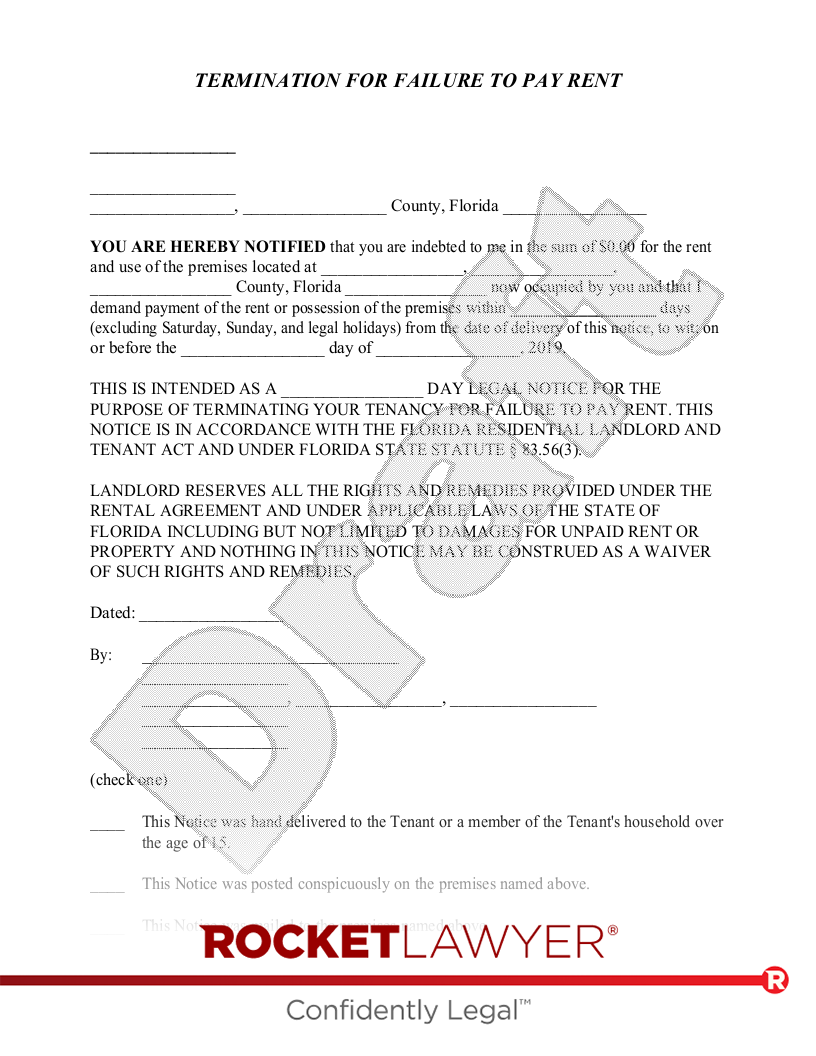
- 3-Day Notice to Pay Rent or Quit: This is used for non-payment of rent. It demands that the tenant pay the overdue rent within three full business days (excluding weekends and legal holidays) or vacate the property. If the tenant complies, the landlord cannot proceed with eviction for that specific rent default.
- 7-Day Notice to Cure or Quit (With Opportunity to Cure): This notice is used for lease violations that are curable. For example, if a tenant has an unauthorized pet, this notice gives them seven days to remove the pet or face eviction. If the tenant remedies the violation within the specified period, the eviction process halts.
- 7-Day Notice of Termination (Without Opportunity to Cure): This notice is for serious, non-curable lease violations or repeated violations of the same material term within a 12-month period. Examples include extensive property damage, illegal activity, or repeated unauthorized occupants after prior warnings. This notice informs the tenant that their lease is terminated, and they must vacate within seven days without the option to fix the issue.
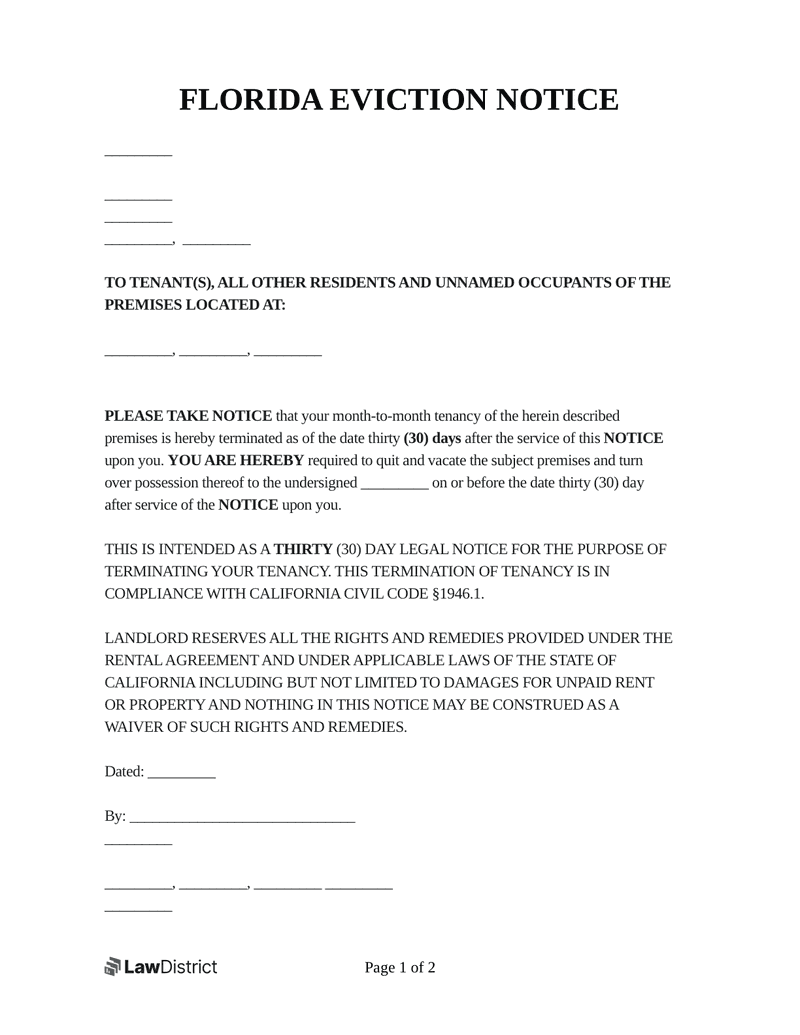
- 15-Day Notice of Termination of Tenancy: For month-to-month tenancies, this notice is used to terminate the rental agreement without cause. It must be given at least 15 days prior to the end of any monthly rental period.
Serving the Notice Correctly
Proper service of the eviction notice is a critical step. Failure to serve the notice correctly can invalidate the entire eviction process. Florida law specifies acceptable methods for service:
- Hand Delivery: Directly providing the notice to the tenant at the rental property.
- Mailing: Sending the notice via first-class mail, though this method is generally less preferred due to proof of receipt issues.
- Posting: If the tenant is absent from the premises or cannot be found, the notice can be posted conspicuously on the door of the dwelling. When posting, it is advisable to also mail a copy to ensure all bases are covered.
It is highly recommended that landlords keep a copy of the notice and document the date and method of service, ideally with a witness or a photograph of the posted notice. The clock for the notice period begins ticking the day after the notice is properly served.
The Importance of Documentation
Throughout the pre-eviction phase and beyond, meticulous documentation is crucial. Landlords should maintain comprehensive records of:
- The lease agreement and any amendments.
- Payment records (rent, fees, security deposits).
- All communication with the tenant (emails, letters, text messages, phone call logs).
- Evidence of lease violations (photos of damage, police reports for illegal activity).
- Copies of all notices served, with proof of service.
This documentation will serve as vital evidence should the eviction proceed to court.
Filing an Eviction Lawsuit
If the tenant fails to comply with the notice (e.g., doesn’t pay rent, doesn’t cure a violation, or doesn’t vacate) within the specified timeframe, the landlord can then proceed to file an eviction lawsuit with the local county court. This is where the judicial process formally begins.
The Complaint for Eviction
The landlord, or their attorney, must file a formal document called a “Complaint for Eviction” (or “Complaint for Unlawful Detainer”) with the clerk of the court in the county where the rental property is located. This complaint must clearly state:
- The names of the landlord and tenant.
- The address of the rental property.
- The terms of the lease agreement.
- The specific grounds for eviction (e.g., non-payment of rent, lease violation).
- That the required notice was properly served and the tenant failed to comply.
- The relief sought, which is typically possession of the property and, in some cases, unpaid rent and damages.
The landlord will also need to pay a filing fee to the court.
Service of Process
Once the complaint is filed, it must be formally “served” upon the tenant by a process server or the county sheriff. This is a critical legal step, informing the tenant that a lawsuit has been filed against them and giving them an opportunity to respond. Unlike the pre-eviction notice, personal service is generally preferred for the lawsuit, though substituted service (e.g., leaving it with a resident of suitable age and discretion) or posting (if personal service is impossible) may be allowed by court order. The tenant typically has five business days to respond to the complaint by filing an answer with the court.
Tenant’s Response and Court Proceedings
If the tenant files an answer within the five-day period, the case will be set for a court hearing. In Florida, if the eviction is for non-payment of rent, the tenant must deposit the disputed rent amount into the court registry when they file their answer or face immediate eviction.
During the hearing, both the landlord and tenant will present their case, often with the assistance of legal counsel. The judge will review the evidence, including the lease agreement, notices, payment ledgers, and any other relevant documentation. If the landlord proves their case, the judge will issue a Final Judgment of Eviction.
If the tenant fails to file a response within the five days, the landlord can file a motion for a “default judgment,” which means the court rules in favor of the landlord due to the tenant’s failure to respond.
The Final Judgment and Writ of Possession
The culmination of a successful eviction lawsuit is the issuance of a final judgment and, subsequently, a writ of possession. These are the documents that legally allow the landlord to regain control of their property.
Obtaining a Default or Final Judgment
If the tenant does not respond to the complaint, the landlord can file a Motion for Default and then seek a Default Final Judgment. If the tenant does respond, the case proceeds to a hearing or trial, after which the judge will issue a Final Judgment of Eviction. This judgment formally declares that the landlord has the right to possession of the property. The judgment may also include an award for unpaid rent, late fees, and court costs, though collecting these monetary judgments often requires separate actions.
The Role of the Sheriff
Once the Final Judgment for Possession is granted, the landlord must obtain a “Writ of Possession” from the court clerk. This is a court order directed to the county sheriff, authorizing them to remove the tenant and restore possession of the property to the landlord.
The landlord then delivers the writ to the sheriff’s office along with the required fee. The sheriff will serve a 24-hour notice to the tenant, typically by posting it on the door of the rental unit. This notice gives the tenant one last opportunity to vacate voluntarily. If the tenant remains after the 24-hour period expires, the sheriff will return to the property and physically remove the tenant and their belongings. The landlord should be present at this time to change the locks and secure the property.
Post-Eviction Considerations for Landlords
The process doesn’t end once the sheriff has executed the writ of possession. Landlords have ongoing responsibilities and tasks to manage after an eviction to comply with the law and prepare the property for a new tenant.
Handling Abandoned Property
Florida Statute 715.104 outlines specific procedures for handling a tenant’s abandoned personal property after an eviction. The landlord must provide written notice to the tenant (at their last known mailing address and any known alternative address) detailing the abandoned items and stating where they can be retrieved. The tenant then has a specified period (typically 10 days if personally delivered or 15 days if mailed) to reclaim their property. If the property is not claimed, the landlord can sell it, dispose of it, or keep it, depending on its estimated value and specific statutory thresholds. It is crucial to follow these rules diligently to avoid liability.
Securing the Property and Finding New Tenants
Immediately after the sheriff restores possession, the landlord should change all locks to prevent unauthorized re-entry. It is also an opportune time to assess the property for any damages beyond normal wear and tear that may have occurred during the tenancy. Documenting these damages with photos or videos is essential, especially if the landlord intends to make a claim against the tenant’s security deposit.
Once the property is secure and any necessary repairs or cleaning have been completed, the landlord can begin the process of marketing the unit and screening new tenants. This involves reviewing applications, conducting background checks, and ensuring new lease agreements comply with all Florida landlord-tenant laws.
Legal Assistance and Best Practices
While this guide provides a general overview, each eviction case can have unique circumstances. Landlords are strongly encouraged to consult with an attorney specializing in Florida landlord-tenant law. Legal counsel can provide invaluable assistance in drafting notices, filing complaints, navigating court procedures, and ensuring full compliance with state and local regulations. Adhering to best practices, such as maintaining clear communication, thorough documentation, and a comprehensive understanding of legal requirements, will significantly improve a landlord’s chances of a successful and lawful eviction process in Florida.
LifeOutOfTheBox is a participant in the Amazon Services LLC Associates Program, an affiliate advertising program designed to provide a means for sites to earn advertising fees by advertising and linking to Amazon.com. Amazon, the Amazon logo, AmazonSupply, and the AmazonSupply logo are trademarks of Amazon.com, Inc. or its affiliates. As an Amazon Associate we earn affiliate commissions from qualifying purchases.