
Changing your name legally in Florida is a significant life event that can impact various aspects of your personal and professional existence. Whether motivated by marriage, divorce, personal preference, or gender affirmation, the process requires careful attention to legal procedures to ensure a smooth transition. Understanding the specific requirements and steps involved is crucial for anyone looking to update their legal identity within the Sunshine State. This guide outlines the various pathways to a legal name change in Florida, providing insight into the documentation, filings, and subsequent administrative updates necessary to reflect your new name across all official records.

Understanding the Reasons and Types of Name Changes
The decision to change one’s name is deeply personal and can stem from a multitude of reasons, each dictating a slightly different legal pathway in Florida. Recognizing your motivation is the first step in navigating the legal landscape efficiently.
Common Motivations for a Name Change
One of the most frequent reasons for a name change is marriage, where one spouse typically opts to take the other’s surname, or both choose a hyphenated or entirely new shared name. Conversely, divorce often prompts individuals to revert to a maiden name or a previously used surname. Beyond marital status, many individuals seek a name change due to personal preference, perhaps disliking their given name, seeking a fresh start, or adopting a name that better reflects their identity. For members of the LGBTQ+ community, gender affirmation is a critical reason, aligning their legal name with their gender identity. Other reasons can include escaping an abusive past, correcting a misspelling, or simply a desire for a unique identity. Each of these motivations, while personal, funnels into specific legal procedures designed to accommodate the change.
Differentiating Between Marriage/Divorce-Related Changes and Other Petitions
It’s important to distinguish between name changes that occur as part of a marital dissolution or formation and those pursued independently. When a name change is requested as part of a marriage license application or a divorce decree, the process is generally more streamlined. For marriage, the new name is typically indicated on the marriage license application, and the certified marriage certificate serves as proof of the name change for most administrative updates. Similarly, a divorce judgment can explicitly include an order restoring a former name, which then acts as the official document.
However, all other reasons for a name change – including personal preference, gender affirmation, or changes for minors – typically require a separate Petition for Change of Name filed with a circuit court. This often involves a more rigorous judicial process, including background checks and a court hearing, to ensure the change is not sought for fraudulent or illegal purposes. Understanding this distinction is key to preparing the correct documentation and following the appropriate legal steps in Florida.
The General Petition Process: A Step-by-Step Guide
For name changes not directly tied to marriage or divorce, the general petition process is the standard route. This involves a series of formal steps within the Florida court system.
Eligibility and Jurisdiction in Florida
To file a Petition for Change of Name in Florida, you must be a resident of the county where you are filing for at least six months. The petition must be filed in the Circuit Court of the county where you reside. If you are a minor, at least one parent or legal guardian must reside in Florida and file on your behalf. There are also specific requirements regarding criminal history; individuals convicted of certain felonies or sexual offenses may face additional hurdles or be prohibited from changing their name.
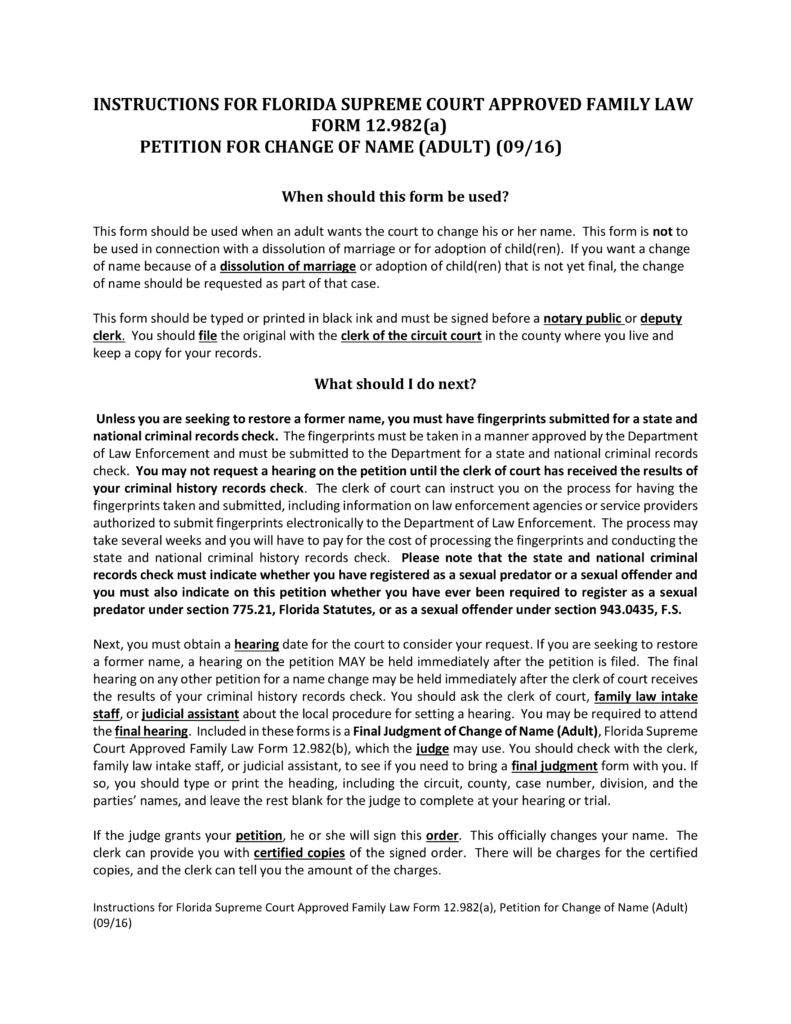
Required Forms and Documentation
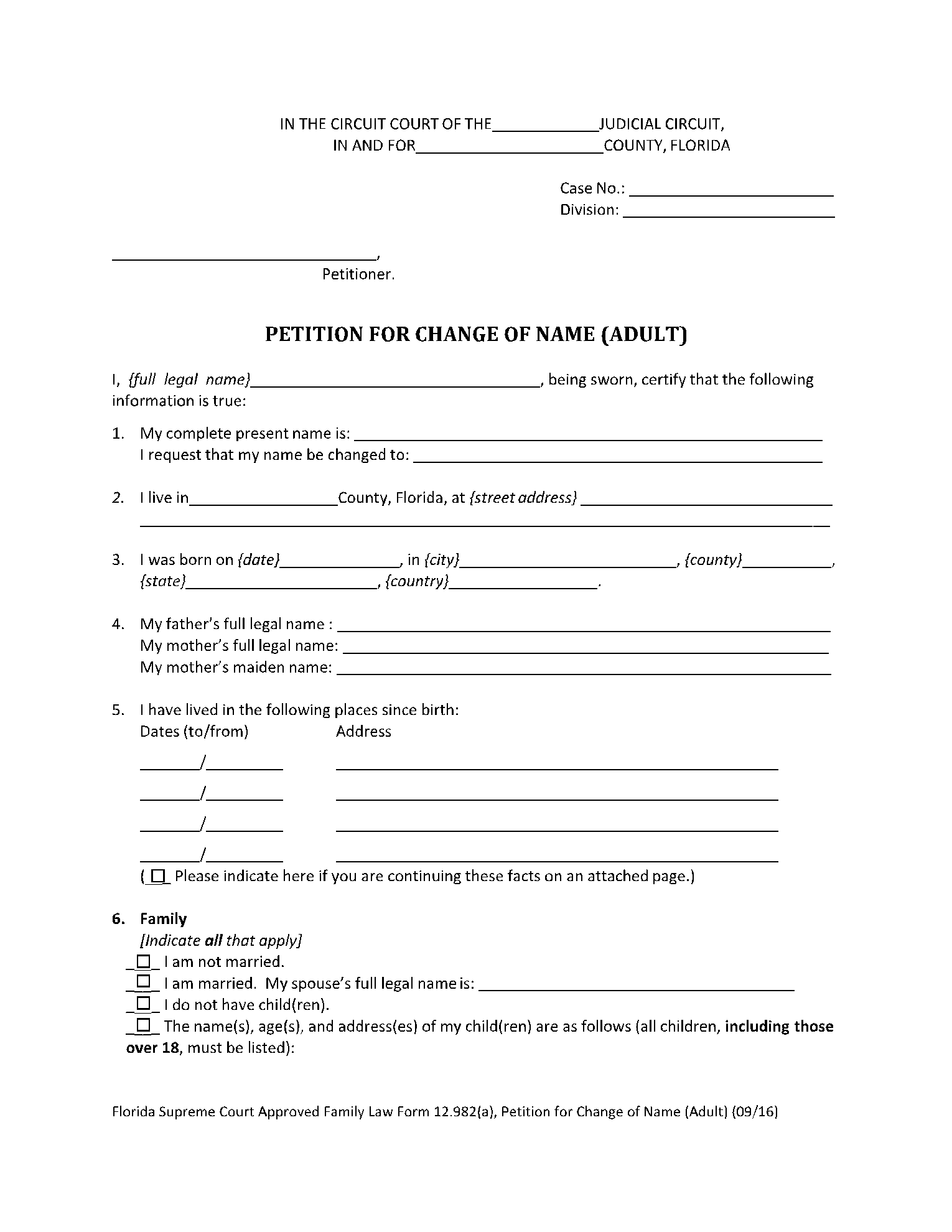
The core document is the Petition for Change of Name. This form requires detailed information, including your current legal name, the name you wish to adopt, your birth date, place of birth, and reasons for the change. You will also need to provide your residential history for the past five years and disclose any past criminal convictions or judgments.
A critical component for adult petitioners is the fingerprint-based criminal history check. You must submit your fingerprints to the Florida Department of Law Enforcement (FDLE) which then forwards them to the Federal Bureau of Investigation (FBI). This background check is mandatory to ensure the name change is not being sought to evade creditors, escape criminal prosecution, or for other fraudulent purposes. The results are typically sent directly to the Clerk of Court. For minors, parental consent forms and potentially school records may be required.
Filing the Petition with the Clerk of Court
Once all forms are completed and notarized, and the background check has been initiated, the next step is to file the petition with the Clerk of the Circuit Court in your residential county. There is an associated filing fee, which varies by county but is typically several hundred dollars. If you cannot afford the fee, you may apply for a Waiver of Indigent Status. Upon filing, you will receive a case number. In some counties, you may also be required to publish notice of your intended name change in a local newspaper, though this is less common for adult changes and more for specific minor cases or circumstances.
The Court Hearing and Final Order
After filing and the completion of the background check, the court will schedule a hearing. This hearing is usually informal and may be brief. The judge will review your petition, confirm your identity, and ask about your reasons for the name change. If all requirements are met and the judge finds no legal impediments, an Order Granting Change of Name will be issued. This order is the official legal document that formally changes your name. It is imperative to obtain several certified copies of this order, as you will need them to update all your identification and records.
Specific Scenarios for Name Changes
While the general petition process covers many situations, certain circumstances warrant specific considerations or have unique procedures.
Name Changes for Minors in Florida
Changing a minor’s name involves additional legal safeguards to protect the child’s best interests. A parent or legal guardian must file the petition on the minor’s behalf. Both parents typically must consent to the name change, or the petitioning parent must demonstrate that the other parent’s consent is not required (e.g., due to abandonment, parental rights termination, or unknown whereabouts). The court will assess factors such as the child’s preference (if old enough to express one), the bond with each parent, and the impact on the child’s identity and well-being. A background check is usually required for the petitioning parent.
Name Changes Due to Marriage or Divorce
As mentioned, these are generally the most straightforward name changes. For marriage, presenting your certified marriage certificate to various agencies is usually sufficient. For divorce, the final judgment of dissolution of marriage, if it includes an order restoring a prior name, serves as your legal document. In either case, the need for a separate court petition is often bypassed, simplifying the initial legal hurdle.
Name Changes for Gender Affirmation
Individuals seeking to change their name as part of gender affirmation follow the general petition process. The reasons provided for the name change are often deeply personal and rooted in aligning one’s legal identity with their true self. Courts in Florida generally recognize gender identity as a valid reason for a name change. While the process is the same, it’s particularly important for individuals undergoing gender transition to obtain certified copies of the name change order, as this document will be crucial for updating identity markers on passports, driver’s licenses, and other vital records to reflect their affirmed gender and name.
Post-Court Order: Updating Your Identification
Receiving your Order Granting Change of Name is a significant milestone, but the process isn’t complete until your new name is reflected across all official documents and records. This administrative phase is critical to ensure your new legal identity is fully recognized.
Social Security Administration
The Social Security Administration is typically the first agency you should notify. You’ll need to complete Form SS-5, Application for a Social Security Card, and provide your certified name change order, along with proof of identity and citizenship. There is no fee for this service. Once processed, you will receive a new Social Security card with your updated name, though your Social Security number will remain the same. This step is foundational, as many other agencies verify your name through the Social Security Administration database.
Department of Motor Vehicles
Next, update your driver’s license or state identification card with the Florida Department of Highway Safety and Motor Vehicles (FLHSMV). You will need to bring your certified name change order, your current driver’s license/ID, and potentially other identification documents. A fee is typically associated with issuing a new card. It’s important to do this promptly, as your driver’s license is a primary form of identification.
Passport
If you have a U.S. passport, you’ll need to update it through the U.S. Department of State. The specific form and requirements depend on when your current passport was issued and whether you also need to update your gender marker. Generally, you’ll submit Form DS-11, DS-82, or DS-5504, along with your certified name change order, current passport, and new passport photos. Fees apply depending on the application type. This process can take several weeks, so plan accordingly, especially if you have upcoming travel.
Banks, Bills, and Other Important Records
Beyond the major government agencies, you must systematically update your name with various other entities:
- Financial Institutions: Banks, credit card companies, investment firms.
- Utilities and Services: Electricity, water, internet, cell phone providers.
- Employment Records: Human resources, payroll, professional licenses.
- Medical Records: Doctors’ offices, hospitals, insurance providers.
- Educational Institutions: Schools, universities, alumni associations.
- Property Records: Deeds, vehicle titles, insurance policies.
- Voting Registration: Your local Supervisor of Elections office.
For each of these, you will typically need to provide a certified copy of your name change order. It’s advisable to create a checklist and keep multiple certified copies of your order readily available.
Important Considerations and Professional Assistance
Navigating a legal name change, while seemingly straightforward, can involve complexities. Being prepared for potential challenges and understanding when to seek expert guidance can save time and reduce stress.
Potential Costs and Fees
The overall cost of changing your name legally in Florida includes several components:
- Court Filing Fees: Varies by county, typically a few hundred dollars.
- Fingerprint Background Check Fee: Paid to the fingerprinting service and FDLE/FBI.
- Certified Copies of Court Order: Each copy has a small fee, but it’s essential to get several.
- New ID/Passport Fees: Fees for updating your driver’s license, passport, etc.
- Publication Fees: (If required) For newspaper notices.
These costs can add up, so budgeting for them is important.
The Importance of Accuracy and Completeness
Any error or omission in your petition or supporting documents can lead to delays or even denial. Ensure all forms are filled out accurately, completely, and consistently with information across all documents. Double-check spellings, dates, and addresses. Providing clear, legitimate reasons for your name change is also crucial for the court’s approval.
When to Seek Legal Counsel
While many individuals successfully navigate the name change process independently, there are specific situations where legal counsel is highly recommended:
- Complex Criminal History: If you have a felony conviction or a history of specific offenses, an attorney can advise on eligibility and present your case effectively.
- Parental Disputes (for minors): If one parent objects to a minor’s name change, or if a parent’s whereabouts are unknown, an attorney can help navigate custody laws and court procedures.
- International Considerations: If you are not a U.S. citizen or have international documents that also need updating, legal advice can be invaluable.
- Denial of Petition: If your petition is denied, an attorney can help understand the reasons and advise on next steps, including potential appeals.
- Unusual Circumstances: Any situation that deviates significantly from the standard process may benefit from professional legal guidance.
An attorney specializing in family law or civil procedures in Florida can provide tailored advice, ensure all documents are properly prepared and filed, represent you in court, and help troubleshoot any issues that arise, making the process smoother and more efficient.
LifeOutOfTheBox is a participant in the Amazon Services LLC Associates Program, an affiliate advertising program designed to provide a means for sites to earn advertising fees by advertising and linking to Amazon.com. Amazon, the Amazon logo, AmazonSupply, and the AmazonSupply logo are trademarks of Amazon.com, Inc. or its affiliates. As an Amazon Associate we earn affiliate commissions from qualifying purchases.