
The journey of Florida from a mosaic of indigenous territories to a full-fledged state of the United States is a rich tapestry woven with threads of exploration, colonial ambition, territorial disputes, and socio-political complexities. Its path to statehood, culminating on March 3, 1845, was protracted and fraught with challenges, reflecting the broader historical currents of expansion and nation-building in North America. Understanding this process offers a profound insight into the historical foundations of one of America’s most iconic and distinct regions.
From Indigenous Lands to European Claims
Before European contact, the landmass that would become Florida was home to a diverse array of indigenous peoples, including the Timucua, Calusa, Apalachee, and Tequesta. These sophisticated societies had established complex cultures, trade networks, and architectural feats long before the arrival of foreign powers. Their deep connection to the land and its resources shaped the initial contours of human presence in the region.
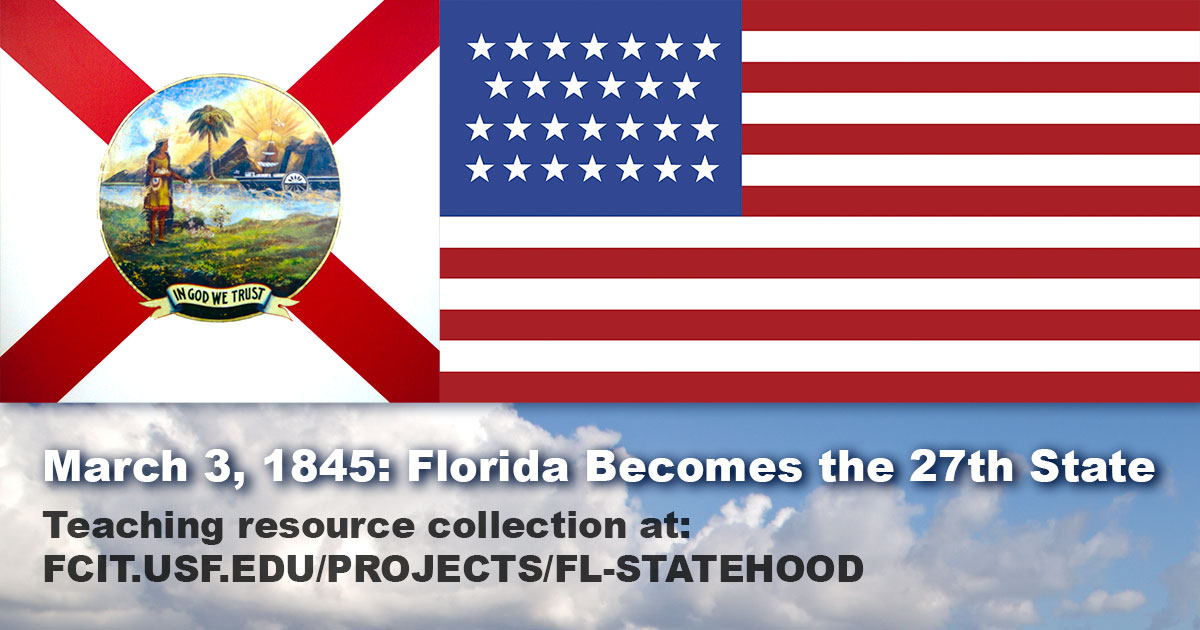
Early Inhabitants and Spanish Arrival
The earliest well-documented European arrival was in 1513, when Juan Ponce de León, a Spanish explorer, landed near what is now St. Augustine and claimed the territory for Spain, naming it “La Florida” in honor of Pascua Florida (the Easter Feast). This marked the beginning of European colonization, which would profoundly alter the trajectory of the indigenous populations through disease, conflict, and cultural disruption. Spain’s interest in Florida was primarily strategic, serving as a buffer to protect its more lucrative colonial possessions in Mexico and the Caribbean, and as a base for missionary efforts. The founding of St. Augustine in 1565 by Pedro Menéndez de Avilés solidified Spain’s permanent presence, making it the oldest continuously inhabited European-established settlement in the United States.
Colonial Rivalries: Spain, France, and Britain
Florida’s strategic location quickly made it a pawn in the imperial rivalries between European powers. While Spain claimed vast territories, its actual control over Florida was often tenuous, limited to a few coastal garrisons like St. Augustine and Pensacola. France briefly challenged Spanish dominance in the 16th century with Fort Caroline, but it was the rising power of Great Britain that posed the most significant threat. Following the French and Indian War (Seven Years’ War), Spain ceded Florida to Great Britain in 1763 in exchange for Havana, Cuba. The British divided Florida into East Florida (with its capital at St. Augustine) and West Florida (capital at Pensacola), encouraging settlement and development. However, British control was short-lived. During the American Revolutionary War, Spain, allied with France against Great Britain, reconquered parts of Florida, and by the Treaty of Paris in 1783, Great Britain returned both East and West Florida to Spanish rule. This period of shifting allegiances left a complex legacy, with various cultural influences mingling in the sparsely populated region.
The Spanish Cession and American Expansion
By the early 19th century, Florida had become a thorn in the side of the burgeoning United States. Spanish authority was weak, making it a haven for runaway slaves, Native American tribes (particularly the Seminoles) resisting American expansion, and even pirates and outlaws. Border raids by Seminole warriors into American territories and counter-raids by American forces further inflamed tensions. The United States coveted Florida for several reasons: its strategic location guarding the entrance to the Gulf of Mexico, its fertile lands for agriculture, and its potential as an outlet for Southern expansion.
The Treaty of Adams-Onís
The decisive moment came with the incursions of General Andrew Jackson into Florida during the First Seminole War (1817-1818). Jackson’s actions, including the seizure of Pensacola and the execution of British subjects, were technically an invasion of Spanish territory but were tacitly supported by elements within the American government. This demonstration of American military power, combined with Spain’s declining imperial strength and its preoccupation with revolts in its Latin American colonies, pushed both nations to the negotiating table.
The result was the Treaty of Adams-Onís, signed in 1819 between U.S. Secretary of State John Quincy Adams and Spanish Minister Don Luis de Onís. Under its terms, Spain formally ceded Florida to the United States in exchange for $5 million in claims by American citizens against Spain and American recognition of the Spanish claim to Texas. The treaty was ratified in 1821, and Florida officially became a territory of the United States.
The Florida Territory
Upon becoming a U.S. territory, Andrew Jackson briefly served as its first military governor. The territorial government was established in 1822, uniting East and West Florida under a single administration. The new capital was strategically chosen at Tallahassee in 1824, situated between the two former colonial centers of St. Augustine and Pensacola. The territorial period saw a significant influx of American settlers, particularly from the Southern states, drawn by the promise of cheap land for cotton and sugar cultivation. This migration brought with it the institution of chattel slavery, which would profoundly shape Florida’s social, economic, and political landscape, and become a central issue in its bid for statehood.
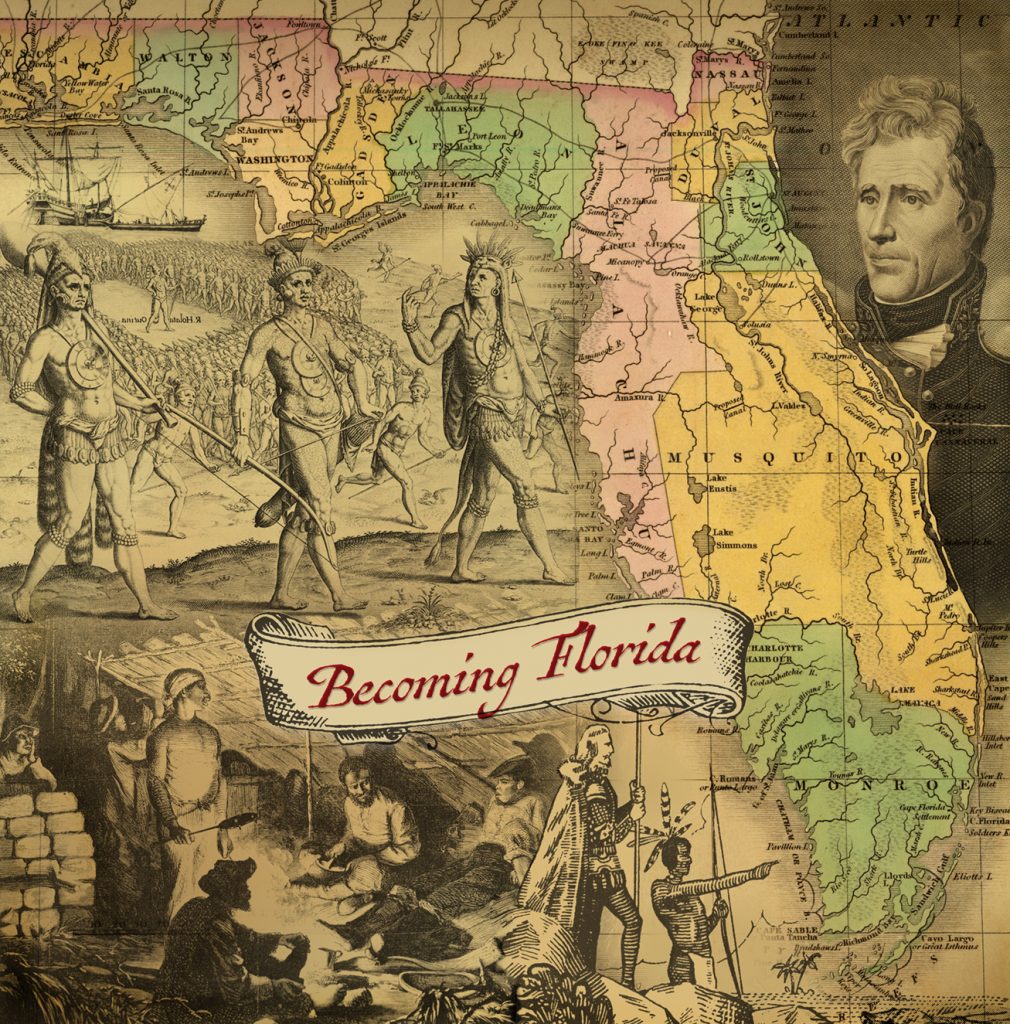
The Path to Statehood: Challenges and Development
The territorial period was marked by rapid, albeit uneven, development and considerable internal strife. The push for statehood gained momentum as the population grew and settlers sought greater self-governance and representation. However, several significant challenges stood in the way.
Population Growth and Economic Pressures
The lure of fertile lands led to a substantial increase in Florida’s white population, particularly in the northern regions where plantations flourished. Key agricultural products included cotton, sugar, and tobacco. However, the territory remained largely undeveloped in its southern reaches, which were still considered wild frontiers. The demand for infrastructure, such as roads and ports, grew, as did the desire for a voice in national politics to protect local economic interests, particularly those tied to slave labor. The economic aspirations of the planters and speculators fueled the drive for statehood, believing it would bring greater stability and federal support for development.
The Seminole Wars and Their Impact
Perhaps the most significant impediment to statehood was the prolonged and costly conflict with the Seminole people. The Second Seminole War (1835-1842) was one of the longest and most expensive Indian wars in American history. It stemmed from the federal government’s policy of Indian Removal, which aimed to relocate Native American tribes from the southeastern United States to Indian Territory (present-day Oklahoma). The Seminoles, led by figures like Osceola, fiercely resisted, employing guerrilla tactics in the challenging Florida wilderness. The war drained federal resources, deterred settlement, and made the territory appear unstable and dangerous. Its conclusion, though not a definitive military victory for the United States, effectively broke the back of organized Seminole resistance and opened up more land for American expansion, paving the way for statehood.
The Slavery Question and Political Deadlock
The issue of slavery was inextricably linked to Florida’s path to statehood. As a Southern territory, Florida’s economy and social structure were deeply intertwined with the institution of slavery. Admitting Florida as a slave state would upset the delicate balance of power in the United States Senate, which meticulously sought to maintain an equal number of free and slave states to prevent either side from dominating the national legislative agenda. This political deadlock meant that Florida’s admission was delayed for years.
The Act of Admission: March 3, 1845
The resolution to the slavery question, and thus Florida’s path to statehood, came through a compromise that exemplified the political maneuvering of the antebellum era.
Balancing Act with Iowa
To maintain the Senate’s balance, Florida was admitted simultaneously with Iowa. Iowa, a territory in the Midwest, was poised to enter the Union as a free state. By pairing a slave state (Florida) with a free state (Iowa), the number of senators from each side of the slavery debate remained equal, preventing either from gaining a legislative advantage. This political arrangement, though pragmatic, underscored the profound divisions within the nation that would ultimately lead to the Civil War.
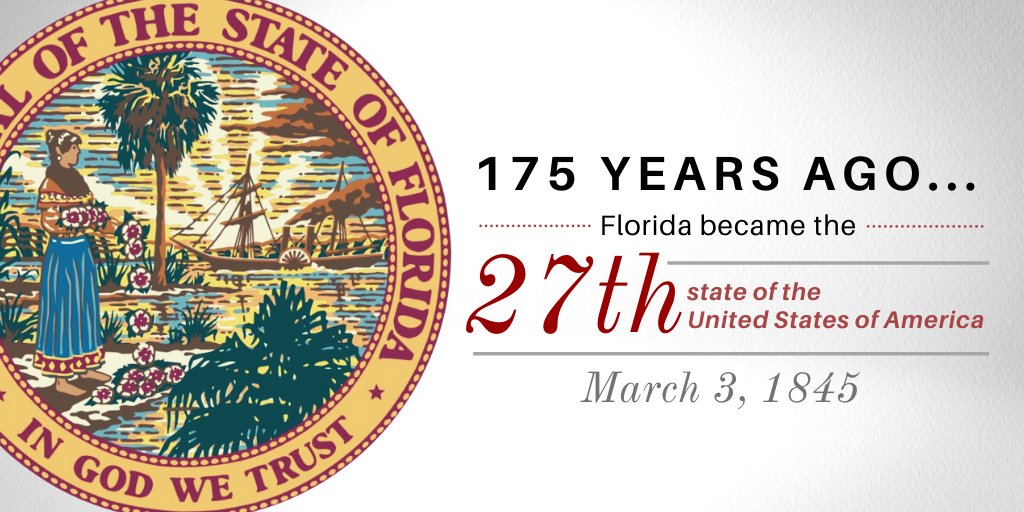
On March 3, 1845, President John Tyler signed the bill admitting Florida to the Union as the 27th state. The state constitution, drafted in 1838-1839, provided for a governor elected for a four-year term, a bicameral legislature, and a judicial system. It also, significantly, protected the institution of slavery.
A New Chapter for the Sunshine State
With statehood, Florida embarked on a new chapter. While the immediate future was still tied to the contentious issue of slavery, its admission marked a crucial step in the consolidation of the American nation. It opened the door for further development, albeit with the enduring challenges of integrating diverse populations, managing rapid growth, and reconciling its historical past with its future aspirations. The historical journey of Florida to statehood is a testament to the complex forces that shaped the United States, from early exploration to the formation of its distinctive identity.
LifeOutOfTheBox is a participant in the Amazon Services LLC Associates Program, an affiliate advertising program designed to provide a means for sites to earn advertising fees by advertising and linking to Amazon.com. Amazon, the Amazon logo, AmazonSupply, and the AmazonSupply logo are trademarks of Amazon.com, Inc. or its affiliates. As an Amazon Associate we earn affiliate commissions from qualifying purchases.