
The question “How long is The Florida Keys Bridge?” often sparks images of a single, impossibly long span stretching across the shimmering turquoise waters. While the vision of a singular, monumental bridge is captivating, the reality is far more intricate and historically rich. What many refer to collectively as “The Florida Keys Bridge” is, in fact, a magnificent series of 42 individual bridges, each a testament to human ingenuity and a vital link in the legendary Overseas Highway. This remarkable network transforms the journey through the Florida Keys into an immersive experience, where land and sea converge in an architectural marvel.

The Grand Tapestry of the Overseas Highway
The Overseas Highway is not merely a road; it is a monumental achievement, a ribbon of concrete and steel stretching approximately 113 miles from the southern tip of mainland Florida at Key Largo down to Key West, the southernmost point in the continental United States. It is a highway unlike any other, uniquely characterized by its numerous bridges that leapfrog across crystal-clear channels and shallow flats, connecting tiny islands and larger keys alike. This unique infrastructure is a landmark in itself, renowned globally for its breathtaking views and its audacious engineering.
A Legacy Forged in Steel and Concrete
The story of the Overseas Highway begins not with cars, but with trains. The initial vision belonged to Henry Flagler, a Standard Oil tycoon who, in the early 20th century, undertook the monumental task of extending his Florida East Coast Railway from the mainland all the way to Key West. This engineering marvel, known as the Overseas Railroad, was deemed the “Eighth Wonder of the World” upon its completion in 1912. It overcame immense logistical challenges, battling hurricanes, saltwater corrosion, and the sheer scale of building bridges over miles of open ocean. The railroad served as the lifeline for the Florida Keys for over two decades until tragedy struck in 1935. The devastating Labor Day Hurricane, one of the most intense storms in recorded history, obliterated significant portions of the railroad, rendering it irreparable.
Following the hurricane’s destruction, the state of Florida purchased the damaged railway right-of-way. Rather than abandon the dream of a land link, engineers repurposed many of the existing railroad bridge foundations and structures, constructing a highway that would eventually become the iconic Overseas Highway. This transformation ushered in a new era of accessibility for the Florida Keys, moving from steam locomotives to automobiles, and opening the door for tourism and development that continues to define the region today. The evolution from rail to road is a testament to the enduring human spirit and the relentless pursuit of connection.
The Interconnected Network
When visitors inquire about “the length of the Florida Keys Bridge,” they are often referring to the total mileage of all bridged sections along the Overseas Highway. It is estimated that nearly 17 miles of the 113-mile highway consist of bridges. This means roughly 15% of the entire journey through the Keys is spent traversing over water, an astonishing figure that underscores the unique geography of this archipelago. Each bridge, whether a short span over a narrow channel or a mile-long stretch, plays a critical role in maintaining this essential connection, allowing seamless travel across what would otherwise be a series of isolated islands.
The Iconic Seven Mile Bridge: A Landmark in Itself
Among the numerous spans that comprise the Overseas Highway, the Seven Mile Bridge stands out as the most famous, most photographed, and arguably the most recognizable symbol of the Florida Keys. This engineering marvel is more than just a transportation route; it is a destination and a landmark in its own right, captivating travelers with its immense scale and stunning oceanic vistas.
Dual Spans, Enduring Legacy
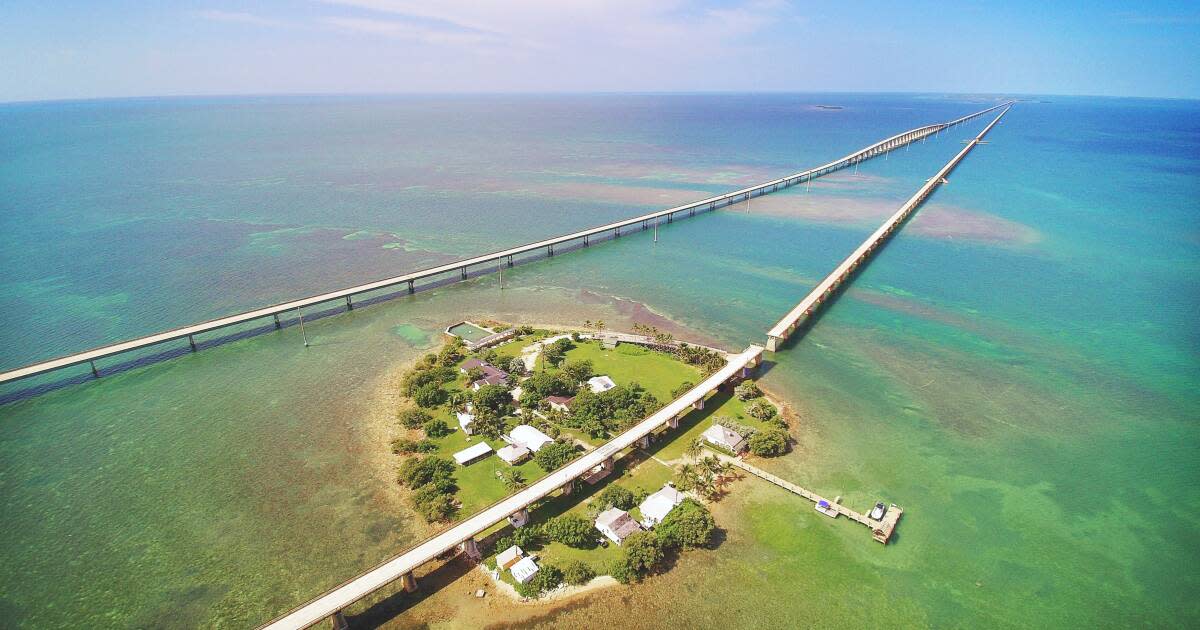
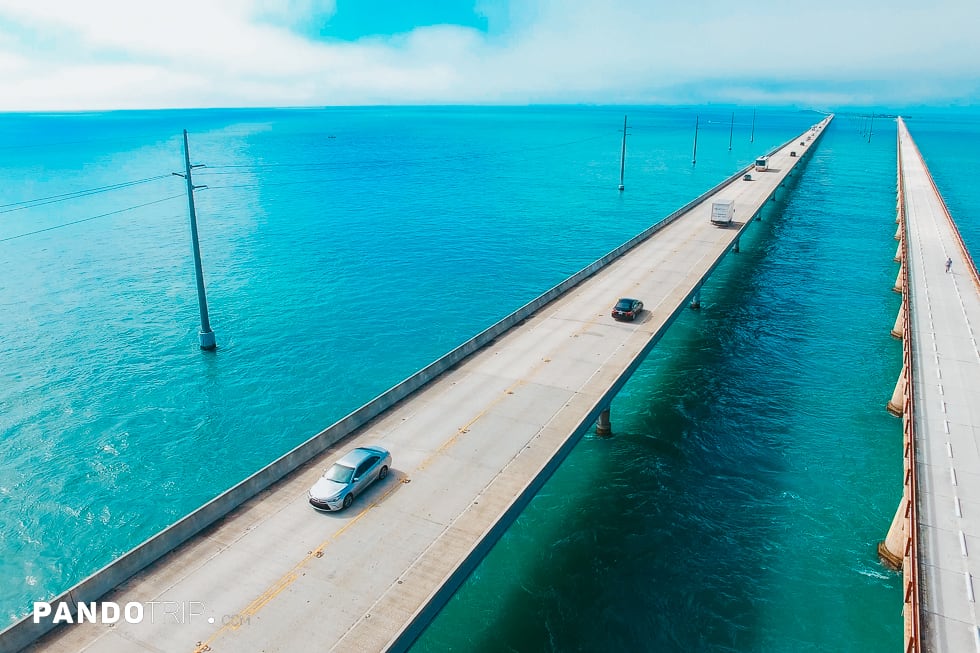
The Seven Mile Bridge is actually two bridges running parallel to each other. The more frequently traversed “new” bridge carries vehicular traffic, while sections of the “old” bridge serve as a historic landmark and a popular spot for recreation. The precise length of the new Seven Mile Bridge is 6.79 miles, or approximately 10.92 kilometers, a figure that makes it one of the longest bridges in Florida and a marvel of modern construction.
The “Old Seven Mile Bridge” is a poignant reminder of Henry Flagler’s’s ambitious Overseas Railroad. Completed in 1912, it was initially a railway bridge, later converted for automobile use after the 1935 hurricane. Its unique segmental concrete arch design, though innovative for its time, was eventually deemed insufficient for the growing traffic demands and marine conditions. A significant portion of this historic bridge, approximately 2.2 miles, remains accessible and is a cherished pedestrian and fishing pier, leading to the historic Pigeon Key.
The “New Seven Mile Bridge,” built between 1979 and 1982, represents a significant leap in engineering. Constructed as a segmentally cast box-girder bridge, it features a much higher profile, providing 65 feet of navigational clearance at its apex, known as the “Moser Channel hump.” This design not only accommodates large marine vessels but also offers wider lanes and shoulders for safer vehicle passage. The construction of the new bridge was a monumental undertaking, employing cutting-edge techniques to create a structure designed to withstand the harsh marine environment and the powerful forces of hurricane-strength winds.
Engineering Prowess and Aesthetic Grace
The Seven Mile Bridge embodies both engineering brilliance and a striking aesthetic. Its sleek, modern design appears to float effortlessly above the azure waters, offering panoramic vistas that stretch to the horizon where the Atlantic Ocean meets the Gulf of Mexico. The bridge’s robust construction utilizes state-of-the-art materials and techniques, ensuring its resilience against the relentless forces of nature. Its continued presence serves as a testament to the ingenuity of the engineers and builders who dared to connect these islands, transforming a challenging environment into a magnificent passage. Beyond its functional role, the Seven Mile Bridge has cemented its place in popular culture, appearing in numerous films, commercials, and travel documentaries, further cementing its status as an iconic landmark.
The Path to Pigeon Key
The accessible segment of the Old Seven Mile Bridge serves as a unique recreational pathway, offering pedestrians and cyclists an unparalleled opportunity to experience the historic structure firsthand. This 2.2-mile stretch leads directly to Pigeon Key, a small island historically significant as a base camp for the original Overseas Railroad workers. Today, Pigeon Key operates as a historic site and educational center, preserving the legacy of Flagler’s extraordinary endeavor. Walking or biking this segment of the old bridge offers a tangible connection to the past, providing insights into the challenges and triumphs of early 20th-century engineering while surrounded by the beauty of the Florida Keys National Marine Sanctuary.
A Symphony of Spans: Other Significant Bridges
While the Seven Mile Bridge commands much of the spotlight, it is crucial to recognize that it is but one star in a constellation of equally vital bridges that collectively form the backbone of the Overseas Highway. Each of the 42 bridges has its own story, its own engineering challenges, and its own unique contribution to the uninterrupted flow of traffic and the picturesque landscape of the Keys.
Beyond the Famous Seven
The second longest bridge on the route is the Long Key Bridge, stretching approximately 2.3 miles (3.7 km). Like the Seven Mile Bridge, it too has a storied past, originally part of the 1907 railroad construction. Its modern replacement, built in the 1980s, provides breathtaking views, particularly around Long Key State Park, an area renowned for its natural beauty and outdoor recreation opportunities. The Long Key Bridge is an integral link, connecting the upper and middle Keys with its elegant concrete structure.
Further south, near the pristine beaches of Bahia Honda State Park, lies the Bahia Honda Bridge. Approximately 5,260 feet (1.6 km) long, this bridge is notable for its distinctive truss design, a remnant of its railroad origins. While a newer, parallel bridge now carries vehicle traffic, a section of the old bridge has been creatively repurposed as a scenic pedestrian and bicycle path, offering unparalleled views of the surrounding natural beauty, including the unique ecology of the Bahia Honda Channel.
Another significant span is the Channel No. 5 Bridge, which measures approximately 1 mile (1.6 km) in length. This bridge is recognized for its impressive concrete arch design and its crucial role in facilitating marine navigation through a busy channel. Located between Islamorada and Marathon, it underscores the continuous architectural ingenuity required to traverse the diverse aquatic landscape of the Keys.
The collective length of these 42 bridges, while varying in individual dimensions, adds up to nearly 17 miles, a considerable portion of the entire 113-mile Overseas Highway. This cumulative length is the true answer to how long “The Florida Keys Bridge” truly is — a vast and interconnected system that functions as a single, awe-inspiring landmark.
The Bridges as Cultural and Economic Pillars
Far more than mere concrete and steel structures, the bridges of the Florida Keys are the very arteries that sustain the region. They represent a fundamental transformation, changing the isolated islands of yesteryear into the vibrant, accessible, and economically thriving destination they are today. Their impact extends far beyond transportation, shaping the culture, economy, and very identity of the Keys.
Lifeline of the Keys
These magnificent spans serve as the undisputed lifeline for the entire archipelago. They facilitate the daily commute for residents of Key Largo, Islamorada, Marathon, Big Pine Key, and Key West, connecting communities and businesses. Critically, they underpin the region’s primary industry: tourism. Without these bridges, the Florida Keys would be largely inaccessible to the millions of visitors who flock here annually, drawn by the promise of sun, sea, and unique island charm. From the delivery of essential goods to the swift response of emergency services, the bridges ensure the continuity of life and commerce throughout the island chain.
A Scenic Drive Unparalleled
The Overseas Highway, with its seemingly endless stretches over open water, is consistently ranked among the most scenic drives in the world. The bridges themselves are key contributors to this reputation, offering an immersive experience where drivers feel as though they are gliding atop the ocean. The panoramic vistas of the Atlantic Ocean to the east and the Gulf of Mexico to the west are breathtaking, especially during sunrise and sunset when the sky erupts in a spectacle of color. This unique driving experience transforms a simple journey into a memorable adventure, making the bridges not just a means to an end, but an attraction in themselves. They inspire photographers, filmmakers, and travelers from across the globe, eager to capture or simply soak in the unique beauty of this ocean-spanning highway.
Guardians of the Environment and History
Maintaining these extensive bridge systems in a corrosive saltwater environment, exacerbated by hurricane season, is an ongoing and formidable challenge. The constant cycle of inspection, repair, and replacement is a testament to the dedication required to preserve this vital infrastructure. Moreover, the bridges exist within the delicate ecosystem of the Florida Keys National Marine Sanctuary, requiring careful consideration of environmental impact during construction and maintenance. The design and ongoing care of these structures reflect a delicate balance between human development and the preservation of one of the world’s most unique marine habitats. In essence, the bridges stand as both modern marvels and living monuments, connecting not only islands but also generations, preserving a legacy of innovation while forging a path to the future.
LifeOutOfTheBox is a participant in the Amazon Services LLC Associates Program, an affiliate advertising program designed to provide a means for sites to earn advertising fees by advertising and linking to Amazon.com. Amazon, the Amazon logo, AmazonSupply, and the AmazonSupply logo are trademarks of Amazon.com, Inc. or its affiliates. As an Amazon Associate we earn affiliate commissions from qualifying purchases.