
Florida, often celebrated as the Sunshine State, beckons travelers with its pristine beaches, vibrant cities like Miami and Orlando, and world-renowned attractions. Yet, beyond the theme parks and resort corridors lies a sprawling, diverse ecosystem teeming with unique wildlife. For those venturing into Florida’s natural landscapes, understanding the local flora and fauna is paramount to a safe and enriching travel experience. Among the state’s fascinating inhabitants are its snakes, a topic that often sparks both curiosity and apprehension among visitors. While most of Florida’s snake species are harmless, a select few are venomous and warrant respectful caution. This guide aims to demystify the presence of venomous snakes in Florida, providing essential knowledge for travelers seeking to explore its wilder side responsibly.

Understanding Florida’s Diverse Ecosystem
Florida’s unique geography and subtropical climate create an ideal environment for a vast array of wildlife, including numerous snake species. From the northern panhandle’s pine forests to the central peninsula’s vast wetlands and the southern Everglades’ unique marshlands, each region offers distinct habitats that support different animal populations.
The Sunshine State’s Unique Habitats
The state is characterized by a mosaic of ecological zones. The vast Everglades National Park and Big Cypress National Preserve are iconic for their cypress swamps, sawgrass prairies, and mangrove forests, providing sanctuary for countless species. Upland areas feature longleaf pine forests and sandhills, while freshwater lakes, rivers, and coastal estuaries crisscross the entire state. Even suburban and urban areas, particularly those bordering undeveloped land, can encounter wildlife as animals navigate fragmented habitats. This ecological richness is part of what makes Florida such an appealing destination for ecotourism and outdoor adventures, from hiking and kayaking to birdwatching and camping.
Why Snakes Thrive in Florida
The warm, humid climate of Florida offers perfect conditions for cold-blooded reptiles like snakes to thrive year-round. An abundant food supply, including rodents, amphibians, birds, and other reptiles, ensures a healthy prey base. Additionally, the varied terrain provides ample cover and breeding grounds. While most of Florida’s 44 native snake species are non-venomous and play a crucial role in maintaining ecological balance by controlling pest populations, a traveler’s awareness of the venomous species is key to ensuring safety during their exploration.
The Six Venomous Snakes of Florida
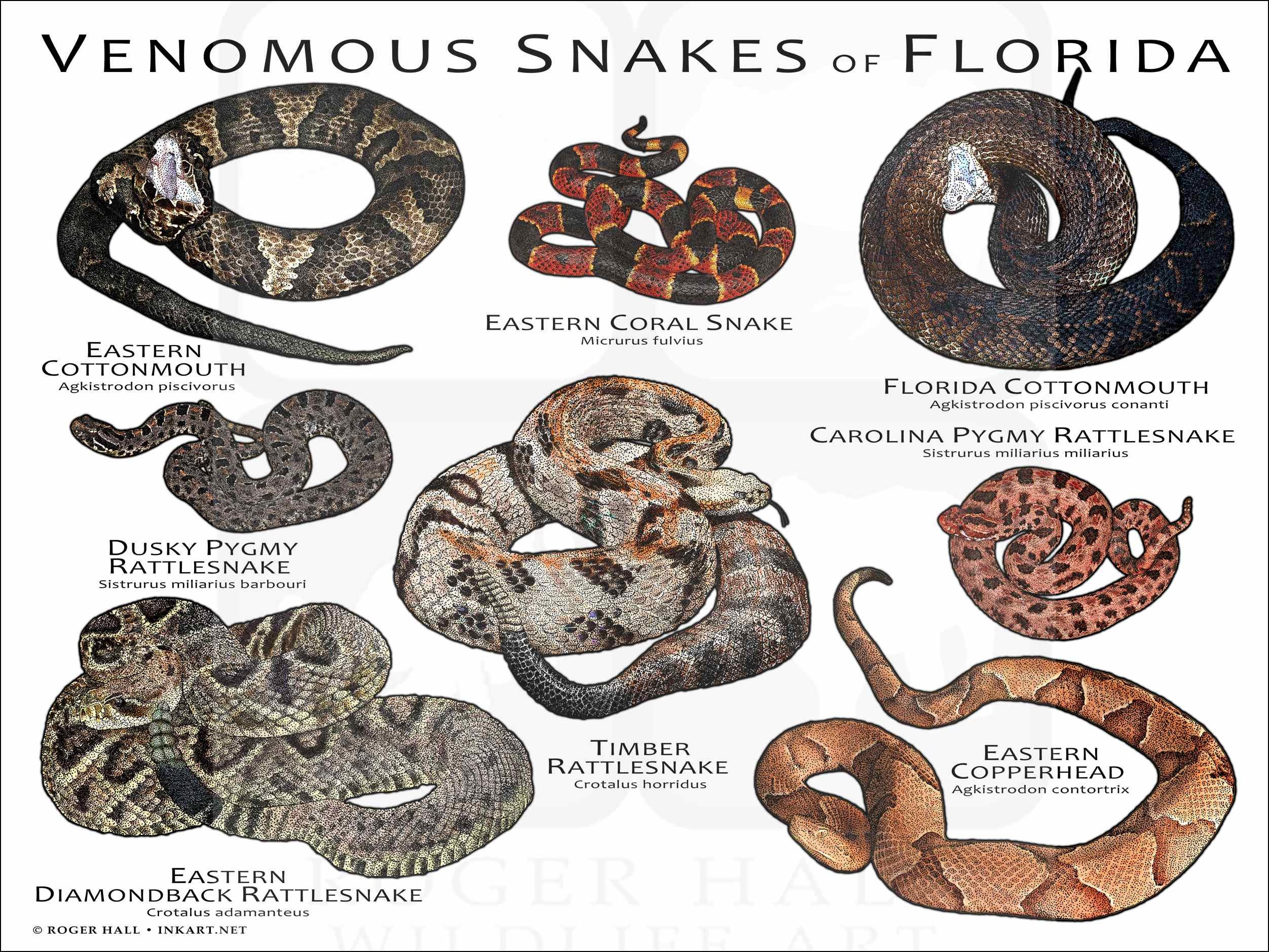
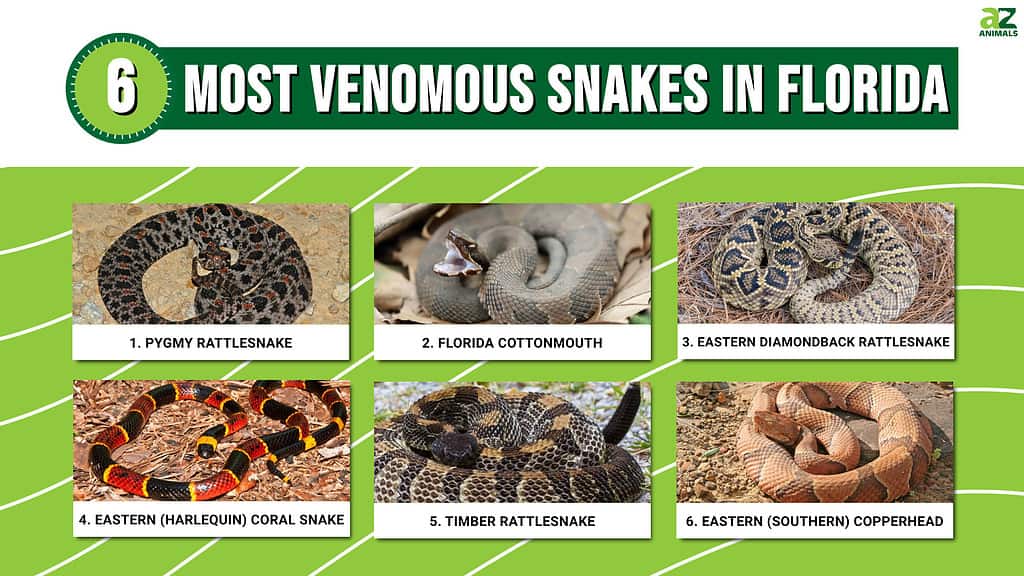
Travelers to Florida should be aware that there are six native venomous snake species in the state. Each possesses unique characteristics and preferred habitats. Knowing how to identify them, and more importantly, how to avoid encounters, is vital.
Eastern Diamondback Rattlesnake
The Eastern Diamondback Rattlesnake is the largest venomous snake in North America and can be found throughout Florida in dry pine forests, palmetto flatwoods, and scrubland. Easily identifiable by the prominent diamond patterns on its back and the distinctive rattle on its tail, this snake is highly venomous. Adults typically range from 3 to 5 feet, but some can exceed 7 feet. They are ambush predators and prefer to avoid human interaction, rattling loudly as a warning when threatened.
Timber Rattlesnake (Canebrake Rattlesnake)
Primarily found in Florida’s northern regions, particularly the panhandle, the Timber Rattlesnake (also known as the Canebrake Rattlesnake) prefers heavily wooded areas, swamps, and river bottoms. It has a velvet-black tail and a distinctive rusty stripe running down its back against a lighter gray or tan body. Like other rattlesnakes, it uses its rattle to deter threats, but its warning is often more subtle than the diamondback’s.
Pygmy Rattlesnake
The Pygmy Rattlesnake is a small, stout snake found statewide in various habitats, including pine flatwoods, prairies, and near wetlands. Averaging less than 2 feet in length, its small size makes it harder to spot. It has dark spots or blotches on a gray to tan body, and its rattle is so tiny that its buzzing sound is often compared to an insect’s. Despite its size, its bite can be painful and medically significant, though generally not life-threatening to healthy adults.
Cottonmouth (Water Moccasin)
The Cottonmouth (or Water Moccasin) is Florida’s only venomous water snake, found near any body of fresh or brackish water across the state. They are thick-bodied snakes, typically dark brown or black, with some having faint crossbands. When threatened, they often gape their mouths to reveal a stark white interior, hence the name “cottonmouth.” While they are generally not aggressive, they will bite if cornered or stepped on. Travelers should exercise caution around ponds, lakes, rivers, and canals.
Coral Snake
The Coral Snake is perhaps the most distinctive of Florida’s venomous snakes, known for its vibrant bands of red, yellow, and black. A helpful rhyme for identification is “Red touches yellow, kill a fellow; red touches black, venom lack.” This snake is relatively small, slender, and secretive, often found in wooded areas, burrowing in leaf litter or under logs. Unlike pit vipers, Coral Snakes have fixed fangs and must chew to inject their potent neurotoxic venom, which can affect the nervous system and cause delayed symptoms. Bites are rare but serious.
Copperhead
While more common in other parts of the Southeastern United States, the Copperhead is extremely rare in Florida, primarily confined to a few localized areas in the western panhandle. It has a distinctive hourglass pattern of copper or reddish-brown bands on a lighter tan or pinkish-brown body. Its venom is less potent than that of rattlesnakes or cottonmouths, but a bite can still be very painful and require medical attention. Travelers in Florida are far more likely to encounter other venomous species.
Travel Safety: Navigating Florida’s Natural Beauty
Exploring Florida’s natural wonders is an incredible experience, and with a few precautions, concerns about snakes can be minimized. Most snake encounters occur when humans accidentally step on or too close to a snake that feels threatened.
Staying Safe on Trails and in Parks
When hiking, camping, or engaging in any outdoor activity in Florida’s wilder areas like the Ocala National Forest or various state parks, consider these tips:
- Stay on Marked Trails: Snakes often seek refuge in dense vegetation. Sticking to clear, maintained paths reduces the chance of an unexpected encounter.
- Wear Appropriate Footwear: Closed-toe shoes, preferably hiking boots that cover your ankles, offer significant protection against accidental bites.
- Watch Where You Step and Place Your Hands: Be vigilant, especially when stepping over logs, rocks, or through leaf litter. Avoid reaching into crevices or dense bushes without looking first.
- Use a Headlamp at Night: If traversing trails after dark, a reliable light source is essential to spot snakes that may be active.
- Avoid Tall Grass and Heavy Brush: When possible, choose open areas, as snakes can be well camouflaged in taller vegetation.
What to Do if You Encounter a Snake
Encountering a snake, especially a venomous one, can be startling, but panicking is counterproductive.
- Give It Space: The vast majority of snakes will try to escape rather than confront a perceived threat. Maintain a safe distance, at least six feet.
- Do Not Provoke or Touch: Never attempt to handle, harass, or capture any snake, even if it appears to be non-venomous or dead.
- Back Away Slowly: If a snake is in your path, slowly and calmly retreat. Do not make sudden movements. Allow the snake to move away on its own.
- Alert Park Staff: If you encounter a snake in a public park or designated recreation area, inform park rangers or staff so they can monitor the situation if needed.
First Aid and Emergency Preparedness
While snake bites are rare, being prepared is crucial for any traveler.
- Seek Immediate Medical Attention: If bitten by any snake you suspect is venomous, call 911 or your local emergency number immediately. Time is critical for effective treatment.
- Stay Calm and Immobilize the Bite Area: Keep the affected limb still and below the level of the heart to slow the spread of venom.
- Remove Jewelry/Tight Clothing: Swelling can occur rapidly, so remove rings, watches, or tight clothing near the bite area.
- DO NOT: Attempt to suck out the venom, cut the wound, apply a tourniquet, or use ice. These actions are ineffective and can cause more harm.
- Know Hospital Locations: Before venturing into remote areas, identify the nearest medical facilities equipped to handle snakebite emergencies. Many hospitals in Florida stock antivenom.
Dispelling Myths and Promoting Awareness
Part of responsible travel in Florida involves understanding snakes without succumbing to fear or misinformation.
Common Misconceptions About Snakes
Many myths surround snakes, contributing to unnecessary fear. For instance, snakes are not inherently aggressive; they bite defensively when threatened. The idea that snakes chase people is also untrue. Furthermore, distinguishing venomous from non-venomous snakes can be complex, and relying on generalizations (like head shape) can be misleading. The most reliable approach is to treat all unknown snakes with caution and distance.
The Role of Snakes in Florida’s Ecosystem
Snakes are integral to Florida’s rich biodiversity. They play a vital role in pest control, preying on rodents and other small animals, which helps maintain the health of ecosystems. They also serve as a food source for other predators, contributing to the natural food web. Their presence indicates a healthy environment.
Respecting Wildlife for a Harmonious Travel Experience
As travelers, our goal should be to enjoy Florida’s natural beauty while minimizing our impact and respecting its inhabitants. This means appreciating snakes from a distance, understanding their role, and taking proactive steps to ensure personal safety without harming wildlife. By being informed and prepared, visitors can safely explore the wild heart of Florida and return home with unforgettable memories.
LifeOutOfTheBox is a participant in the Amazon Services LLC Associates Program, an affiliate advertising program designed to provide a means for sites to earn advertising fees by advertising and linking to Amazon.com. Amazon, the Amazon logo, AmazonSupply, and the AmazonSupply logo are trademarks of Amazon.com, Inc. or its affiliates. As an Amazon Associate we earn affiliate commissions from qualifying purchases.