
Navigating the complexities of family finances, especially after a significant life change, is a critical aspect of shaping your lifestyle. For parents in Florida with one child, understanding child support calculations is not just about legal compliance; it’s about establishing a stable foundation for your family’s well-being, growth, and opportunities. Child support directly influences a household’s budget, dictating the resources available for housing, education, recreation, and even the ability to explore enriching experiences. This guide aims to demystify the process in Florida, focusing on how these financial realities empower parents to maintain a vibrant and supportive lifestyle for their single child.
Understanding the Foundation: Florida’s Child Support Guidelines
Florida law is clear: both parents have a continuing obligation to support their child. When parents separate or divorce, child support ensures that this financial responsibility is upheld by the non-residential or higher-earning parent. The primary objective is to maintain, as much as possible, the same standard of living the child would have enjoyed had the parents remained together. This commitment to the child’s established lifestyle underpins all child support decisions.
The Income Shares Model Explained
Florida utilizes the “Income Shares Model” for calculating child support. This model is based on the premise that a child should receive the same proportion of parental income as if the parents were still together. Essentially, the court estimates the total amount parents would spend on their child if they lived in an intact household. This total is then divided between the parents based on their respective incomes.
The model first aggregates the net income of both parents. “Net income” isn’t just a simple take-home pay; it’s a carefully defined figure that accounts for gross income minus allowable deductions. Once the combined net income is determined, Florida Statutes provide a statutory schedule that indicates the basic amount of child support needed for a child at various income levels. For a single child, this schedule provides a clear baseline, which is then allocated between the parents. The idea is to ensure that the child’s lifestyle, including access to quality education, healthcare, and recreational activities, is supported proportionally by both parents’ earnings.
Factors Beyond Gross Income
While gross income is the starting point, several crucial deductions are considered to arrive at an accurate net income. These typically include:
- Federal, state, and local income taxes: The actual amount paid, not just what is withheld.
- FICA or self-employment taxes: Social Security and Medicare contributions.
- Mandatory union dues: If applicable.
- Mandatory retirement payments: Contributions required as a condition of employment.
- Health insurance premiums: For the parent only, not the child.
- Court-ordered child support for other children: Payments made to another household for other children.
- Court-ordered spousal support (alimony): Payments made to a former spouse.
Each of these deductions impacts the disposable income of a parent, which in turn affects their calculated contribution to child support. Ensuring accurate documentation of these expenses is vital, as it directly influences the final child support order and thus the financial framework for the child’s daily life and future opportunities.
Calculating Child Support for One Child
The journey to determining the exact child support amount for one child in Florida follows a structured, step-by-step process. This methodical approach ensures fairness and consistency, aiming to reflect the financial realities of both parents while prioritizing the child’s needs and established lifestyle.
Net Income Determination
The first critical step is to accurately calculate the net monthly income for each parent. This is more nuanced than simply looking at a paycheck. It involves taking the gross monthly income and subtracting the allowable deductions mentioned previously. For instance, if one parent earns a gross monthly income of $5,000 and has $1,000 in combined taxes, mandatory deductions, and their own health insurance premiums, their net income would be $4,000. If the other parent earns $3,000 gross and has $600 in similar deductions, their net income would be $2,400.
Once each parent’s net income is established, these figures are combined to arrive at the total combined available net income. In our example, this would be $4,000 + $2,400 = $6,400. This combined figure is the cornerstone for consulting Florida’s child support guidelines.
Applying the Statutory Schedule
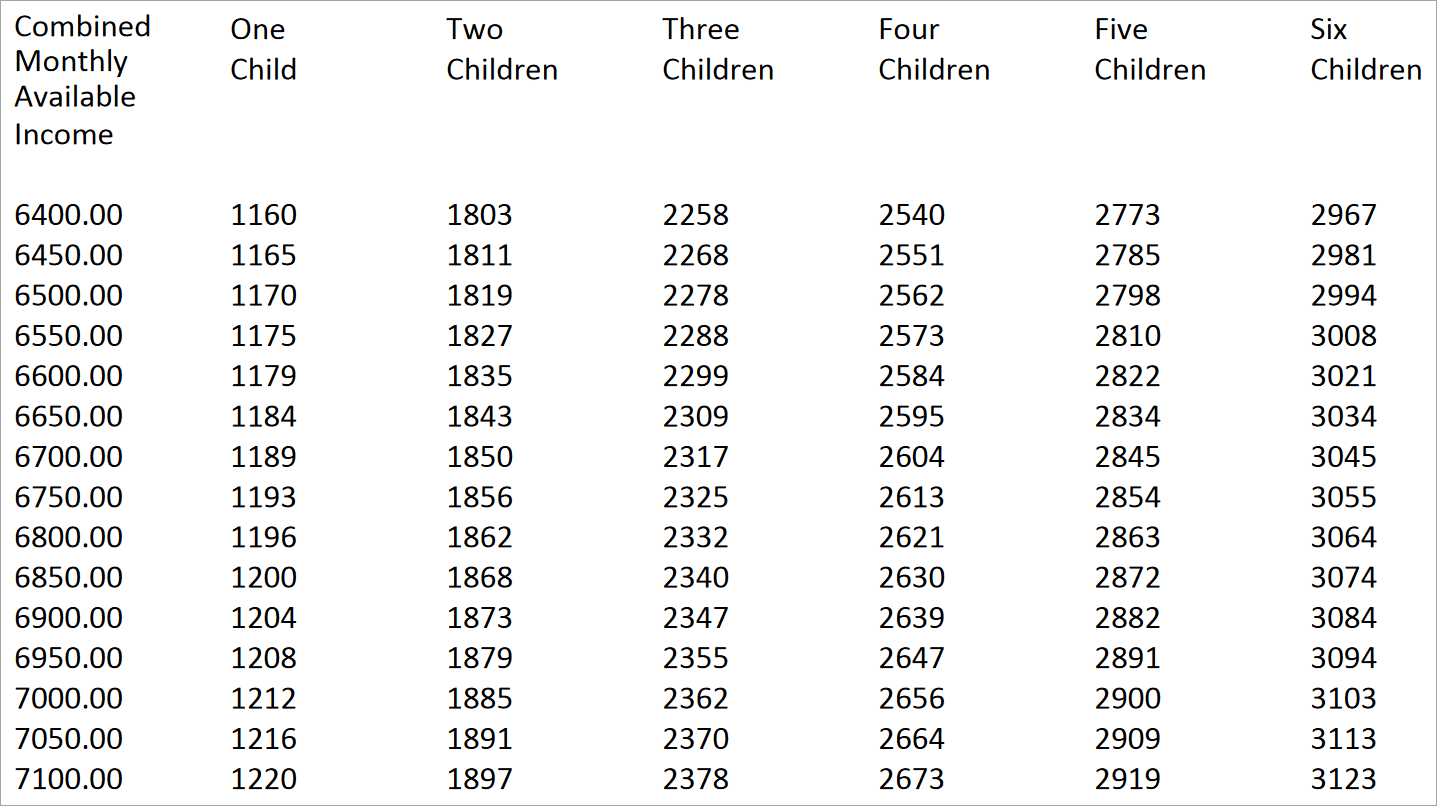
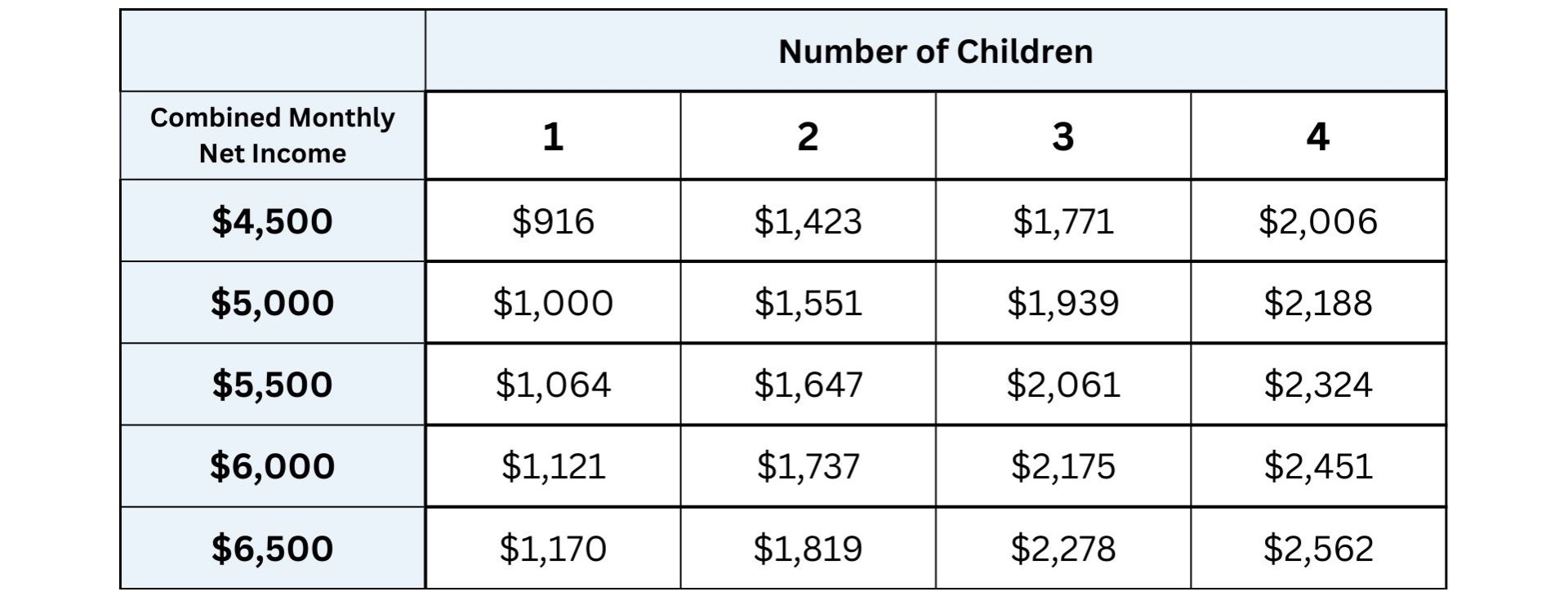
With the combined net monthly income, the next step involves consulting the “Guidelines Schedule” found in Florida Statute 61.30. This schedule provides a presumptive monthly child support amount based on the combined net income and the number of children. For our example combined net income of $6,400 for one child, the schedule might indicate a basic child support amount of, for instance, $950 per month. This figure represents the estimated cost of raising one child for parents earning that combined income level.
This basic support amount is then prorated between the parents based on their individual percentage of the combined net income.
- Parent 1’s percentage: ($4,000 / $6,400) = 62.5%
- Parent 2’s percentage: ($2,400 / $6,400) = 37.5%
Applying these percentages to the basic support amount ($950):
- Parent 1’s share: 62.5% of $950 = $593.75
- Parent 2’s share: 37.5% of $950 = $356.25
These are the parents’ presumptive basic child support obligations. However, this is not necessarily the final amount paid. The calculation becomes more complex with adjustments for specific expenses and time-sharing arrangements. The financial contributions derived from these calculations directly shape the lifestyle the child can experience, from access to enrichment activities to comfortable living arrangements, impacting their overall development and well-being.
Adjustments and Special Considerations

While the basic child support calculation provides a foundational figure, Florida law recognizes that a child’s needs extend beyond a simple monthly sum. Various specific expenses and the unique living arrangements of the child necessitate adjustments to the presumptive amount. These considerations are vital for ensuring that the child’s lifestyle, including their health, education, and daily care, is adequately supported by both parents.
Health Insurance and Daycare Costs
Two of the most significant adjustments to basic child support involve health insurance and childcare expenses. These are often substantial monthly costs that directly impact a family’s budget and lifestyle.
- Health Insurance Premiums: The parent who pays for the child’s health insurance premium receives a credit for this expense. The total cost of the child’s portion of the premium is added to the basic child support amount, and then each parent is allocated their percentage share of this total. The parent who is paying the premium for the child then receives a credit for their payment against their total obligation. For example, if the child’s health insurance premium is $150 per month, this amount is added to the $950 basic support, making a total of $1,100. This total is then prorated by each parent’s income percentage. The parent who actually pays the $150 premium for the child’s insurance gets that $150 subtracted from their calculated share. This adjustment recognizes the direct financial contribution one parent makes towards ensuring the child’s health and access to necessary medical care.
- Childcare/Daycare Expenses: Similar to health insurance, reasonable and necessary childcare costs incurred due to a parent’s employment or job search are added to the basic child support obligation. These costs are then prorated between the parents based on their income percentages. High-quality childcare is essential for many families, directly impacting a parent’s ability to work and the child’s developmental opportunities. Including these costs ensures that the child’s daily care and enrichment are properly budgeted for within the child support order, allowing the child to participate in activities that promote their growth and social skills, which are integral to their lifestyle.
Overnights and Time-Sharing Schedules
Florida’s child support statute also provides a specific adjustment for extensive time-sharing. If a parent has the child for more than 20% of the overnights in a year (which is 73 overnights or more), the child support calculation is modified. This is often referred to as the “substantial deviation” or “gross-up” method.
The premise here is that the parent who has the child for a significant number of overnights incurs more direct costs for the child’s daily care, food, housing, and general needs during that time. To account for this, the total basic child support amount, plus health insurance and childcare, is divided by 1.5. Each parent’s share is then calculated, and the amount one parent would pay the other is reduced based on the percentage of overnights the obligor parent has the child. This adjustment acknowledges the hands-on financial contribution of both parents to the child’s day-to-day lifestyle. A parent who provides a home, meals, and daily supervision for a larger portion of the year is recognized for those direct expenses, leading to a more equitable distribution of financial responsibility. This can significantly impact the final payment, reflecting the actual co-parenting arrangement and its implications for the child’s everyday life.
Deviations from the Guidelines
While the guidelines are designed to provide a fair and consistent approach, Florida courts have the discretion to deviate from the presumptive child support amount by plus or minus 5% without specific written findings. For deviations greater than 5%, the court must provide a written explanation detailing why the guidelines amount would be unjust or inappropriate.
Reasons for deviation can include:
- Unusual medical or educational expenses: For a child with special needs, for example.
- Independent income of the child: If the child has significant income.
- Impact of seasonal variations in income: For parents with fluctuating employment.
- Age of the child: Older children may have higher expenses.
- Special needs or extraordinary expenses: Beyond typical childcare or healthcare, such as specialized therapy or extensive extracurricular activities that enhance the child’s development and lifestyle.
These deviations ensure that the child support order is tailored to the specific circumstances of the family and the child, ensuring that their unique lifestyle needs are met, even if they fall outside the standard calculations.
The Lifestyle Impact: Ensuring Your Child’s Well-being
Child support, far from being just a legal mandate, plays a profound role in shaping the lifestyle and opportunities available to a child. For one child in Florida, the consistent provision of financial support contributes directly to their stability, their educational journey, their recreational pursuits, and their overall quality of life. Understanding its impact allows parents to plan more effectively, ensuring that their child can thrive and enjoy a fulfilling life.
Budgeting for Experiences and Growth
Effective child support enables parents to budget for more than just basic necessities. It opens doors to experiences that enrich a child’s life and foster their personal growth. From educational excursions to theme parks in Orlando, to engaging in youth sports leagues in Tampa, or even taking a family vacation to explore the vibrant culture of Miami, these activities are often supported by the financial resources provided through child support. A stable financial foundation allows for:
- Educational Enrichment: Funding for tutors, specialized courses, art classes, music lessons, or even contributions to future college savings. These investments in education are crucial for a child’s development and future prospects.
- Recreational Activities: Participation in sports, scouting, dance, or other extracurriculars, which are vital for social development, physical health, and discovering passions.
- Quality of Life: Ensuring access to a safe and comfortable home, nutritious food, appropriate clothing, and the ability to partake in social events with peers.
- Exploratory Travel: While child support isn’t explicitly for vacations, a stable household budget makes it possible for parents to plan family trips, whether it’s a weekend getaway to the Florida Keys or an extended visit to a national park. These travel experiences provide invaluable learning opportunities, create lasting memories, and broaden a child’s perspective on the world, aligning perfectly with a “life out of the box” philosophy.
These components collectively contribute to a well-rounded lifestyle, fostering a child’s physical, emotional, and intellectual development. Without adequate child support, these enriching opportunities might be limited, underscoring the importance of accurate and consistent payments.
Navigating Changes and Modifications
Life is dynamic, and financial circumstances can change for either parent. Florida law recognizes this by allowing for modifications to child support orders when there has been a substantial, involuntary, and permanent change in circumstances. This could include a significant increase or decrease in income for either parent, a major change in time-sharing, or unforeseen extraordinary medical expenses for the child.
Proactively addressing these changes is essential for maintaining the child’s lifestyle. If a parent’s income significantly decreases, continuing to pay the original amount might lead to financial hardship, impacting their ability to contribute to the child’s daily life. Conversely, if one parent’s income substantially increases, an upward modification might ensure the child continues to benefit from an improved standard of living, preventing a decline in their accustomed lifestyle.
Seeking a modification is a legal process, typically requiring the filing of a petition with the court. It’s not automatic, and arrears can accumulate if a parent unilaterally stops paying or reduces payments without a court order. Staying informed about your rights and obligations, and understanding when to seek a modification, is key to providing consistent support for your child’s evolving lifestyle. Ultimately, child support in Florida is a commitment to the enduring well-being and flourishing lifestyle of the child, ensuring they have the resources to grow, learn, and experience all that life has to offer.
LifeOutOfTheBox is a participant in the Amazon Services LLC Associates Program, an affiliate advertising program designed to provide a means for sites to earn advertising fees by advertising and linking to Amazon.com. Amazon, the Amazon logo, AmazonSupply, and the AmazonSupply logo are trademarks of Amazon.com, Inc. or its affiliates. As an Amazon Associate we earn affiliate commissions from qualifying purchases.