
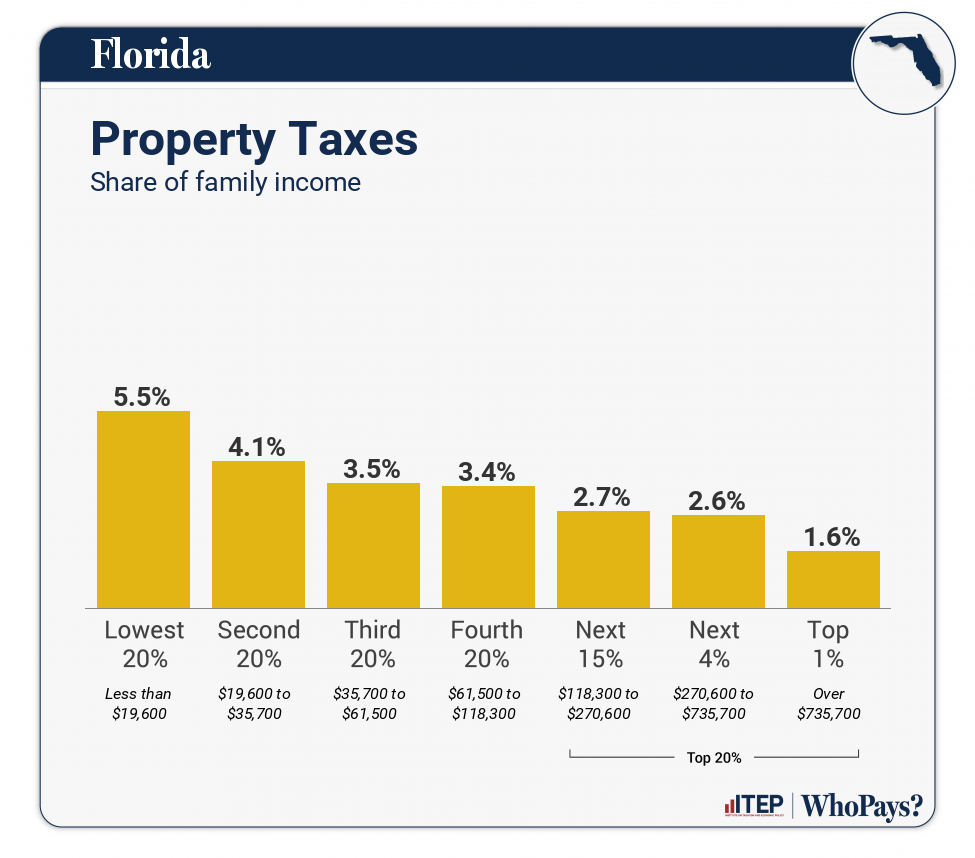
For individuals considering a long-term stay in the Sunshine State, whether for retirement, relocation, or investment in a vacation home, understanding the intricacies of Florida property tax is paramount. Property taxes represent a significant annual expenditure for homeowners and directly influence the overall affordability and financial planning for any extended accommodation choice. Unlike some states, Florida has no state income tax, making property taxes a crucial component of local government funding and, consequently, a major consideration for prospective long-term residents. Delving into the assessment methods, exemptions, and regional variations is essential to budget effectively and make informed decisions about settling in this popular destination.

Understanding the Florida Property Tax Landscape for Long-Term Accommodation
The framework of property taxation in Florida is governed by a system designed to fund local services, including schools, law enforcement, fire protection, and infrastructure. For anyone looking to establish a long-term presence, grasping the fundamental principles of this system is critical to accurately forecast annual living expenses.
Ad Valorem Taxes: The Foundation
At its core, Florida property tax is an “ad valorem” tax, meaning it is levied “according to value.” This implies that the amount of tax you pay is directly proportional to the assessed value of your property. Each county in Florida has an elected Property Appraiser responsible for determining the fair market value of all real estate within their jurisdiction as of January 1st each year. This valuation process considers factors such as recent sales of comparable properties, the cost of replacement, and potential income for commercial properties. For homeowners planning a long-term stay, the assessed value forms the bedrock of their annual tax obligation. It’s important to note that the market value, which is what a property might sell for today, and the assessed value, used for tax purposes, can sometimes differ, especially for properties benefiting from certain state-mandated protections.
Millage Rates and Their Local Variations
Once a property’s value is assessed, the tax amount is calculated using a “millage rate.” A mill represents $1 for every $1,000 of assessed property value. Millage rates are set annually by various taxing authorities, including county commissions, city councils, school boards, and special districts (e.g., water management, fire rescue). These rates can vary significantly from one jurisdiction to another, even within the same county, reflecting the specific service needs and budgetary decisions of each local entity. For instance, a property in Miami-Dade County might have a different combined millage rate than a similar property in Broward County or Orange County (where Orlando is located). This localized nature means that the exact property tax bill can be highly dependent on the specific city and community one chooses for long-term accommodation. Prospective long-term residents should research the millage rates applicable to their desired location to gain a realistic understanding of their future tax liability.
Key Factors Influencing Your Florida Property Tax Bill
While the assessed value and millage rate form the basic calculation, several other crucial factors can significantly alter the final property tax bill for long-term residents in Florida. Understanding these elements is vital for accurate budgeting and maximizing potential savings.
Property Value Assessment
As mentioned, the Property Appraiser determines the “just value” or fair market value. However, Florida has protective measures that cap how much a property’s assessed value can increase each year. The most significant of these is the Save Our Homes (SOH) amendment. For properties with a homestead exemption, the SOH amendment limits the annual increase in assessed value to 3% or the Consumer Price Index (CPI), whichever is lower. This cap helps protect long-term residents from drastic tax increases due even to rapid surges in market values. For properties that are not homesteaded (e.g., investment properties, second homes), the annual increase in assessed value is capped at 10%. This distinction is critical for anyone considering different types of long-term accommodation, as an investment property will likely see its assessed value rise more quickly than a primary residence.
Homestead Exemption: A Cornerstone for Florida Residents
The Florida Homestead Exemption is perhaps the most significant tax benefit for homeowners who designate a property as their primary residence. To qualify, you must own the home and reside in it as of January 1st of the tax year. This exemption can reduce the taxable value of your primary residence by up to $50,000. The first $25,000 applies to all taxing authorities, while an additional $25,000 applies to non-school taxes. For example, if your home is assessed at $300,000 and you qualify for the full homestead exemption, your taxable value would be reduced to $250,000 ($300,000 – $50,000). This substantially lowers your annual property tax bill and is a major incentive for individuals planning a long-term stay and permanent residency in Florida. It underscores the financial advantage of establishing primary residency rather than purchasing a second home.
Additional Exemptions and Discounts
Beyond the general homestead exemption, Florida offers several other valuable exemptions and discounts tailored to specific groups, further enhancing the affordability of long-term accommodation.
- Senior Exemptions: Many counties offer additional homestead exemptions for seniors (typically 65 and older) with limited income, further reducing their taxable value. Specific income thresholds and county-level ordinances apply, so it’s vital to check local criteria in areas like Pinellas County or Collier County, popular for retirees.
- Veteran Exemptions: Disabled veterans can qualify for significant tax exemptions, with benefits varying based on the degree of disability. Some severely disabled veterans may even qualify for a full exemption.
- Disabled Person Exemptions: Individuals with certain disabilities may also be eligible for additional exemptions.
- Widow/Widower Exemption: A $500 exemption is available for widows and widowers.
These additional exemptions play a critical role in the long-term financial planning for eligible residents, often making homeownership significantly more affordable. Applying for these exemptions is usually a one-time process with the local Property Appraiser’s office, typically by March 1st of the year for which you are seeking the exemption.
Navigating Property Taxes in Different Florida Regions
The geographical diversity of Florida translates directly into a wide spectrum of property tax obligations. The choice of location for a long-term stay is not only about lifestyle preferences but also about financial implications.
Coastal vs. Inland: A Tax Perspective
Generally, properties located in highly desirable coastal areas tend to have significantly higher market values compared to those inland. This directly impacts property taxes. For instance, a luxury waterfront condo in Miami Beach, Fort Lauderdale, or Naples will likely have a substantially higher assessed value than a comparable-sized home in a more inland community like Lakeland or Ocala. Even with similar millage rates, the higher base value means a larger tax bill. Popular counties for long-term residents and snowbirds, such as Palm Beach County and Sarasota County, often see property values that reflect their premium locations and amenities, leading to higher property tax expenditures. Conversely, communities in central Florida, like those around Orlando or in Polk County, might offer more affordable property options and, consequently, lower tax bills, making them attractive for budget-conscious long-term residents.
The Impact of Community Development Districts (CDDs)
Many newer, master-planned communities across Florida are established as Community Development Districts (CDDs). These districts are special-purpose governmental entities authorized by Florida statutes to finance and manage the development and maintenance of community infrastructure, facilities, and services. While CDDs often provide enhanced amenities like clubhouses, pools, golf courses, and meticulously maintained common areas, the cost of these benefits is passed on to homeowners within the district. CDD fees typically appear as a non-ad valorem assessment on the annual property tax bill, meaning they are separate from the ad valorem property tax calculation but are collected alongside it. For those considering long-term accommodation in these amenity-rich communities, particularly popular with retirees and families in areas like Hillsborough County or St. Johns County, it’s crucial to factor in these additional CDD assessments, which can add hundreds or even thousands of dollars to the annual cost of homeownership.
Long-Term Financial Planning: Incorporating Property Taxes
A comprehensive financial plan for long-term accommodation in Florida must rigorously account for property taxes. These are not merely an annual nuisance but a consistent and significant cost of living.
Budgeting for Annual Property Tax Payments
Property tax bills in Florida are typically mailed in November, with a discount offered for early payment (e.g., 4% in November, reducing monthly). The full amount is due by March 31st of the following year. For most homeowners with a mortgage, property taxes are collected through an escrow account by their lender, ensuring that funds are available when the bill comes due. However, for those who own their homes outright, direct budgeting and saving for these annual payments are essential. It’s advisable to divide the estimated annual tax bill by twelve and set aside that amount monthly to avoid a large lump-sum payment shock. Regularly checking the Property Appraiser’s and Tax Collector’s websites for your specific county (e.g., Duval County for Jacksonville, Pinellas County for St. Petersburg, Hillsborough County for Tampa) can help keep abreast of assessment changes and payment deadlines.

Understanding Tax Implications for Vacation Rentals and Investment Properties
For individuals considering long-term accommodation that includes generating income, such as purchasing a property for short-term vacation rentals or long-term leases, the property tax implications differ significantly. As these properties are not primary residences, they do not qualify for the Homestead Exemption. This means their taxable value will be higher, leading to a larger tax bill. Furthermore, these non-homesteaded properties are subject to the 10% annual cap on assessed value increases, rather than the more protective Save Our Homes 3% cap. This distinction is crucial for investors. When evaluating potential returns on investment properties in popular tourist areas like Orlando or coastal communities, the higher property tax burden must be accurately factored into profitability calculations. Consulting with a local real estate professional or tax advisor can provide tailored insights into the specific tax liabilities associated with different types of long-term property ownership and usage in Florida.
LifeOutOfTheBox is a participant in the Amazon Services LLC Associates Program, an affiliate advertising program designed to provide a means for sites to earn advertising fees by advertising and linking to Amazon.com. Amazon, the Amazon logo, AmazonSupply, and the AmazonSupply logo are trademarks of Amazon.com, Inc. or its affiliates. As an Amazon Associate we earn affiliate commissions from qualifying purchases.