
Establishing a long-term residence in Florida offers numerous advantages, from its sunny climate to its vibrant communities. For those considering the Sunshine State as their permanent home, understanding the financial benefits tied to property ownership is crucial. Among the most significant is the Florida Homestead Exemption, a powerful tool designed to reduce property tax burdens for permanent residents. This exemption plays a vital role in making long-term accommodation in Florida more affordable and stable, providing significant savings year after year. For anyone planning to reside here indefinitely, familiarizing oneself with the application process and benefits is a foundational step in financial planning for their Florida home.
Understanding the Florida Homestead Exemption
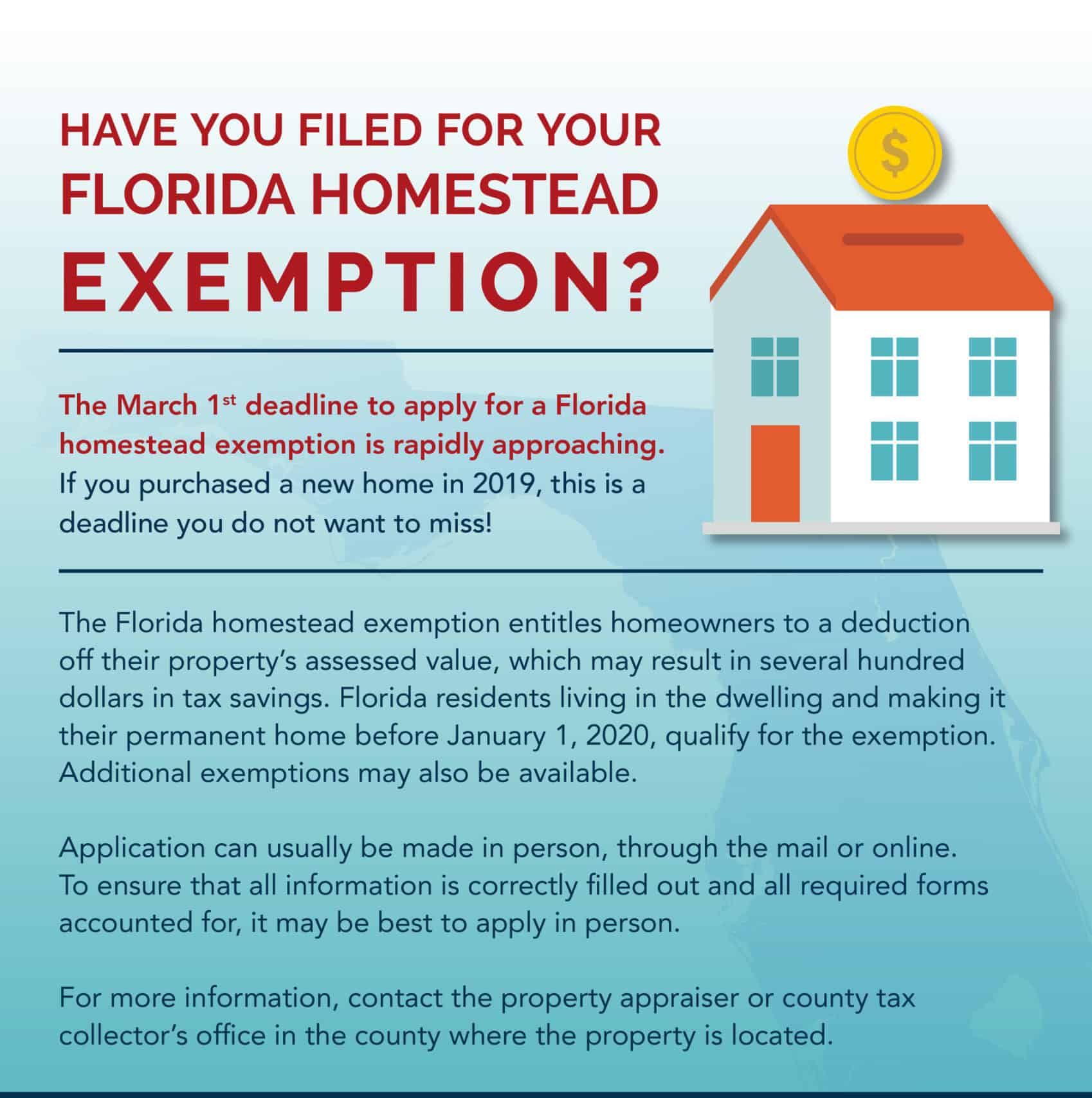
The Florida Homestead Exemption is a constitutional benefit that provides homeowners with a reduction in the taxable value of their primary residence. This exemption is not merely a discount; it’s a fundamental aspect of property law designed to protect residents and their families from excessive property taxes, thereby fostering stable communities and encouraging long-term residency. For many, the homestead exemption makes owning a home in Florida a more financially viable and attractive prospect. It directly impacts the cost of long-term accommodation, making it an essential consideration for homeowners.
Purpose and Benefits
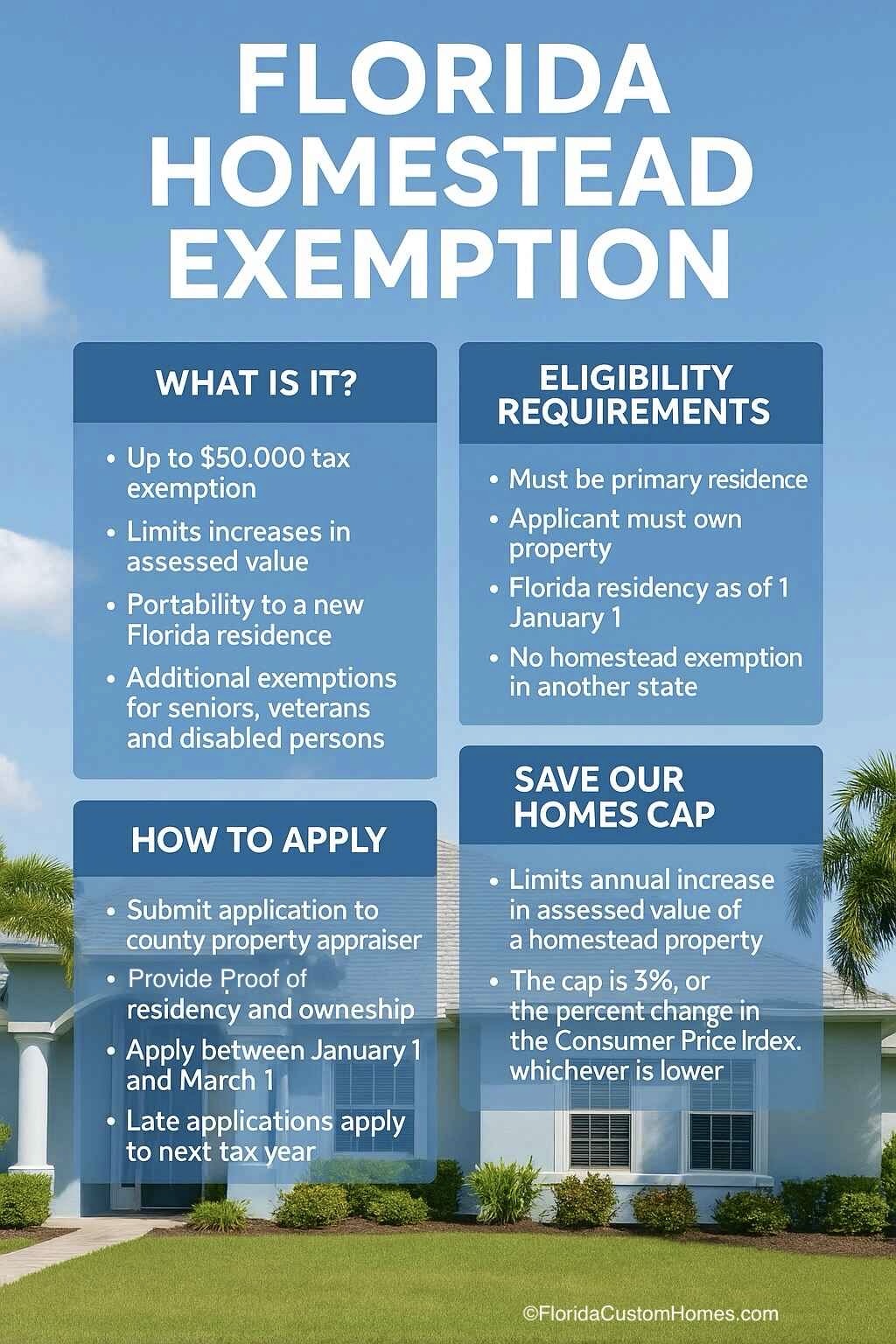
The primary purpose of the homestead exemption is to offer substantial property tax relief. Homeowners who qualify can reduce the assessed value of their property by up to $50,000. This reduction is applied in two tiers: the first $25,000 applies to all taxing authorities, including school districts, while an additional $25,000 applies to non-school taxes. The cumulative effect can translate into hundreds or even thousands of dollars in annual savings, significantly lowering the overall cost of maintaining one’s primary accommodation.
Beyond the initial tax reduction, the homestead exemption also triggers the “Save Our Homes” (SOH) amendment. This critical provision caps the annual increase in the assessed value of homesteaded properties at 3% or the Consumer Price Index (CPI), whichever is lower. This protection is invaluable, especially in a dynamic real estate market like Florida’s, where property values can fluctuate. The SOH amendment provides long-term residents with predictability and stability in their property taxes, preventing steep increases that could otherwise make their primary residence unaffordable. It ensures that the cost of your long-term accommodation remains manageable, even as market values soar.
Furthermore, the homestead exemption offers important creditor protection. Under Florida law, a homesteaded property is largely protected from forced sale to satisfy most types of creditors, providing homeowners with an invaluable layer of financial security for their primary residence. This protection underscores the state’s commitment to preserving the stability of its residents’ homes.
Eligibility Requirements for Homestead Exemption
To qualify for the Florida Homestead Exemption, homeowners must meet specific criteria outlined in the state’s statutes. These requirements are in place to ensure that the benefits are extended to those who genuinely use Florida as their permanent and primary place of abode. Understanding these prerequisites is the first step towards successfully applying and securing this valuable tax relief for your long-term accommodation.
Ownership and Occupancy
The most fundamental requirement is that the applicant must own the property and use it as their permanent residence as of January 1st of the year for which they are applying. This means the property must be occupied by the owner, or a dependent of the owner, as their legal domicile. It cannot be an investment property, a vacation home, or a secondary residence. The intent to reside there permanently is key.
Evidence of permanent residency often includes:
- Florida Driver’s License or ID Card: Demonstrating state residency.
- Florida Voter Registration: Indicating participation in local elections.
- Declaration of Domicile: A formal statement recorded with the Clerk of Court.
- Vehicle Registration in Florida: Further proof of local presence.
- Utility Bills and Mail at the Property Address: Showing continuous occupancy.
- Proof of Termination of Residency in Other States: If applicable, demonstrating commitment to Florida as a sole domicile.
It’s important to note that a married couple can only claim one homestead exemption between them, regardless of whether they own properties in different counties or even different states. The exemption is tied to their primary shared residence.
Residency Status
Applicants must be permanent residents of Florida. This typically means they do not claim residency or homestead exemptions in any other state or country. The Property Appraiser’s office will often review various records, including income tax returns (looking for residency claims in other states) and vehicle registrations, to verify this. Filing an income tax return with an out-of-state address or claiming a homestead exemption on another property can lead to denial or revocation of the Florida exemption, along with potential penalties. The intent is to support those who have genuinely made Florida their long-term home.
The Application Process: Step-by-Step
Applying for the Florida Homestead Exemption is a straightforward process, but it requires attention to detail and adherence to deadlines. The application is typically filed with your local County Property Appraiser’s office. Each county, such as Miami-Dade County, Broward County, or Orange County, will have its own specific procedures and forms, but the general requirements remain consistent statewide.
Gathering Required Documents
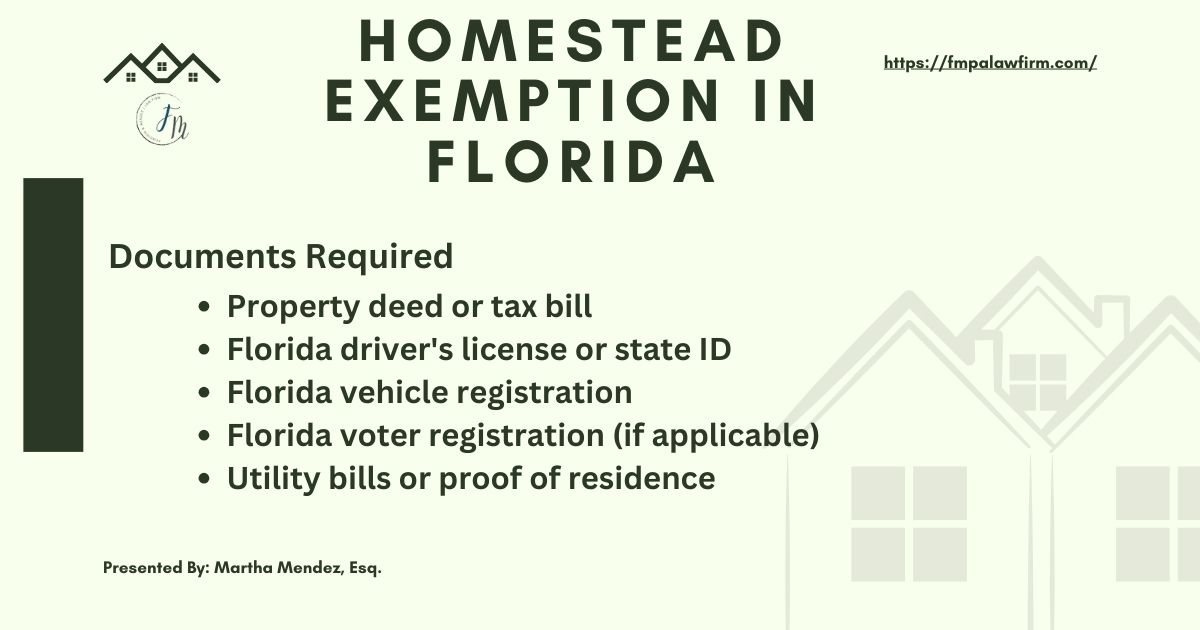
Before beginning the application, ensure you have all necessary documentation ready. This typically includes:
- Proof of Ownership: A copy of the recorded deed to the property.
- Proof of Florida Residency and Occupancy:
- Florida Driver’s License or Florida Identification Card.
- Florida Vehicle Registration.
- Florida Voter Registration Card.
- Social Security numbers for all applicants.
- If applicable, a Declaration of Domicile.
- Proof of cancellation of homestead exemption from any other state (if previously claimed).
- Social Security Numbers: For all owners applying for the exemption.
- Immigration Documents (if applicable): For non-U.S. citizens, proof of permanent residency or other valid visa types that allow for permanent domicile in the U.S.
It’s advisable to check the specific requirements of your county’s Property Appraiser’s website, as they may request additional documents based on individual circumstances.
Submitting the Application
Applications can generally be submitted in person, by mail, or online. Many counties now offer convenient online portals for submitting applications, making the process more accessible for new residents.
- Obtain the Application Form: Download it from your County Property Appraiser’s website or pick it up in person.
- Complete the Form Accurately: Fill out all sections, ensuring all information is correct and matches your supporting documents.
- Attach Required Documents: Make copies of all supporting documentation; do not submit originals unless explicitly requested.
- Submit Before the Deadline: The most crucial step is to submit your application by the March 1st deadline for the tax year for which you are seeking the exemption. For example, to receive the exemption for taxes levied in 2024, your application must be filed by March 1, 2024.
While the official deadline is March 1st, it’s highly recommended to apply as soon as you meet the January 1st occupancy requirement. This allows time for any corrections or additional documentation requested by the Property Appraiser’s office.
Deadlines, Renewal, and Special Circumstances
Understanding the timeline and ongoing responsibilities is vital for maintaining your homestead exemption and maximizing your long-term accommodation savings in Florida.
Important Deadlines
The primary deadline for filing a new homestead exemption application is March 1st of the tax year for which you are applying. If you close on your home in Florida in the latter half of the year, you will apply the following year. For example, if you purchased and occupied your home as your primary residence on December 1, 2023, you would apply between January 1, 2024, and March 1, 2024, for the 2024 tax year exemption.
There is a provision for late filing up to September 18th of the tax year. However, late applications are subject to review and may not always be approved. It is always best practice to apply by the March 1st deadline to avoid any potential issues.
Automatic Renewal and Changes in Status
Once approved, the Florida Homestead Exemption generally renews automatically each year, provided there are no changes in ownership or residency status. Most counties will send a postcard or email reminder confirming your exemption renewal.
However, it is the homeowner’s responsibility to notify the Property Appraiser’s office if there are any changes that affect their eligibility, such as:
- Selling the Property: The exemption does not transfer to the new owner.
- Renting Out the Property: If it is no longer your primary residence.
- Changing Primary Residence: Moving to another home, even within Florida.
- Claiming Homestead Exemption in Another State: This immediately disqualifies you from the Florida exemption.
- Death of a Property Owner: This may require re-filing by the surviving owners.
Failure to notify the Property Appraiser of such changes can result in the revocation of the exemption, along with back taxes, penalties, and interest.
Additional Exemptions and Discounts
Beyond the standard homestead exemption, Florida offers several additional exemptions that can further reduce property tax burdens for qualifying homeowners, making long-term accommodation even more affordable. These include:
- Widow/Widower Exemption: A $500 exemption for surviving spouses.
- Disability Exemption: A $500 exemption for those with a permanent total disability.
- Senior Exemption: Various additional exemptions may be available for seniors (typically 65 and older) with limited income, often requiring specific county or city ordinances.
- Veteran Exemption: Significant exemptions are available for honorably discharged veterans with service-connected disabilities, ranging from partial to full exemptions depending on the percentage of disability.
Each of these additional exemptions has its own specific eligibility criteria and application process. Homeowners who believe they may qualify for these benefits should contact their County Property Appraiser’s office for detailed information and application forms. These benefits underscore Florida’s commitment to supporting its diverse population of long-term residents and ensuring their accommodation remains financially sustainable.
LifeOutOfTheBox is a participant in the Amazon Services LLC Associates Program, an affiliate advertising program designed to provide a means for sites to earn advertising fees by advertising and linking to Amazon.com. Amazon, the Amazon logo, AmazonSupply, and the AmazonSupply logo are trademarks of Amazon.com, Inc. or its affiliates. As an Amazon Associate we earn affiliate commissions from qualifying purchases.