
Becoming a bail bondsman in Florida offers a unique career path within the state’s judicial system, blending entrepreneurship with a crucial role in the legal process. This profession requires a specific set of skills, a strong understanding of legal statutes, and a commitment to serving the community. For individuals looking for a dynamic career with significant responsibility, navigating the steps to becoming a licensed bail bondsman in the Sunshine State can be a rewarding journey.
Understanding the Role of a Bail Bondsman
At its core, a bail bondsman facilitates the temporary release of individuals arrested for a crime, ensuring their appearance in court. This role is fundamental to the justice system, upholding the principle that individuals are innocent until proven guilty and have the right to reasonable bail.
What is Bail?
Bail is a financial guarantee, set by a court, that an arrested individual will return for their scheduled court dates. Its purpose is to ensure the accused does not flee while awaiting trial. The amount of bail can vary significantly based on the severity of the alleged crime, the defendant’s criminal history, and their ties to the community. If the defendant appears for all court proceedings, the bail money is returned. If they fail to appear, the bail is forfeited.
The Bondsman’s Function
Many individuals cannot afford to post the full bail amount themselves. This is where a bail bondsman steps in. A bondsman, acting as a surety agent, posts a bond with the court on behalf of the defendant. In exchange, the defendant or a co-signer pays the bondsman a non-refundable premium, typically 10-15% of the total bail amount. The bondsman then assumes the financial risk that the defendant will appear in court. Should the defendant fail to appear (skip bail), the bondsman is responsible for the full bail amount to the court and often employs bounty hunters (fugitive recovery agents) to locate and return the defendant to custody. Beyond the financial transaction, a bondsman often serves as a point of contact and reminder for defendants, helping them navigate court schedules and understand their obligations.
Essential Requirements for a Florida Bail Bondsman
The state of Florida has stringent requirements to ensure that bail bondsmen are reputable, responsible, and capable of handling the legal and financial obligations of the profession. These requirements are designed to protect the public and maintain the integrity of the judicial system.
Citizenship and Residency
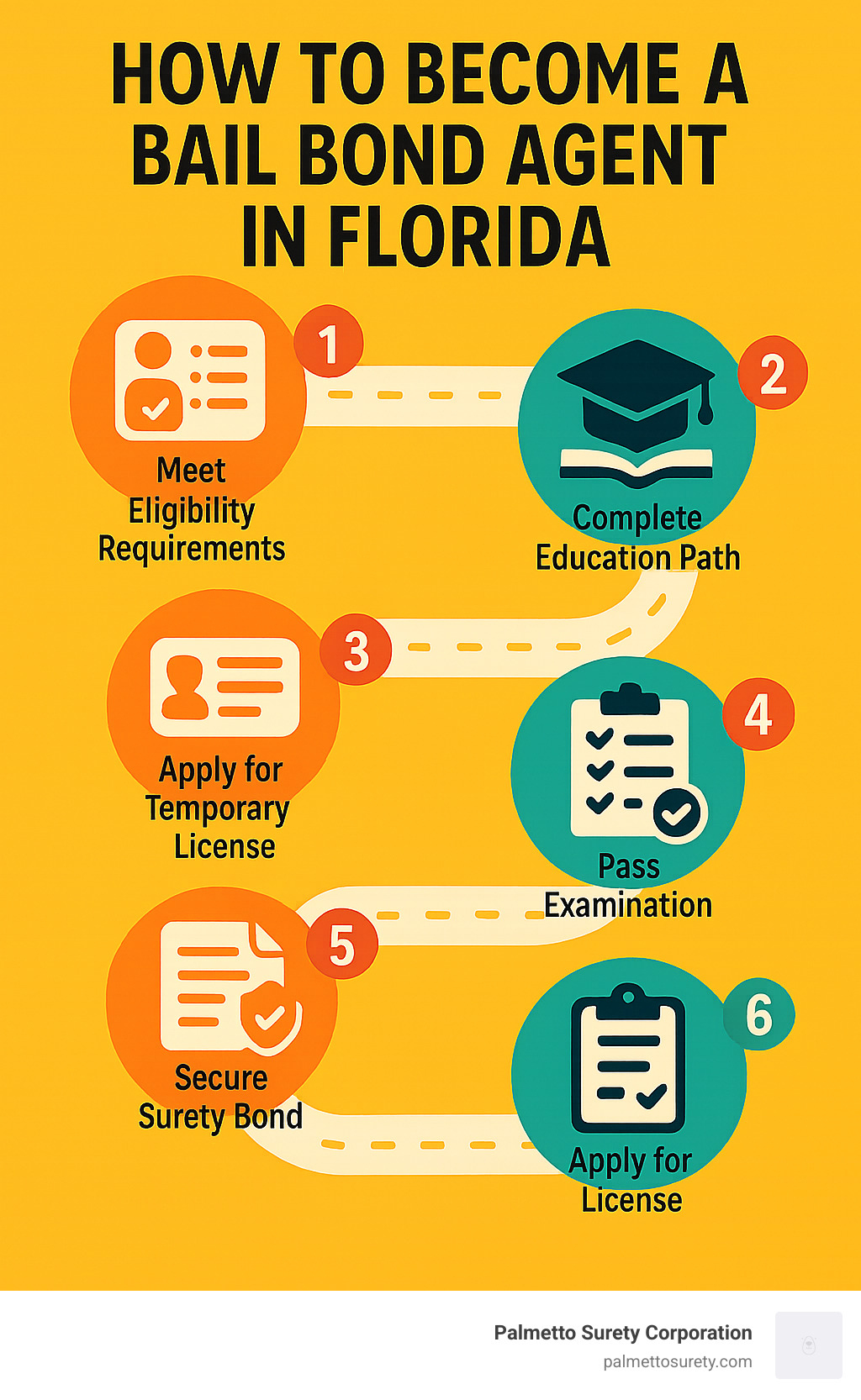
To qualify for a bail bond license in Florida, applicants must be a citizen or legal resident of the United States. Furthermore, they must be a resident of Florida for at least one year prior to applying for the license. This residency requirement helps ensure a local understanding of the community and its legal landscape.
Age and Education
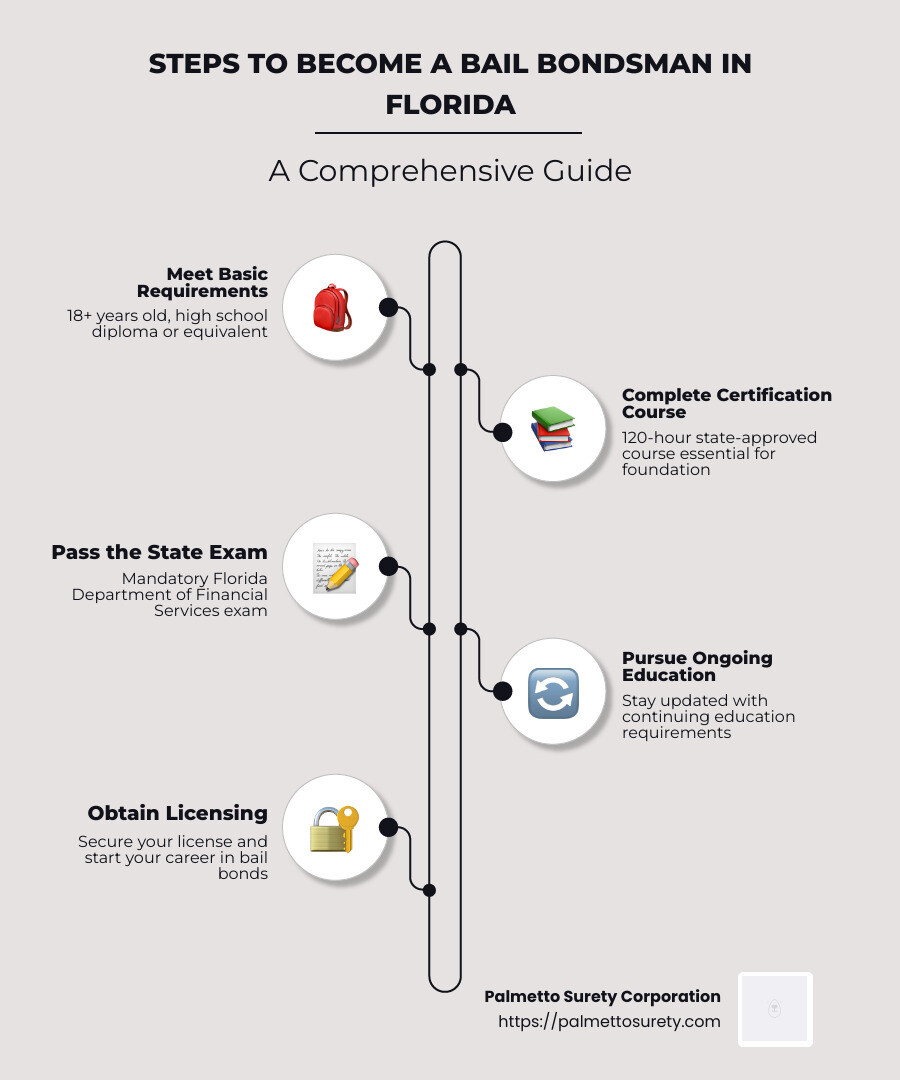
Applicants must be at least 18 years old. While a specific college degree is not mandated, a high school diploma or its equivalent (GED) is required. More importantly, candidates must complete a state-approved pre-licensing education course, which provides specialized knowledge crucial for the profession. This course covers Florida laws and regulations pertinent to bail bonding, ethical practices, and the responsibilities of a bondsman.
Background Checks and Character
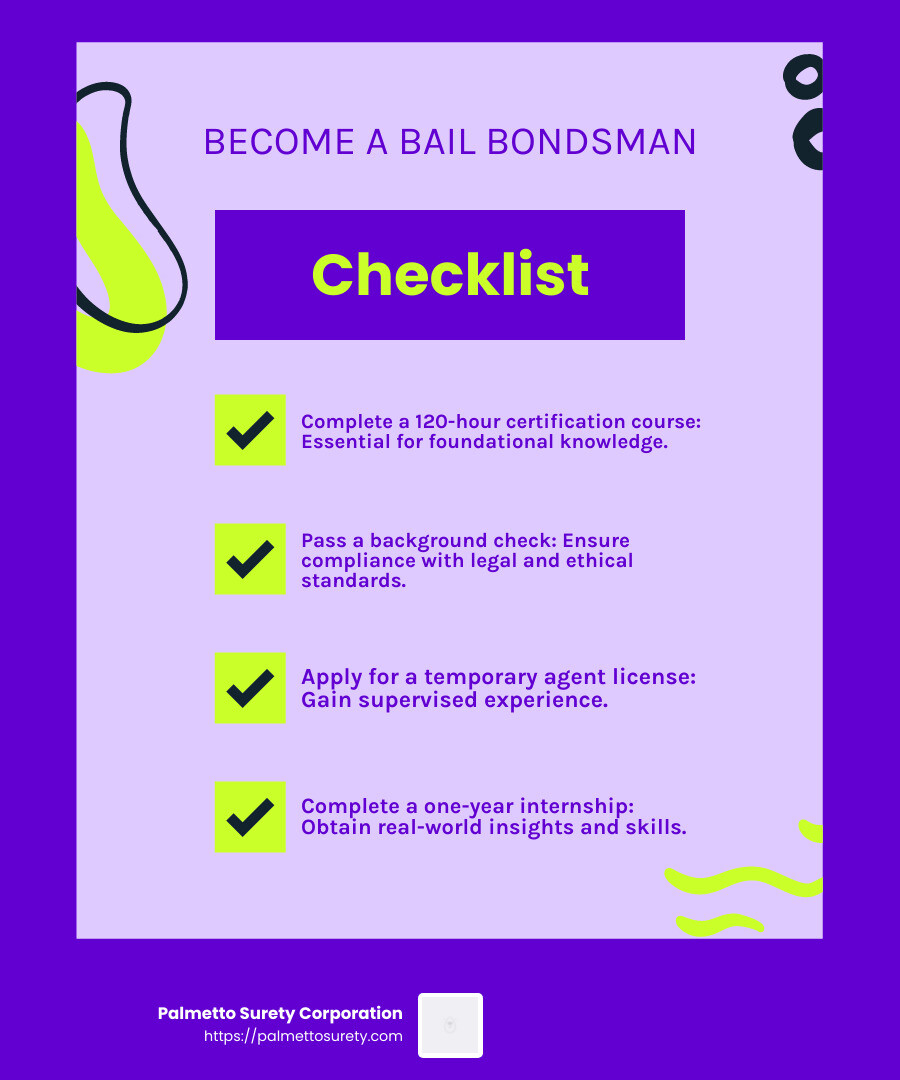
Integrity and a clean record are paramount for a bail bondsman. Applicants undergo thorough background checks, including fingerprinting, to assess their criminal history. The Florida Department of Financial Services (DFS), which regulates the industry, looks for evidence of good moral character and a sound reputation. Individuals with felony convictions or certain misdemeanor offenses, particularly those involving dishonesty, fraud, or moral turpitude, may be disqualified from obtaining a license. Financial stability is also considered, as a bondsman must demonstrate the ability to meet significant financial obligations.
The Licensing Process in Florida
Obtaining a bail bond license in Florida is a multi-step process overseen by the Florida Department of Financial Services (DFS). Adhering to each step meticulously is crucial for a successful application.
Pre-Licensing Education
The first formal step is completing a 120-hour pre-licensing course approved by the Florida Department of Financial Services. These courses are offered by various educational institutions throughout the state, both in-person and online. The curriculum typically includes topics such as:
- Florida Statutes and Regulations: In-depth study of Chapter 648 of the Florida Statutes, which specifically governs bail bondsmen.
- Legal Procedures: Understanding arrest procedures, court processes, and the rights of the accused.
- Ethical Practices: Professional conduct, client confidentiality, and avoiding conflicts of interest.
- Business Operations: Record-keeping, financial management, and marketing strategies specific to the bail bond industry.
- Fugitive Recovery: Basics of locating and apprehending defendants who have skipped bail, often with an emphasis on legal boundaries and safety.
Upon successful completion of the course, applicants receive a certificate, which is necessary for the next stage.
State Examination
After completing the pre-licensing education, candidates must pass a state licensing examination administered by a DFS-approved testing vendor. This comprehensive exam tests knowledge of Florida bail bond laws, insurance principles, and ethical responsibilities. It is designed to ensure that applicants possess the necessary expertise to operate competently and legally. Thorough preparation, often including practice tests and review of course materials, is highly recommended to pass on the first attempt.
Application Submission to the Florida Department of Financial Services
With the education and exam requirements met, the next step involves submitting a formal application to the Florida Department of Financial Services (DFS). The application package typically includes:
- Completed application form.
- Proof of citizenship or legal residency.
- Proof of Florida residency for at least one year.
- Official transcripts or certificates from the pre-licensing course.
- Fingerprint-based background check results.
- Application fees.
- Any additional documentation requested by the DFS to verify good moral character and financial stability.
The DFS will review the application meticulously, conducting its own background checks and verifying all submitted information. This review process can take several weeks or even months.
Appointment by an Insurer
Unlike many other professions, a bail bondsman in Florida cannot operate independently without being sponsored or appointed by an insurance company that is licensed to underwrite surety bail bonds in the state. This insurance company effectively backs the bonds issued by the bail bondsman. Finding a reputable surety company to work with is a critical step. They will often conduct their own vetting process of the applicant, looking for reliability, business acumen, and adherence to ethical standards. Once an appointment is secured, the surety company notifies the DFS, which then issues the final license.
Building Your Bail Bonds Business
Once licensed, the journey transitions from obtaining credentials to establishing a viable business. Building a successful bail bond operation in Florida involves strategic planning, financial investment, and effective networking.
Financial Considerations
Starting a bail bond business requires significant capital. Key financial aspects include:
- Surety Relationship: Establishing a financial relationship with a surety insurance company. This often involves providing collateral or a line of credit to the surety as a guarantee against bond forfeitures. The amount can range from tens of thousands to hundreds of thousands of dollars, depending on the volume and size of bonds anticipated.
- Office Setup: Securing an office space that is easily accessible and professional. Many bondsmen strategically locate their offices near courthouses or jails for convenience.
- Operational Costs: Initial and ongoing expenses include licensing fees, insurance (liability, errors & omissions), legal counsel, advertising, vehicle costs, and potentially hiring staff.
- Reserve Funds: Maintaining sufficient cash reserves to cover potential bond forfeitures, which are an inherent risk in the business.
Prospective bondsmen should develop a comprehensive business plan detailing startup costs, projected revenue, and risk management strategies.
Operational Setup
Beyond finances, the operational setup is crucial for efficiency and compliance:
- Legal Compliance: Ensuring all business practices strictly adhere to Florida statutes and DFS regulations. This includes proper documentation, fee structures, and handling of collateral.
- Technology and Systems: Implementing systems for client management, record-keeping, payment processing, and communication. A reliable database for tracking court dates and client information is essential.
- Security: Given the nature of the business, security measures for both the office and personal safety are important considerations.
- Staffing: As the business grows, hiring administrative staff, investigators, or additional bondsmen may become necessary.
Marketing and Networking
In a competitive market like Florida, effective marketing and networking are vital:
- Local Presence: Building relationships with attorneys, law enforcement, and court personnel can be beneficial. Understanding the local legal community in cities like Miami, Orlando, or Tampa is key.
- Visibility: Professional signage, a strong online presence (website, social media), and local advertising can attract clients. Being available 24/7 is often a significant competitive advantage.
- Reputation: Providing reliable, professional, and ethical service builds a positive reputation, leading to referrals. Word-of-mouth is powerful in this industry.
The Day-to-Day Life and Future Outlook
A career as a bail bondsman is far from a standard 9-to-5 job. It demands flexibility, resilience, and a deep sense of responsibility.
Responsibilities and Challenges
The daily life of a bail bondsman can be unpredictable. It involves:
- Client Intake: Meeting with clients, explaining the bail process, assessing risk, and completing paperwork. This often happens at odd hours, including nights and weekends.
- Court Appearances: Attending court hearings, especially for bond forfeiture cases or to assist clients with understanding their obligations.
- Monitoring Clients: Keeping track of defendants’ court dates and ensuring they adhere to any conditions of their release.
- Fugitive Recovery: When a defendant fails to appear, the bondsman is responsible for locating and apprehending them, often working with or employing fugitive recovery agents. This aspect carries inherent risks and requires careful adherence to legal procedures.
- Administrative Tasks: Managing paperwork, financial records, and compliance with regulatory bodies.
Challenges include the financial risk of bond forfeitures, dealing with difficult or unreliable clients, and the demanding schedule. The work can also be emotionally taxing, dealing with individuals facing stressful legal situations.
Rewards and Contribution to the Community
Despite the challenges, the profession offers significant rewards. Successful bail bondsmen can earn a substantial income. More importantly, the role provides a vital service to the community. By enabling the release of individuals awaiting trial, bondsmen help ensure that people can return to their families and jobs, prepare their defense, and avoid unnecessary pre-trial incarceration. This contributes to a more efficient and humane justice system. There’s a sense of purpose in helping individuals navigate a complex legal system during a difficult time.
Continuing Education and Growth
To maintain a Florida bail bond license, continuing education is mandatory. Licensed bondsmen must complete 14 hours of approved continuing education every two years, including at least one hour of ethics. This ensures that professionals stay updated on changes in laws, regulations, and best practices. Opportunities for growth include expanding into new markets, increasing the capacity for writing larger bonds, or specializing in certain types of cases. Some experienced bondsmen may also transition into teaching pre-licensing courses or becoming surety agents themselves.
Becoming a bail bondsman in Florida is a demanding yet potentially lucrative and impactful career. It requires dedication to the legal process, strict adherence to state regulations, and a strong commitment to serving individuals in their time of need. With the right preparation, ethical practice, and business acumen, individuals can carve out a successful and meaningful path in this unique field.
LifeOutOfTheBox is a participant in the Amazon Services LLC Associates Program, an affiliate advertising program designed to provide a means for sites to earn advertising fees by advertising and linking to Amazon.com. Amazon, the Amazon logo, AmazonSupply, and the AmazonSupply logo are trademarks of Amazon.com, Inc. or its affiliates. As an Amazon Associate we earn affiliate commissions from qualifying purchases.