
Navigating the legal system, especially in an unfamiliar state, can be daunting. While visitors typically come to Florida for its pristine beaches, vibrant cities, and theme parks, unexpected situations can arise, sometimes leading to an arrest. If you find yourself needing to bond someone out of jail in the Sunshine State, understanding the local process is crucial. This guide offers insights into the Florida bail system, providing a practical roadmap during a challenging time.
Understanding Bail in the Sunshine State
The concept of bail is rooted in the fundamental principle that individuals are presumed innocent until proven guilty. It serves as a financial guarantee that an arrested person will appear for all scheduled court dates after their release from custody.

The Purpose of Bail
Bail, as mandated by the Eighth Amendment of the U.S. Constitution and outlined in Florida Statutes, is designed to ensure the defendant’s appearance in court while allowing them to maintain their freedom during the pretrial release phase. It balances the defendant’s right to liberty with the state’s interest in administering justice. The amount and conditions of bail are typically set based on factors such as the severity of the alleged crime, the defendant’s flight risk, criminal history, and ties to the community.
Different Types of Bail Bonds in Florida
Florida offers several methods for securing release from jail through bail, each with its own requirements and implications.
Cash Bond
A Cash Bond involves paying the full bail amount directly to the Clerk of Court or the jail. Once all court appearances are completed and the case is resolved, the full amount, minus any administrative fees, is returned to the person who posted it. This method requires immediate access to the entire bail amount, which can often be substantial.
Surety Bond
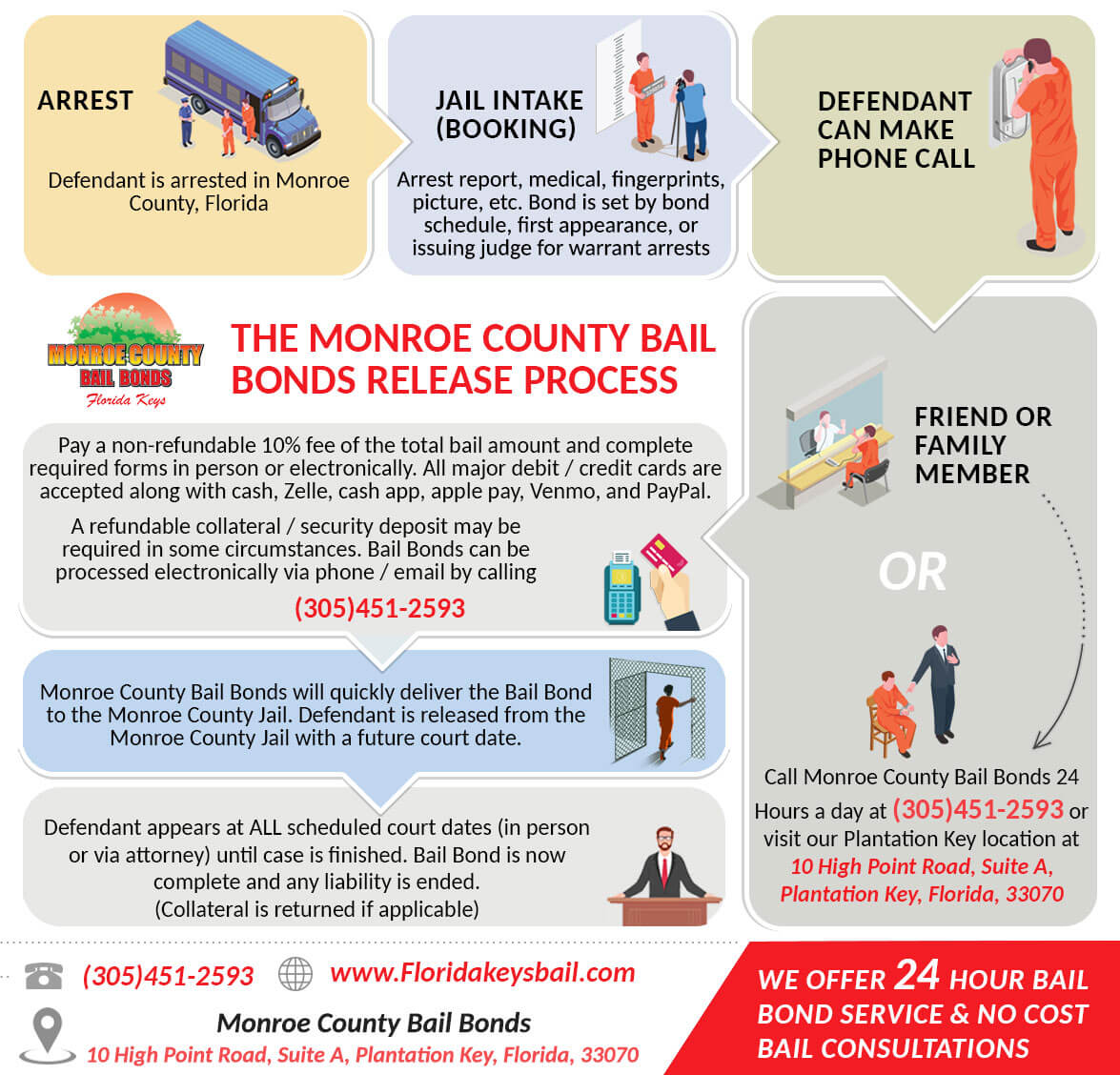
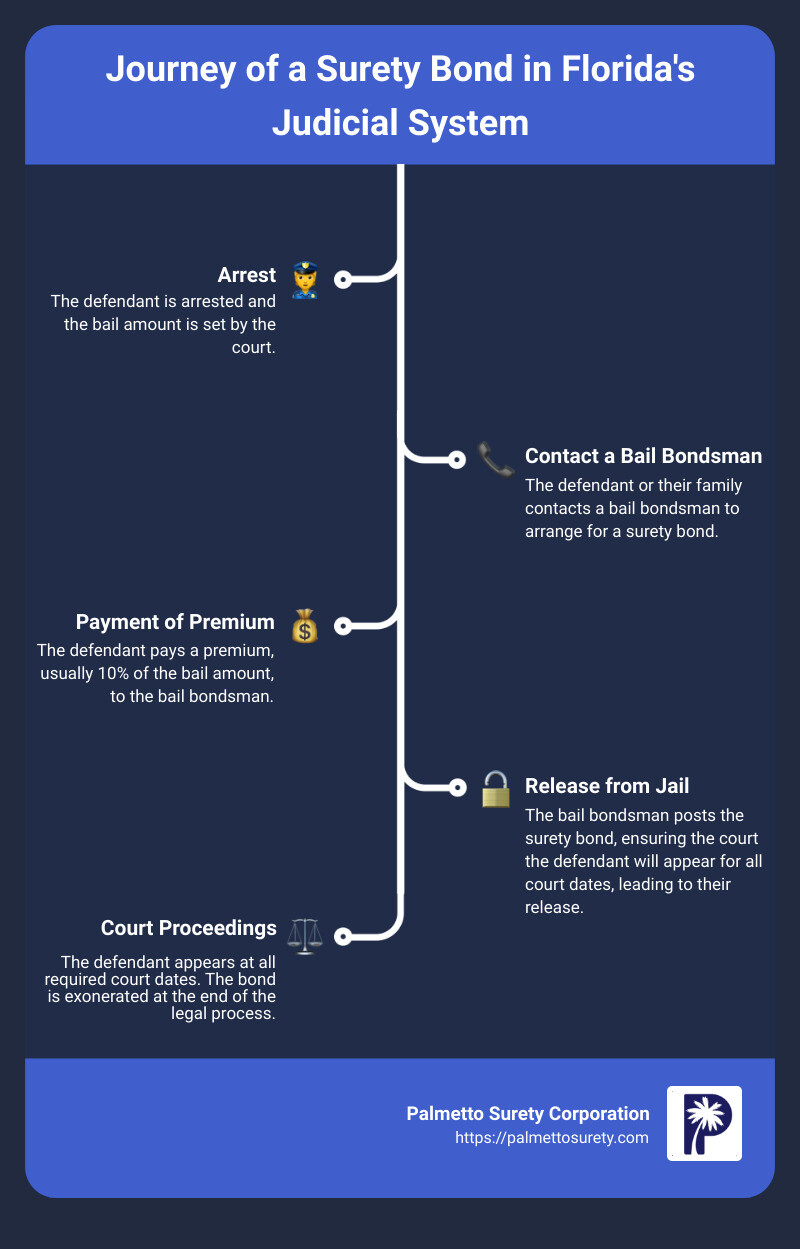
The most common method, a Surety Bond, is facilitated through a licensed Bail Bond Agency. The agency charges a non-refundable premium, typically 10% of the total bail amount (or 15% for federal bonds), and often requires collateral. In return, the agency guarantees the defendant’s appearance in court to the state. If the defendant fails to appear, the agency is responsible for the full bail amount and will typically employ a bounty hunter to locate and return the defendant to custody.
Property Bond
Less frequently used, a Property Bond involves pledging real estate as collateral for the bail amount. The value of the property must typically be at least double the bail amount to account for potential fluctuations and legal fees. This process is often complex, requiring appraisals, legal documentation, and court approval, making it a time-consuming option.
Pretrial Release
In some cases, a defendant may be released on their own recognizance (ROR) or through Pretrial Release programs. ROR means no money is required; the defendant simply promises to appear in court. Pretrial Release often involves supervision and specific conditions, such as regular check-ins, curfews, or GPS monitoring, without a financial bond. Eligibility for these options depends on the severity of the crime, the defendant’s background, and the discretion of the judge.
Initial Steps After an Arrest in Florida
The immediate aftermath of an arrest can be disorienting. The first crucial steps involve gathering information and understanding the situation. The arrested individual will typically be transported to a county jail facility, processed, and held until a bail amount is set. This process can take several hours, sometimes longer depending on the county and the time of arrest.
Navigating the Bail Bond Process
Once an individual is arrested, swift action can often lead to quicker release. Understanding how to locate the person, determine the bail amount, and choose the most suitable bonding option is paramount.
Locating the Arrested Individual
The first step is to confirm where the individual is being held. Most Florida counties offer online inmate search tools on their sheriff’s office or jail websites. For example, Miami-Dade County, Orange County, and Broward County all provide public inmate search portals. If online resources are unavailable or yield no results, directly calling the local county sheriff’s office or jail is the next course of action. Be prepared to provide the full name and date of birth of the arrested person.
Determining the Bail Amount
Bail amounts are typically determined in one of two ways:
Bond Schedule vs. Judicial Discretion
Many counties operate with a bond schedule, a pre-set list of bail amounts for common offenses. For minor crimes, individuals may be able to post bond immediately based on this schedule. For more serious offenses, or if the individual has a complex criminal history, the bail amount is often set by a judge or magistrate during a first appearance hearing. These hearings typically occur within 24 hours of arrest.
Role of the Judge or Magistrate
During the first appearance hearing, a judge or magistrate will review the arrest affidavit, consider the defendant’s criminal history, community ties, and flight risk, and then set a bail amount and any accompanying conditions of release. It is at this stage that the possibility of Pretrial Release or a reduced bail amount may be discussed, especially if the defendant has legal representation.
Choosing a Bail Option
The choice of bail option largely depends on financial capacity and preference.
Pros and Cons of Cash Bond
A Cash Bond offers the advantage of potential full reimbursement, making it the most cost-effective option if the defendant fulfills all court obligations. However, it requires a significant upfront financial outlay that most people do not have readily available, especially for higher bail amounts.
Working with a Bail Bond Agency
For many, engaging a Bail Bond Agency is the most practical solution. While it involves a non-refundable fee, it allows for release without having to pay the full bail amount. Agencies simplify the process and often provide guidance, which can be invaluable during a stressful time. However, it’s important to understand the terms of the agreement, including any collateral requirements.
Working with a Licensed Bail Bond Agent
When opting for a Surety Bond, selecting a reputable and licensed Bail Bond Agency is paramount. These professionals are regulated and play a critical role in the Florida legal system.
What a Bail Bond Agent Does
A licensed bail bond agent acts as an intermediary, guaranteeing to the court that the defendant will appear for all scheduled proceedings. In exchange for this guarantee, they collect a premium (usually 10% of the bail amount) from the defendant or a co-signer. They then process the paperwork with the jail to secure the defendant’s release. Their expertise can help streamline the release process, particularly for those unfamiliar with local procedures in specific Florida counties like Palm Beach County or Orange County.
Fees and Collateral
The premium paid to a bail bond agency is non-refundable. In addition to the premium, agents may require collateral to secure the bond, especially for high bail amounts or defendants deemed a higher flight risk. Collateral can include property, vehicles, jewelry, or even bank accounts. This collateral is held by the agency until the case is resolved and all court appearances are completed. If the defendant absconds, the agency has the right to seize the collateral to cover their liability to the court.
Verifying Agent Credentials
Before entering into an agreement, always verify that the bail bond agent and agency are properly licensed and in good standing. In Florida, bail bond agents are regulated by the Florida Department of Financial Services. Their website provides a licensee search tool where you can check an agent’s license status and disciplinary history. This due diligence ensures you are working with a legitimate and reputable professional.
The Bail Bond Agreement
A clear, written contract should outline all terms and conditions of the bail bond agreement. This includes the premium charged, any collateral required, the responsibilities of the indemnitor (the person signing for the bond), and the consequences of failing to appear in court. Read this agreement carefully and ask questions before signing. Ensure you understand your obligations, particularly regarding the defendant’s appearance in court.
Post-Bond Release Considerations
Securing release from jail is a significant step, but it is not the end of the process. Several crucial considerations follow to ensure the defendant fulfills their legal obligations.
Understanding Conditions of Release
When a judge sets bail, they often impose specific conditions of release in addition to the financial bond. These conditions vary widely depending on the nature of the charges and the defendant’s history. Common conditions in Florida include:
- No contact with victims or witnesses.
- Staying away from specific locations.
- Curfews.
- Maintaining employment.
- Avoiding alcohol or drugs (sometimes requiring random testing).
- Wearing an electronic monitoring device.
Failure to adhere to any of these conditions can result in the immediate revocation of bail and re-arrest.
Court Dates and Obligations
Upon release, the defendant will be provided with information regarding their next court date, usually an arraignment. It is imperative that the defendant attends every single scheduled court appearance, no matter how minor it may seem. Missing a court date, even inadvertently, is considered a failure to appear (FTA) and has severe repercussions. It’s advisable to mark these dates clearly, set reminders, and confirm them with their legal counsel.
Consequences of Failing to Appear
A failure to appear (FTA) is a serious offense in Florida. If a defendant misses a court date, the judge will typically issue a bench warrant for their arrest, and the bail bond will be forfeited. This means that if a Surety Bond was used, the Bail Bond Agency is liable for the full bail amount and will initiate efforts to locate and apprehend the defendant. Any collateral provided will likely be seized. Furthermore, new charges for failure to appear can be filed, complicating the original case and potentially leading to harsher penalties.
Getting Your Collateral Back
If a Surety Bond was used and collateral was provided, it will be returned to the indemnitor once the case is fully resolved and the defendant has fulfilled all their court obligations. This includes attending all hearings, trials, and sentencing. The process of returning collateral usually begins shortly after the Clerk of Court formally exonerates the bond. Be sure to stay in communication with the bail bond agency regarding the return of your assets.
Important Legal Nuances and Resources
While securing bail is a critical first step, understanding the broader legal landscape in Florida is essential for anyone involved in the process.
Rights of the Accused
In Florida, as throughout the United States, individuals accused of crimes have fundamental rights. These include the right to remain silent, the right to an attorney, the right to a speedy and public trial, and the right to confront witnesses. It is crucial for the defendant to understand and exercise these rights. Police are required to read the “Miranda Rights” to an individual upon arrest and before custodial questioning.
Seeking Legal Counsel
Engaging an attorney immediately after an arrest is highly advisable. A qualified attorney can:
- Advise the defendant on their rights.
- Represent them at the first appearance hearing to argue for a lower bail amount or Pretrial Release.
- Guide them through the entire legal process.
- Negotiate with the prosecutor.
- Prepare for trial.
If the defendant cannot afford a private attorney, they may be eligible for a Public Defender, whose services are state-funded.
Understanding Florida Statutes Related to Bail
The specifics of bail and arrest procedures are codified in Florida Statutes, primarily Chapter 903. Familiarizing yourself with these statutes, or consulting with someone who is knowledgeable about them, can provide a deeper understanding of the legal framework governing bail in the state. This includes provisions for bond forfeiture, professional bail bondsmen, and the rights and responsibilities of all parties involved.
County-Specific Procedures
While the general principles of bail are consistent statewide, specific procedures and administrative details can vary between counties. For instance, the exact process for posting bail, the hours of the Clerk of Court’s office, or the available pretrial release programs may differ between Miami-Dade County’s extensive system, Orange County’s busy court system, or the procedures in Broward County and Palm Beach County. Always check the specific county sheriff’s office or Clerk of Court website for the most accurate local information. When working with a bail bond agency, they will be well-versed in these local nuances.
LifeOutOfTheBox is a participant in the Amazon Services LLC Associates Program, an affiliate advertising program designed to provide a means for sites to earn advertising fees by advertising and linking to Amazon.com. Amazon, the Amazon logo, AmazonSupply, and the AmazonSupply logo are trademarks of Amazon.com, Inc. or its affiliates. As an Amazon Associate we earn affiliate commissions from qualifying purchases.