
Marriage is a transformative life event, often bringing with it the exciting prospect of a new shared identity, including a new last name. For those who tie the knot in the Sunshine State, navigating the legal and administrative steps to change a last name after marriage in Florida requires a methodical approach. This comprehensive guide outlines the essential procedures, helping newlyweds streamline the process and embrace their new identity with ease.
The Foundational Step: Your Certified Marriage Certificate
The journey to changing your last name legally begins with your marriage certificate. This document is the linchpin that authorizes all subsequent name changes. Without it, no federal or state agency will acknowledge your new marital status or permit a name alteration.
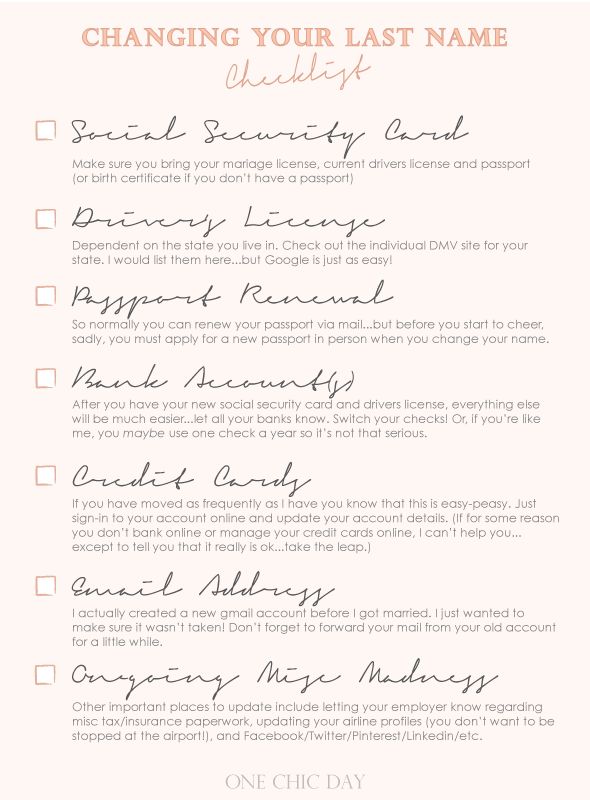
Obtaining the Certificate
After your wedding ceremony in Florida, your officiant is responsible for filing your marriage license with the Clerk of the Circuit Court in the county where you obtained it. Once filed and recorded, it becomes a marriage certificate. It is absolutely crucial to obtain several certified copies of this document. Standard copies are rarely accepted; agencies almost universally require certified copies, identifiable by an official seal, stamp, or signature from the issuing authority.
You can typically request certified copies in person, by mail, or sometimes online, directly from the Clerk of the Circuit Court in the relevant Florida county. Fees for certified copies vary by county, so it’s advisable to check the specific court’s website. Given that you’ll need to present this document to numerous entities, securing at least three to five certified copies upfront can save significant time and effort. Some agencies may keep a copy for their records, while others will review and return it. Having multiple copies on hand ensures you can process multiple applications simultaneously or swiftly replace a lost document without delay.
Verifying Information
Before proceeding with any name change applications, meticulously review your certified marriage certificate. Ensure that your full legal names, the officiant’s signature, and the date and place of marriage are all accurate and correctly transcribed. Any discrepancies, even minor typographical errors, could lead to rejections and substantial delays in your name change process. If you discover an error, contact the Clerk of the Circuit Court immediately to inquire about correction procedures. Rectifying errors at this initial stage is far simpler than trying to correct them after they’ve been propagated across multiple official documents.
Updating Federal Records: Social Security and Passport
Once you have your certified marriage certificate in hand and have verified its accuracy, the next critical steps involve updating your federal identification records. These are paramount, as many state and private entities will only permit name changes after your federal identity documents reflect your new name.
Social Security Administration (SSA)
Changing your name with the Social Security Administration (SSA) is often the first official step after obtaining your marriage certificate, as a corrected Social Security card is frequently required for other identification updates, such as your driver’s license. To update your name, you will need to complete Form SS-5, the Application for a Social Security Card.
Along with the completed form, you must provide original documents or certified copies to prove your identity, U.S. citizenship (or immigration status), and your legal name change. The primary document for name change will be your certified marriage certificate. For proof of identity, a current driver’s license, state-issued non-driver identification card, or U.S. passport is typically accepted. Proof of U.S. citizenship could be your birth certificate or a U.S. passport.
You cannot submit photocopies for these proofs; they must be originals or certified copies. The SSA will mail your new Social Security card (with your updated name) to you once the process is complete, and your original documents will be returned. There is no fee for changing your name on your Social Security card. While you can mail your application and documents, many prefer visiting a local SSA office to avoid mailing original identification. Always check the official SSA website for the most current requirements and office locations.
Passport Services (U.S. Department of State)
After updating your Social Security records, consider changing your name on your U.S. passport. The specific form and documentation required depend on how recently your current passport was issued:
- Form DS-5504 (Correction, Name Change, Data Correction, and Limited Passport Book Replacement Application): Use this form if your current passport was issued less than one year ago. You will need to submit your current passport, your certified marriage certificate, and a new passport photo. There is no fee for this service if it falls within the one-year window.
- Form DS-82 (U.S. Passport Renewal Application for Eligible Individuals): If your passport was issued more than one year ago but less than 15 years ago, and you were at least 16 years old when it was issued, you can use the renewal application. You will submit your current passport, your certified marriage certificate, and a new passport photo. The standard passport renewal fee applies.
- Form DS-11 (Application for a U.S. Passport): If your passport was issued more than 15 years ago, or if you were under 16 when it was issued, or if your passport is damaged/lost, you will need to apply for a new passport using Form DS-11. This requires appearing in person at a passport acceptance facility, providing proof of U.S. citizenship (e.g., birth certificate), valid photo ID (e.g., driver’s license with new name), certified marriage certificate, and a new passport photo. All applicable new passport fees will apply.
It is highly recommended to update your passport, especially if you plan any international travel in the near future, to avoid discrepancies between your travel documents and other identification. The U.S. Department of State website provides detailed instructions and forms.
Updating State Records: Driver’s License and Vehicle Title
With your federal identity updated (specifically your Social Security card), you can now proceed to change your name on your state-issued identification and vehicle records in Florida.
Florida Department of Highway Safety and Motor Vehicles (FLHSMV)

Changing your name on your Florida driver’s license or state ID card is a mandatory step. You must visit a local Florida Department of Highway Safety and Motor Vehicles (FLHSMV) service center in person. You generally have 30 days to update your driver’s license after a legal name change.
When visiting the FLHSMV, you will need to bring:
- Your current Florida driver’s license or ID card.
- Your new Social Security card reflecting your updated name. The FLHSMV will electronically verify your Social Security number with the SSA system.
- Your certified marriage certificate as proof of your legal name change.
- Proof of residential address if it has changed, typically two documents like utility bills or a lease agreement.
- The required fee for a duplicate or updated driver’s license/ID card.
You will complete a brief application form, surrender your old license, and a new one with your updated name will be issued on the spot.
Vehicle Titles and Registration
If you own a vehicle, boat, or other registered property, you will also need to update the titles and registration to reflect your new name. This is typically handled through your local County Tax Collector’s Office or a licensed tag agency, which acts on behalf of the FLHSMV.
To update a vehicle title, you generally need to present:
- The original vehicle title.
- Your certified marriage certificate.
- Your updated Florida driver’s license with your new name.
- A completed application for a new title (usually Form HSMV 82101).
- Payment for the title transfer and registration fees.
It is advisable to update your vehicle records promptly to avoid any potential legal or insurance complications. This ensures that your ownership documents accurately reflect your current legal identity.
Notifying Other Essential Entities
Once your primary federal and state identifications are updated, a comprehensive list of other entities requiring notification of your name change should be addressed. This ensures a seamless transition and avoids future administrative headaches.
Financial Institutions and Internal Revenue Service (IRS)
Contact your banks, credit unions, credit card companies, and investment firms. Each institution will have its own procedure, but you’ll typically need to present your certified marriage certificate and your updated photo ID (driver’s license or passport). Update all joint accounts, individual accounts, and credit cards. It’s also wise to check your credit report to ensure all accounts are correctly updated and to monitor for any inconsistencies.
While the Internal Revenue Service (IRS) does not require you to contact them directly about a name change, your new name will be automatically updated when you file your next tax return, provided you have already changed it with the SSA. If your Social Security records are not updated, there could be issues with your tax refund or processing of your return.
Employers and Insurance Providers
Inform your employer(s) about your name change. You will need to update your HR records, including your W-4 form, and potentially your employee benefits information. Provide them with a copy of your new Social Security card for payroll purposes.
For insurance, notify your health insurance provider, auto insurance company, life insurance provider, and any other relevant insurance carriers. Your name should match across all policies to ensure coverage remains valid. They will typically require a copy of your marriage certificate and possibly your updated ID.
Utilities, Leases, and Subscriptions
Remember to update your name with utility companies (electricity, water, gas, internet), your landlord or mortgage company, and any subscription services (magazines, streaming services, gym memberships, professional organizations). While seemingly minor, these details contribute to your overall lifestyle management and ensure all bills and communications are correctly addressed. Review your mailing list and digital profiles to capture all necessary changes.
Pro Tips for a Seamless Name Change
Changing your last name after marriage in Florida can be a multi-step process. Strategic planning and organization can significantly ease the transition.
Maintain an Organized Folder
Create a dedicated folder (physical and/or digital) for all your name change documents. Include your certified marriage certificates, copies of all forms submitted, receipts for fees paid, and a checklist of entities contacted and those still pending. This centralized repository will be invaluable for tracking progress and addressing any issues that may arise.
Plan for Timing and Costs
Understand that the entire process can take several weeks or even months, depending on the response times of various agencies. Prioritize documents needed for essential activities first (e.g., Social Security, driver’s license). Factor in the costs associated with certified copies, new IDs, passport fees, and any processing fees, and budget accordingly.
Consider All Accounts
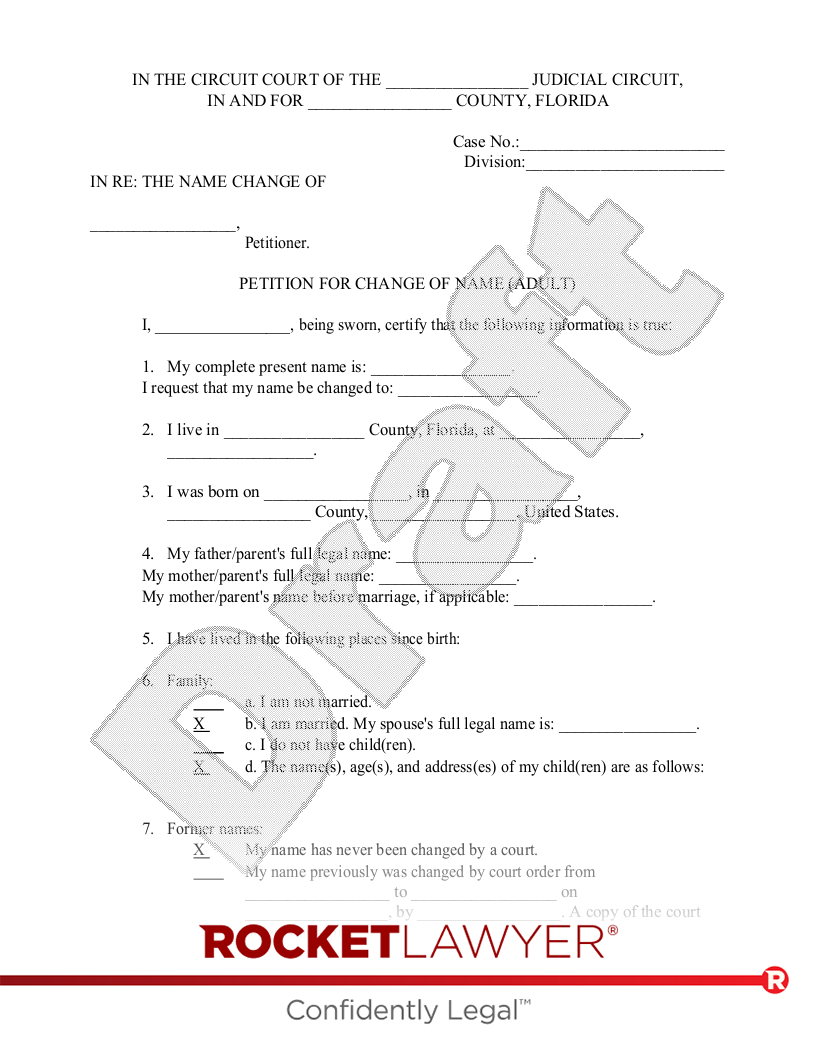
Beyond the major categories, think about lesser-used accounts or affiliations that may still hold your old name. This includes professional licenses, voter registration, loyalty programs, email addresses, social media profiles, and even pet microchip registrations. While not all are critical, updating them ensures consistency across your entire personal and digital presence, reinforcing your new identity.
Embracing a new last name after marriage is a personal choice that requires attention to detail and patience. By systematically following these steps in Florida, you can successfully transition your identity across all official and personal platforms, paving the way for your new chapter with confidence.
LifeOutOfTheBox is a participant in the Amazon Services LLC Associates Program, an affiliate advertising program designed to provide a means for sites to earn advertising fees by advertising and linking to Amazon.com. Amazon, the Amazon logo, AmazonSupply, and the AmazonSupply logo are trademarks of Amazon.com, Inc. or its affiliates. As an Amazon Associate we earn affiliate commissions from qualifying purchases.