
The Essential Role of a Florida State ID in Your Lifestyle
Embracing life in the Sunshine State, whether as a long-term resident or a new arrival, often involves navigating various administrative processes to ensure smooth daily living. Among the most fundamental is obtaining a Florida state identification card. Far more than just a piece of plastic, this document serves as your official proof of identity and residency within Florida, unlocking access to essential services and simplifying countless everyday interactions. For those committed to a life in Florida, understanding how to secure this vital card is a cornerstone of establishing your presence and convenience.
Why a Florida ID Matters for Residents
A Florida state ID card is indispensable for a wide array of activities that define modern living. It is the primary accepted form of identification for everything from opening a bank account, cashing checks, and applying for jobs, to registering to vote in local and state elections. It facilitates access to government services, including social welfare programs, and serves as age verification for purchases like alcohol or tobacco. For many, it replaces the need to carry a passport for domestic identification purposes, offering a more convenient and secure option for daily use.
Beyond these practicalities, a Florida ID solidifies your status as a resident, which can be crucial for accessing resident-specific discounts at attractions, parks, and educational institutions across the state. It streamlines interactions with law enforcement and emergency services, ensuring accurate identification when it matters most. For families, securing state IDs for all eligible members is a proactive step toward organized and stress-free living in Florida. In essence, it’s not just a card; it’s a passport to participating fully in the vibrant Florida lifestyle.
Distinguishing a State ID from a Driver’s License
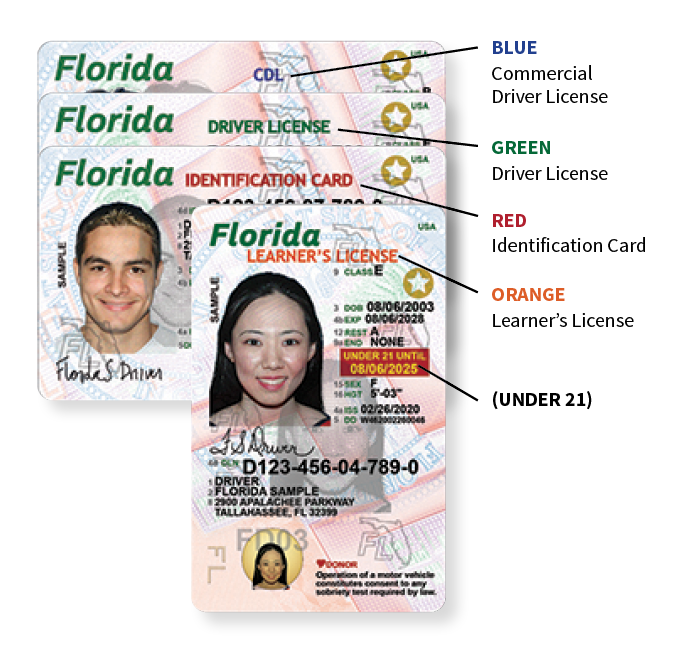
While often confused, a Florida state ID card is distinct from a Florida driver’s license. The primary difference lies in their purpose: a driver’s license grants you the legal privilege to operate a motor vehicle, whereas a state ID card serves solely as proof of identity and age for non-driving residents. Individuals who do not drive, such as seniors, those with medical conditions preventing driving, or young adults prior to obtaining a driver’s license, rely heavily on state ID cards.
Both documents are issued by the same governmental authority, the Florida Department of Highway Safety and Motor Vehicles (FLHSMV), and feature similar security measures and physical appearance. The application process, including the required documentation, is also largely identical. Choosing between the two depends entirely on whether you intend to drive in Florida. If not, the state ID card is the perfect solution, providing all the necessary identification without the driving privileges and associated testing. If you already possess a valid Florida driver’s license, you do not need a separate state ID card, as the driver’s license fulfills all identity verification requirements.
Navigating the Application Process: Step-by-Step
Obtaining your Florida state ID card is a straightforward process, provided you arrive prepared. The key to a smooth experience lies in understanding the requirements and gathering all necessary documentation beforehand. The FLHSMV offices, often referred to as DMV or Tax Collector’s Offices, are the designated locations for processing these applications.
Gathering Your Required Documents
The FLHSMV adheres to federal REAL ID Act standards, meaning strict documentation is required to prove your identity, Social Security number, and residential address. It’s advisable to bring original documents or certified copies, as photocopies are generally not accepted.
Primary Identification
You will need one document to establish your primary identification. This proves who you are. Acceptable documents include:
- Original or certified copy of a U.S. Birth Certificate (issued by a government agency, not a hospital record)
- Valid U.S. Passport or Passport Card
- Certificate of Naturalization
- Consular Report of Birth Abroad
- Valid Alien Registration Receipt Card (Green Card) for non-U.S. citizens
- Valid Employment Authorization Card (EAD) for non-U.S. citizens
Proof of Social Security Number
To verify your Social Security number, you must present one document. The name on this document must match the name on your primary identification.
- Original Social Security card
- W-2 form
- Pay stub showing your full Social Security number
- SSA Form 1099 or non-SSA Form 1099
Two Proofs of Residential Address
This step is crucial for establishing your Florida residency. You must provide two different documents showing your current residential address. These cannot be P.O. boxes and must clearly state your name and address.
- Utility bill (electric, water, gas, cable, landline telephone) issued within the last 60 days
- Mail from a government agency (federal, state, county, city) issued within the last 60 days
- Florida Vehicle Registration or Title
- Automobile insurance policy or bill
- Mortgage statement or deed
- Residential rental contract or lease agreement
- W-2 form or 1099 form
- Statement from a financial institution (bank, credit union, etc.) issued within the last 60 days
- Educational institution transcript or student loan application
For minors under 18, a parent or legal guardian may present an affidavit of domicile along with their own proof of address.
Locating a DMV or Tax Collector’s Office
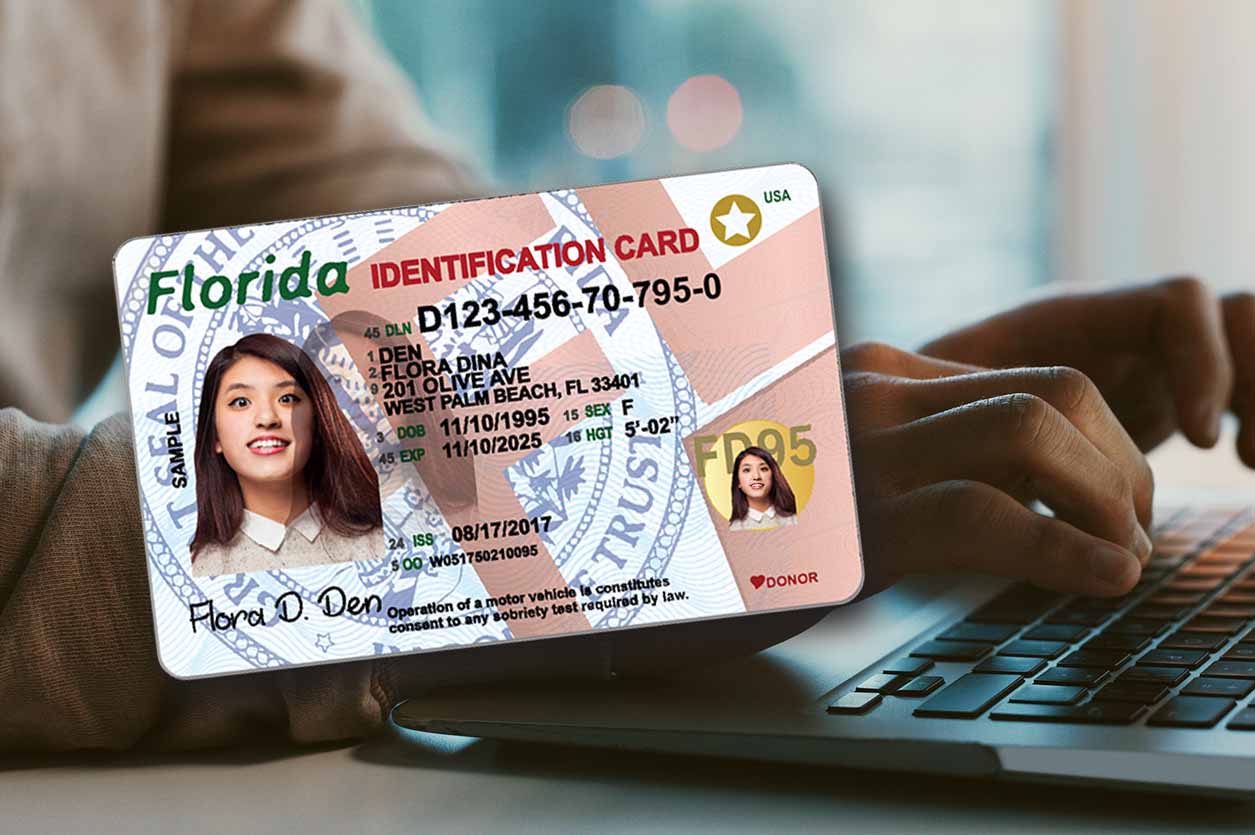
The FLHSMV oversees the issuance of state IDs, but the actual processing typically occurs at local DMV offices or county-specific Tax Collector’s Offices which are authorized to provide these services. To find the nearest office, visit the official FLHSMV website and use their “Find an Office” locator. It’s highly recommended to check if the specific office you plan to visit requires appointments, as many do, especially in populous areas like Miami, Orlando, or Tampa. Some offices also offer online queuing systems or virtual appointments to reduce wait times.
What to Expect During Your Visit
Once you arrive at the office, you will typically:
- Check-in: Present your appointment confirmation or take a number for walk-in service.
- Document Review: A clerk will review all your submitted documents to ensure they meet the FLHSMV requirements. Any missing or incorrect documents will result in a delay or denial of your application.
- Application Form: You will complete a brief application form.
- Vision Test: While primarily for driver’s licenses, some offices may require a basic vision screening for state ID applicants as well.
- Photo: Your photograph will be taken. Ensure you are prepared for this, as it will be on your ID for years.
- Fingerprints & Signature: You may be required to provide digital fingerprints and a digital signature.
- Payment: Pay the applicable fee for the state ID card. Fees can vary slightly, so check the FLHSMV website for current rates.
- Temporary ID: You will typically receive a temporary paper ID card immediately. Your permanent plastic card will be mailed to your residential address within a few weeks.
The entire process, assuming all documents are in order, usually takes less than an hour, though wait times can fluctuate depending on the office and time of day.
Specific Considerations for New Florida Residents
Moving to a new state brings a host of adjustments, and establishing your official identity in Florida is a key step towards integrating into your new community. For those relocating, special attention should be paid to quickly update all identification to reflect your new Florida address and status.
Establishing Residency in the Sunshine State
The process of obtaining a Florida state ID is a fundamental part of establishing legal residency. The two proofs of residential address are critical here. It’s not enough to simply have mail forwarded; these documents must genuinely reflect your physical presence in Florida. Utility bills under your name, a lease agreement for a Florida property, or even a Florida vehicle registration can serve as robust proof. Many new residents prioritize getting their Florida ID shortly after moving to ensure they can fully participate in the state’s civic and economic life without delay. This proactive approach helps in transitioning smoothly into the Florida lifestyle.
Special Cases: Non-U.S. Citizens and Minors
Non-U.S. Citizens
For non-U.S. citizens residing in Florida, the requirements for obtaining a state ID card are similar but include specific immigration documents for primary identification. Acceptable documents include:
- Valid Alien Registration Receipt Card (Green Card, Form I-551)
- Employment Authorization Card (EAD, Form I-766)
- Valid unexpired foreign passport with a U.S. visa accompanied by a Form I-94
- I-20 Form from a university or college (for students)
- DS-2019 Form (for exchange visitors)
It’s crucial that all immigration documents are valid and unexpired at the time of application. The duration of your state ID card may be limited to the expiration date of your immigration documents.
Minors
Minors under the age of 18 can also obtain a Florida state ID card. The process is similar, but requires additional verification from a parent or legal guardian.
- The minor must present their primary identification (e.g., birth certificate, U.S. Passport).
- The parent or legal guardian must accompany the minor and provide their own valid government-issued ID.
- The parent or legal guardian must provide two proofs of residential address and complete an affidavit of domicile, asserting that the minor resides at that address.
- If the parent is not present, a notarized Parental Consent Form (Form HSMV 71142) may be required.
Obtaining an ID for a minor is an excellent way to prepare them for increasing independence, providing them with official identification for school, travel, and various activities as they grow.
Maintaining Your Florida ID: Renewals and Replacements
A Florida state ID card is typically valid for eight years for U.S. citizens and those with permanent resident status, aligning with the state’s driver’s license renewal cycle. For non-U.S. citizens, the expiration date usually coincides with their immigration document expiration. Staying on top of renewals and knowing how to replace a lost card are practical aspects of managing your official documentation.
Understanding Renewal Cycles and Options
You will receive a renewal notice by mail a few months before your ID card is set to expire. The notice will detail your options for renewal. Many Florida state ID cards are eligible for online renewal through the FLHSMV website, offering a convenient way to update your card without a trip to an office. This is often the preferred method for those whose information hasn’t changed.
However, if you’ve recently changed your name, updated your residential address, or if your physical appearance has significantly altered, you might need to renew in person. In-person renewals also apply if you renewed online during your last cycle or if your photo needs to be updated. For non-U.S. citizens, renewal often requires an in-person visit to verify current immigration status and documents. Always check the FLHSMV website for specific eligibility criteria for online or mail renewal versus in-person requirements.

What to Do if Your ID is Lost or Stolen
Losing your state ID card can be a stressful event, but replacing it in Florida is a straightforward process.
- Report it: While not always mandatory, reporting a lost or stolen ID to local law enforcement can provide an official record, which might be useful for identity theft protection.
- Gather documents: You will need to present primary identification, proof of Social Security number, and two proofs of residential address again, just as you did for your initial application. This is why it’s always wise to keep copies or digital records of your essential documents.
- Visit an office: Go to any FLHSMV or Tax Collector’s Office that processes ID cards.
- Pay fee: There will be a replacement fee, which is typically lower than the initial application fee.
Protecting your Florida state ID card is crucial for safeguarding your identity and ensuring uninterrupted access to daily life services. By understanding the application, renewal, and replacement procedures, you can confidently manage this essential document, making your life in Florida as seamless and secure as possible.
LifeOutOfTheBox is a participant in the Amazon Services LLC Associates Program, an affiliate advertising program designed to provide a means for sites to earn advertising fees by advertising and linking to Amazon.com. Amazon, the Amazon logo, AmazonSupply, and the AmazonSupply logo are trademarks of Amazon.com, Inc. or its affiliates. As an Amazon Associate we earn affiliate commissions from qualifying purchases.