
Navigating the administrative requirements of a new state can be a significant part of establishing your lifestyle, especially when it comes to essential assets like your vehicle. In Florida, the ability to move freely, whether for daily commutes, weekend adventures, or exploring the state’s diverse landscapes, is central to the resident experience. A car is often indispensable, and with car ownership comes the crucial legal document: the vehicle title. Understanding how to properly acquire and transfer a car title in Florida is a fundamental step for any new resident or car owner, ensuring your vehicle is legally recognized and ready for the road. This guide will walk you through the process, helping you seamlessly integrate into the Florida way of life.
The Essentials of Vehicle Ownership in the Sunshine State
For many, owning a car in Florida isn’t just a convenience; it’s a necessity that deeply influences daily life and leisure. From cruising down coastal highways to exploring the vibrant city centers of Miami, Orlando, or Tampa, a reliable vehicle is key. Before you can truly enjoy this freedom, however, you must ensure your car is legally titled and registered in your name. The car title serves as official proof of ownership, a vital document for everything from selling your vehicle to resolving insurance claims or even proving your legal right to possess it. Without a proper title, your vehicle is not fully legal, and you could face complications. Therefore, understanding the nuances of obtaining this critical document is not just about compliance; it’s about securing your peace of mind and embracing the practicalities of the Florida lifestyle. The process, while seemingly bureaucratic, is straightforward once you know the steps and requirements, primarily handled by the Florida Department of Highway Safety and Motor Vehicles (FLHSMV) and its local county Tax Collector’s Office branches.
Understanding the Florida Vehicle Title Process
The vehicle title is a legal document issued by the state that establishes ownership of a car, truck, motorcycle, or other motor vehicle. In Florida, this title is managed by the FLHSMV. It contains crucial information such as the vehicle identification number (VIN), make, model, year, and the name of the owner(s). If there is a loan on the vehicle, the title will also list the lienholder, meaning the lender retains a security interest in the car until the loan is fully repaid.
There are several scenarios under which you might need to obtain or transfer a car title in Florida:
- New Car Purchase: When you buy a brand-new vehicle from a licensed dealership in Florida.
- Used Car Purchase (Dealership): Buying a pre-owned vehicle from a Florida dealership.
- Used Car Purchase (Private Seller): Acquiring a used vehicle directly from an individual seller in Florida.
- Out-of-State Transfer: Moving to Florida and needing to transfer your vehicle’s title from another state.
- Gifted or Inherited Vehicle: Receiving a vehicle as a gift or through an inheritance.
- Duplicate Title: If your original title is lost, stolen, or damaged.
Each scenario has slightly different requirements and procedures, but the general principle remains the same: proving ownership and fulfilling state regulations to get the title into your name. For most transactions, you will interact with your local county Tax Collector’s Office, which acts on behalf of the FLHSMV for title and registration services.
Step-by-Step Guide for Title Acquisition
Successfully obtaining your car title in Florida depends on your specific situation. Here’s a breakdown of the common scenarios and the steps involved:
For New Residents Transferring an Out-of-State Title
If you’ve recently moved to Florida and brought your vehicle with you, you’ll need to transfer your out-of-state title to a Florida title. This process must typically be completed within 30 days of establishing residency.
-
Gather Required Documents:
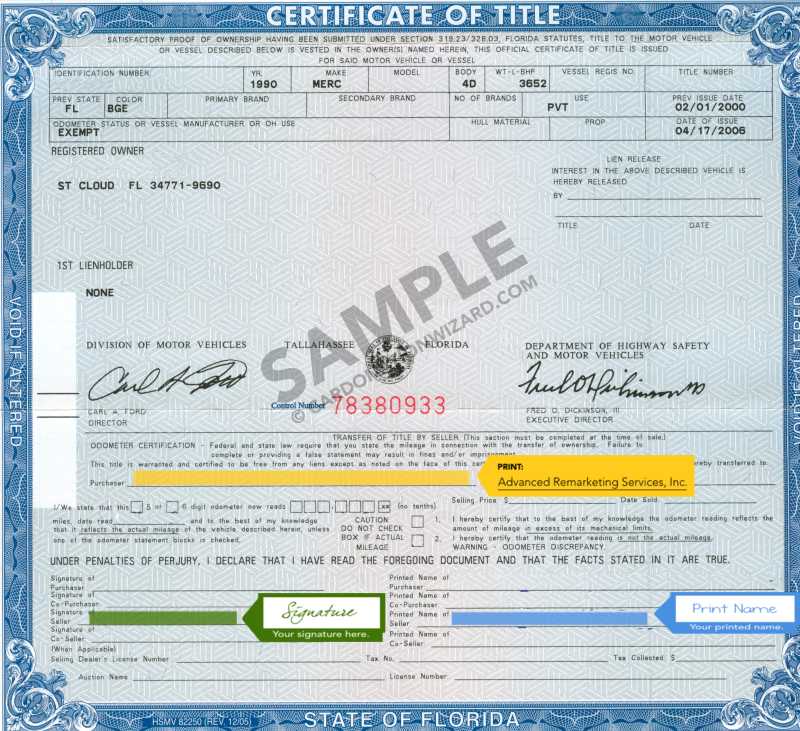
- Out-of-State Title: The original physical title from your previous state. If your vehicle has a lien, the title might be held by your lender. You will need to contact your lienholder to request the title be sent to Florida or directly to you for transfer.
- Proof of Florida Insurance: You must have valid Florida Personal Injury Protection (PIP) and Property Damage Liability (PDL) insurance.
- Proof of Identity: A valid driver’s license or state ID.
- Vehicle Identification Number (VIN) Verification: This is required for all out-of-state vehicles. You can have this done by any Florida law enforcement officer, a licensed DMV dealer, or a motor vehicle agent at the Tax Collector’s Office using Form HSMV 82042 (Vehicle Identification Number and Odometer Verification).
- Odometer Reading: The current mileage of your vehicle.
- Application for Certificate of Title With/Without Registration (Form HSMV 82040): This form can be filled out in advance or at the Tax Collector’s Office.
- Proof of Sales Tax Payment: If you paid sales tax in another state, you might receive credit, but you’ll need documentation. If you didn’t pay sales tax equivalent to Florida’s 6% (plus any local discretionary sales surtax), you will pay the difference.
-
Visit Your Local Tax Collector’s Office: Bring all your documents. A motor vehicle agent will review your paperwork, verify your VIN (if not done previously), and process your application.
- Pay Fees: You will be responsible for title transfer fees, initial registration fees (if applicable), license plate fees, and any applicable sales tax. The exact amount will vary.
Purchasing a Used Vehicle from a Private Seller in Florida
When buying a car from a private party in Florida, the responsibility for transferring the title typically falls to the buyer.
-
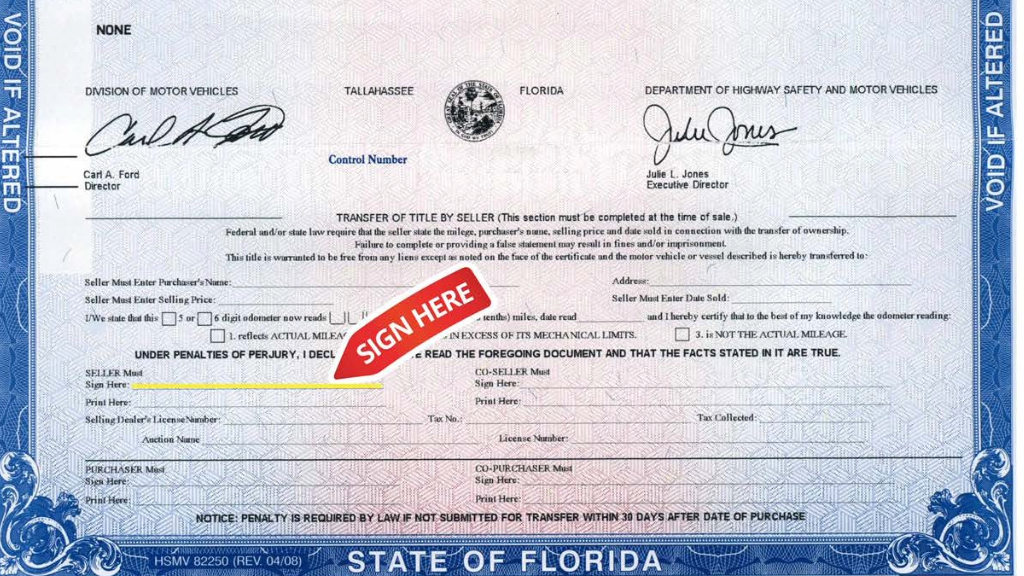
Seller’s Responsibilities: The seller must sign over the current Florida title to you. Ensure they fill out the “Transfer of Title by Seller” section completely, accurately recording the odometer reading and the sales price. Both the buyer and seller should sign and date the title. It’s also advisable to get a bill of sale (Form HSMV 82050), though it’s not strictly required for title transfer, it provides proof of purchase and price, which helps with sales tax calculation.
-
Buyer’s Responsibilities:
- Visit the Tax Collector’s Office: You must apply for a new title within 30 days of purchase to avoid late fees.
- Required Documents: The properly assigned original title, proof of Florida insurance, and your valid ID. The bill of sale is recommended.
- Application (Form HSMV 82040): Complete this form to apply for the title and registration.
- Pay Fees: You will pay title transfer fees, registration fees (for new license plates if you don’t have one to transfer, or plate transfer fees), and Florida sales tax (6% of the purchase price, plus any local discretionary sales surtax).
Purchasing a New or Used Vehicle from a Florida Dealership
This is generally the easiest scenario, as the dealership typically handles the title and registration process for you.
-
Dealership Handles Paperwork: When you buy a vehicle from a licensed Florida dealership, they are legally required to process the title and registration on your behalf. They will collect all necessary fees (sales tax, tag fees, title fees) as part of your purchase agreement.
-
Temporary Tag: The dealership will issue you a temporary license plate that allows you to drive the vehicle legally while the permanent title and registration are being processed. This temporary tag is usually valid for 30 days.
-
Receiving Your Title and Registration: The dealership will submit your paperwork to the Tax Collector’s Office. If you have a lienholder, the electronic title will be sent to them. If you own the car outright, you will receive a physical title in the mail (or an electronic title, depending on your preference and the state’s system). Your permanent license plate and registration sticker will also be mailed to you. It’s crucial to follow up with the dealership if you haven’t received your documents within a few weeks.
Important Considerations and Tips for Florida Car Owners
Beyond the initial title acquisition, there are several aspects of car ownership in Florida that new residents and existing owners should be aware of:
- Electronic Titles (E-Titles): Florida uses an electronic title system. If there is a lien on your vehicle, the title will be held electronically by the FLHSMV for your lienholder. Once the lien is satisfied, the electronic title will convert to a paper title and be mailed to you, or you can request an electronic title to be converted to a paper title at a Tax Collector’s Office.
- Duplicate Titles: If your title is lost, stolen, or damaged, you can apply for a duplicate title using Form HSMV 82101, “Application for Duplicate Title.” This typically requires your valid ID, vehicle information, and a small fee.
- Updating Your Address: If you move within Florida, it’s crucial to update your address with the FLHSMV promptly. While it might not affect your title directly, it ensures you receive your registration renewals and other important vehicle-related correspondence.
- Lien Satisfaction: When you pay off a car loan, your lienholder is required to send you a lien satisfaction document. You then need to take this document to the Tax Collector’s Office to get a clear title (without the lienholder listed). This is crucial for future sales or transfers.
- No Safety or Emissions Inspections: Unlike some other states, Florida does not require periodic safety or emissions inspections for vehicles. However, your vehicle must still be in safe operating condition.

Beyond the Title – Full Vehicle Registration
While obtaining your car title is the cornerstone of legal vehicle ownership, it’s often done concurrently with vehicle registration. Registration involves getting your license plate (tag) and a registration sticker, which must be renewed annually or biennially. The title establishes who owns the car, while registration allows the car to be legally driven on public roads. When you apply for a title at the Tax Collector’s Office, you will typically complete the registration process at the same time, receiving your new plate or transferring an existing one. This integrated approach ensures that you complete all necessary steps to fully legitimize your vehicle for your Florida lifestyle in one visit. Maintaining current registration is just as vital as having a proper title, ensuring that your vehicle is always ready for the open road.
LifeOutOfTheBox is a participant in the Amazon Services LLC Associates Program, an affiliate advertising program designed to provide a means for sites to earn advertising fees by advertising and linking to Amazon.com. Amazon, the Amazon logo, AmazonSupply, and the AmazonSupply logo are trademarks of Amazon.com, Inc. or its affiliates. As an Amazon Associate we earn affiliate commissions from qualifying purchases.