
Understanding the Landscape of Personal Identity in the Sunshine State
Changing one’s name is a significant personal decision, often marking a new chapter or aligning one’s identity more accurately with their true self. In Florida, the process for legally changing a name can range from relatively straightforward, as in the case of marriage or divorce, to a more involved judicial procedure for general civil name changes. Understanding the specific legal framework is crucial for anyone looking to undertake this personal journey in the Sunshine State.
Common Reasons for a Name Change
People choose to change their names for a variety of deeply personal and practical reasons:

- Marriage and Divorce: The most common reasons involve adopting a spouse’s surname or reverting to a maiden name (or a former name) after a divorce. These changes are typically facilitated through the marriage certificate or divorce decree.
- Personal Preference or Identity Alignment: Many individuals seek to change their name to better reflect their personal identity, gender identity, or simply because they prefer a different name. This often involves a civil name change petition.
- Correction of Errors: Occasionally, a birth certificate or other official document may contain a misspelling or error, necessitating a legal name change to correct the record.
- Protection or Safety: In rare but important cases, a name change may be pursued for personal safety, such as for victims of domestic violence or those entering witness protection programs, though these often involve specific, confidential legal processes.
- Family Unity: Some families opt for name changes to create a unified family name, especially in situations involving blended families or adoptions.
Navigating the General Civil Name Change Process in Florida
For most adults seeking to change their name for reasons other than marriage or divorce, the process involves filing a petition with the Circuit Court in Florida. This is known as a general civil name change.
Initial Steps and Eligibility
Before initiating the process, certain criteria must be met:
- Residency Requirement: To file a petition for a name change in Florida, you must be a bona fide resident of the county where you plan to file for at least six months prior to the filing date.
- Who Can File: Adults aged 18 or older can file a petition to change their own name. Parents or legal guardians can also petition to change a minor child’s name, which introduces additional legal requirements, such as parental consent. The focus here is primarily on adults changing their own name.
- Reasons for Denial: Courts may deny a name change petition if it appears the intent is to defraud creditors, avoid criminal prosecution, escape legal obligations, or if the chosen name is inherently offensive or causes confusion. Full disclosure is paramount.
The Petition and Supporting Documents
The core of the civil name change process lies in the formal petition and accompanying paperwork:
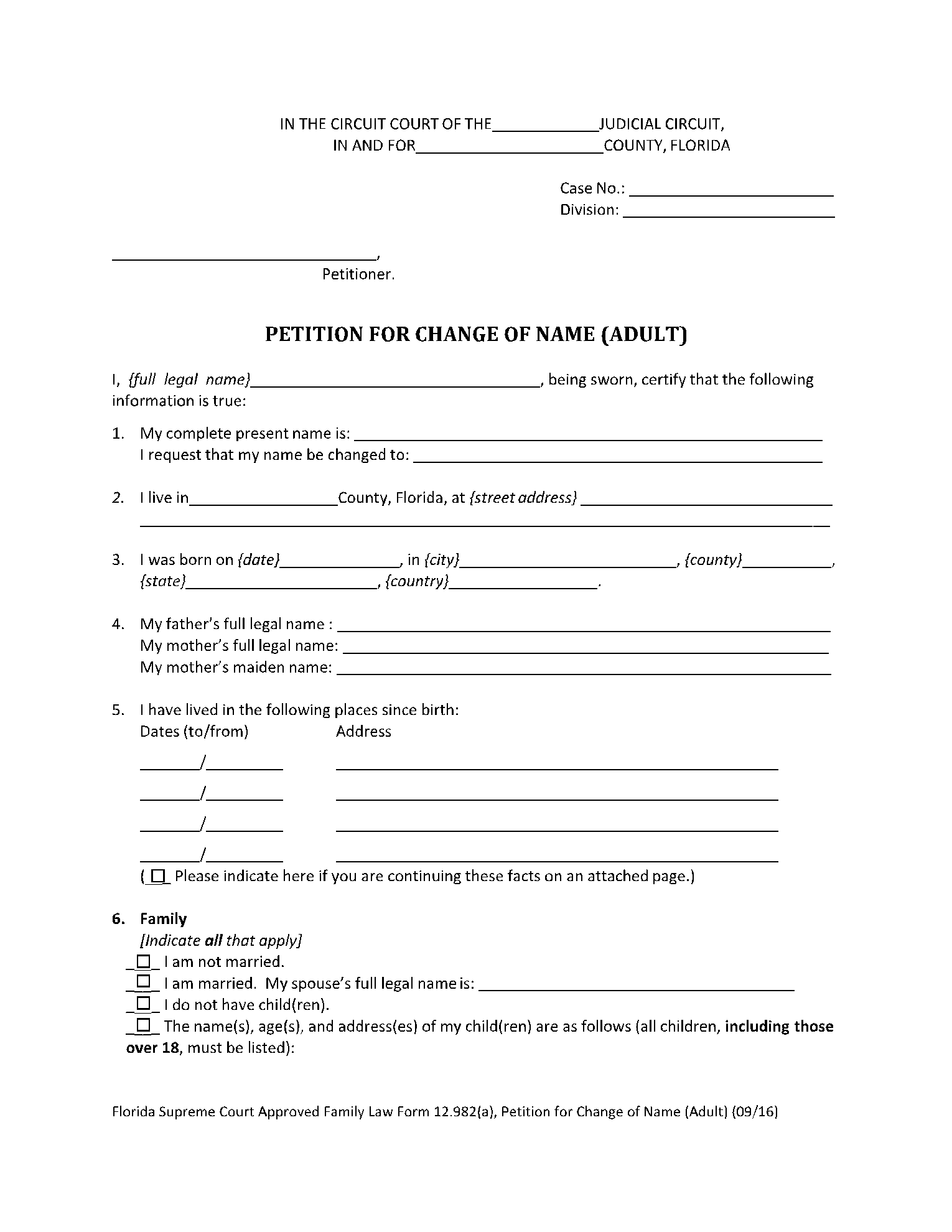
- Petition for Change of Name: This is the primary legal document you will file. It requires you to state your current legal name, your desired new name, the reasons for the change, any previous name changes, and to disclose any felony convictions or outstanding warrants. Honesty and thoroughness are critical here.
- Required Forms: The Florida Courts website provides standardized forms, including the “Petition for Change of Name” (Form 12.982(a)) and the “Order Granting Change of Name” (Form 12.982(b)). It is vital to use the correct and most up-to-date forms.
- Filing Fees: A filing fee is required when submitting your petition to the Clerk of the Circuit Court. These fees vary by county, and you should contact your local clerk’s office for the exact amount. If you cannot afford the fee, you may be able to file a motion for indigent status to have the fees waived.
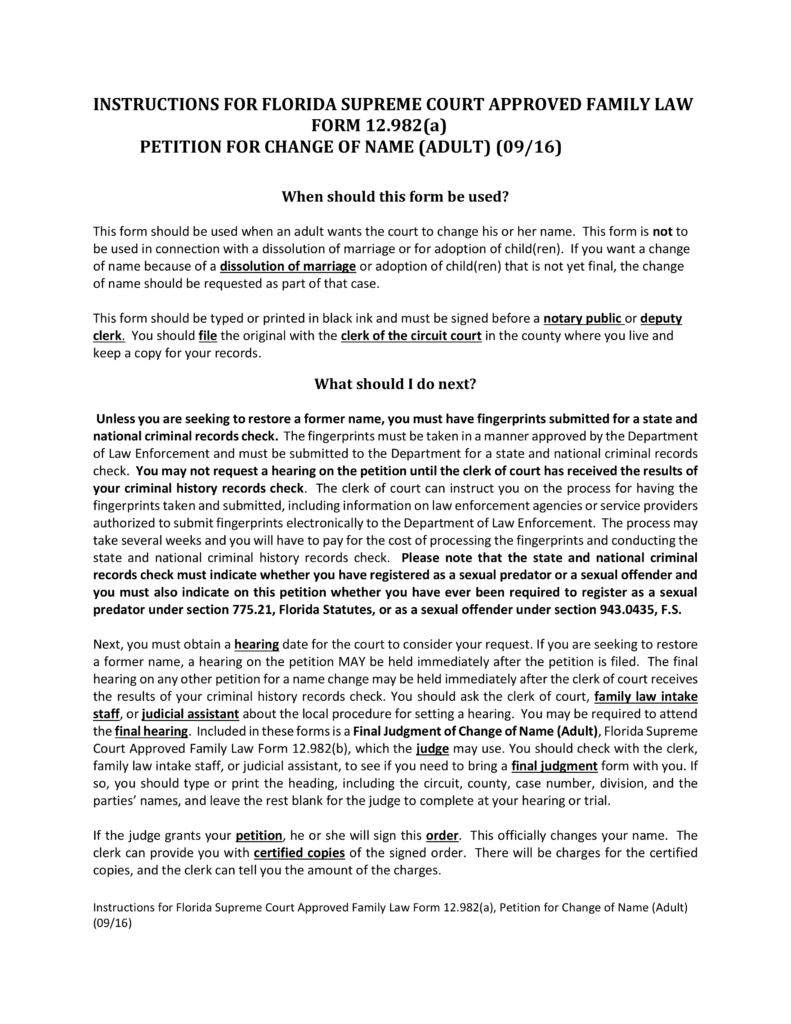
- Fingerprinting and Background Checks: For adult name changes, Florida Statutes generally mandate that petitioners undergo a criminal background check. You will need to be fingerprinted by a LiveScan service provider approved by the Florida Department of Law Enforcement (FDLE). The results will be sent directly to the court from both the FDLE and the Federal Bureau of Investigation (FBI). This step is crucial and must be completed promptly after filing your petition.
The Court Hearing and Final Order
After submitting your petition and completing the background check, the process moves to the judicial review phase:
- Scheduling a Hearing: Once all necessary documents are filed and background check results are received by the court, a hearing date will be scheduled. In some counties, judges may approve straightforward petitions without a hearing if all requirements are met and there are no concerns, but a hearing is common practice.
- What Happens at the Hearing: During the hearing, the judge will review your petition, the background check results, and may ask you questions to confirm your identity, your reasons for the name change, and to ensure there is no fraudulent intent. Your presence is generally required.
- Order Granting Change of Name: If the judge is satisfied, they will sign an “Order Granting Change of Name.” This official court order is the legal document that formalizes your name change. It is paramount to obtain several certified copies of this order, as you will need them to update all your personal identification and records.
Life Event Name Changes: Marriage and Divorce
Name changes associated with marriage or divorce are generally simpler because they leverage existing legal documents.
- Marriage: When you get married in Florida, your marriage license serves as the primary document to change your last name. You do not typically need a separate court order for this type of name change. Most agencies will accept your certified marriage certificate as proof of your new name.
- Divorce: Similarly, if you wish to revert to your maiden name or a former name during or after a divorce, the divorce decree can include a provision restoring your prior name. If your divorce decree does not include this, or if you decide to change your name to something entirely new, you would then need to pursue the general civil name change process outlined above.
These life event-driven changes usually bypass the extensive petition and background check requirements of a civil name change, making them more administrative than judicial.
Post-Order Steps: Updating Your Identity
Receiving your “Order Granting Change of Name” is a significant milestone, but the process isn’t complete until you’ve updated all your official documents and records. This is a critical phase to ensure your new legal identity is recognized across all aspects of your life.
Certified Copies
Immediately after the judge signs your order, request multiple certified copies from the Clerk of the Court. You will need these original certified copies for various agencies, as photocopies are usually not accepted. Five to ten copies are often recommended.
Key Agencies to Notify
Updating your name involves a systematic approach to notifying various governmental and private institutions:
- Social Security Administration (SSA): This is typically the first and most crucial step. You must notify the Social Security Administration so they can update your record and issue a new Social Security card. This is fundamental because many other agencies verify your name through SSA records. You’ll need Form SS-5, your certified name change order, and proof of identity and citizenship.
- Florida Department of Highway Safety and Motor Vehicles (DHSMV): After updating your SSA record, you must update your Florida driver’s license or state ID card. Visit a local DHSMV office with your certified name change order, proof of the SSA update (like the new Social Security card or a confirmation letter), and your current license/ID.
- U.S. Passport Agency: If you have a passport, you’ll need to update it with your new name. This involves submitting Form DS-11 or DS-82 (depending on circumstances), your certified name change order, your current passport, and new passport photos. The U.S. Passport Agency will issue a new passport in your updated name.
- Financial Institutions: Contact your banks, credit card companies, investment firms, and other financial institutions to update your name on all accounts. They will typically require a certified copy of your name change order.
- Employers and Educational Institutions: Inform your employer’s HR department for payroll, benefits, and official records. If you are a student, update your records with your school or university.
- Voter Registration: Update your voter registration with your new name to ensure you can continue to vote in Florida elections.
- Healthcare Providers and Insurance Companies: Ensure your health insurance, life insurance, and medical records reflect your new name to avoid complications with claims and appointments.
- Utilities and Other Services: Update your name with utility companies, landlords, mortgage lenders, subscription services, and any other accounts you hold.
Timeline and Consistency
It’s advisable to update your records systematically and as quickly as possible. Inconsistencies between your legal name and the name on various documents can cause significant administrative headaches, particularly with travel, financial transactions, and legal matters. Maintaining a checklist can help ensure no critical records are overlooked.
Seeking Legal Guidance and Resources
While the process for changing your name in Florida can be managed independently, certain situations may warrant professional legal assistance.
When to Consult an Attorney
- Complex Cases: If your reasons for a name change are unusual, if you have a criminal record (even minor offenses, though specific felonies may disqualify you), or if there are objections from other parties (especially in child name changes), an attorney can navigate the complexities.
- Confidentiality Concerns: In cases where personal safety is a factor, an attorney can help ensure that the process is handled with appropriate confidentiality measures.
- Understanding Legal Nuances: An attorney can provide clear advice on the specific statutes and court rules, ensuring all paperwork is correctly prepared and filed, reducing the chance of delays or denial.
Self-Help Resources
For those who prefer to handle the process themselves, Florida offers valuable resources:
- Florida Courts Self-Help Center: The Florida Courts Self-Help Center website provides forms, instructions, and general information about various legal procedures, including name changes.
- Clerk of the Circuit Court: Your local Clerk of the Circuit Court office can provide information on filing procedures, local rules, and fee schedules specific to your county. However, they cannot provide legal advice.
Costs Beyond Filing Fees
Beyond the initial court filing fee, anticipate other expenses such as fingerprinting fees, fees for certified copies of the court order, and potentially attorney fees if you opt for legal representation. Budgeting for these costs is an important part of the planning process for your name change.
Changing your name in Florida is a personal journey that requires attention to detail and adherence to legal procedures. By understanding each step, from petitioning the court to updating your identity across all official documents, you can navigate this process smoothly and confidently, embracing your new legal name and the lifestyle it represents.
LifeOutOfTheBox is a participant in the Amazon Services LLC Associates Program, an affiliate advertising program designed to provide a means for sites to earn advertising fees by advertising and linking to Amazon.com. Amazon, the Amazon logo, AmazonSupply, and the AmazonSupply logo are trademarks of Amazon.com, Inc. or its affiliates. As an Amazon Associate we earn affiliate commissions from qualifying purchases.