
The question of whether car insurance is mandatory in Florida is a crucial one for anyone planning to drive within the Sunshine State. Navigating the requirements for driving legally and safely is paramount, especially when embarking on a vacation or a longer stay. Florida’s approach to auto insurance is designed to protect both drivers and the public, ensuring a baseline level of financial responsibility in the event of an accident. Understanding these mandates is essential for avoiding legal complications and potential financial hardship.
Florida’s No-Fault Insurance System Explained
At the heart of Florida‘s auto insurance laws lies its “no-fault” system. This system, while sometimes misunderstood, has specific implications for how accident claims are handled.

Personal Injury Protection (PIP) as a Foundation
Unlike many states that operate on a tort system where the at-fault party pays, Florida utilizes a no-fault system. This means that regardless of who caused the accident, your own insurance policy’s Personal Injury Protection (PIP) coverage will pay for a portion of your medical expenses and lost wages, up to your policy limits.
- Coverage Minimums: The state mandates a minimum of $10,000 in PIP coverage per person per accident. This coverage is designed to provide immediate financial relief for injuries and lost income resulting from a crash.
- Medical Treatment Threshold: To access PIP benefits for medical treatment, at least 50% of your medical treatment must be related to the covered injury, and this treatment must be received within 14 days of the accident. Furthermore, there’s a $2,500 threshold for medical expenses unless the injury is a “serious injury,” in which case the threshold is $10,000.
- Death Benefits: PIP also includes a death benefit of $5,000 per person, which is paid in addition to any other PIP benefits.
Bodily Injury Liability (BIL) and Property Damage Liability (PDL)
While PIP covers your own initial expenses, it does not address the damages you might cause to others. This is where Bodily Injury Liability (BIL) and Property Damage Liability (PDL) come into play.
- Bodily Injury Liability: Florida requires drivers to carry a minimum of $10,000 in BIL coverage per person and $20,000 in BIL coverage per accident. This coverage pays for the medical expenses, lost wages, and other damages of individuals injured in an accident caused by your negligence.
- Property Damage Liability: In addition to bodily injury, you must also have at least $10,000 in PDL coverage per accident. This covers damages to other people’s property, such as vehicles, fences, or buildings, that you are responsible for damaging in an accident.
The “80/20” Rule and Splitting Your Coverage
The minimum requirements often referred to as the “80/20” rule are a simplified way to remember the BIL and PDL minimums: $10,000 in Bodily Injury Liability per person, and $20,000 in Bodily Injury Liability per accident ( $10,000 x 2), along with $10,000 in Property Damage Liability. It’s important to understand that these are minimums, and many drivers opt for higher coverage limits to ensure they are adequately protected against potentially substantial claims.
Consequences of Driving Without Insurance in Florida
Operating a vehicle in Florida without the legally mandated insurance coverage can lead to a cascade of serious repercussions. The state takes compliance with its insurance laws very seriously.
Fines and Penalties
The immediate consequence of being caught driving without insurance is financial. You can expect significant fines. Beyond initial penalties, repeated offenses can escalate the severity of these fines and lead to further legal entanglements.
Suspension of Driving Privileges
One of the most impactful penalties is the suspension of your driver’s license. The state has the authority to revoke your privilege to drive, which can severely disrupt your personal and professional life. Reinstatement of a suspended license typically involves demonstrating proof of insurance and paying reinstatement fees, which can be substantial.
Vehicle Impoundment
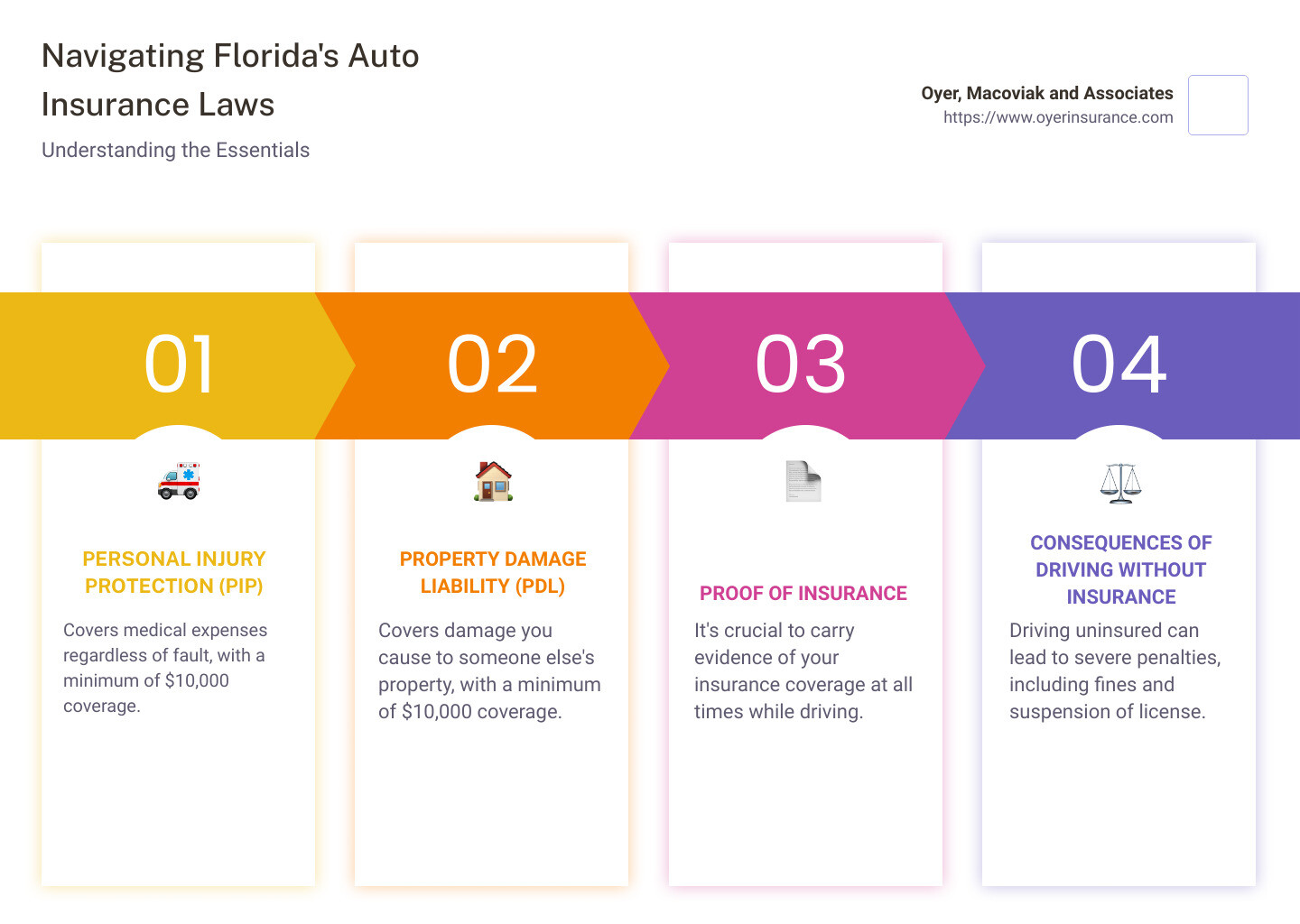
In some cases, your vehicle can be impounded. This means your car will be taken and stored at an impound lot, incurring daily storage fees that can quickly add up. Retrieving an impounded vehicle requires paying these fees, along with other penalties and proof of insurance, making it a costly and time-consuming process.
Potential for Lawsuits
The most severe consequence of driving without insurance is the financial vulnerability you face in the event of an accident. If you cause an accident and do not have liability coverage, you can be sued personally for the full extent of the damages, including medical bills, lost wages, and pain and suffering. This could lead to significant personal debt and the potential garnishment of wages or other assets.
Specific Considerations for Tourists and Visitors
For those visiting Florida, whether for a theme park adventure or a relaxing beach getaway, understanding the insurance requirements is equally important. Renting a car or driving a personal vehicle necessitates compliance with state laws.
Renting a Car in Florida
When you rent a vehicle in Florida, the rental company will typically offer you their own insurance options. These can include:
- Loss Damage Waiver (LDW) or Collision Damage Waiver (CDW): This is not technically insurance, but rather a waiver that releases you from financial responsibility for damage to the rental car itself.
- Supplemental Liability Insurance (SLI): This provides additional liability coverage beyond the minimums required by the rental company.
- Personal Accident Insurance (PAI): This covers medical expenses for you and your passengers in the event of an accident.
It’s crucial to check with your personal auto insurance provider and your credit card company (many offer rental car insurance as a perk) before your trip. You may already have adequate coverage, potentially saving you money on expensive rental insurance add-ons. However, even if you have personal coverage, ensure it extends to rental vehicles and meets Florida’s minimum requirements. If your personal policy doesn’t cover rental cars, or if you don’t have comprehensive personal auto insurance, purchasing some form of coverage from the rental agency is highly recommended to avoid significant financial risk.
Bringing Your Own Vehicle
If you are driving your own car to Florida from another state, your existing auto insurance policy should generally meet Florida’s minimum requirements. However, it is always wise to verify this with your insurance provider. Different states have varying minimum coverage levels, and while Florida’s requirements are not the highest in the nation, it’s essential to ensure your policy is at least compliant. Be particularly aware of the PIP component, as not all states have this type of coverage.
Beyond the Minimum: Why More Coverage Matters
While the state mandates minimum levels of car insurance, relying solely on these bare necessities can leave you exposed to significant financial risk. The costs associated with serious car accidents can easily exceed the minimum coverage amounts.
Understanding Underinsured/Uninsured Motorists (UM/UIM)
A critical coverage that many drivers overlook is Uninsured/Underinsured Motorist (UM/UIM) coverage. This coverage protects you if you are involved in an accident with a driver who either has no insurance (uninsured) or not enough insurance to cover your damages (underinsured). Given that many drivers in Florida may opt for the bare minimum, or even drive without insurance, UM/UIM coverage is highly advisable. It can cover your medical bills, lost wages, and in some cases, property damage, if the at-fault driver cannot.
The Value of Comprehensive and Collision Coverage
Comprehensive coverage protects your vehicle from non-collision-related damages, such as theft, vandalism, fire, or natural disasters. Collision coverage, on the other hand, pays for damage to your car if it collides with another vehicle or object, regardless of fault. While these coverages are not mandatory in Florida, they are essential for protecting your investment in your vehicle, especially if you have a newer or more valuable car. Many lenders require these coverages as part of your loan agreement.

The Peace of Mind Factor
Ultimately, investing in car insurance that extends beyond the state minimums provides invaluable peace of mind. Knowing that you and your loved ones are protected financially in the event of an accident, and that you can cover damages you may cause to others, allows for a more secure driving experience. Whether you are a resident navigating your daily commute or a tourist exploring the wonders of Florida, responsible insurance coverage is a non-negotiable aspect of safe and legal driving. It ensures that unexpected events on the road do not lead to insurmountable financial burdens.
LifeOutOfTheBox is a participant in the Amazon Services LLC Associates Program, an affiliate advertising program designed to provide a means for sites to earn advertising fees by advertising and linking to Amazon.com. Amazon, the Amazon logo, AmazonSupply, and the AmazonSupply logo are trademarks of Amazon.com, Inc. or its affiliates. As an Amazon Associate we earn affiliate commissions from qualifying purchases.