
Planning a trip to the Sunshine State involves considering various aspects, from booking the perfect accommodation in Miami to mapping out adventures in Everglades National Park. For many responsible firearm owners, understanding a destination’s concealed carry laws is as crucial as checking the weather forecast. Florida, a popular destination for millions of tourists annually, has specific regulations regarding carrying firearms, and recent changes have further reshaped the legal landscape. This guide aims to provide travelers with a comprehensive overview of Florida’s concealed carry statutes, reciprocity agreements, and practical considerations to ensure a compliant and enjoyable visit.

Navigating Concealed Carry Laws in Florida as a Traveler
Florida has long been known for its robust gun rights, but recent legislative updates have significantly altered how residents and visitors approach concealed carry. Understanding these changes is paramount for anyone traveling to cities like Orlando, Tampa, or Jacksonville with a firearm.
Florida’s Permitless Carry Law: What Changed?
As of July 1, 2023, Florida officially became a permitless carry state. This means that eligible individuals are no longer required to obtain a specific state-issued permit, such as the Florida Concealed Weapon or Firearm License (CWFL), to carry a concealed firearm in public. This significant legislative shift allows anyone who is at least 21 years old and meets the state’s criteria for firearm ownership to carry a concealed weapon without a license.
However, “permitless carry” does not mean “unrestricted carry.” All existing prohibitions on where a firearm can be carried (e.g., schools, courthouses) remain in effect. Furthermore, individuals must still meet the eligibility requirements that would have been necessary to obtain a CWFL, such as not being a convicted felon, not having a history of domestic violence, and not being deemed mentally incompetent. For travelers, this means that while an out-of-state permit might not be strictly necessary for concealed carry in Florida if they meet the state’s basic eligibility, understanding the specific limitations is vital.
The Florida Concealed Weapon or Firearm License (CWFL)
Despite the introduction of permitless carry, the Florida Concealed Weapon or Firearm License (CWFL) continues to exist and offers distinct advantages, particularly for residents and frequent visitors. While not mandatory for concealed carry within Florida, holding a CWFL can be beneficial for several reasons:
- Reciprocity: A CWFL allows residents to carry concealed in other states that have reciprocity agreements with Florida. This is a crucial benefit for those who travel beyond Florida’s borders.
- Purchasing Benefits: CWFL holders are typically exempt from the mandatory waiting period when purchasing a firearm in Florida.
- Legal Clarity: For some, having a physical permit provides an added layer of confidence and clarity regarding their right to carry, especially when interacting with law enforcement.
For travelers, while your home state’s permit (if recognized) or Florida’s permitless carry law might cover your concealed carry needs within Florida, the CWFL remains a valuable credential for residents who frequently travel to other states. Non-residents generally cannot obtain a CWFL unless they meet specific residency requirements.
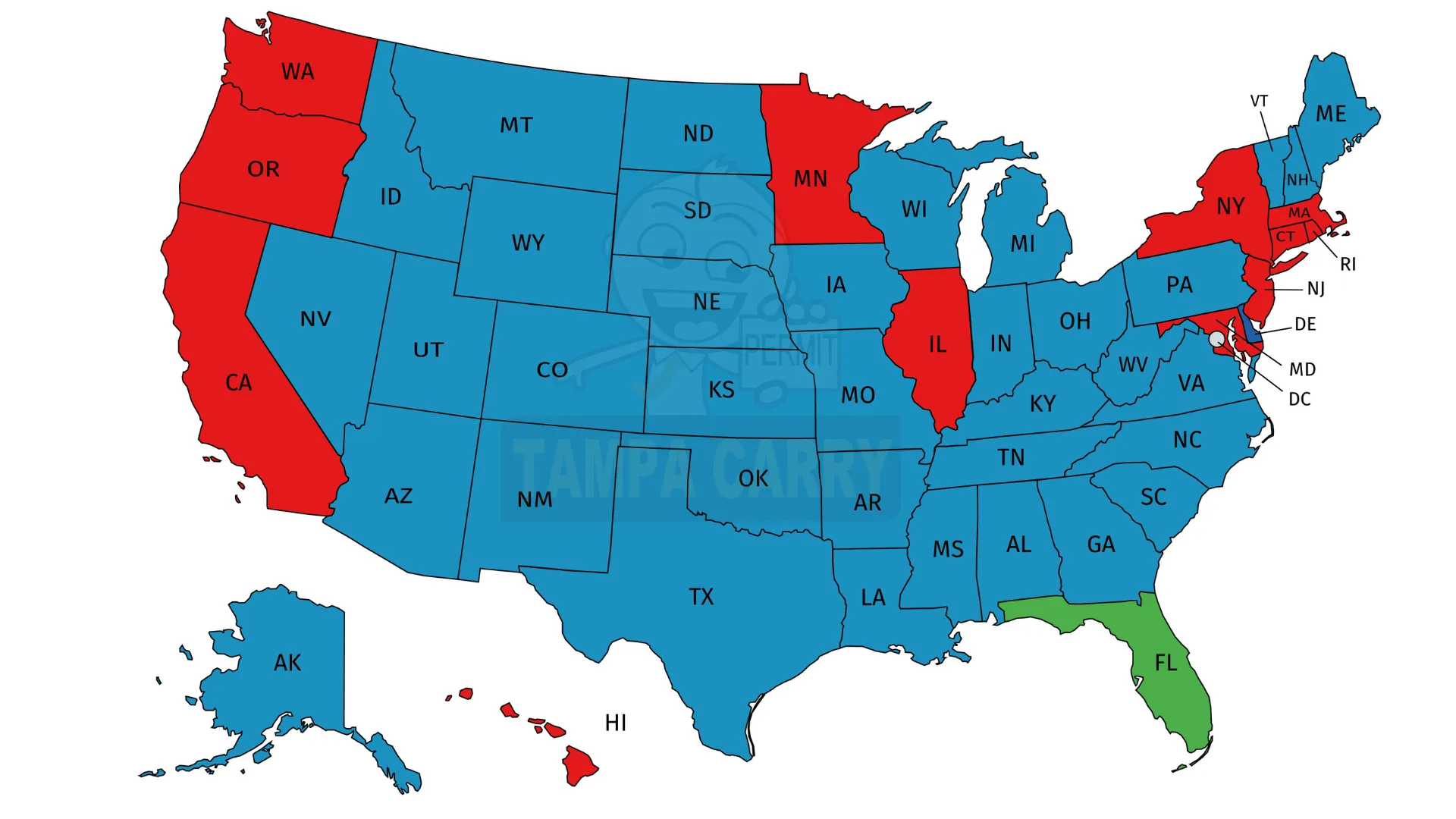
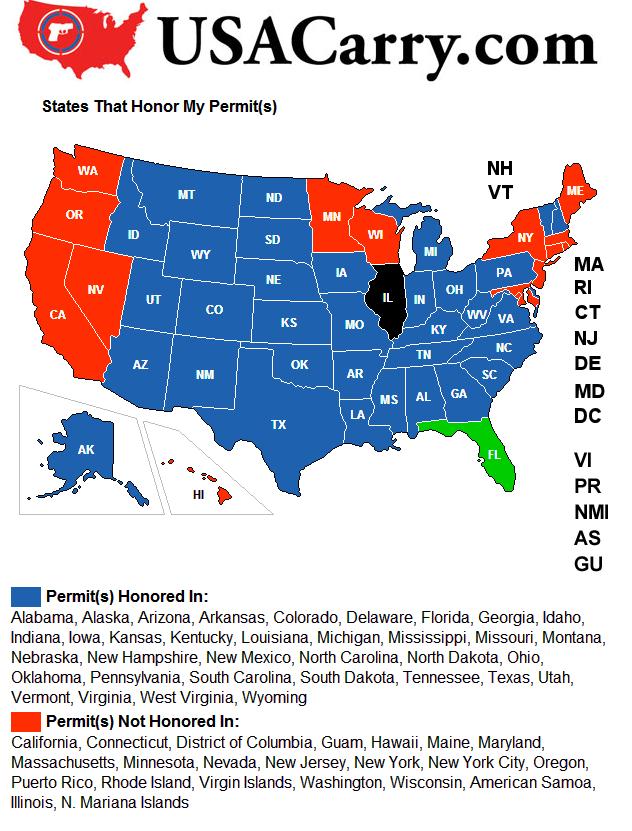
Reciprocity and Recognition: Does Your Home State Permit Work in the Sunshine State?
Before Florida implemented permitless carry, reciprocity was a critical concern for armed travelers. While permitless carry simplifies matters for eligible individuals within Florida, understanding reciprocity is still important for those who prefer to rely on their home state’s permit or travel frequently between states.
States with Automatic Recognition
Florida Statutes outline the states whose concealed weapon licenses Florida honors. Prior to permitless carry, if you held a valid concealed carry permit from one of these recognized states, you could carry concealed in Florida under the same terms as a CWFL holder, provided you adhered to Florida’s laws. Even with permitless carry, this framework still exists. If your permit is from a state Florida recognizes, you are covered. You can check the official list provided by the Department of Agriculture and Consumer Services, which is the issuing authority for CWFLs in Florida, for the most up-to-date information. It is imperative to remember that even if your permit is recognized, you are still bound by Florida’s specific laws regarding prohibited places and methods of carry.
Important Considerations for Non-Resident Permits
For travelers, the key takeaway is that if you are 21 or older and legally eligible to own a firearm, Florida’s permitless carry law likely allows you to carry concealed within the state, irrespective of your home state’s permit status (unless your home state permit is from a non-reciprocal state and you wish to rely solely on it). However, it’s always advisable to carry your valid home state permit if you have one, as it demonstrates compliance and provides an additional layer of documentation. Always prioritize adherence to Florida’s specific rules, which may differ from those in your home state, particularly concerning restricted locations and the manner of carry.
Prohibited Places: Understanding Carry Restrictions for Visitors
Regardless of whether you are carrying under Florida’s permitless carry law or a recognized out-of-state permit, there are strict limitations on where you can carry a concealed firearm. These prohibitions are critical for travelers to understand, as violations can lead to serious legal consequences.
Federal and State Restricted Zones
Florida Statutes explicitly list numerous locations where carrying a concealed firearm is prohibited, even with a license or under permitless carry. These include, but are not limited to:
- Any place of nuisance as defined in Section 823.05, Florida Statutes.
- Any police, sheriff, or highway patrol station.
- Any courthouse or courtroom.
- Any polling place during an election.
- Any meeting of the governing body of a county, public school district, municipality, or special district.
- Any meeting of the Legislature or a committee thereof.
- Any school, college, or professional athletic event not related to firearms.
- Any elementary or secondary school facility or administration building.
- Any portion of an establishment licensed to dispense alcoholic beverages for consumption on the premises, which portion of the establishment is primarily devoted to such purpose. This is a common pitfall for travelers enjoying South Beach nightlife or restaurants in Key West.
- Any college or university facility, unless the licensee is a registered student, employee, or faculty member of the college or university and the weapon is a stun gun or nonlethal electric weapon or device designed solely for defensive purposes.
- Inside the passenger terminal and sterile area of any airport. This includes Orlando International Airport, Miami International Airport, and Tampa International Airport.
- Any career center.
Beyond state law, federal law also designates certain areas as firearm-free zones, such as post offices and federal buildings. Theme parks like Walt Disney World Resort and Universal Studios Florida also have strict no-firearms policies, regardless of state law. Ignoring these prohibitions, whether federal, state, or private property, can lead to arrest and charges.
Private Property and Business Policies
It is crucial for travelers to understand that private property owners and businesses in Florida retain the right to prohibit firearms on their premises. Even if state law permits concealed carry in a general location, a business owner can post “no firearms” signs or verbally communicate such a policy. Failure to comply with a clearly posted or communicated prohibition on private property may result in being asked to leave, and refusal to do so could lead to trespassing charges. When planning your itinerary, especially when visiting restaurants, shops, or specific attractions, it is wise to be aware of and respect these private property rights.
Traveling Through Florida with a Firearm: Beyond Concealed Carry
Understanding concealed carry is one aspect; safely and legally transporting a firearm while traveling to and through Florida is another. Different rules apply to firearms that are not being carried on one’s person.
Transporting Firearms in Vehicles
If you are transporting a firearm in a vehicle in Florida and it is not being carried concealed by an eligible individual, specific requirements must be met. A firearm that is not being carried concealed must be securely encased or not readily accessible for immediate use. “Securely encased” means it is in a holster with a retention strap, in a gun case, glove compartment, console, or secured in another container. An example of “not readily accessible” might be a firearm stored in the trunk of a car. This provision is particularly relevant for travelers who may have firearms in their vehicle but do not intend to carry them concealed, or for those who are ineligible for concealed carry.
Air Travel and Florida Airports
Air travel with firearms is governed by federal regulations enforced by the Transportation Security Administration (TSA) and individual airline policies. Firearms must be declared to the airline at check-in, unloaded, and transported in a locked, hard-sided container as checked luggage. Ammunition must be in its original packaging or a container designed for ammunition and stored separately from the firearm. Crucially, firearms are strictly prohibited in the passenger cabin and sterile areas of all airports, including major hubs like Orlando International Airport and Miami International Airport. Travelers should always verify both TSA guidelines and their specific airline’s policies well in advance of their trip to avoid delays or legal issues.
Hotel Stays and Accommodation Policies
When staying in hotels, resorts, or rental apartments across Florida, it’s important to be aware of the establishment’s policies regarding firearms. While Florida law generally protects the right to possess firearms, private businesses, including lodging establishments, may have their own rules. Many hotels do not explicitly prohibit firearms in guest rooms, but some may have policies requiring firearms to be secured or restrict carrying in common areas. It is always prudent to review the hotel’s terms and conditions or inquire directly with management if you plan to bring a firearm into your accommodation. Responsible storage, such as using a safe, is also advisable to prevent theft or unauthorized access.
Responsible Travel Practices for Armed Visitors in Florida
Traveling with a firearm requires diligence and a commitment to responsible practices. For those visiting Florida, here are essential tips to ensure a safe and legally compliant trip:
- Know the Law: Familiarize yourself with Florida’s specific gun laws, especially regarding prohibited places. Do not assume they are identical to your home state’s laws. ignorance of the law is not a valid defense.
- Verify Eligibility: Ensure you meet all state and federal eligibility requirements for firearm possession and concealed carry in Florida.
- Respect Private Property: Always observe and respect “no firearms” signs or policies communicated by private property owners and businesses.
- Secure Transport: When not carrying concealed, ensure firearms are securely encased or otherwise not readily accessible, particularly in vehicles.
- Air Travel Protocols: If flying, rigorously follow all TSA and airline regulations for checking firearms.
- Avoid Alcohol and Firearms: Exercise extreme caution and good judgment. Carrying a firearm while under the influence of alcohol or drugs is illegal and highly dangerous.
- Seek Local Legal Advice: If you have complex questions or unique circumstances, consult with a Florida-licensed attorney before your trip. This guide is for informational purposes only and not legal advice.
By understanding and adhering to Florida’s firearm laws, particularly those pertaining to concealed carry and prohibited locations, armed travelers can ensure a smooth, lawful, and enjoyable visit to the Sunshine State. Whether you are exploring the historic streets of Tallahassee or enjoying the beaches, responsible firearm ownership is key to a worry-free experience.
LifeOutOfTheBox is a participant in the Amazon Services LLC Associates Program, an affiliate advertising program designed to provide a means for sites to earn advertising fees by advertising and linking to Amazon.com. Amazon, the Amazon logo, AmazonSupply, and the AmazonSupply logo are trademarks of Amazon.com, Inc. or its affiliates. As an Amazon Associate we earn affiliate commissions from qualifying purchases.