
Planning a trip to the Sunshine State requires meticulous attention to detail, from booking the perfect resort to mapping out your adventures at world-renowned attractions. One often-overlooked yet critical piece of information for any traveler is understanding Florida’s time zones. Unlike many states that adhere to a single time zone, Florida straddles two distinct zones: the Eastern Time Zone and the Central Time Zone. Grasping this geographical nuance is paramount for seamless travel, ensuring you arrive on time for flights, tours, and dining reservations, and avoid any unnecessary confusion during your vacation.
Navigating Florida’s Time Zones: An Essential Travel Guide
Florida’s vast east-to-west expanse, coupled with historical and practical considerations concerning its neighboring states, has led to this bifurcated time system. For most visitors, especially those heading to the popular tourist hubs along the Atlantic and Gulf coasts, the Eastern Time Zone will be their primary reference. However, a significant portion of the westernmost region, known as the Florida Panhandle, operates on Central Time. This distinction is more than just a trivial fact; it can profoundly impact travel itineraries, flight connections, and coordination with local services. Recognizing this boundary and its implications is the first step towards a well-planned and stress-free Florida experience.
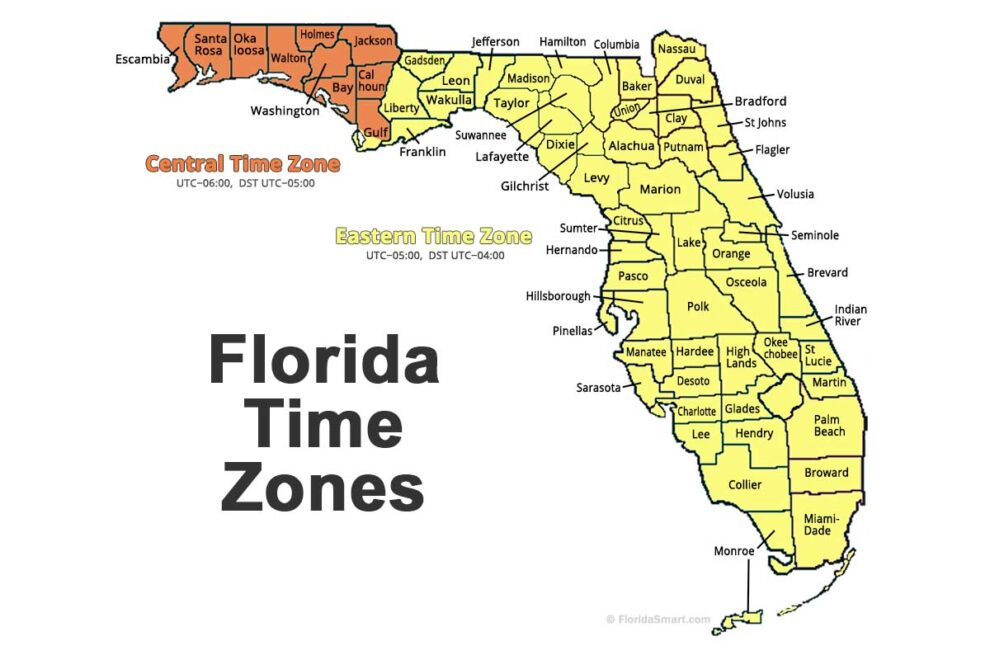
The Eastern Time Zone Majority: Sunshine State’s Primary Rhythm
The overwhelming majority of Florida’s population and its most famous travel destinations fall within the Eastern Time Zone (ET), observing either Eastern Standard Time (EST) or Eastern Daylight Time (EDT) depending on the time of year. This includes the entire Florida Peninsula, extending northward to include the state capital, Tallahassee, and much of the Panhandle up to the Apalachicola River. For most travelers, especially those flying into major international airports, Eastern Time will be their immediate reality upon arrival.
Key Destinations in Eastern Time
Virtually all of Florida’s iconic tourist magnets operate on Eastern Time, ensuring a consistent schedule for visitors exploring these vibrant areas.
- Orlando: The Theme Park Capital. Home to Walt Disney World Resort, Universal Orlando Resort, and numerous other attractions, Orlando is firmly in ET. All park opening and closing times, show schedules, and dining reservations are based on Eastern Time. Travelers flying into Orlando International Airport will immediately synchronize with this zone.
- Miami & South Florida: Beaches and Culture. From the bustling beaches of South Beach and the historic Art Deco Historic District to the vibrant nightlife of Miami, the entire southern tip of Florida, including Fort Lauderdale and Palm Beach, adheres to Eastern Time. This is crucial for coordinating cruise departures, deep-sea fishing charters, and museum visits.
- Tampa Bay Area: Gulf Coast Gems. The popular cities of Tampa, St. Petersburg, and Clearwater, along with attractions like Busch Gardens, are all within the Eastern Time Zone. This also applies to the renowned beaches lining the Gulf of Mexico in this region, such as Siesta Key and Sarasota.
- The Florida Keys: Island Paradise. From Key Largo to the southernmost point of the continental United States in Key West, this tropical archipelago operates on Eastern Time. This is particularly important for dive excursions, sunset cruises, and ferry schedules between islands.
- Jacksonville & Northeast Florida: Historic Charm. The historic city of St. Augustine, the vast urban sprawl of Jacksonville, and the scenic Atlantic coastlines are all on Eastern Time. This also includes the Space Coast around Cape Canaveral and the Kennedy Space Center, where rocket launches are timed to the minute.
- Everglades National Park & Southwest Florida: Nature and Luxury. Destinations like Naples, Fort Myers, and the gateway to the Everglades are also within the Eastern Time Zone.
For travelers arriving by air, the time indicated on their ticket for departure and arrival will almost certainly reflect Eastern Time if their destination is within these areas. It is crucial to set watches and devices accordingly to avoid missing tours, restaurant reservations, or check-in times.
Venturing West: Florida’s Central Time Zone Enclave
While the majority of Florida is in the Eastern Time Zone, a distinct portion of the state, primarily in the Florida Panhandle, observes the Central Time Zone (CT), switching between Central Standard Time (CST) and Central Daylight Time (CDT). This area aligns with neighboring states like Alabama to the west, making regional coordination more practical. Understanding this time shift is vital for those planning beach vacations or road trips through this picturesque part of the state.
The Panhandle’s Distinct Time
The westernmost counties of Florida that operate on Central Time include:
- Escambia County (home to Pensacola)
- Santa Rosa County (including Navarre Beach)
- Okaloosa County (featuring Destin and Fort Walton Beach)
- Walton County (famous for its 30A scenic highway towns like Seaside and Rosemary Beach)
- The vast majority of Bay County (including Panama City Beach)
- The western parts of Gulf County

These destinations, renowned for their stunning white-sand beaches and emerald waters, are one hour behind Eastern Time. So, if it’s 3:00 PM in Orlando, it will be 2:00 PM in Pensacola. This difference can easily lead to missed appointments or confusion if not properly accounted for. Air travelers to this region, landing at airports such as Pensacola International Airport, Destin-Fort Walton Beach Airport, or Northwest Florida Beaches International Airport near Panama City Beach, will find their local arrival times reflecting Central Time.
The Time Zone Border: Crossing the Divide
The dividing line between Eastern and Central Time in Florida is generally considered to be the Apalachicola River. This natural boundary carves through Gulf County and Calhoun County. For example, the town of Port St. Joe to the west of the river is in Central Time, while Apalachicola, just across the river to the east, is in Eastern Time. Mexico Beach and Wewahitchka are also on Central Time.
For travelers driving through the Panhandle, crossing this invisible line can be an interesting experience. Road signs typically indicate the change, but it’s easy to overlook. Modern smartphones and GPS devices will usually update automatically, but it’s always wise to verify, especially when relying on a fixed schedule. This is particularly crucial if you have appointments or connections that span the time zone boundary, such as a flight from Orlando (ET) connecting to a small airport in the western Panhandle (CT).
Practical Tips for Travelers: Avoiding Time Zone Troubles
Careful planning can prevent the common pitfalls associated with Florida’s dual time zones. Here are essential tips for a smooth journey:
Device Settings and Confirmations
- Automatic Time Updates: Ensure your smartphone, tablet, and other smart devices are set to automatically update their time zone. This is usually a default setting, but it’s worth checking before you travel. Most devices will seamlessly adjust as you cross the time zone boundary.
- Double-Check All Reservations: Before departing and upon arrival, confirm all time-sensitive reservations (flights, hotel check-ins, rental car pickups, attraction tickets, tour departures, dinner reservations) against the local time zone of that specific destination. Do not assume; verify. A flight departing from Pensacola (CT) might be listed with a departure time that appears later than a flight from Miami (ET), but the actual time difference must be factored in.
- Traditional Watch: If you rely on a traditional watch, remember to manually adjust it when crossing the time zone boundary or simply keep it on the time zone of your primary destination.
Itinerary Planning and Communication
- Multi-Zone Itineraries: If your trip involves traveling between the Eastern and Central Time Zones, build in buffer time. An hour difference can quickly derail a tight schedule. For example, if you’re driving from Tallahassee to Destin, remember you’ll effectively lose an hour when you cross into Central Time.
- Communicate Clearly: When coordinating with travel companions, tour operators, or local hosts, always specify the time zone. Instead of just saying “meet at 2 PM,” clarify “meet at 2 PM Eastern Time” or “2 PM Central Time.” This simple clarification can prevent misunderstandings.
- Hotel Check-in/Check-out: Be mindful of hotel policies, especially if you are checking into a hotel in one time zone after traveling from another. Early check-in or late check-out requests should explicitly consider the local time.
Daylight Saving Time Consideration
Both the Eastern Time Zone and the Central Time Zone observe Daylight Saving Time (DST). This means that during the spring, clocks “spring forward” one hour, and in the fall, they “fall back” one hour. The key takeaway for travelers is that the one-hour difference between the two zones remains constant throughout the year, regardless of DST. You do not need to worry about the time difference changing; it will always be one hour.

The Historical and Geographical Context
The presence of two time zones in Florida is a result of a combination of geographical expanse and historical legislation. When the Standard Time Act of 1918 established official time zones across the United States, Florida’s long east-west stretch necessitated a division. The decision to place the western Panhandle in Central Time was largely driven by its proximity and economic ties to Alabama and other states in the Central Time Zone. This alignment facilitated commerce, communication, and transportation across state borders in that region.
Over the years, minor adjustments have been made to the time zone boundaries by the U.S. Department of Transportation, which now oversees them. However, the fundamental split in Florida along the Apalachicola River has largely remained consistent, serving the practical needs of residents and businesses in both parts of the state.
In conclusion, for those asking “Is Florida Eastern or Central Time?”, the answer is both. A trip to the Sunshine State promises unforgettable memories, but being well-versed in its time zone geography is a small yet significant step to ensure your travel plans unfold without a hitch. By understanding where the time zones lie and taking simple precautions, you can fully immerse yourself in all that Florida has to offer, without missing a single moment.
LifeOutOfTheBox is a participant in the Amazon Services LLC Associates Program, an affiliate advertising program designed to provide a means for sites to earn advertising fees by advertising and linking to Amazon.com. Amazon, the Amazon logo, AmazonSupply, and the AmazonSupply logo are trademarks of Amazon.com, Inc. or its affiliates. As an Amazon Associate we earn affiliate commissions from qualifying purchases.