
Florida, often celebrated for its sun-drenched beaches, vibrant cities like Miami and Orlando, and world-class attractions, holds an equally compelling allure beneath its surface: a rich and incredibly diverse tapestry of wildlife. The state’s unique geography, situated at the southeastern tip of the North American continent, combined with its subtropical to tropical climate, fosters a remarkable array of ecosystems. These natural environments serve as critical habitats for countless species, making Florida a natural landmark of immense ecological significance. Exploring its fauna reveals a fascinating blend of iconic creatures, rare endemic species, and migratory visitors, each playing a vital role in the intricate balance of the state’s natural heritage.
Diverse Ecosystems: A Natural Tapestry
The remarkable biodiversity of Florida is a direct consequence of its varied habitats, ranging from extensive coastlines to ancient forests and vast wetlands. These ecosystems, each with distinct characteristics, provide specialized niches that support an extraordinary spectrum of life. Understanding these environments is key to appreciating the animals that call them home.
Coastal and Marine Environments
With over 1,350 miles of coastline, Florida’s shores are a dynamic interface between land and sea. The warm waters of the Gulf of Mexico and the Atlantic Ocean are teeming with marine life. Barrier islands, estuaries, and mangrove forests—particularly prevalent in southern Florida—act as crucial nurseries for fish, crustaceans, and mollusks. Coral reefs, especially prominent in the Florida Keys, provide complex structures that support vibrant communities of tropical fish, sea turtles, and various invertebrates. The sandy beaches are nesting grounds for several species of sea turtles, including loggerheads, green sea turtles, and leatherbacks. Offshore, marine mammals like dolphins and various whale species navigate these productive waters.
Freshwater Systems
Inland, Florida is defined by its extensive network of freshwater environments. The Everglades National Park, a vast subtropical wetland, is perhaps the most famous example, often referred to as a “River of Grass.” This unique ecosystem, along with thousands of lakes, springs, and rivers such as the St. Johns River and Lake Okeechobee, provides essential habitat for an incredible array of aquatic life. These include alligators, a variety of freshwater fish like largemouth bass and gar, turtles, and numerous bird species dependent on wetlands. The state’s numerous crystal-clear springs, fed by the underlying aquifer, are critical refuges for manatees, especially during cooler months.
Upland Habitats
Beyond the coasts and wetlands, Florida also features diverse upland habitats. Pine flatwoods, scrublands, hardwood hammocks, and sandhills characterize much of the state’s interior, particularly in areas like the Florida Panhandle and central Florida around the Ocala National Forest. These dryer environments are home to species adapted to sandy soils and periodic fires. Here, one can find white-tailed deer, gopher tortoises, bobcats, and various snake species. The unique scrub habitat supports endemic species like the Florida scrub-jay, emphasizing the importance of preserving these distinct terrestrial landscapes. Forests like Apalachicola National Forest offer deeper woods for larger mammals and raptors.
Iconic Mammals of the Sunshine State
Florida’s mammalian residents range from the gentle giants of its waterways to elusive predators roaming its forests, each contributing to the state’s wild character.
Gentle Giants: Manatees
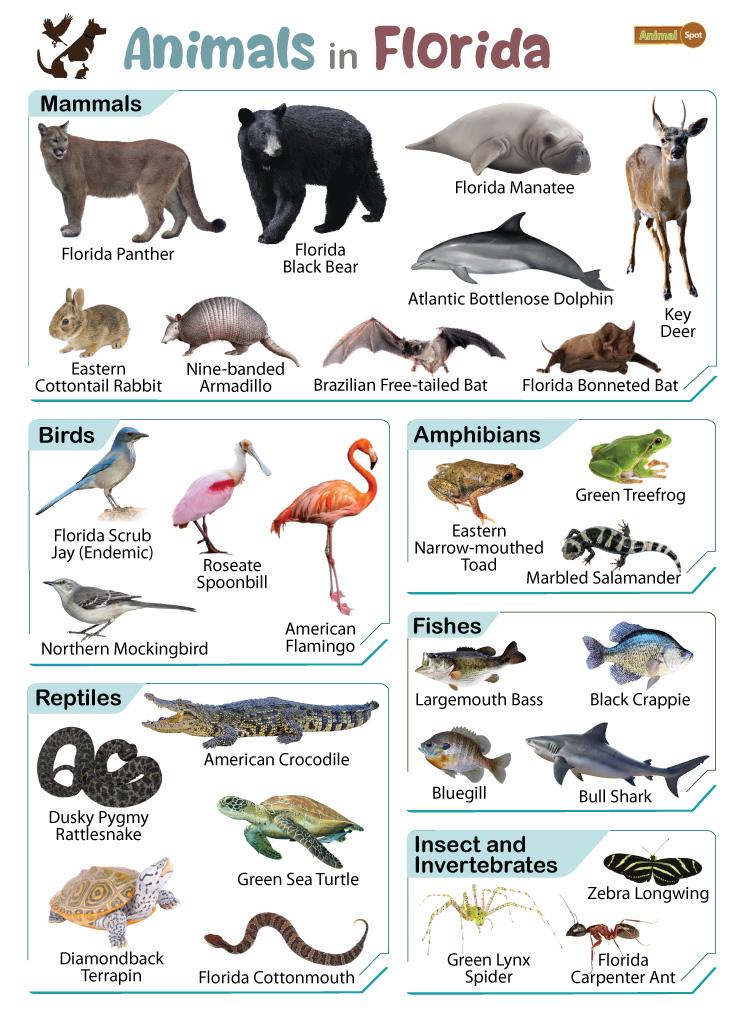
Perhaps the most beloved of Florida’s marine mammals, the Florida manatee is a symbol of conservation efforts. These large, slow-moving herbivores spend their lives in the state’s coastal waters, estuaries, and freshwater springs, feeding on seagrass and other aquatic vegetation. During the cooler winter months, manatees congregate in the warm waters of natural springs and power plant discharge canals, making places like Crystal River and Blue Spring State Park prime viewing locations. Their gentle nature and vulnerability to boat strikes and habitat loss underscore the importance of protecting their aquatic environments.
Elusive Predators: Florida Panthers
The Florida panther, a critically endangered subspecies of puma, is the state’s official animal and a pinnacle predator in its ecosystems. Primarily found in the remote, forested wetlands of South Florida, particularly within Everglades National Park and Big Cypress National Preserve, these solitary cats require vast territories to hunt deer, hogs, and other prey. Their extremely low population numbers highlight the ongoing challenges of habitat fragmentation and human encroachment, making every sighting a rare and significant event.
Other Terrestrial Mammals
Beyond these icons, Florida is home to a variety of other mammals. White-tailed deer are abundant throughout the state, providing a crucial food source for panthers and bobcats. Bobcats, smaller but equally skilled hunters, can be found in a range of habitats from forests to suburban fringes. The American black bear, particularly prominent in central Florida and the Panhandle, has seen a resurgence in population and can occasionally be spotted crossing roads or foraging in more remote areas. Other common mammals include raccoons, opossums, armadillos, and various species of bats, contributing to the nocturnal soundscape of Florida’s natural landmarks.

Avian Wonders: Florida’s Feathered Residents
Florida is a birder’s paradise, boasting one of the most diverse avian populations in North America. Its strategic location along migratory routes and abundant wetland habitats support both resident and migratory species, offering spectacular viewing opportunities.
Wading Birds and Waterfowl
The state’s extensive wetlands, estuaries, and coastal areas are magnets for wading birds. Elegant species like the roseate spoonbill, with its distinct pink plumage, are a vibrant sight. Great egrets, snowy egrets, great blue herons, and wood storks are common, often seen patiently hunting in shallow waters. The unique anhinga, or “snake bird,” dives for fish and then suns itself with outstretched wings to dry its feathers. Diverse waterfowl, including various duck species, also populate Florida’s lakes and ponds, particularly during winter migrations.
Raptors and Songbirds
Above the marshes and forests, raptors soar. Ospreys are a common sight near water bodies, easily identifiable as they plunge feet-first to catch fish. Bald eagles, a symbol of American wildlife, have a healthy population in Florida, often nesting in tall pines near water. Snail kites, a highly specialized raptor, are found almost exclusively in the Everglades and around Lake Okeechobee, preying solely on apple snails. The state’s uplands and urban parks also host a colorful array of songbirds, from the vibrant northern cardinal and blue jay to migratory warblers and vireos that visit during spring and fall.
Reptiles and Amphibians: Ancient Inhabitants
No discussion of Florida wildlife is complete without acknowledging its abundant reptiles and amphibians, many of which are ancient lineages perfectly adapted to the state’s subtropical environment.
Alligators and Crocodiles: Apex Predators
The American alligator is synonymous with Florida. These formidable reptiles are common throughout the state’s freshwater systems, from vast wetlands to golf course ponds. They are apex predators, playing a crucial role in maintaining the health of their aquatic habitats. Florida is also the only place in the world where alligators and crocodiles coexist naturally. The American crocodile, rarer and shy, prefers the brackish and saltwater environments of South Florida, primarily in the Everglades National Park and Biscayne National Park, a testament to the state’s unique ecological confluence.
Snakes, Lizards, and Frogs
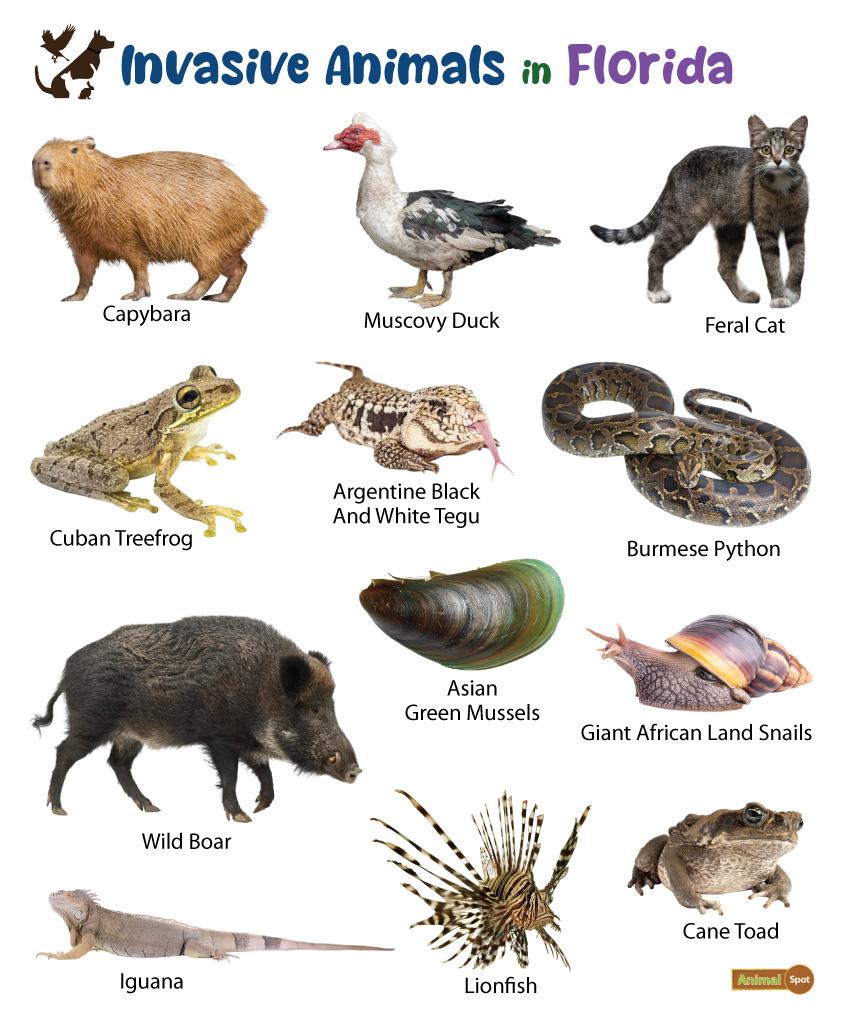
Florida is home to a remarkable diversity of snakes, both venomous and non-venomous. Species like the Eastern diamondback rattlesnake, cottonmouth, and coral snake are venomous, while black racers, rat snakes, and garter snakes are harmless and frequently encountered. Lizards are also widespread, from the ubiquitous green anole to the larger, burrowing gopher tortoise, a keystone species whose burrows provide shelter for many other animals. Amphibians, including numerous species of frogs and toads, thrive in the humid environments, their choruses filling the air after rainfalls. The invasive Cuban tree frog, an example of ecological disturbance, also makes its presence known.
Invertebrates and Marine Life: Hidden Wonders
While often less conspicuous than larger vertebrates, the invertebrate life and smaller marine creatures of Florida represent an immense portion of its biodiversity and are fundamental to the health of its ecosystems.
Insects and Arachnids
Florida’s warm, humid climate supports a staggering number of insect species. Butterflies and moths, including the iconic monarch, add splashes of color to gardens and natural areas. Dragonflies and damselflies dart over wetlands. Bees and other pollinators are crucial for the state’s agriculture and native plant reproduction. While mosquitoes are an undeniable nuisance, they are also a food source for many animals. Spiders, like the golden silk orb-weaver with its impressive webs, and other arachnids play vital roles in controlling insect populations.
Coral Reefs and Offshore Species
Below the surface of the Atlantic Ocean and the Gulf of Mexico, particularly off the Florida Keys, lie extensive coral reefs. These vibrant underwater cities are built by tiny coral polyps and are home to thousands of species of fish, crabs, lobsters, sea urchins, and other invertebrates. Snappers, groupers, angelfish, and parrotfish are just a few examples of the colorful piscine residents. Farther offshore, larger pelagic fish like sailfish and marlin patrol the open waters, alongside various species of sharks. Even the remote Dry Tortugas National Park offers pristine marine environments, showcasing the incredible natural wealth off Florida’s shores.
In conclusion, Florida is far more than just its human-made attractions. Its natural environments are living landmarks, teeming with a complex and captivating array of animals. From the depths of its coral reefs to the highest branches of its cypress trees, the state offers an unparalleled opportunity to witness wildlife in its natural habitats, reminding visitors and residents alike of the imperative to protect these irreplaceable natural treasures.
LifeOutOfTheBox is a participant in the Amazon Services LLC Associates Program, an affiliate advertising program designed to provide a means for sites to earn advertising fees by advertising and linking to Amazon.com. Amazon, the Amazon logo, AmazonSupply, and the AmazonSupply logo are trademarks of Amazon.com, Inc. or its affiliates. As an Amazon Associate we earn affiliate commissions from qualifying purchases.