
Securing and maintaining accommodation in the Sunshine State, whether for long-term residency, a seasonal retreat, or a lucrative vacation rental, involves navigating a unique set of regional requirements. Among the most critical, yet often misunderstood, is the four-point inspection. Far more than a mere formality, this specialized assessment is a cornerstone of property insurance eligibility in Florida, directly impacting the viability and financial security of your accommodation investment. For those looking to own, manage, or even rent older properties, understanding this inspection is not just beneficial—it’s essential.
The Foundation of Florida Accommodation Security
Florida’s allure as a prime location for accommodation, from bustling city apartments in Miami to tranquil beach houses in Sarasota, comes with its own set of challenges, predominantly related to its climate and the age of its housing stock. The four-point inspection emerged as a direct response to these specific vulnerabilities, particularly concerning insurance providers’ willingness to underwrite policies for older properties.
Why Florida’s Unique Climate Matters
The tropical and subtropical climate of Florida exposes properties to intense sun, heavy rainfall, high humidity, and the perennial threat of hurricanes and tropical storms. These environmental factors significantly accelerate wear and tear on crucial building systems. A roof in Florida might degrade faster than in a drier, milder climate. HVAC systems work harder to combat the heat and humidity, while electrical and plumbing components can be susceptible to corrosion and storm damage. For accommodation providers, these conditions translate into increased maintenance costs and a higher risk of system failures, which can directly impact guest comfort, property integrity, and, ultimately, profitability.
The Insurance Imperative for Property Owners
For anyone owning or planning to acquire an accommodation property in Florida, property insurance is non-negotiable. It protects against devastating losses from natural disasters and other perils. However, as properties age, the risk of claims due to outdated or failing systems increases. To mitigate this risk, many Florida insurance carriers require a four-point inspection, especially for homes that are 30 years old or older, before issuing or renewing a policy. Without adequate insurance, a property cannot be legally mortgaged, and operating a rental accommodation becomes an enormous, unmanageable risk. This inspection, therefore, directly dictates whether your accommodation asset is insurable and, by extension, financially secure.
Deconstructing the Four Points
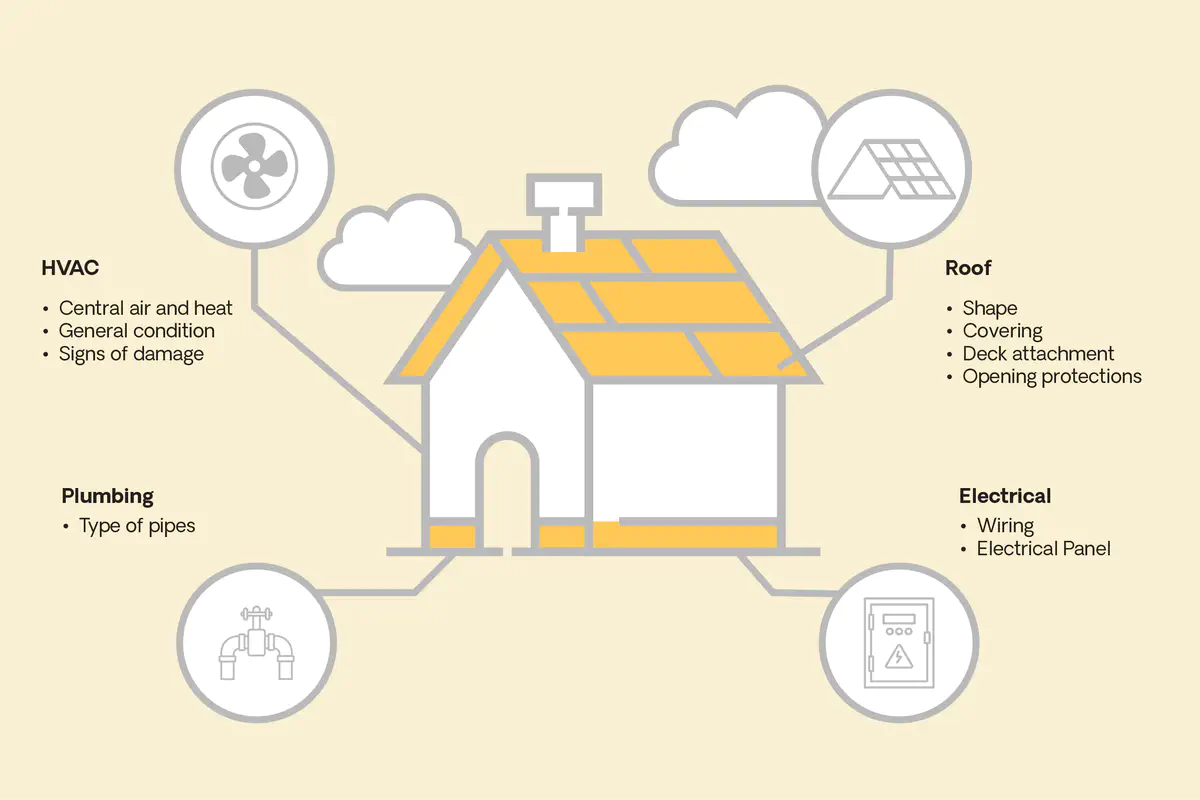
A four-point inspection specifically examines the condition and age of four critical systems within an accommodation property. Unlike a comprehensive home inspection that covers nearly every aspect of the home, the four-point is a targeted assessment designed to reassure insurance companies about the immediate and future risks associated with these key areas.
Roofing: The Primary Shield
The roof is arguably the most critical component for any accommodation in Florida. It’s the primary barrier against the state’s frequent heavy rains and intense sun. The inspection focuses on the roof’s material, its approximate age, its overall condition (including visible damage, missing shingles, signs of leaks, and previous repairs), and its remaining useful life. For a vacation rental in Orlando or a long-term rental in Jacksonville, a robust roof ensures guest comfort, prevents water damage to the interior, and is vital for maintaining insurance coverage. An older, deteriorating roof is a significant red flag for insurers, often leading to policy denial or requiring immediate replacement.
HVAC System: Comfort and Longevity
Florida’s climate demands efficient heating, ventilation, and air conditioning (HVAC) systems year-round. The inspection assesses the age, operational condition, and visible signs of maintenance or disrepair of the HVAC unit(s). An outdated or poorly maintained system not only struggles to keep guests comfortable but also poses potential fire hazards and can lead to high energy bills. For any accommodation, whether a short-term rental in St. Petersburg or a long-term corporate apartment in Tampa, a reliable and safe HVAC system is paramount for guest satisfaction and property management.
Electrical Systems: Powering Your Stay
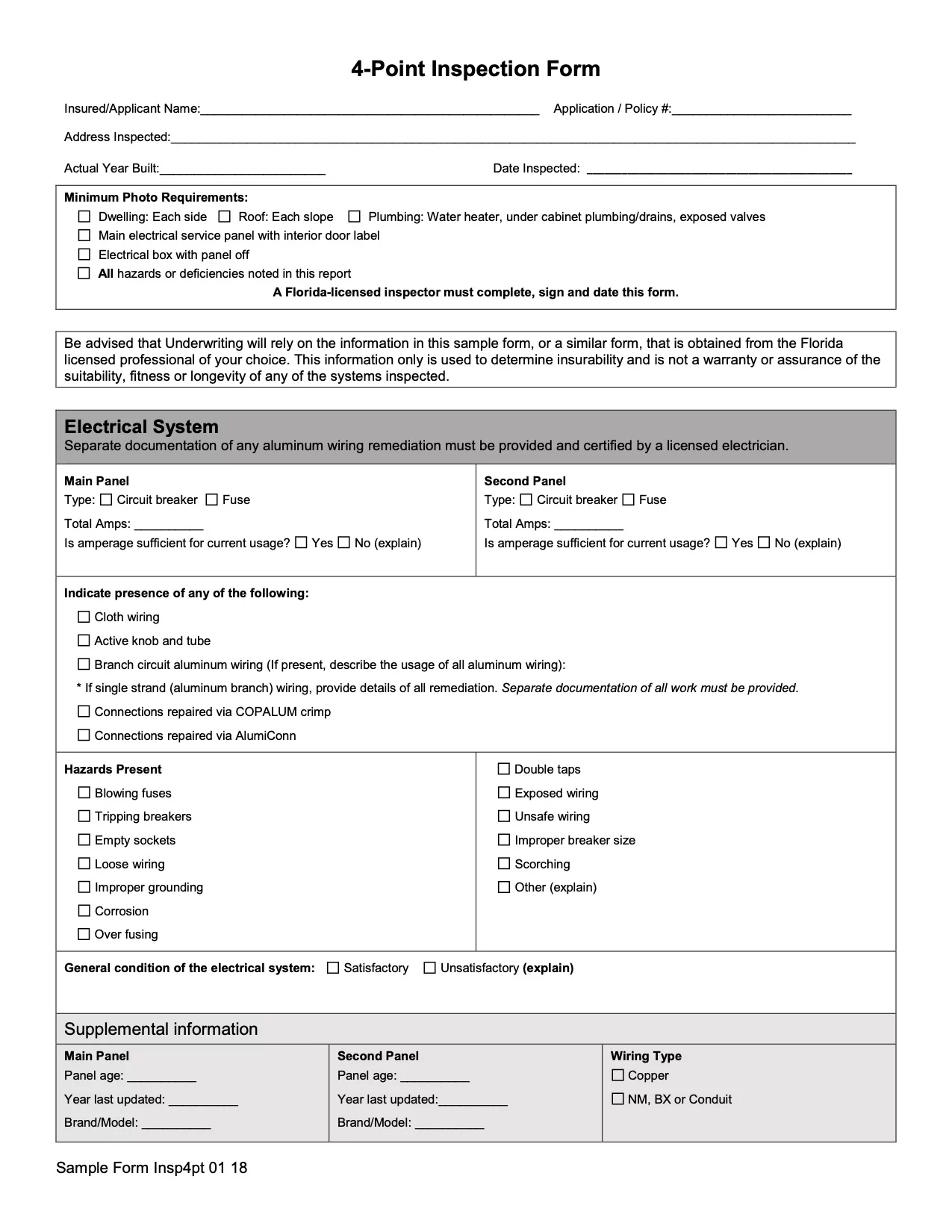
Modern accommodation relies heavily on safe and functional electrical systems to power everything from lighting and appliances to entertainment systems. The four-point inspection examines the electrical panel, wiring type (e.g., knob and tube, aluminum, copper), the condition of outlets and switches, and any visible hazards. Older homes in Florida may still have outdated electrical systems that do not meet current safety standards, posing risks of fire and shock. Insurance companies are particularly concerned about certain types of wiring or panels that are known to be problematic, such as Federal Pacific or Zinsco panels. Ensuring a safe electrical system is non-negotiable for guest safety and operational efficiency of any accommodation.
Plumbing Systems: Essential Utilities
Proper plumbing ensures the availability of clean water, effective waste removal, and prevents costly water damage. The plumbing portion of the inspection evaluates the type of visible piping (e.g., galvanized, copper, PEX), the condition of water heaters, visible leaks, and the overall functionality of the water supply and drainage systems. Burst pipes or chronic leaks can cause significant structural damage, foster mold growth, and disrupt guest stays, leading to negative reviews and potential liability. For properties along the coast in places like Fort Lauderdale or Naples, maintaining robust plumbing is crucial against the backdrop of corrosive salt air and high humidity.
When and Why It’s Required for Accommodation Properties
The four-point inspection is a specific tool primarily used by insurance underwriters to assess risk. Its requirement is not universal across all property transactions but becomes critical under particular circumstances relevant to accommodation.
Older Homes and Insurance Eligibility

The most common trigger for a four-point inspection is the age of the property. Most Florida insurance companies require this inspection for homes 30 years or older. This benchmark helps insurers evaluate the condition of the core systems that are more likely to have deteriorated over time. If you’re acquiring an older property to convert into an Airbnb in Key West or a long-term rental in Gainesville, be prepared for this requirement. Without a satisfactory report, obtaining comprehensive insurance may be difficult, if not impossible, jeopardizing your investment.
Implications for Vacation Rentals and Long-Term Stays
For accommodation providers, the four-point inspection has direct implications. A safe and well-maintained property is essential for guest satisfaction, safety, and positive reviews. Beyond that, a robust insurance policy is critical to protect your business against unforeseen damages or liabilities. A failed four-point inspection can delay or prevent the purchase of an investment property, or even lead to cancellation of an existing policy, rendering the accommodation unviable. It’s a vital step in due diligence for any aspiring or current accommodation owner in Florida.
Navigating Property Transactions
When purchasing an older home in Florida, especially one intended for accommodation, the four-point inspection is typically ordered by the buyer, often after an offer has been accepted but before the final closing. The results will often dictate the buyer’s ability to secure insurance, which in turn affects their mortgage eligibility. If significant deficiencies are found, they may become points of negotiation with the seller for repairs or credits, ensuring that the property meets insurability standards before you take ownership and begin accommodating guests.
Choosing the Right Inspector and Understanding the Report
The quality and credibility of your four-point inspection report are paramount. Choosing a qualified professional and understanding the findings are crucial steps in managing your accommodation property in Florida.
Vetting a Certified Professional
Always select a licensed and insured home inspector who is experienced with Florida construction and insurance requirements. Look for certifications from recognized industry bodies. A reputable inspector will provide a detailed report, often with photographs, documenting the condition of each of the four points. They should be able to clearly communicate their findings and answer any questions you have, helping you understand the implications for your accommodation property.
Deciphering the Findings
The inspection report will typically categorize the condition of each system as “acceptable,” “maintenance required,” or “not acceptable.” An “acceptable” rating means the system is in good working order and meets insurance criteria. “Maintenance required” suggests minor issues that should be addressed but may not immediately impact insurability. “Not acceptable” indicates a significant defect that will likely require immediate repair or replacement for insurance approval. Pay close attention to these classifications, as they directly dictate what actions you might need to take to secure or maintain insurance for your accommodation.
Addressing Deficiencies and Future Planning
If the four-point inspection reveals deficiencies, prompt action is often necessary. Work with your real estate agent, insurance provider, and potentially the seller to determine the best course of action. This might involve negotiating repairs, obtaining quotes for necessary replacements, or seeking a different insurance carrier. Proactive repair of identified issues not only satisfies insurance requirements but also improves the overall safety, longevity, and appeal of your accommodation property for future guests or residents.
The Long-Term Value for Florida Property Investments
Beyond merely securing insurance, the four-point inspection provides invaluable insights that contribute to the long-term success and sustainability of your accommodation investment in Florida.
Protecting Your Accommodation Asset
Understanding the condition of your roof, HVAC, electrical, and plumbing systems allows you to make informed decisions about maintenance and upgrades. Proactive repairs based on inspection findings can prevent costly emergency breakdowns, extend the life of critical systems, and ultimately protect the structural integrity and value of your accommodation. This is particularly relevant for properties in regions like Punta Gorda or Cape Coral, where storm resilience is a major concern.
Enhancing Guest Safety and Satisfaction
A well-maintained property with reliable core systems directly translates to a better experience for guests or long-term tenants. Functional air conditioning, safe electrical outlets, and leak-free plumbing are fundamental expectations. Addressing potential issues identified during a four-point inspection before they become problems ensures guest comfort and safety, leading to higher satisfaction, positive reviews, and repeat business—all vital for a successful accommodation venture.
Future-Proofing Your Florida Investment
The four-point inspection acts as a snapshot of your property’s health. By understanding these key systems, you can budget for future upgrades and renovations, ensuring your accommodation remains competitive and compliant with evolving standards. Whether you’re managing a bustling resort in Daytona Beach or a quiet long-term rental in Tallahassee, this insight allows for strategic planning, safeguarding your investment against unexpected costs and maintaining its appeal in Florida’s dynamic accommodation market. Ultimately, a thorough understanding and successful completion of a four-point inspection is not just an insurance requirement; it’s a critical component of responsible accommodation ownership in the Sunshine State.
LifeOutOfTheBox is a participant in the Amazon Services LLC Associates Program, an affiliate advertising program designed to provide a means for sites to earn advertising fees by advertising and linking to Amazon.com. Amazon, the Amazon logo, AmazonSupply, and the AmazonSupply logo are trademarks of Amazon.com, Inc. or its affiliates. As an Amazon Associate we earn affiliate commissions from qualifying purchases.