
Alaska, the United States’ largest state by area, is a land of unparalleled natural beauty, extreme conditions, and fascinating geographical nuances. From its sprawling glaciers and towering mountain ranges to its vibrant cities and remote Aleutian Islands, Alaska offers a diverse range of experiences for every traveler. However, one aspect that often piques the curiosity of prospective visitors and seasoned adventurers alike is its unique position on the global clock. Understanding Alaska’s time zones is not merely a matter of academic interest; it’s a crucial component of planning a seamless and enjoyable journey, influencing everything from flight schedules and tour bookings to daily activities and communication with the Lower 48 states.
The sheer vastness of Alaska means that it doesn’t conform to a single, monolithic time zone across its entire expanse, although the vast majority of the state observes one primary time. This geographical spread, coupled with its proximity to the International Date Line, creates a complex yet intriguing temporal landscape. For those considering a trip to this magnificent frontier, whether for a luxury cruise along the Inside Passage, a wilderness adventure in Denali National Park, or a cultural immersion in Anchorage, grasping the local time is as essential as packing the right gear. This comprehensive guide will delve into the intricacies of Alaska’s time zones, offering insights for planning your travel itinerary, managing jet lag, and making the most of your Alaskan experience.

Navigating the Vastness: Alaska’s Primary Time Zone
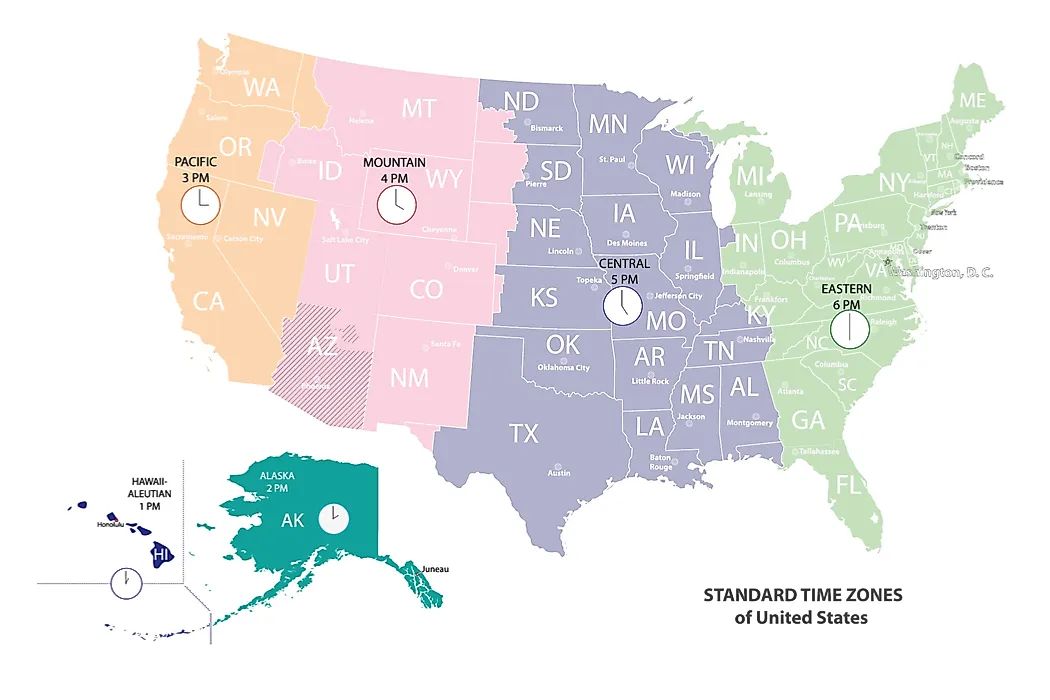
The majority of Alaska operates under the Alaska Time Zone, which is observed throughout most of the mainland and southeastern regions. This time zone is a significant departure from the more eastern parts of the United States, creating a substantial time difference that travelers must account for. For instance, when it’s noon in Alaska in the winter, it’s 4 PM on the East Coast and 1 PM on the West Coast of the United States. This difference profoundly impacts communication and logistical planning, particularly for those flying in from other parts of the country or coordinating with family and colleagues back home.
Understanding the Alaska Time Zone is critical for any form of tourism or accommodation booking. From scheduling airport pickups at Ted Stevens Anchorage International Airport to making reservations at a boutique hotel in Juneau, every interaction hinges on knowing the correct local time. For travelers embarking on a multi-day adventure to see the Northern Lights in Fairbanks or exploring the wilderness near the Chugach Mountains, being attuned to the Alaskan clock ensures a smooth experience, preventing missed connections or late arrivals for guided tours and excursions. This deep dive into Alaska’s time structure will prepare you for a truly immersive and worry-free visit to this extraordinary state.
Understanding AKST and AKDT
The Alaska Time Zone primarily observes two designations throughout the year: Alaska Standard Time (AKST) and Alaska Daylight Time (AKDT). During the winter months, from early November to mid-March, most of Alaska operates on Alaska Standard Time (AKST), which is 9 hours behind Coordinated Universal Time (UTC-9). This is the period when daylight hours are significantly shorter, especially in the northern parts of the state, with sunrise often not occurring until late morning and sunset in the early afternoon. For those seeking unique winter experiences like dog sledding or ice fishing, understanding these daylight constraints is crucial for planning daytime activities.
When spring arrives, typically on the second Sunday in March, Alaska — along with most of the United States — shifts to Daylight Saving Time, adopting Alaska Daylight Time (AKDT). At this point, clocks “spring forward” one hour, placing Alaska 8 hours behind Coordinated Universal Time (UTC-8). This change marks the beginning of Alaska’s famous long summer days, where in some regions, the sun barely dips below the horizon, leading to nearly 24 hours of daylight around the summer solstice. This abundance of daylight is a major draw for summer tourism, allowing for extended sightseeing, late-night hikes, and full days of adventure. Hotels and resorts often capitalize on this, offering flexible scheduling for guests, whether they’re staying at a Marriott in Anchorage or a wilderness lodge in Seward. For lifestyle travelers, especially those accustomed to predictable day-night cycles, adapting to the Alaskan clock and its profound seasonal variations is a core part of the experience.

A Historical Perspective: The Evolution of Alaska’s Time Zones
The time zone structure in Alaska has not always been as straightforward as it is today. Prior to 1967, Alaska was a temporal patchwork, divided into four distinct time zones: Pacific Time, Yukon Time, Alaska Time, and Bering Time. This multi-zone system was a relic of its vast size and the historical development of its diverse regions, often tied to local needs and logistical considerations. For instance, the southeastern panhandle, due to its proximity to the Pacific Northwest, often aligned with Pacific Time (UTC-8/-7), while the westernmost reaches, particularly the Aleutian Islands, were so far west they practically touched the International Date Line, observing what was then known as Bering Time (UTC-11/-10). This fragmentation posed significant challenges for intra-state communication, commerce, and efficient governance, particularly after Alaska achieved statehood in 1959.
Recognizing the need for greater uniformity and simplification, the United States Department of Transportation streamlined Alaska’s time zones in 1967. The majority of the state was consolidated into the Alaska Time Zone. However, due to their extreme westward longitude, the westernmost Aleutian Islands were carved out as an exception, retaining their unique time designation. This historical shift underscores the practical difficulties of imposing a single time standard on such a geographically expansive and diverse region. For travelers today, this history highlights the importance of double-checking local times, especially when visiting remote areas, as understanding this evolution provides context for the contemporary time zone map. It’s a testament to Alaska’s unique position on the global stage, where practicality often dictates deviation from conventional norms.
The Unique Divisional Lines: Beyond the Mainland
While most of Alaska falls within the primary Alaska Time Zone (AKST/AKDT), there’s a significant exception that adds another layer of complexity to its temporal landscape: the remote Aleutian Islands. This chain of volcanic islands stretches for over 1,100 miles into the Bering Sea, almost reaching the International Date Line, making them geographically closer to Asia than to the continental United States. Their extreme westward position necessitates a different time zone, impacting everything from local flight schedules to the daily routines of residents and visiting scientists or fishermen. For adventure travelers looking to explore these rugged, wildlife-rich destinations, being aware of this time zone shift is paramount.
This division showcases the pragmatic approach taken to manage time across such a vast and challenging terrain. It also offers a fascinating insight into the practicalities of governance and daily life in a state defined by its immense scale. Whether you’re planning to stay at a local accommodation in Dutch Harbor or participate in an eco-tourism expedition around Adak, knowing the precise local time is as crucial as understanding the weather patterns. It’s a reminder that Alaska is a land of exceptions and unique rules, where geographical realities often dictate deviations from the norm, making every aspect of the journey an experience of discovery.
The Aleutian Anomaly: UTC-10
The westernmost portions of the Aleutian Islands, specifically west of 172° W longitude, operate under a different time zone entirely: Hawaii Aleutian Standard Time (HAST). This time zone is UTC-10, meaning it is one hour behind the rest of Alaska during both standard and daylight saving periods. When the majority of Alaska observes Alaska Standard Time (UTC-9), the western Aleutians are at UTC-10. Similarly, when the mainland switches to Alaska Daylight Time (UTC-8), these islands remain at UTC-9 (effectively one hour behind the general AKDT). This places them on the same time as Hawaii, a temporal link across vast oceanic distances.
This unique time designation means that for travelers venturing to islands like Adak or Attu (though Attu is largely uninhabited), they will experience an additional time shift. This can be particularly disorienting, as a flight from Anchorage to Adak essentially involves gaining an hour. For anyone involved in logistics, shipping, or commercial fishing, which are vital to the Aleutian economy, precision in timekeeping is absolutely essential. Hotels and local accommodations in places like Dutch Harbor (which falls just outside the HAST zone but is a major hub) are well-versed in advising guests about the local time. For a deeper understanding of these remote destinations and their singular lifestyle, recognizing their distinct time zone is an important first step in appreciating the nuances of this extraordinary part of the world.
Major Cities and Their Time Zone
For the vast majority of travelers visiting Alaska, the primary Alaska Time Zone (AKST/AKDT) will be the standard. This applies to all of Alaska’s major population centers and popular tourist destinations, simplifying planning for most itineraries.
-
Anchorage: As Alaska’s largest city and a primary gateway, Anchorage observes the Alaska Time Zone. If you’re flying into Ted Stevens Anchorage International Airport, planning your hotel check-in at Hotel Captain Cook or booking a sightseeing tour to the Alaska Native Heritage Center, you’ll be operating on AKST or AKDT. This consistency makes Anchorage a convenient base for exploring central Alaska and is typically the starting point for many land-based tours and cruise extensions.
-
Fairbanks: The “Golden Heart City” and a hub for Northern Lights viewing, Fairbanks also adheres to the Alaska Time Zone. Whether you’re enjoying a stay at a Hilton property, preparing for a dog sledding experience, or visiting the University of Alaska Museum of the North, your clock will be set to AKST or AKDT. The extreme seasonal daylight variations here are particularly pronounced, making time zone awareness crucial for scheduling evening aurora hunts or daytime excursions.
-
Juneau: Alaska’s capital city, nestled in the southeastern panhandle and accessible primarily by air or sea, is also in the Alaska Time Zone. Cruisers disembarking from a Holland America Line or Princess Cruises ship to explore the Mendenhall Glacier or experience a whale watching tour will find themselves on AKST/AKDT. The consistent time zone across these key destinations streamlines travel planning significantly for most visitors, allowing them to focus on the breathtaking attractions rather than constant time adjustments.
-
Nome: Located on the Bering Sea coast, Nome is famous as the end point of the Iditarod Trail Sled Dog Race. Despite its remote location in western Alaska, it remains within the Alaska Time Zone.
-
Utqiagvik (formerly Barrow): The northernmost city in the United States, Utqiagvik, also observes the Alaska Time Zone. Its extreme latitude means periods of 24-hour daylight in summer and 24-hour darkness in winter, making time zone understanding critical for scheduling and for appreciating the truly unique local lifestyle.
Travel Implications: Planning Your Alaskan Adventure
Understanding Alaska’s time zones is not just an academic exercise; it’s a practical necessity for any well-planned Alaskan adventure. The sheer geographical spread and the resulting time differences, especially when compared to the contiguous United States, require thoughtful consideration in your travel planning. This foresight can be the difference between a smooth, enjoyable trip and one fraught with missed connections or frustrating scheduling errors. From adjusting your internal clock to maximizing your daylight hours, a conscious approach to time zones enhances every aspect of your Alaskan experience.
When booking flights, coordinating with tour operators, or simply making dinner reservations at a charming local restaurant, always confirm the local time. For instance, a four-hour time difference from the Pacific Time Zone or a five-hour difference from the Mountain Time Zone can lead to early morning calls for family back home feeling like late night intrusions. This consideration extends to everything from confirming hotel check-in times to ensuring you arrive promptly for a glacier tour in Kenai Fjords National Park. For luxury travelers and those on a budget travel alike, a meticulous approach to time zones is a hallmark of intelligent travel and a key to unlocking the full potential of an Alaskan journey.
Adapting to the Alaskan Clock: Tips for Travelers
Adjusting to the Alaskan clock can be a significant hurdle, especially for travelers arriving from the Eastern Time Zone or even the Central Time Zone. The time difference, typically four to five hours behind the East Coast, can induce substantial jet lag. To mitigate this, consider gradually shifting your sleep schedule a few days before your departure. Upon arrival in Alaska, immediately adopt the local time for meals and sleep, no matter how tired you feel. Exposing yourself to natural daylight, especially in the mornings, can help reset your circadian rhythm more quickly. Booking a welcoming accommodation with comfortable amenities, such as a Hyatt property in Anchorage or a cozy lodge near Denali, where you can rest well, is also crucial.
Communication with friends, family, or business associates in the Lower 48 also requires careful planning. A 9 AM call for someone in New York City would mean a 5 AM wake-up call in Anchorage during standard time. Always double-check time differences before making important calls or scheduling virtual meetings. For those working remotely while experiencing Alaska, clear communication about your availability based on local time is essential for a productive business stay. Remember, the locals are accustomed to these time shifts and are usually very helpful. Don’t hesitate to ask your hotel concierge or tour guide for advice on local timing and best practices for managing your schedule. Embracing the rhythm of the Alaskan clock is part of immersing yourself in the state’s unique lifestyle.
Maximizing Daylight: Seasonal Considerations for Your Itinerary
Alaska’s relationship with daylight is perhaps its most captivating seasonal characteristic, profoundly impacting any travel itinerary. During the summer months, particularly around the summer solstice in June, many parts of Alaska experience incredibly long days, some even bordering on 24 hours of daylight, especially in northern destinations like Utqiagvik. This phenomenon, often referred to as the “midnight sun,” offers unparalleled opportunities for extended activities and sightseeing. Imagine hiking Flattop Mountain above Anchorage at 10 PM with the sun still high in the sky, or fishing for salmon until the early hours of the morning. Tourism operators and hotels in Alaska often extend their hours to accommodate this, making it possible to pack more experiences into a single day, from wildlife cruises in Seward to flightseeing tours over Denali.
Conversely, the winter months bring vastly reduced daylight hours, particularly in December and January. In Fairbanks, the sun might only be above the horizon for a few hours, while Utqiagvik experiences weeks of polar night. This doesn’t mean winter travel is less rewarding; it simply shifts the focus. Rather than extended daytime activities, the emphasis turns to unique winter experiences like aurora viewing, dog sledding, and ice sculpting festivals. Accommodation providers, from cozy cabins to well-appointed resorts, are equipped to provide comfort and guidance for these darker seasons. For family trips, budget travelers, or those on a luxury travel excursion, aligning your visit with the seasonal daylight patterns is paramount to enjoying the specific attractions and lifestyle Alaska has to offer, making your itinerary as efficient and memorable as possible.
LifeOutOfTheBox is a participant in the Amazon Services LLC Associates Program, an affiliate advertising program designed to provide a means for sites to earn advertising fees by advertising and linking to Amazon.com. Amazon, the Amazon logo, AmazonSupply, and the AmazonSupply logo are trademarks of Amazon.com, Inc. or its affiliates. As an Amazon Associate we earn affiliate commissions from qualifying purchases.