
Nestled along the southwestern coast of Florida, Sarasota offers travelers a captivating blend of pristine beaches, vibrant arts, and lush natural beauty. A crucial aspect of planning any visit to this charming city is understanding its climate, as the temperature in Sarasota directly influences the types of activities you can enjoy, the clothes you’ll need to pack, and even the overall ambiance of your experience. Sarasota is renowned for its humid subtropical climate, characterized by warm, often hot, temperatures year-round, distinct wet and dry seasons, and ample sunshine. This consistent warmth makes it a favored destination for those seeking an escape from colder climes, but knowing the nuances of its seasonal temperatures is key to crafting the perfect Sarasota adventure.
Sarasota’s Alluring Subtropical Climate: A Year-Round Destination
Sarasota’s climate is largely influenced by its proximity to the Gulf of Mexico and its position within the subtropical belt, ensuring mild winters and hot, humid summers. This geographical advantage provides a climate that generally appeals to travelers seeking warmth and sunshine, even during months when much of the northern hemisphere is shrouded in snow. The city experiences distinct seasons, not in the dramatic foliage changes seen elsewhere, but in temperature, humidity levels, and precipitation patterns. Understanding these shifts is paramount for travelers, as they dictate everything from beach conditions to the comfort level of exploring outdoor attractions like Myakka River State Park or the botanical wonders of the Marie Selby Botanical Gardens. Whether your ideal vacation involves lounging on the powdery sands of Siesta Key Beach, delving into the artistic treasures at The Ringling, or enjoying a leisurely stroll through St. Armands Circle, knowing what temperatures to expect will significantly enhance your travel planning and on-the-ground enjoyment.
Navigating Sarasota’s Seasons: A Traveler’s Guide to Temperature and Activities
The beauty of Sarasota’s climate lies in its variety throughout the year, offering different experiences for every type of traveler. Each season presents unique average temperatures and weather patterns that shape the best way to enjoy the region.
Winter Wonders (December – February): Mild Sunshine and Optimal Exploration
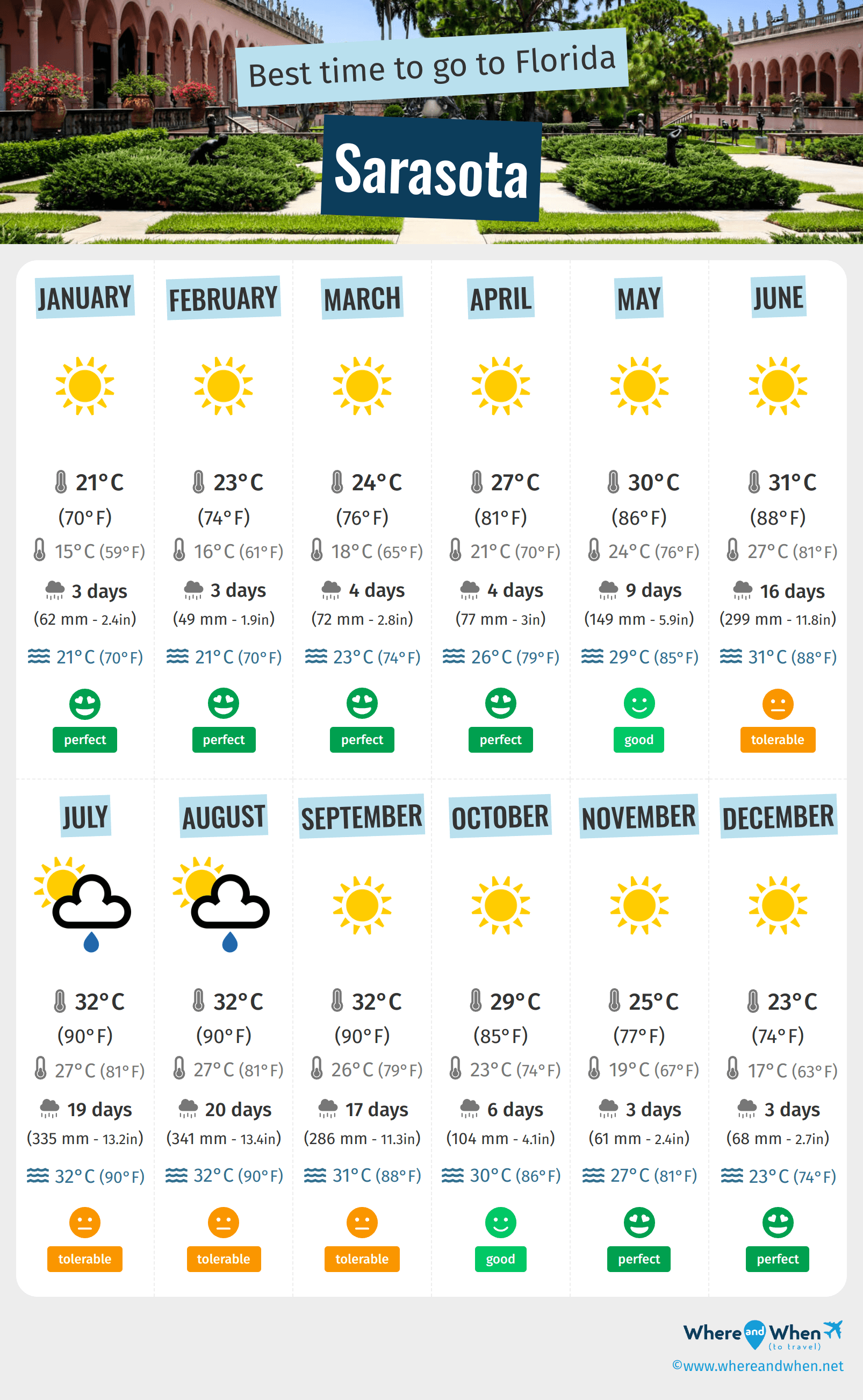
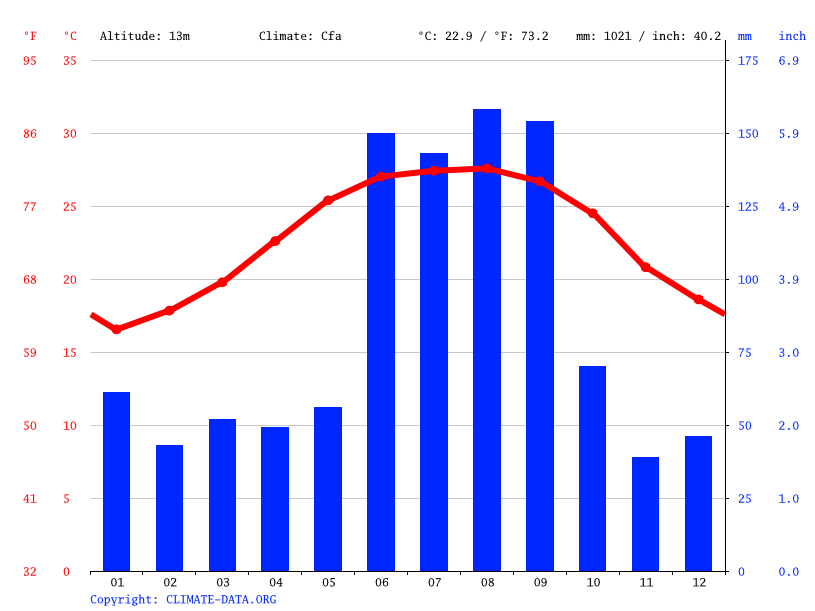
Winter in Sarasota is arguably the most popular time for visitors, particularly those escaping colder climates. During these months, the city enjoys delightful conditions, characterized by abundant sunshine and remarkably comfortable temperatures. Average daytime highs typically range from the low to mid-70s Fahrenheit (21-24°C), while evenings can dip into the 50s Fahrenheit (10-15°C). Humidity levels are at their lowest, making outdoor activities exceptionally pleasant. This season is perfect for exploring Sarasota’s many attractions, from leisurely walks along the beach and wildlife viewing at Myakka River State Park to perusing the shops and restaurants of St. Armands Circle. Cultural events, art festivals, and outdoor concerts also flourish during this mild period. For packing, light layers are advisable, with a light jacket or sweater for cooler evenings. The Gulf of Mexico water temperatures, while cooler than in summer, remain tolerable for many, usually hovering in the high 60s to low 70s Fahrenheit (18-22°C), allowing for refreshing dips.
Spring’s Gentle Embrace (March – May): Warmth Before the Summer Rush
As winter gives way to spring, Sarasota experiences a gradual warming trend, with temperatures becoming increasingly inviting. Daytime highs in spring generally range from the mid-70s to low 80s Fahrenheit (24-29°C), while nights remain comfortably mild in the 60s Fahrenheit (15-20°C). Humidity begins to rise but is still far from the peak levels of summer. This period is ideal for beach enthusiasts, as the warm air perfectly complements the steadily warming Gulf of Mexico waters. Activities such as kayaking, paddleboarding, and exploring the vibrant flora at the Marie Selby Botanical Gardens are particularly enjoyable. Spring also sees fewer crowds compared to the peak winter season, offering a more tranquil experience. Travelers should pack typical summer attire – shorts, t-shirts, swimsuits – with a light long-sleeved shirt or sweater for cooler evenings.
Summer’s Tropical Intensity (June – August): Heat, Humidity, and Afternoon Showers
Summer in Sarasota is synonymous with heat and humidity. Daytime temperatures consistently reach the high 80s to low 90s Fahrenheit (30-35°C), often feeling even warmer due to the high humidity. Nighttime lows typically stay in the mid-70s Fahrenheit (24-26°C). This is Sarasota’s wet season, characterized by frequent afternoon thunderstorms that, while intense, are usually brief, leaving behind refreshed air and often stunning sunsets. The intense heat makes water activities a primary focus, with the Gulf of Mexico waters reaching bath-like temperatures in the mid-80s Fahrenheit (29-30°C). Indoor attractions, such as the comprehensive art and circus museums at The Ringling or the fascinating exhibits at Mote Marine Laboratory & Aquarium, provide excellent respite from the afternoon heat. Packing should focus on lightweight, breathable fabrics, a wide-brimmed hat, and definitely rain gear for those afternoon downpours.
Autumn’s Golden Transition (September – November): Pleasant Relief and Fewer Crowds

Autumn brings a welcome change to Sarasota, as the intense summer heat and humidity gradually begin to recede. While September can still feel very much like summer, by October and November, temperatures become more comfortable. Daytime highs typically range from the low to mid-80s Fahrenheit (27-30°C) in early autumn, cooling to the mid-70s Fahrenheit (24-26°C) by late November. Nighttime temperatures also drop into the 60s Fahrenheit (15-20°C). Humidity levels decrease, making outdoor activities significantly more enjoyable. This is a fantastic time for golfing, fishing, and exploring the area’s numerous nature preserves without the peak summer crowds. While the official hurricane season extends into November, the likelihood of direct impacts generally diminishes by late autumn. The Gulf of Mexico waters remain warm enough for swimming well into October, gradually cooling as winter approaches. Similar to spring, packing summer attire with slightly heavier layers for cooler evenings, especially in November, is a good strategy.
Beyond the Thermometer: Humidity, Water Temperatures, and Sun Protection
While air temperature provides a primary gauge for weather, several other factors are crucial for a comfortable and safe visit to Sarasota.
Understanding Humidity’s Role
Humidity plays a significant role in how hot the temperature in Sarasota feels, particularly during the summer months. High humidity can make 85°F (29°C) feel like 95°F (35°C) or even hotter, leading to increased discomfort and the need for more frequent hydration. Travelers should be mindful of the “feels like” temperature, which accounts for humidity, and adjust their activity levels and water intake accordingly. Staying hydrated is paramount, regardless of the season, but especially during the humid summer.
Gulf Waters: A Key Attraction’s Temperature Profile
For many, Sarasota’s appeal lies in its stunning Gulf of Mexico beaches, most famously Siesta Key Beach. The water temperature is a major draw, and thankfully, it’s inviting for a significant portion of the year.
- Winter (Dec-Feb): High 60s to low 70s F (18-22°C). Cooler but often still pleasant for a quick dip for many.
- Spring (Mar-May): Mid-70s to low 80s F (24-28°C). Ideal for swimming, snorkeling, and other water sports.
- Summer (Jun-Aug): Mid-80s F (29-30°C). Like bathwater, perfect for extended periods in the water.
- Autumn (Sep-Nov): High 70s to low 80s F (26-28°C) in early autumn, gradually cooling to the low 70s F (22-24°C) by late November. Still very enjoyable.
These warm waters extend the beach season significantly, making Sarasota a premier destination for aquatic adventures almost year-round.
Sun Protection and Health Considerations
The Florida sun is strong year-round, regardless of the air temperature. UV index levels are often high, even on cloudy days. Travelers should always prioritize sun protection. This includes wearing broad-spectrum sunscreen with a high SPF, reapplying frequently, especially after swimming; wearing wide-brimmed hats and sunglasses; and seeking shade during the sun’s peak hours (typically 10 AM to 4 PM). Staying hydrated by drinking plenty of water is also crucial to prevent heat-related illnesses, particularly during the hotter months.
Planning Your Sarasota Escape: Tailoring Your Trip to the Climate
Understanding the temperature in Sarasota is more than just knowing what numbers to expect on the thermometer; it’s about strategically planning your itinerary to maximize enjoyment. If your primary goal is to bask on the beach and swim in warm waters, late spring, summer, and early autumn are excellent choices. For those who prefer active outdoor exploration, cultural events, and milder weather, the winter and spring months are unparalleled.
Packing efficiently based on the season will prevent discomfort and ensure you have the right attire for every adventure, from a brisk morning walk on Siesta Key Beach to an evening out at a fine dining establishment in St. Armands Circle. Always pack adaptable clothing, and don’t forget essentials like hats, sunglasses, and reef-safe sunscreen.
Ultimately, Sarasota’s diverse climate means there’s rarely a “bad” time to visit; rather, there are different experiences to be had. By aligning your travel preferences with the seasonal temperatures and typical weather patterns, you can ensure your Sarasota escape is as comfortable, engaging, and memorable as possible, allowing you to fully immerse yourself in all the wonders this vibrant Florida gem has to offer.
LifeOutOfTheBox is a participant in the Amazon Services LLC Associates Program, an affiliate advertising program designed to provide a means for sites to earn advertising fees by advertising and linking to Amazon.com. Amazon, the Amazon logo, AmazonSupply, and the AmazonSupply logo are trademarks of Amazon.com, Inc. or its affiliates. As an Amazon Associate we earn affiliate commissions from qualifying purchases.