
Florida, often celebrated for its sun-drenched beaches, vibrant cities, and thrilling theme parks, holds a unique geographical characteristic that can sometimes catch travelers off guard: it spans two different time zones. While the vast majority of the Sunshine State adheres to Eastern Time, a significant portion of its captivating Panhandle region observes Central Time. Understanding this temporal division is crucial for seamless travel planning, ensuring you arrive on time for flights, tours, and those eagerly anticipated dinner reservations. For anyone embarking on a comprehensive Florida adventure, especially one that takes them across the state’s diverse landscapes, knowing exactly where and why this change occurs is an essential piece of travel intelligence.
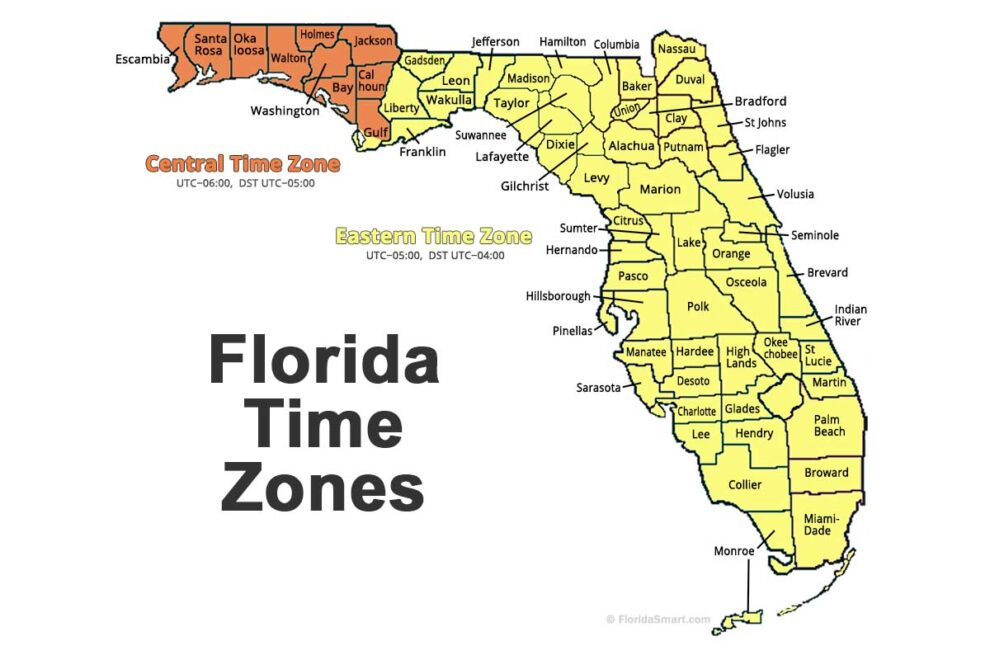
Understanding Florida’s Time Zone Geography
The United States is divided into multiple standard time zones, primarily to align daily activities with the sun’s position and to facilitate nationwide coordination. Florida, despite its relatively compact east-to-west width compared to other states, straddles two of these major zones: the Eastern Time Zone (ET) and the Central Time Zone (CT). The existence of these two zones within one state creates a fascinating geographical and logistical nuance for visitors and residents alike.
Most of Florida, including its populous east coast, central tourist hubs, and southern tip, operates on Eastern Standard Time (EST) during winter months and Eastern Daylight Time (EDT) during the spring, summer, and fall. This means that when you’re planning a trip to iconic destinations like Miami, Orlando, or the Florida Keys, you’ll be firmly rooted in ET.
However, as you journey westward into the Florida Panhandle, the clocks wind back an hour to accommodate the Central Time Zone. This region observes Central Standard Time (CST) in the winter and Central Daylight Time (CDT) for the rest of the year. This shift is a direct result of the state’s westward extension, which aligns more naturally with the timekeeping of neighboring Alabama and Mississippi. For travelers, understanding this dual system is paramount, as an unexpected hour difference can impact everything from catching a flight to making a hotel check-in.
Pinpointing the Central Time Zone Enclave
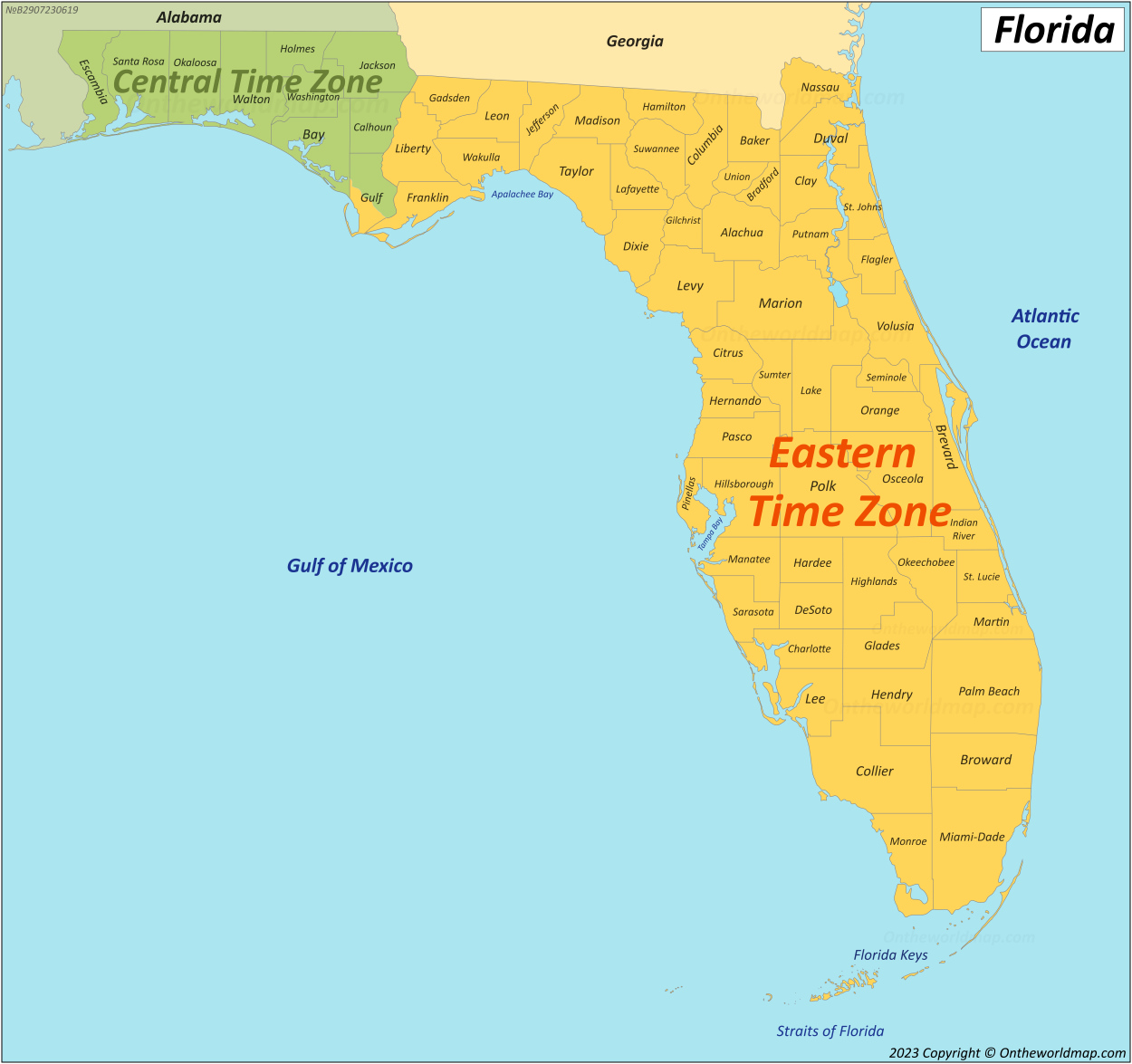
The boundary between Eastern and Central Time in Florida is a point of frequent inquiry for many travelers. For the most part, the time zone line roughly follows the Apalachicola River from the Gulf of Mexico northward to the Georgia border. However, there are specific county designations that clarify the transition.
All counties situated entirely to the west of this general line observe Central Time. These include:
- Escambia County (home to Pensacola)
- Santa Rosa County
- Okaloosa County (including Fort Walton Beach and Destin)
- Walton County
- Bay County (featuring Panama City Beach)
These popular Panhandle destinations, renowned for their sugar-white sands and emerald waters, are firmly in Central Time.
The situation becomes slightly more intricate around Gulf County. While the majority of Gulf County, including the city of Port St. Joe, observes Central Time, a small eastern sliver of the county—roughly east of Wetappo Creek and north of Port St. Joe—actually falls within the Eastern Time Zone.
Beyond this point, traveling eastward, all of Franklin County (home to historic Apalachicola), Liberty County, Calhoun County, and all other counties further east are in the Eastern Time Zone. This means that if you’re driving along U.S. Route 98 from Panama City Beach (CT) towards Apalachicola (ET), you will cross this invisible but impactful time zone boundary, requiring an adjustment of your clock by one hour forward.
Practical Implications for Travelers

Navigating Florida’s dual time zones requires a little foresight, but it’s a simple adjustment that can prevent significant travel hiccups. Here’s how the time zone change can impact your journey and tips for managing it effectively:
Flight Schedules and Transportation
For travelers flying into or out of Florida’s Panhandle airports, such as Northwest Florida Beaches International Airport in Panama City Beach (CT) or Pensacola International Airport (CT), it’s crucial to pay close attention to flight times. All airline tickets will specify times in the local time of the departure and arrival airports. If you’re flying from Orlando International Airport (ET) to Pensacola (CT), a two-hour flight will feel like three hours on your internal clock because you “lose” an hour when you cross into Central Time. Conversely, flying eastward from Pensacola to Orlando will make a two-hour flight seem like only one, as you “gain” an hour. Always double-check your itinerary’s specified local times for each segment.
When embarking on a scenic Florida road trip that crosses the time zone boundary, particularly if you have scheduled appointments or hotel check-ins, be mindful of the hour shift. A simple awareness can prevent missing a reservation or arriving too late (or too early) for an event. GPS devices and smartphones usually adjust automatically, but it’s always wise to verify the time displayed.
Booking Accommodations and Activities
Confirmation of check-in and check-out times, tour start times, and restaurant reservations becomes critical when traveling across time zones. Imagine booking a dolphin-watching tour at 9:00 AM in Destin (CT) after spending the previous night in Tallahassee (ET). If you forget to adjust your clock, you could arrive an hour late, missing your tour. Similarly, a hotel reservation for 3:00 PM in Port St. Joe (CT) might mean arriving an hour earlier than anticipated if your internal clock is still on Eastern Time. Always confirm times with the local businesses or venues, specifying their local time zone if there’s any ambiguity.
Day Trips and Cross-Zone Itineraries
Many travelers enjoy combining the cultural attractions of North Florida cities like Tallahassee (ET) with the stunning beaches of the Panhandle (Panama City Beach, Destin) (CT). Planning a day trip from one zone to the other requires careful scheduling. For instance, leaving Tallahassee at 8:00 AM ET for a two-hour drive to Panama City Beach will put you there at 9:00 AM CT, effectively “losing” an hour of your morning. Conversely, driving back would “gain” an hour, making the return journey seem shorter in elapsed time. Accounting for this hour can make a significant difference in maximizing your sightseeing or leisure time.
Business and Communication
For those blending leisure with work, or needing to communicate with contacts across the state, the time zone difference is a practical consideration. Scheduling virtual meetings or phone calls requires knowing which participants are in ET and which are in CT. A 10:00 AM ET meeting is 9:00 AM CT, a detail that can easily be overlooked but quickly disrupt schedules.
Planning Your Florida Adventure: Time Zone Tips
To ensure your Florida travels are smooth and enjoyable, keep these simple time zone tips in mind:
- Verify Local Time: Upon arrival in a new destination or when crossing the time zone boundary, always confirm the local time. Your smartphone and GPS devices typically adjust automatically, but a quick manual check or confirmation can provide peace of mind.
- Double-Check All Reservations: Before departing, review all flight, hotel, rental car, tour, and dining reservations, paying specific attention to the time zone specified for each. If unsure, contact the vendor to clarify.
- Utilize Digital Tools (Wisely): While smartphones and in-car navigation systems are excellent for automatic time adjustments, be aware that sometimes a glitch can occur, or a device might not update immediately. A traditional watch set to local time can serve as a reliable backup.
- Embrace the Change: Think of the time zone shift as part of the unique fabric of Florida travel. It’s an interesting geographical feature that adds another layer to the diverse experiences the state offers.
By understanding where Florida changes time zones and applying these practical tips, you can confidently navigate the Sunshine State and ensure your travel plans unfold precisely as intended, allowing you to focus on enjoying the beauty and excitement that awaits.
LifeOutOfTheBox is a participant in the Amazon Services LLC Associates Program, an affiliate advertising program designed to provide a means for sites to earn advertising fees by advertising and linking to Amazon.com. Amazon, the Amazon logo, AmazonSupply, and the AmazonSupply logo are trademarks of Amazon.com, Inc. or its affiliates. As an Amazon Associate we earn affiliate commissions from qualifying purchases.