
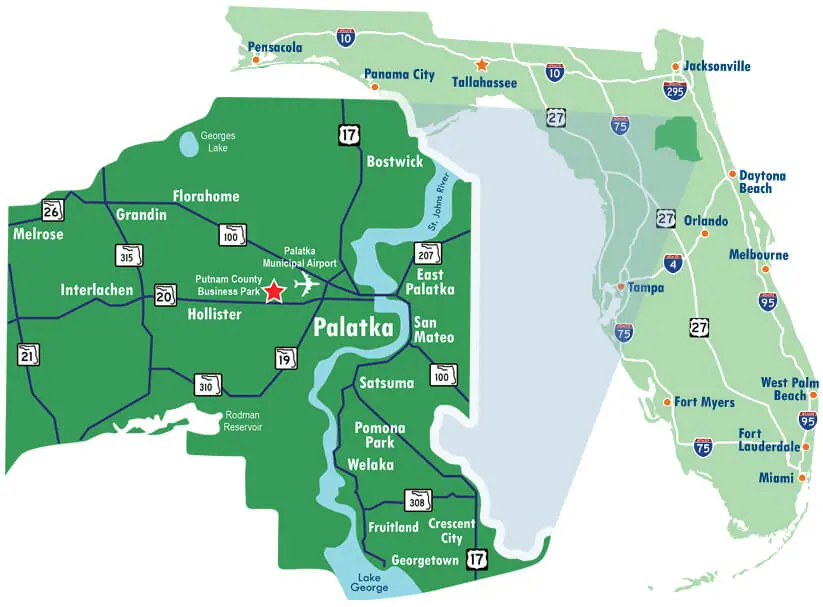
When travelers look at a map of Florida, their eyes are often drawn to the sprawling coastlines of the Atlantic Ocean or the shimmering beaches of the Gulf of Mexico. However, nestled within the northeastern interior of the state lies a hidden gem that offers a different kind of Florida experience—one defined by riverine beauty, deep-seated history, and lush botanical wonders. Palatka is located in the heart of Northeast Florida and serves as the county seat of Putnam County. It is situated approximately 60 miles south of Jacksonville, 50 miles east of Gainesville, and 30 miles west of St. Augustine. This strategic position makes it a vital crossroads for those exploring the region’s inland waterways and historic corridors.
Understanding Palatka’s Geographic Identity
To truly understand where Palatka is, one must look at its relationship with the St. Johns River. The city is perched on a distinctive bend where the river narrows, creating a natural crossing point that has dictated the area’s development for centuries. Geographically, Palatka serves as a bridge between the coastal plains of the east and the rolling hills of the central Florida ridge. Its location provides easy access to some of the most diverse ecosystems in the United States.
Centrality in Northeast Florida
Palatka acts as a hub for several major transit routes. It is conveniently positioned near the intersection of U.S. Route 17 and State Road 100. For visitors coming from Orlando, the drive is roughly 90 minutes north, making it an accessible day trip for those staying in the theme park capital. Unlike the flat, sandy terrain typical of the coast, the geography around Palatka is characterized by ancient sand dunes, deep ravines, and sprawling wetlands. This unique topography is a result of the city’s placement along the prehistoric shoreline of the Florida peninsula.
The Hub of Putnam County
As the administrative and cultural center of Putnam County, Palatka is surrounded by a series of smaller, charming communities such as Bostwick, Welaka, Interlachen, and Crescent City. The city serves as the primary gateway for travelers heading toward the Ocala National Forest, which lies just to the southwest. This positioning makes Palatka the “Gem City of the St. Johns,” a nickname earned during the 19th century when it was a premier destination for steamboat travelers seeking the subtropical wonders of the Deep South.
The Majesty of the St. Johns River
The St. Johns River is the lifeblood of Palatka. Unlike most rivers in North America, the St. Johns River flows north, and Palatka sits at a critical juncture where the river transitions from a wide, lake-like expanse into a more navigable, narrow channel. This geographic feature historically made it the “endpoint” for large luxury steamboats in the 1800s, as they could not easily navigate the tighter turns further south without offloading cargo or passengers.
A Gateway to Ancient Waterways
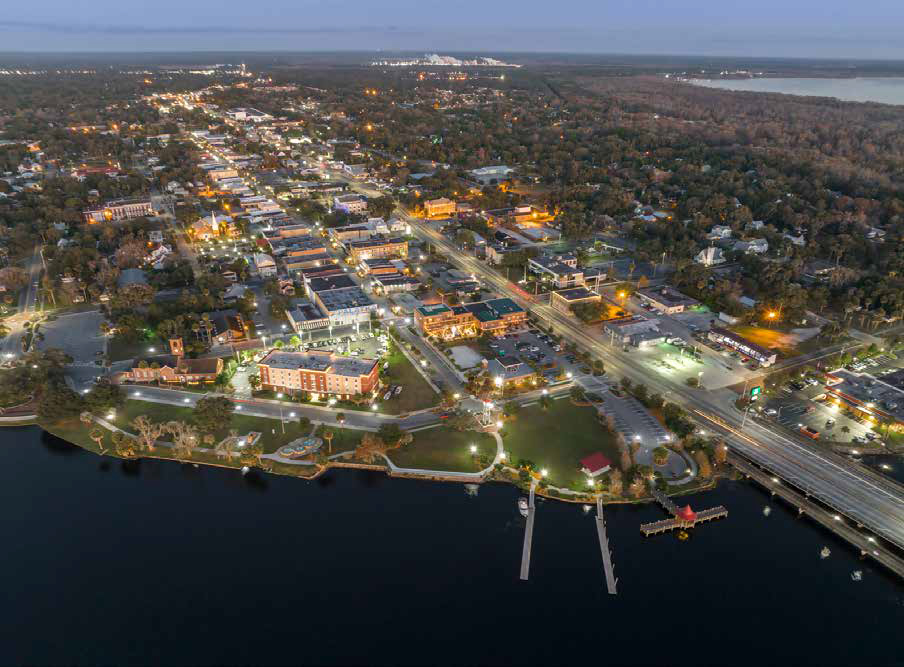
The riverfront in Palatka is more than just a scenic view; it is a gateway to the history of Florida. Long before European settlers arrived, the Seminole Indians and their ancestors utilized this stretch of the river for trade and sustenance. The name Palatka itself is derived from the Muscogee word “Pilo-taikita,” which means “crossing” or “cow crossing.” Today, the Memorial Bridge spans this historic crossing, offering travelers a panoramic view of the vast water system that connects the interior of Florida to the Atlantic Ocean via Jacksonville.
Fishing and Boating Culture
For the modern traveler, Palatka is often synonymous with world-class bass fishing. It has frequently been cited as part of the “Bass Capital of the World” due to the abundant largemouth bass found in the river and the nearby Rodman Reservoir. Professional anglers from across the United States flock to these waters for major tournaments. Beyond competitive fishing, the river offers tranquil opportunities for kayaking and canoeing, especially near the St. Johns River Center, which provides educational insights into the river’s ecology and the importance of its conservation.
Natural Wonders and Public Parks
The physical location of Palatka allows it to boast some of the most striking natural landscapes in the state. Because it is situated on a series of steep-sided ravines, the city offers hiking and sightseeing experiences that are rare in the typically flat Florida landscape.

Ravine Gardens State Park: A Botanical Gem
Perhaps the most famous landmark in Palatka is Ravine Gardens State Park. This 59-acre park was created in 1933 by the Works Progress Administration. The park is built around two steep ravines up to 120 feet deep, which were formed over thousands of years by the erosion of the ancient sandy ridges. During the peak blooming season, the park is a riot of color, featuring thousands of azaleas. A loop road and various suspension bridges allow visitors to explore the depths of the ravines, offering a lush, jungle-like atmosphere that feels worlds away from the nearby city streets.
Extensive Trail Systems and Wildlife
For those who prefer trekking on foot or bike, Palatka serves as a critical junction for the Florida Trail, one of the nation’s premier long-distance hiking paths. The Rice Creek Conservation Area, located just outside the city, offers a glimpse into a massive cypress swamp where some of the oldest trees in the state still stand. Nearby Dunns Creek State Park provides additional acreage for birdwatching, where travelers can spot bald eagles, ospreys, and various wading birds. The intersection of these ecosystems makes Palatka a premier destination for ecotourism and nature photography.
Exploring the Historic Districts and Local Culture
Palatka is a city that wears its history on its sleeve—or rather, on its walls. The city’s location as a former steamboat hub and center for the timber and citrus industries left behind a wealth of architectural and cultural treasures that are meticulously preserved today.
The South Historic District and Architecture
Walking through the South Historic District, visitors can see a variety of architectural styles that reflect the city’s golden age. From Queen Anne and Victorian homes to Classical Revival structures, the neighborhood is a living museum. A standout landmark is the Bronson-Mulholland House, built in 1854. This fully restored mansion sits on a hill overlooking the river and serves as a testament to the city’s pre-Civil War prosperity. The Putnam County Historical Society manages many of these heritage sites, ensuring that the stories of the early pioneers and the famous naturalist William Bartram—who explored the area in the 1770s—remain a central part of the city’s identity.
A Gallery of Murals
Palatka is also known as the “City of Murals.” Throughout the downtown area, more than 30 large-scale murals adorn the sides of historic brick buildings. These artworks depict scenes from the city’s past, including the arrival of the first steamships, the local cattle industry, and the diverse groups of people who shaped the region. This outdoor gallery makes a simple walk through the downtown core an engaging cultural experience. The Larimer Arts Center, housed in a beautiful 1916 building that originally served as a library, continues to foster this artistic spirit by hosting local exhibitions and community workshops.
Signature Events and When to Visit
The timing of a visit to Palatka can greatly enhance the experience, as the city’s calendar is filled with festivals that celebrate its unique location and resources. Because it is in Northeast Florida, the climate is slightly more seasonal than in the southern parts of the state, with cooler winters and vibrant spring seasons.
Celebrating the Azalea and the Blue Crab
Every March, the city hosts the Azalea Festival, which coincides with the peak blooming of the flowers at Ravine Gardens State Park. This event draws thousands of visitors for parades, crafts, and live music. In May, the focus shifts to the river for the Blue Crab Festival. This massive event takes over the riverfront and celebrates the local seafood industry. It is one of the largest and longest-running festivals in the region, featuring carnival rides, seafood vendors, and national musical acts. These events highlight the community’s connection to the land and the water, providing a festive atmosphere for travelers.
Seasonal Travel Considerations
For those seeking a quiet retreat, the late autumn and winter months offer mild temperatures and clear skies, ideal for exploring the Florida Trail or visiting the Ocala National Forest. While the summer months can be humid, they are also the prime time for water sports on the St. Johns River. Regardless of the season, Palatka offers a sense of “Old Florida” that is increasingly rare. It is a place where the pace of life slows down, and the natural beauty of the river valley takes center stage.
Whether you are navigating the waterways, hiking through the deep ravines, or admiring the historic murals, knowing where Palatka is means knowing a more authentic, inland side of Florida. It remains a vital destination for anyone wishing to experience the intersection of history, nature, and Southern hospitality in the Sunshine State. From its roots as a Seminole Indians crossing to its status as a modern ecotourism hub, this city continues to be a cornerstone of the St. Johns River valley. For the traveler looking to go beyond the typical tourist traps, Palatka provides a rich, rewarding journey into the heart of the region.
LifeOutOfTheBox is a participant in the Amazon Services LLC Associates Program, an affiliate advertising program designed to provide a means for sites to earn advertising fees by advertising and linking to Amazon.com. Amazon, the Amazon logo, AmazonSupply, and the AmazonSupply logo are trademarks of Amazon.com, Inc. or its affiliates. As an Amazon Associate we earn affiliate commissions from qualifying purchases.