
The annual clash between the University of Florida and the University of Georgia is more than just a collegiate football matchup; it is a cultural phenomenon that anchors itself in the geography of the American South. For nearly a century, this storied rivalry has found its home in Jacksonville, a city in Florida that serves as the neutral ground for one of the most anticipated events in the United States. Understanding where the game takes place requires an exploration of the specific landmarks that define the experience, from the modern steel of the stadium to the historic banks of the St. Johns River.

The Iconic Setting of EverBank Stadium
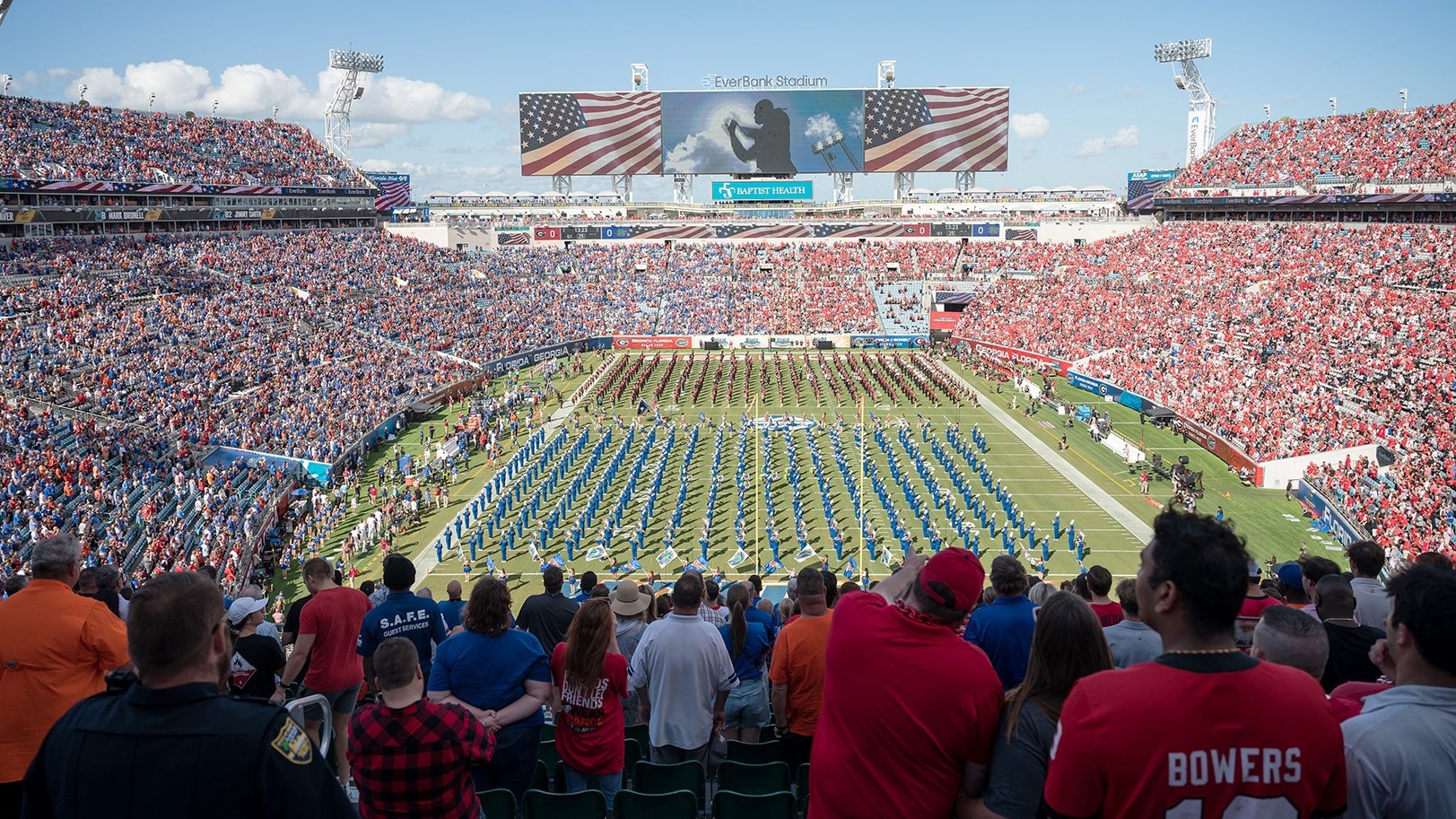
At the heart of the “Where” is EverBank Stadium, a massive sports complex located in Downtown Jacksonville. This landmark is the permanent stage for the rivalry, offering a neutral territory that sits roughly equidistant between Gainesville and Athens. The stadium is not merely a venue; it is a landmark of modern engineering and sports architecture that has evolved alongside the game itself.
A Neutral Ground Landmark
The tradition of playing at a neutral site began in 1933, and Jacksonville was chosen specifically for its location and its capacity to host large crowds. Unlike typical home-and-home collegiate series, this game transforms the stadium into a perfectly bisected landmark. One half of the stands is a sea of orange and blue, while the other is dominated by red and black. This visual split makes EverBank Stadium one of the most unique geographic landmarks in sports, where state lines and team loyalties meet on a single gridiron.
The Architectural Evolution of the Venue
The current stadium stands on the site of the original Gator Bowl, a historic landmark that hosted the game for decades. In the mid-1990s, the old structure was largely demolished to make way for a state-of-the-art facility capable of hosting an NFL franchise, the Jacksonville Jaguars. The current landmark features massive video boards, which at the time of their installation were the largest in the world, and unique features like the spas and cabanas in the north end zone. Adjacent to the stadium is Daily’s Place, an amphitheater and covered flex field that serves as a modern architectural landmark, further defining the sports complex’s footprint in the city.
The Geographical Landmark of Jacksonville, Florida
While the stadium is the focal point, the entire city of Jacksonville acts as the landmark backdrop for the event. As the largest city by land area in the contiguous United States, Jacksonville provides a sprawling canvas for the festivities. Its position on the Atlantic Ocean and the St. Johns River makes it a vital geographic landmark in the Southeast.
The Gateway to the Sunshine State
Jacksonville serves as a symbolic and literal gateway. For fans traveling south from Georgia, the crossing of the state line into Florida is the first landmark moment of the journey. The city’s skyline, marked by the Wells Fargo Center and the Bank of America Tower, signals the arrival at the neutral site. The urban landscape of Jacksonville is intertwined with the identity of the game, providing a sophisticated backdrop to the rugged intensity of the rivalry.
The St. Johns River: A Natural Landmark
Perhaps no natural landmark is as central to the Florida-Georgia experience as the St. Johns River. Flowing north through the heart of the city, the river is the reason for the stadium’s location. On game day, the river itself becomes a bustling landmark, filled with boats of all sizes in a tradition known as “sailgating.” The sight of hundreds of vessels anchored near the stadium is a landmark image of the rivalry. Landmarks like the Friendship Fountain on the Southbank provide a scenic viewpoint for the water-bound festivities, connecting the natural beauty of the region with the energy of the game.
Historic Landmarks Surrounding the Rivalry
Beyond the modern stadium, several historic landmarks in the vicinity play a crucial role in the heritage of the game. These sites provide context to the longevity of the rivalry and the city’s commitment to hosting it.
Metropolitan Park and the Tailgating Tradition
Located directly across from the stadium, Metropolitan Park is a sprawling riverside landmark that serves as the epicenter of the pre-game atmosphere. This park has hosted concerts, festivals, and the famous “World’s Largest Outdoor Cocktail Party” gatherings for years. As a landmark of public space, it represents the community aspect of the game, where fans from both universities congregate. The park’s location along the St. Johns River makes it a premier spot for witnessing the convergence of sports and nature.
The Bridges of Jacksonville
The bridges that span the St. Johns River are iconic landmarks that define the transit and visual identity of the Florida-Georgia game. The Hart Bridge, often called “The Green Monster” due to its distinctive color, looms over the stadium parking lots and is a constant presence in aerial shots of the game. The Main Street Bridge, with its vertical-lift design and bright blue steel, is another landmark that fans cross as they move between Downtown Jacksonville and the stadium district. These structures are more than just infrastructure; they are the steel skeletons that hold the geography of the game together.
The Future of the Landmark Location
The question of “Where” is currently entering a period of transition and discussion. As EverBank Stadium prepares for significant renovations, the landmark status of the game’s location is being reevaluated for the coming years.
Renovations and Temporary Relocations
With the Jacksonville Jaguars and the city of Jacksonville planning a “Stadium of the Future,” the venue will likely be unavailable for a brief period. This has sparked conversations about temporary landmark hosts. Potential candidates include Mercedes-Benz Stadium in Atlanta and Camping World Stadium in Orlando. Moving the game to these locations would temporarily shift the landmark focus of the rivalry, bringing the game to the architectural wonders of Atlanta or the tourism-heavy landscape of Central Florida.

Preserving the Neutral Site Legacy
Despite potential temporary moves, the historical and cultural landmarks of Jacksonville remain the spiritual home of the game. The city has invested heavily in the Sports Complex and the surrounding A. Philip Randolph Boulevard area to ensure it remains a premier destination. The legacy of the Gator Bowl and the decades of tradition built within the city’s limits have cemented Jacksonville as the definitive landmark for this rivalry. The commitment to keeping the game in a neutral city highlights the importance of place in collegiate sports, where the venue becomes as much a part of the story as the players on the field.
In conclusion, the Florida-Georgia game is situated in a landscape defined by significant landmarks. From the towering heights of EverBank Stadium to the historic flow of the St. Johns River, the “Where” is a collection of sites that embody the spirit of the South. Whether it is the green steel of the Hart Bridge or the open spaces of Metropolitan Park, these landmarks provide the physical framework for a rivalry that transcends the sport, making Jacksonville a permanent fixture in the map of American football history. As the stadium undergoes its next evolution, the landmark status of this location will only continue to grow, ensuring that the game remains anchored in a place of historical and architectural significance for generations to come.
LifeOutOfTheBox is a participant in the Amazon Services LLC Associates Program, an affiliate advertising program designed to provide a means for sites to earn advertising fees by advertising and linking to Amazon.com. Amazon, the Amazon logo, AmazonSupply, and the AmazonSupply logo are trademarks of Amazon.com, Inc. or its affiliates. As an Amazon Associate we earn affiliate commissions from qualifying purchases.