
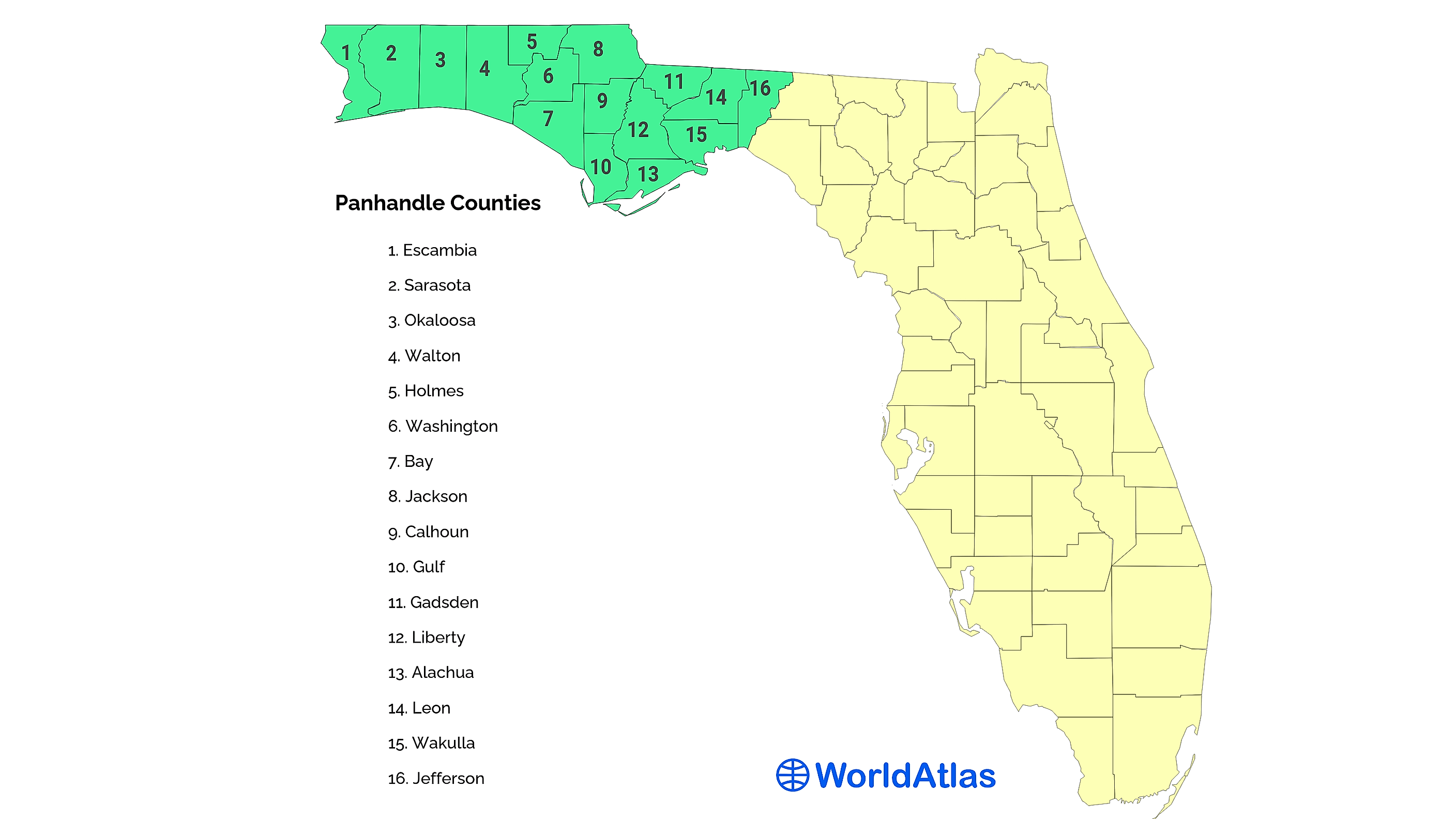
The geography of Florida is often defined by its iconic peninsula, but stretching westward along the northern rim of the Gulf of Mexico is a distinctive region known as the Panhandle. This narrow strip of land, resembling the handle of a cooking pan, serves as a vital transition between the deep southern culture of Alabama and Georgia and the tropical allure of the rest of the Sunshine State. Geographically, it encompasses the northwestern portion of the state, extending roughly 200 miles from the Perdido River in the west to the Aucilla River in the east. Within this expanse lies a collection of natural landmarks, historical monuments, and architectural wonders that distinguish the region from any other part of the United States.

The Geographical Boundaries of Northwest Florida
Understanding where the Panhandle is requires a look at its specific borders and the natural features that define its shape. The region is bounded to the north by the 31st parallel, which marks the state line with Alabama, and further east by the border with Georgia. To the south, the entire length of the Panhandle is hugged by the warm, turquoise waters of the Gulf of Mexico.
One of the most significant geographical landmarks in the region is the Apalachicola River. This river serves as more than just a waterway; it is a major cultural and temporal divider. The Apalachicola River marks the boundary between the Eastern Time Zone and the Central Time Zone. Consequently, cities like Tallahassee, the state capital, operate on Eastern Time, while coastal hubs like Panama City Beach and Pensacola are one hour behind in Central Time.
The terrain of the Panhandle is vastly different from the flat, marshy everglades of the south. The northern reaches of the region feature the “Red Hills,” characterized by rolling clay hills and high elevations that are rare elsewhere in Florida. As one moves toward the coast, the landscape transitions into sandy flatwoods and eventually the world-renowned quartz-sand beaches of the Emerald Coast.
Coastal Icons and Marine Landmarks
The southern edge of the Panhandle is home to some of the most famous natural landmarks in North America. The beaches here are unique due to their sand, which is composed of nearly pure Appalachian quartz. This gives the shoreline a brilliant white appearance that remains cool to the touch even in the height of summer.
Gulf Islands National Seashore
Perhaps the most significant coastal landmark is the Gulf Islands National Seashore. Stretching across both Florida and Mississippi, the Florida portion includes Santa Rosa Island and Perdido Key. This federally protected area preserves massive sand dunes and pristine maritime forests. Within its boundaries sits Fort Pickens, a massive pentagonal brick fortress completed in 1834. As a historical landmark, Fort Pickens is notable for being one of the few Southern forts to remain in Union hands throughout the American Civil War.
The Forgotten Coast and St. Marks Lighthouse
Further east, the coastline takes a turn toward the Forgotten Coast, a region less developed than the bustling Destin area. A prominent landmark here is the St. Marks Lighthouse. Standing as one of the oldest lighthouses in the state, it has guided ships through the Apalachee Bay since the mid-19th century. Its white conical tower serves as a stark contrast against the surrounding salt marshes of the St. Marks National Wildlife Refuge.
Henderson Beach State Park and St. Andrews State Park
In the heart of the Emerald Coast, Henderson Beach State Park in Destin protects 30-foot high dunes and serves as a sanctuary for coastal plants and animals. Similarly, St. Andrews State Park in Panama City Beach is a major landmark for marine life enthusiasts. Located at the entrance of St. Andrews Bay, it provides a unique ecological window into the transition from the Gulf of Mexico to inland estuaries.
Inland Geology and Historical Monuments
The Panhandle’s interior is a treasure trove of geological landmarks that challenge the common perception of Florida as a flat, swampy state.
Florida Caverns State Park
Located near Marianna, Florida Caverns State Park is the only state park in Florida where visitors can explore air-filled caves. These limestone caverns are filled with stalactites, stalagmites, soda straws, and flowstones. This landmark is a result of the region’s karst topography, where acidic groundwater has spent millennia dissolving the underlying limestone to create intricate subterranean chambers.
The Florida State Capitol
In the eastern Panhandle, Tallahassee serves as the political heart of the state. The Florida State Capitol complex is a landmark of architectural significance. It features the Historic Capitol, a restored 1902 building with its iconic candy-striped awnings and stained-glass dome, sitting in the shadow of the 22-story New Capitol tower. This juxtaposition represents the growth of Florida from a frontier territory to one of the most populous states in the nation.
National Naval Aviation Museum
In the far west, Pensacola is anchored by the National Naval Aviation Museum. Located on the Naval Air Station Pensacola, this landmark is one of the largest aviation museums in the world. It houses over 150 beautifully restored aircraft and serves as a monument to the region’s long-standing connection with military history and aeronautical innovation. Nearby, Fort Barrancas overlooks Pensacola Bay, another brick-and-mortar testament to the strategic military importance of the Panhandle’s coastline.
Ecological Preserves and Natural Sanctuaries
The Panhandle contains some of the most biodiverse regions in North America. These natural landmarks are vital for the survival of numerous endemic species.
Apalachicola National Forest
The Apalachicola National Forest is the largest national forest in Florida, covering over 570,000 acres. This vast landmark is characterized by longleaf pine savannas and cypress swamps. It is a critical habitat for the red-cockaded woodpecker and various carnivorous plants, such as pitcher plants, which thrive in the nutrient-poor soils of the bogs.
Wakulla Springs
Just south of Tallahassee lies Wakulla Springs, one of the largest and deepest freshwater springs in the world. The spring vent is a massive geological landmark that pumps out hundreds of millions of gallons of water daily, maintaining a constant temperature of 69 degrees. The surrounding Edward Ball Wakulla Springs State Park protects this ancient water source, which has been a gathering place for humans for over 10,000 years, as evidenced by the mastodon bones recovered from its depths.
Coastal Dune Lakes of Walton County
In Walton County, a series of Coastal Dune Lakes represent a geological phenomenon found in only a few places worldwide, including Madagascar and Australia. These lakes, such as Western Lake in Grayton Beach State Park, are unique because they sit just feet away from the salt water of the Gulf of Mexico, separated only by sand dunes. Occasionally, after heavy rain, the lakes “outfall” into the ocean, creating a rare exchange of fresh and salt water that supports a specialized ecosystem.
The Architectural Legacy of the Panhandle
The Panhandle is also home to landmarks that are not formed by nature, but by revolutionary urban design.
Seaside and New Urbanism
The community of Seaside is an internationally recognized landmark of architecture and town planning. It was the birthplace of New Urbanism, a design movement that emphasizes walkable neighborhoods, traditional architectural styles, and community spaces. The town’s iconic pastel-colored houses, white picket fences, and the Seaside Post Office have influenced urban development across the globe.
Alys Beach and Rosemary Beach
Following the success of Seaside, other architectural landmarks emerged along the Scenic Highway 30A corridor. Rosemary Beach features Dutch-West Indies and colonial influences, while Alys Beach is a stunning landmark of Bermuda-inspired architecture, defined by its stark white masonry and courtyard-centric homes. These towns serve as living landmarks of how human-made environments can be integrated into the delicate coastal landscape of the Panhandle.

Eden Gardens State Park
Near the Choctawhatchee Bay, Eden Gardens State Park preserves the Wesley Mansion, a two-story white columns house built in 1897. Surrounded by ancient live oaks draped in Spanish moss, this landmark provides a window into the timber and turpentine industry that once dominated the Panhandle’s economy before tourism became the primary driver.
The Panhandle in Florida is far more than just a geographical extension of the state. It is a region defined by its quartz-white sands, its subterranean limestone wonders, its political and military monuments, and its pioneering architectural experiments. Whether it is the historic walls of Fort Pickens or the rare Coastal Dune Lakes, the landmarks of the Panhandle tell the story of a land shaped by both the forces of the Gulf of Mexico and the rich history of the American South.
LifeOutOfTheBox is a participant in the Amazon Services LLC Associates Program, an affiliate advertising program designed to provide a means for sites to earn advertising fees by advertising and linking to Amazon.com. Amazon, the Amazon logo, AmazonSupply, and the AmazonSupply logo are trademarks of Amazon.com, Inc. or its affiliates. As an Amazon Associate we earn affiliate commissions from qualifying purchases.