
Florida is often celebrated for its world-class beaches and sprawling theme parks, but beneath the surface of the Sunshine State lies a subterranean wonder: the Floridan Aquifer. This massive underground reservoir feeds more than 1,000 freshwater springs, creating pockets of crystal-clear, sapphire-blue water that remain a constant 72 degrees Fahrenheit year-round. For travelers seeking an authentic “Real Florida” experience, these natural swimming holes offer a refreshing escape from the humidity and a chance to swim in some of the cleanest water in the United States.
However, not every spring in the state is open for swimming. Some are protected for research, others are restricted due to hazardous conditions or ecological sensitivity, and some, like the famous Silver Springs State Park, are reserved for glass-bottom boat tours and kayaking to protect the ancient vegetation and wildlife. To help you navigate these liquid gems, this guide identifies the best springs where you can dive in, tube down natural rivers, and explore the underwater beauty of the Florida wilderness.
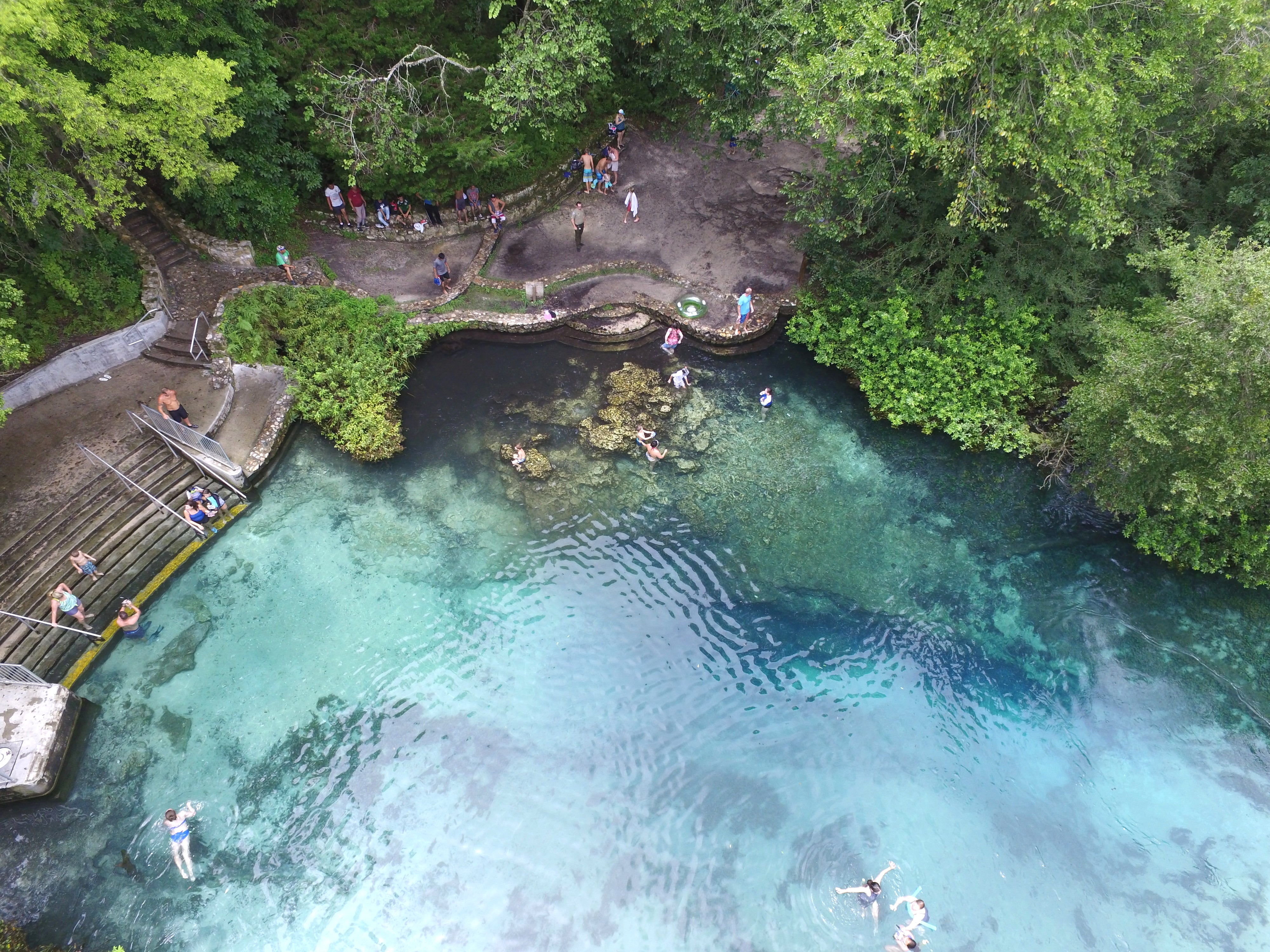
Central Florida’s Aquatic Treasures
The central region of the state, particularly near Orlando and within the Ocala National Forest, contains some of the most accessible and visually stunning swimming springs. These locations are popular day-trip destinations for those staying in the city who want to trade rollercoasters for limestone caverns.
Kelly Park and Rock Springs Run
Located in Apopka, Kelly Park is home to Rock Springs Run, one of the most unique swimming experiences in the state. Unlike a traditional basin spring, Rock Springs emerges from a vertical limestone cleft and flows into a swift, shallow stream. Swimmers typically bring a pool float or inner tube to the “headspring” and drift down a three-quarter-mile natural lazy river. The water is exceptionally clear, and the surrounding lush canopy makes it feel like a tropical jungle. Because of its popularity, the park often reaches capacity within minutes of opening during the summer months.
Blue Spring State Park
In Orange City, Blue Spring State Park offers a massive swimming area with a dramatic boil where the water surges from the earth. The spring run is about half a mile long, leading out to the St Johns River. While swimming is the primary draw during the summer, it is important to note that the spring is closed to all water activities during the winter to provide a sanctuary for the West Indian Manatee. In the warmer months, the deep vents attract snorkelers and free-divers who wish to explore the depths of the limestone cavern.
Wekiwa Springs State Park
Just a short drive from Disney World, Wekiwa Springs State Park serves as the headwaters of the Wekiva River. The swimming area here is a large, natural pool with a limestone shelf. It is a favorite for families because the main swimming area is relatively contained and easy to supervise. The park also offers extensive hiking trails and canoe rentals, making it a comprehensive destination for outdoor enthusiasts.
The Gems of Ocala National Forest
The Ocala National Forest hosts several “first-magnitude” springs—a classification given to springs that discharge at least 2,800 liters of water per second. Alexander Springs is perhaps the most beginner-friendly, featuring a gently sloping beach entry that is perfect for young children. Conversely, Juniper Springs offers a more historic vibe, with a swimming area enclosed by a stone wall built by the Civilian Conservation Corps in the 1930s. For those looking for a vast, open swimming area with bright white sand bottoms, Silver Glen Springs Recreation Area is unparalleled.
The Wild North and the Suwannee River Valley
Heading north toward Gainesville and High Springs, the landscape shifts into a more rugged, rural terrain. This region is considered the “Springs Heartland,” where the density of swimmable springs is higher than anywhere else in the world.
Ichetucknee Springs State Park
For many Floridians, a trip to Ichetucknee Springs State Park in Fort White is a rite of passage. While you can swim in the headsprings, the main attraction is the multi-hour tube float down the Ichetucknee River. The water is so transparent that you can see fish and turtles swimming through the eelgrass several feet below you. It is a peaceful, slow-moving experience that showcases the pristine beauty of the North Florida ecosystem.
Ginnie Springs
Unlike most of the springs on this list, Ginnie Springs is privately owned. Located on the banks of the Santa Fe River, it is famous for its exceptionally clear water and complex cave systems. It is a premier destination for SCUBA diving. Swimmers can enjoy several different spring heads, including Devil’s Eye and Devil’s Ear. It should be noted that Ginnie Springs has a more festive, social atmosphere compared to the more regulated state parks.

Gilchrist Blue Springs State Park
The newest addition to the state park system, Gilchrist Blue Springs State Park, features a stunning main spring that produces about 44 million gallons of water a day. The swimming area is framed by picturesque wooden boardwalks, and the run to the Santa Fe River is short and scenic. It is an excellent spot for photography and quiet relaxation.
Devil’s Den and Blue Grotto
For a truly otherworldly swimming experience, Devil’s Den Prehistoric Spring in Williston is a must-visit. This is an underground “karst” window, meaning a cave roof collapsed to reveal a subterranean river. Swimmers and snorkelers descend a wooden staircase into a prehistoric cavern filled with ancient rock formations. Nearby, Blue Grotto offers a similar sinkhole experience, though it is primarily geared toward divers. Note that these locations often require a reservation and are specifically for snorkeling or diving rather than casual wading.
West Coast Wonders and the Nature Coast
The western edge of Florida along the Gulf of Mexico is often called the Nature Coast. Here, the springs are often tidally influenced and serve as critical habitats for marine life.
Rainbow Springs State Park
Located in Dunnellon, Rainbow Springs State Park is one of the oldest and most beautiful attractions in the state. The swimming area is deep—around 10 to 18 feet in some spots—and the water is a brilliant shade of turquoise. The park features man-made waterfalls from its days as a private attraction and offers a separate tubing entrance further down the Rainbow River. It is widely considered one of the most photogenic springs in the country.
Weeki Wachee Springs State Park
While famous for its legendary mermaid shows, Weeki Wachee Springs State Park also features a massive water park called Buccaneer Bay. This is the only spring-fed water park in Florida, featuring flume rides and slides that drop you directly into the 72-degree spring water. For those who prefer a more natural swim, the turquoise waters of the Weeki Wachee River are accessible via kayak, though swimming is strictly regulated to certain areas to protect the shoreline.
Crystal River and Three Sisters Springs
Crystal River is the only place in the United States where you can legally swim with manatees in the wild. Three Sisters Springs is the crown jewel of this area. During the summer, the springs are open to swimmers who arrive by boat or kayak. The water is startlingly clear and surrounded by lush greenery. In the winter, swimming is restricted to guided manatee tours to ensure the safety of the animals that huddle there for warmth.
Essential Tips for Swimming in Florida Springs
Swimming in a spring is a different experience than swimming in a pool or at the beach. To make the most of your trip and protect these fragile ecosystems, travelers should keep several logistical and ecological factors in mind.
Understanding the Environment
Florida’s springs are managed by several entities, including the Florida Department of Environmental Protection and the Southwest Florida Water Management District. These organizations enforce strict rules to prevent erosion and pollution. Visitors should always stay on designated boardwalks and entry points to avoid trampling native plants. Additionally, the use of “spring-safe” sunscreen is highly encouraged to prevent chemicals from contaminating the aquifer.
Wildlife Awareness
While the springs are generally safe, they are wild environments. You may encounter American Alligators, though they typically avoid the high-traffic swimming areas where human noise and splashing are constant. More common sightings include Florida Softshell Turtles, Great Blue Herons, and various species of fish like Largemouth Bass. Always keep a respectful distance from wildlife and never feed the animals.
Timing Your Visit
Because the water temperature is a constant 72 degrees, the springs are actually most pleasant when the air temperature is hot. During the summer months and on holiday weekends, parks like Ichetucknee and Kelly Park will reach capacity within an hour of opening. To ensure entry, it is best to arrive at the gates 30 to 60 minutes before the park officially opens. Alternatively, visiting on a weekday in the “shoulder seasons” of late spring or early autumn offers a much quieter, more serene experience.

What to Bring
To maximize your comfort, consider bringing the following items:
- Water Shoes: The bottom of many springs is composed of limestone rock, which can be sharp or slippery.
- Snorkel Gear: You will miss half the beauty if you don’t look underwater. The clarity allows you to see deep into the vents and observe the aquatic life.
- Dry Bags: If you are tubing or kayaking, a dry bag is essential for your phone and keys.
- Reusable Water Bottles: Most parks have strict “no-disposable-plastic” rules near the water to prevent litter.
Whether you are looking for the thrill of a deep-water dive at Madison Blue Spring State Park or a family-friendly afternoon at De Leon Springs State Park, Florida springs offer a timeless connection to the state’s natural history. These basins are not just swimming holes; they are windows into the earth, providing a cool, clear sanctuary for both humans and nature alike.
LifeOutOfTheBox is a participant in the Amazon Services LLC Associates Program, an affiliate advertising program designed to provide a means for sites to earn advertising fees by advertising and linking to Amazon.com. Amazon, the Amazon logo, AmazonSupply, and the AmazonSupply logo are trademarks of Amazon.com, Inc. or its affiliates. As an Amazon Associate we earn affiliate commissions from qualifying purchases.