
Standing as a silent sentinel over the island of Maui, Haleakala is more than just a mountain; it is a massive shield volcano that forms more than 75% of the island’s landmass. For those standing at sea level on the beaches of Hawaii, the peak often disappears into a crown of clouds, creating an air of mystery about its true scale. To understand how high Haleakala is, one must look both above the clouds and beneath the waves of the Pacific Ocean.
The summit of Haleakala, known as Puu Ulaula or Red Hill, reaches an impressive 10,023 feet (3,055 meters) above sea level. However, this measurement only tells a fraction of the story. If measured from its true base on the ocean floor, this natural landmark rises nearly 30,000 feet, making it taller than Mount Everest when calculated from base to peak. This staggering elevation creates a unique environment where sub-alpine ecosystems thrive just miles away from tropical rainforests and sandy shores.
The Geographical Grandeur of Haleakala
The sheer verticality of Haleakala is a testament to the power of the volcanic hotspot that created the Hawaiian Islands. Unlike the jagged, tectonic peaks found in the United States mainland, such as the Rocky Mountains, Haleakala is characterized by its broad, sloping profile. This “shield” shape is the result of thousands of years of fluid lava flows layering upon one another.
Elevation and Geological Formation
The journey from the coast of Maui to the summit of Haleakala is often described as one of the steepest climbs in the world for a motorized vehicle. In just 38 miles, travelers ascend from sea level to over 10,000 feet. This rapid change in altitude results in a dramatic drop in temperature and oxygen levels. While the coastal towns of Kihei or Lahaina may be basking in 80-degree weather, the summit often experiences frost and, occasionally, snow.
Geologically, Haleakala is considered a dormant volcano. Its last eruption occurred several hundred years ago, though it is still considered likely to erupt again in the future. The height of the mountain is not static; like most islands in Hawaii, Maui is slowly sinking under its own weight while simultaneously being eroded by wind and rain. Despite this, it remains one of the most prominent landmarks in the North Pacific.
The Shield Volcano of Maui
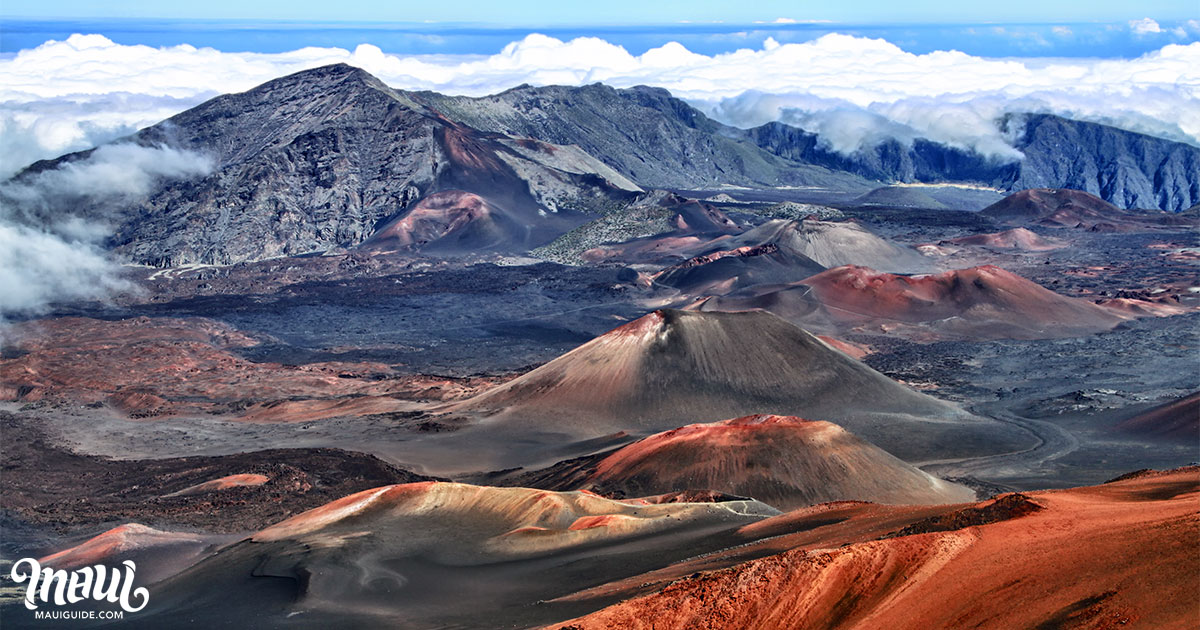
While Mauna Kea and Mauna Loa on the Big Island are higher in absolute elevation, Haleakala holds a special place in the topography of the United States. Its massive crater—which is technically an erosional valley rather than a volcanic caldera—measures seven miles across and two miles wide. Within this “crater,” the floor sits about 2,600 feet below the summit rim, creating a landscape that looks more like the surface of Mars than a tropical island.
The scale of the mountain influences the weather patterns for the entire region. The mountain acts as a barrier to the moisture-laden trade winds. As these winds hit the slopes, the air is forced upward, cooling and releasing rain on the windward side near Hana. This leaves the leeward side and the summit itself in a rain shadow, creating a desert-like environment at high altitudes.
The Summit Districts and Crater Landscapes
The area surrounding the peak is preserved within the Haleakala National Park, a sanctuary that protects both the geological features and the rare biological species that call this altitude home. The park is divided into two main sections: the Summit District and the Kipahulu District. It is in the Summit District where the true height of the mountain is most palpable.
Exploring the Haleakala National Park
Visitors to the park often congregate at specific viewpoints to grasp the magnitude of the landmark. The Leleiwi Overlook and the Kalahaku Overlook offer sweeping views of the crater floor, where cinder cones rise like miniature volcanoes within the larger structure. These cones, such as Puu o Maui, reach heights of several hundred feet themselves, yet they look like small mounds from the summit rim.
At 10,023 feet, the air is thin and remarkably clear. This clarity is why the summit is a restricted airspace and home to a collection of high-tech research facilities. For the casual observer, the height provides a 360-degree panorama that, on a clear day, allows for views of the Big Island, Lanai, Molokai, and even Kahoolawe.
The Eolian Desert and Unique Flora
One of the most remarkable aspects of Haleakala is the life that exists at its peak. The “Eolian” zone, referring to the wind-swept environment at the summit, is home to the Haleakala Silversword. This plant is found nowhere else on Earth. It has adapted to the extreme UV radiation and freezing temperatures of the 10,000-foot elevation by developing silver hairs that reflect sunlight and conserve moisture.
The landscape at this height is dominated by volcanic scree—loose rocks and ash that vary in color from deep reds to charcoal blacks. The silence at the summit is often profound, broken only by the whistling of the wind. This high-altitude desert serves as a stark contrast to the lush greenery of the Oheo Gulch located at the base of the mountain in the coastal region of the park.

Cultural and Historical Significance
To the Native Hawaiian people, Haleakala is not just a geological landmark; it is a sacred site. The name itself translates to “House of the Sun.” The height of the mountain plays a central role in the oral traditions and spiritual practices of the Hawaiian Islands.
The Legend of Maui and the Sun
The most famous legend associated with the mountain involves the demigod Maui. According to tradition, the sun used to race across the sky too quickly, leaving the people with short days and insufficient time to dry their kapa (cloth) or grow their food. Maui climbed to the 10,000-foot summit of Haleakala and waited for the sun to rise. Using a lasso made from his sister’s hair, he snared the sun’s rays. Maui only released the sun after it promised to travel more slowly for half the year, creating the long days of summer.
This legend highlights why the summit is considered a “wao akua,” or the realm of the gods. In ancient times, only high-ranking priests and chiefs were permitted to ascend to these heights. The archaeological remains found within the crater, including stone altars and shelters, suggest that the mountain was used for spiritual retreats and astronomical study for centuries.
Ancient Astronomical Observations
Long before modern telescopes were built, the ancient residents of Hawaii recognized the summit of Haleakala as a premier location for observing the heavens. The height of the mountain places it above much of the atmospheric distortion that plagues lower elevations. Polynesian navigators, who settled the islands after traveling across the Pacific Ocean using only the stars, likely utilized high points like Haleakala to calibrate their celestial maps.
Scientific Importance: Looking Toward the Stars
In the modern era, the height of Haleakala has made it one of the most important scientific sites in the world. The same reasons that made it sacred to ancient Hawaiians—its proximity to the heavens and clear air—make it an ideal location for astrophysics and space surveillance.
Haleakala Observatory
Near the summit, though separate from the national park boundaries, lies “Science City,” home to the Haleakala Observatory. This complex includes some of the world’s most advanced telescopes, managed by the University of Hawaii and the United States Air Force. The Daniel K. Inouye Solar Telescope, the largest solar telescope in the world, is located here. It allows scientists to study the sun’s magnetic fields with unprecedented detail.
The height of 10,000 feet is crucial here because it is above the “inversion layer,” a meteorological phenomenon where clouds are trapped at lower altitudes. This ensures that the telescopes have clear, dry skies for the majority of the year. The site is also used for tracking man-made satellites and space debris, providing a vital service for global communications and safety.
Atmospheric Clarity and Research
Beyond astronomy, the elevation of Haleakala is essential for atmospheric research. Being located in the middle of the Pacific Ocean, far from major industrial centers like Los Angeles or Tokyo, the air at the summit is some of the cleanest on the planet. Scientists use this height to measure global CO2 levels and study the movement of aerosols across the atmosphere. The mountain acts as a giant probe sticking up into the troposphere, providing data that helps us understand climate change on a global scale.
Preserving the Majesty of the House of the Sun
As one of the most visited natural landmarks in Hawaii, Haleakala faces significant conservation challenges. The very height that makes it so attractive also makes its ecosystems incredibly fragile.
Conservation Efforts for the Silversword
The Haleakala Silversword was once on the brink of extinction due to grazing by invasive goats and cattle, as well as vandalism by early tourists. Today, thanks to the efforts of the National Park Service, the population has rebounded. However, climate change poses a new threat. As temperatures rise, the specific moisture conditions at 10,000 feet are changing, forcing the plants to adapt or perish. Maintaining the integrity of this high-altitude landmark requires strict adherence to trails and protection of the volcanic soil.
Sustainable Visitation in Hawaii
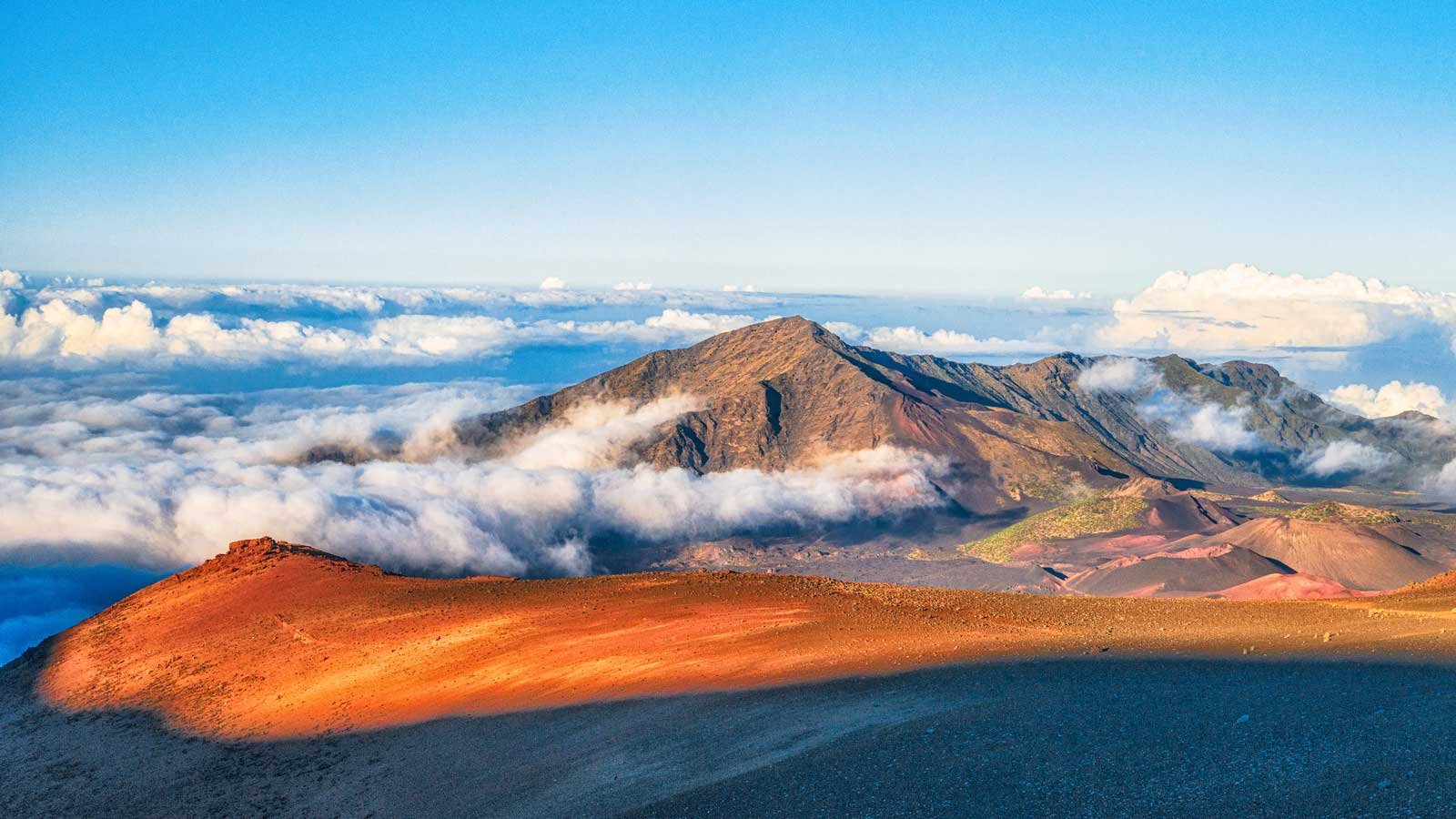
The popularity of the Haleakala sunrise has led to the implementation of a reservation system to manage the number of vehicles at the summit. This is necessary not only for the visitor experience but also to reduce the carbon footprint on the mountain’s peak. Standing at the top of Haleakala and looking down at the clouds reminds visitors of the mountain’s scale and the importance of preserving such unique geological features for future generations.
Whether viewed as a geological wonder, a sacred spiritual site, or a pinnacle of modern science, the height of Haleakala remains one of the defining features of the United States landscape. At 10,023 feet above the sea, it is a place where the earth meets the sky, offering a perspective on the world that can be found nowhere else in the Pacific Ocean.
LifeOutOfTheBox is a participant in the Amazon Services LLC Associates Program, an affiliate advertising program designed to provide a means for sites to earn advertising fees by advertising and linking to Amazon.com. Amazon, the Amazon logo, AmazonSupply, and the AmazonSupply logo are trademarks of Amazon.com, Inc. or its affiliates. As an Amazon Associate we earn affiliate commissions from qualifying purchases.