
The dream of visiting Hawaii is shared by travelers from all corners of the globe. Known for its emerald-green cliffs, volcanic landscapes, and the warm spirit of aloha, this isolated archipelago in the Pacific Ocean is a pinnacle destination for those seeking both adventure and relaxation. However, because it is the most isolated island chain in the world, getting there requires a significant commitment of time. Whether you are departing from the bustling cities of North America, the historic hubs of Europe, or the vibrant capitals of Asia, understanding the logistics of your journey is the first step in planning the ultimate tropical getaway.
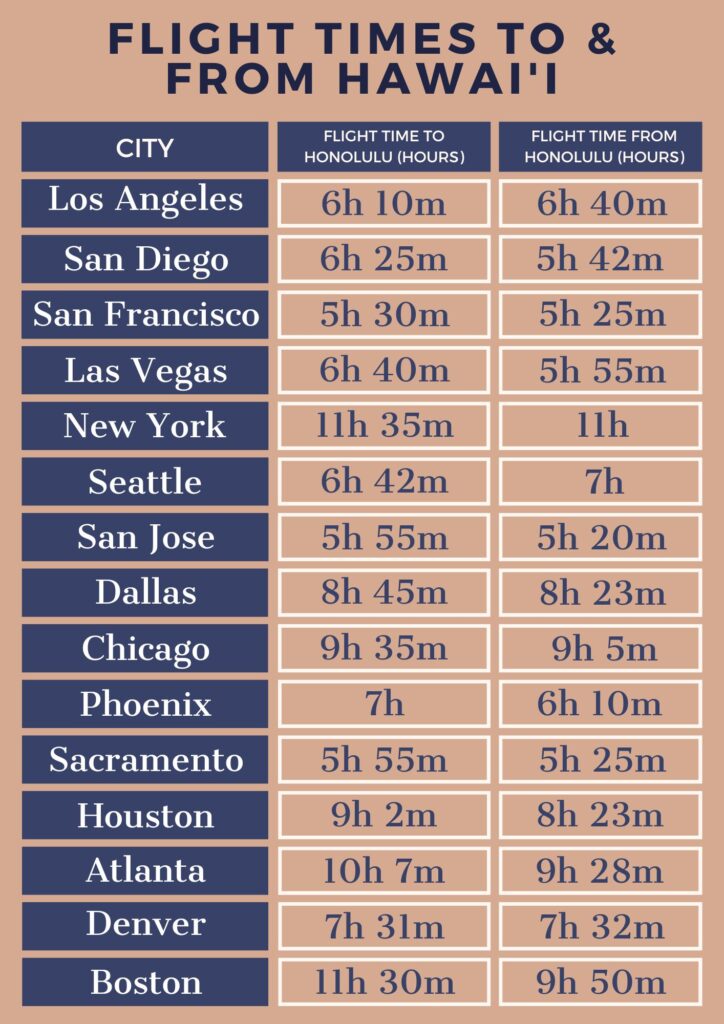
Flight Times from Major Global Hubs
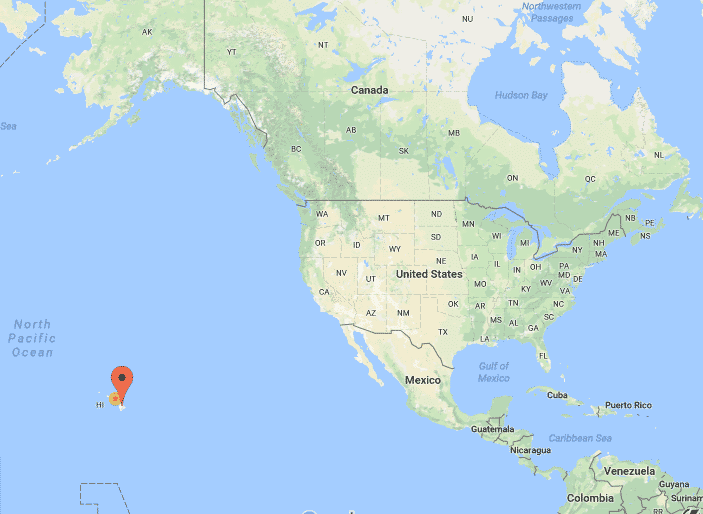
For the vast majority of visitors, the journey to Hawaii begins at an airport. The time it takes to reach the islands varies drastically depending on your point of origin. Because the islands are situated roughly 2,400 miles from California, even the shortest flights involve several hours over open water.
Departures from the West Coast of the United States
The West Coast of the United States serves as the primary gateway to the Hawaiian Islands. Cities like Los Angeles, San Francisco, and Seattle offer the most frequent and direct connections to Honolulu and the neighbor islands.
From Los Angeles International Airport, a direct flight to Oahu typically takes between 5 hours and 30 minutes to 6 hours. If your destination is Maui or the Big Island, the flight time remains relatively consistent, perhaps adding or subtracting fifteen minutes depending on the specific island’s position. Travelers leaving from San Francisco can expect a similar duration.
Further north, departures from Seattle or Portland usually take slightly longer, often clocking in at around 6 hours and 15 minutes. For those coming from Canada, specifically Vancouver, the flight is roughly 6 hours, making the Pacific Northwest a convenient jumping-off point for North American travelers.
Crossing the Continental United States
Traveling from the central or eastern parts of the United States is a much more intensive endeavor. For those flying from Chicago, a direct flight to Honolulu takes approximately 9 hours. From Texas, specifically Dallas, travelers can expect to be in the air for about 8.5 hours.
The longest domestic flights originate from the East Coast. A non-stop journey from New York City to Honolulu is one of the longest domestic routes in the world, typically taking between 10.5 and 11.5 hours. From Atlanta, the flight time is similarly substantial, often exceeding 10 hours. Due to the significant time difference—Hawaii does not observe daylight savings time—travelers from the East Coast often find themselves gaining nearly half a day on the way there, only to face a challenging “red-eye” return journey.
International Gateways: Asia and Oceania
Hawaii is also a major destination for travelers from Japan, Australia, and New Zealand. From Tokyo, the flight to Honolulu takes roughly 7 to 8 hours, depending on the season and wind patterns. This route is exceptionally popular, and Honolulu International Airport is well-equipped to handle the high volume of international arrivals.
Coming from the southern hemisphere, the journey is longer. A direct flight from Sydney to Oahu takes about 10 hours. Travelers from Auckland can expect a journey of roughly 9 hours. These long-haul flights often provide a unique perspective on the sheer scale of the Pacific Ocean.
Navigating the Islands: Inter-Island Travel
Once you arrive in the state, your journey may not be over. While many visitors choose to stay on Oahu to enjoy the sights of Waikiki and the history of Pearl Harbor, many others seek the diverse landscapes of the other islands.
Inter-Island Flights
The most common way to move between islands is by air. Short-haul flights connect Honolulu to Kahului Airport on Maui, Lihue Airport on Kauai, and both Hilo and Kona on the Big Island. These flights are incredibly quick, usually lasting between 30 and 45 minutes.
However, the “travel time” is more than just the flight duration. Travelers must account for the time spent returning a rental car, checking in at the terminal, and passing through security. Even for a 30-minute flight, it is wise to budget at least three hours for the entire process. For those visiting smaller islands like Molokai or Lanai, smaller commuter planes are the standard, offering breathtaking aerial views of the Pacific as part of the experience.
Ferry Services
While air travel is dominant, there is a limited ferry service between Maui and Lanai. The Maui-Lanai Passenger Ferry departs from Lahaina and takes about 45 minutes to an hour to reach Manele Harbor. This is a scenic alternative that allows travelers to potentially spot humpback whales during the winter months, adding a touch of adventure to the transit.
Alternative Methods: Cruising to Hawaii
For those who believe that the journey is just as important as the destination, cruising to Hawaii offers a vastly different timeline. Most cruises to the islands depart from California ports such as Los Angeles, San Francisco, or San Diego.
Transpacific Crossings
A standard cruise from the West Coast to Hawaii typically takes 4 to 5 days at sea before reaching the first port of call, which is often Honolulu or Hilo. These days at sea allow passengers to fully disconnect and enjoy the amenities of a luxury vessel while crossing the vast Pacific.
Due to the Passenger Vessel Services Act, most foreign-flagged cruise ships departing from the United States must visit a foreign port. This often means the itinerary includes a stop in Ensenada, Mexico, or Vancouver, which adds additional time to the overall trip. A round-trip cruise from the West Coast to Hawaii usually lasts about 15 days in total.
Inter-Island Cruising
An alternative is to fly into Honolulu and board a ship that stays within the islands. These itineraries typically last 7 days and visit Oahu, Maui, Kauai, and the Big Island. This method eliminates the need for multiple inter-island flights and hotel check-ins, allowing the traveler to see the diversity of the archipelago efficiently.
Factors That Influence Your Travel Time
While the distance between two points remains constant, several variables can influence how long it actually takes to get to Hawaii.
Jet Stream and Wind Patterns
The jet stream plays a crucial role in flight duration. When traveling west from North America to Hawaii, planes are often flying against headwinds, which can slow the aircraft down. Conversely, the return journey to the mainland is typically shorter because of the tailwinds provided by the jet stream. It is common for a return flight to Los Angeles to be 30 to 45 minutes faster than the flight out.
Seasonal Variations and Weather
Seasonal weather can also impact travel times. During the winter months, heavy storms in the North Pacific can lead to turbulence or flight path adjustments that may add time to the journey. Additionally, peak travel seasons like the winter holidays or summer break can lead to increased congestion at major airports like Daniel K. Inouye International Airport. Longer lines at security and busier tarmacs can add significant “ground time” to your total travel day.
Layovers and Connections
Unless you are flying from a major hub, your journey will likely involve at least one layover. Common connection points include Los Angeles, San Francisco, Seattle, and Phoenix. A layover can add anywhere from two to six hours to your total travel time. Some travelers choose to turn their layover into a “stopover,” spending a night in a city like San Francisco to break up the long journey and adjust to the time difference more gradually.
Maximizing Your Time in the Islands
Given the time it takes to reach Hawaii, most travel experts recommend staying for at least a week to make the journey worthwhile. Once you land and receive your first lei, the long hours of travel quickly fade into the background as you immerse yourself in the natural beauty of the destination.
From the lush cliffs of the Na Pali Coast on Kauai to the volcanic wonders of Hawaii Volcanoes National Park on the Big Island, every hour spent in transit is rewarded with world-class experiences. Whether you are driving the Road to Hana in Maui or snorkeling at Hanauma Bay in Oahu, the Hawaiian Islands offer a unique blend of adventure and serenity that makes the trek across the Pacific Ocean entirely worth it.
Planning for the travel time is not just about the hours in the air; it is about preparing for the transition into a slower, more intentional pace of life. By understanding the logistics—from the flight times out of New York City to the inter-island hops to Lihue—you can set realistic expectations and ensure that your arrival in Hawaii is as seamless and stress-free as the island breeze.
LifeOutOfTheBox is a participant in the Amazon Services LLC Associates Program, an affiliate advertising program designed to provide a means for sites to earn advertising fees by advertising and linking to Amazon.com. Amazon, the Amazon logo, AmazonSupply, and the AmazonSupply logo are trademarks of Amazon.com, Inc. or its affiliates. As an Amazon Associate we earn affiliate commissions from qualifying purchases.