
The allure of Hawaii has captivated travelers for centuries. Situated in the heart of the Pacific Ocean, this volcanic archipelago is one of the most isolated population centers on Earth. For those planning a journey to this tropical paradise, the question of distance is more than just a matter of geography; it defines the travel experience, the logistics of the flight, and the sense of crossing into a world entirely removed from the bustle of mainland life. Understanding how many miles lie between you and the shores of Honolulu or the cliffs of the Nā Pali Coast is the first step in embarking on one of the world’s most iconic travel adventures.
Understanding the Distance from Major Global Hubs
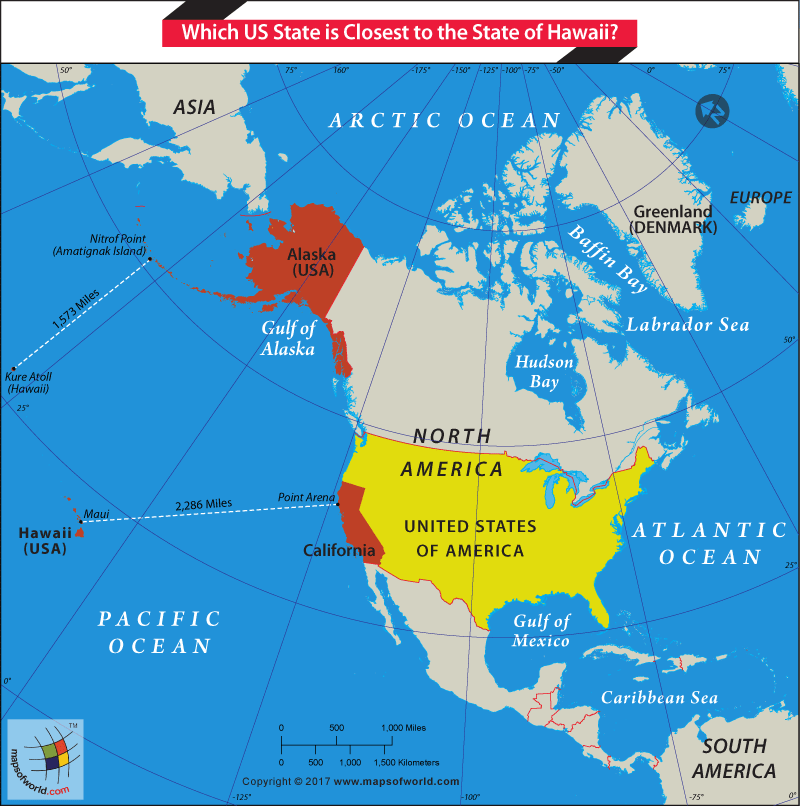
The sheer scale of the Pacific Ocean is difficult to grasp until you are thousands of feet above it, watching the endless blue horizon. Because Hawaii is located roughly 2,400 miles from the nearest continental landmass, every traveler arriving by air or sea must commit to a significant journey. The distance varies considerably depending on your point of departure, influencing both the flight duration and the type of aircraft used for the route.
The West Coast Gateway
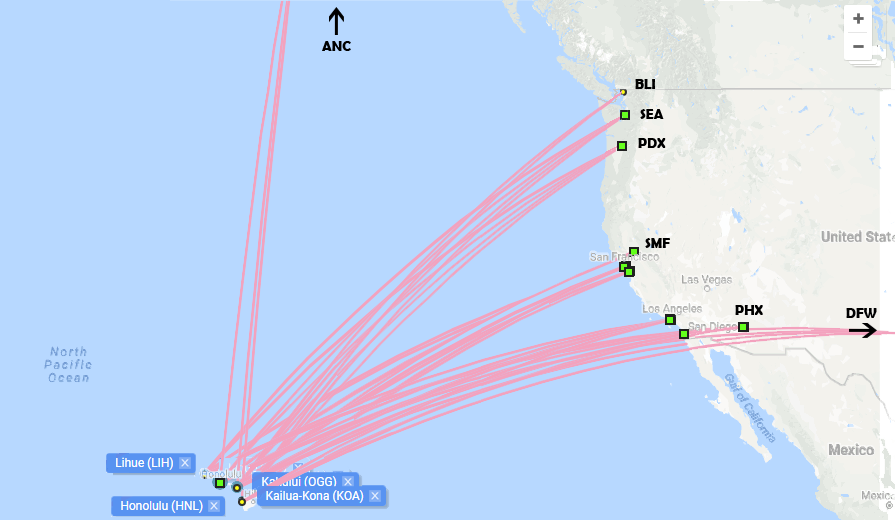
For travelers from the United States, the West Coast serves as the primary gateway to the islands. California remains the closest state to the archipelago, with San Francisco and Los Angeles acting as the most frequent departure points. From San Francisco, the distance to Honolulu is approximately 2,390 miles. From Los Angeles, the flight covers about 2,550 miles.
Further north, cities like Seattle and Portland offer slightly longer routes. A flight from Seattle to the islands spans roughly 2,680 miles. Even from Vancouver in Canada, travelers are looking at a journey of approximately 2,700 miles. These routes are typically served by medium-to-long-haul aircraft, and the flight time usually averages between five and six hours, depending on wind patterns.
Long-Haul Travel from the East Coast and Europe
Traveling from the East Coast of the United States to Hawaii is a massive undertaking that rivals many international transoceanic flights. From New York City, the distance to Honolulu is nearly 5,000 miles. This journey often requires a non-stop flight of nearly 11 hours or a connection through a hub like Chicago or Dallas.
For those coming from Europe, the distances become even more staggering. London in the United Kingdom is roughly 7,200 miles away from Hawaii. Because of the extreme distance, there are no direct commercial flights from Europe; travelers must typically fly to a major North American hub or a city in Asia to complete the journey.
Trans-Pacific Journeys from Asia and Oceania
Hawaii also serves as a vital bridge between the Americas and Asia. From Tokyo, Japan, the distance to Honolulu is approximately 3,850 miles. This makes Hawaii a popular destination for Japanese travelers, who can reach the islands in about seven to eight hours. Seoul in South Korea is slightly further, at about 4,500 miles.
From the south, Sydney, Australia, is roughly 5,000 miles away, while Auckland in New Zealand is about 4,400 miles. These distances highlight Hawaii’s central role in Pacific travel and its unique position as a cultural and geographical crossroads.
Navigating the Island Chain: Distances Between the Hawaiian Islands
Once you arrive in the state, the concept of distance shifts. While the “miles to Hawaii” refers to the vast ocean crossing, the “miles within Hawaii” refers to the inter-island travel that defines many visitors’ itineraries. The island chain stretches over 1,500 miles, but the eight main islands are clustered relatively close together at the southeastern end of the archipelago.
Oahu to Maui: The Popular Connection
The most common inter-island route is between Oahu and Maui. Travelers often fly into Daniel K. Inouye International Airport in Honolulu before taking a short hop to Kahului Airport in Maui. The distance between these two hubs is only about 100 miles. The flight is so short—often less than 40 minutes—that the aircraft barely reaches its cruising altitude before beginning its descent. Despite the short distance, the landscape changes dramatically from the urban sprawl of Waikiki Beach to the lush valleys and volcanic peaks of Haleakala National Park.
Traveling to the Big Island and Kauai
The Big Island (officially known as Hawaii Island) is the southernmost island in the chain. From Honolulu, it is approximately 170 miles to Kona International Airport or 210 miles to Hilo. This island is famous for its vast size and diverse climates, ranging from the volcanic landscapes of Volcanoes National Park to the snow-capped peak of Mauna Kea.
To the northwest of Oahu lies Kauai, known as the Garden Isle. The distance from Honolulu to Lihue Airport is about 100 miles. Kauai offers some of the most rugged terrain in the state, including the world-renowned Waimea Canyon and the dramatic Nā Pali Coast, which is largely inaccessible by car.
Smaller Islands: Molokai and Lanai
For those seeking a quieter experience, Molokai and Lanai are even closer to their neighbors. Molokai is only about 25 miles from Maui, a distance so short that it can be seen clearly on a sunny day. Lanai is similarly situated, roughly 9 miles across the Auau Channel from Maui. These shorter distances allow for ferry travel in some cases, providing a different perspective on the Pacific waters.
Flight Times and Air Travel Dynamics
When discussing the miles to Hawaii, it is essential to consider that mileage does not always translate directly to time. The dynamics of air travel, particularly over the Pacific Ocean, are heavily influenced by the jet stream.
The Impact of Jet Streams
Jet streams are high-altitude air currents that flow from west to east. When traveling from Asia or the West Coast to Hawaii, pilots often encounter headwinds. This can add significant time to the flight. Conversely, when returning from Hawaii to California or Japan, these same winds act as tailwinds, pushing the aircraft forward and shortening the duration of the trip. It is not uncommon for a flight from Los Angeles to Honolulu to take nearly six hours, while the return trip takes only five.
The Great Circle Route
Airlines do not fly in a straight line on a flat map. Instead, they follow the “Great Circle” route, which accounts for the curvature of the Earth. This is the shortest distance between two points on a sphere. For long-haul flights from the East Coast or Canada, this route often takes planes further north than one might expect before banking south toward the islands.
Direct Routes vs. Layovers
The availability of direct flights has expanded significantly in recent years. While Honolulu remains the primary international hub, more carriers now offer direct service from the West Coast to Kahului Airport, Lihue Airport, and Kona International Airport. This allows travelers to skip the connection in Oahu, saving miles and time. However, for those coming from smaller markets, a layover in San Francisco, Los Angeles, or Phoenix is often a necessary part of the journey.
Preparing for the Journey: Tips for Long-Distance Travel
Traveling thousands of miles requires careful preparation to ensure comfort and health. The flight to Hawaii is long enough that “coach fatigue” can set in, making the arrival less enjoyable if one isn’t prepared.
Managing Time Zone Shifts
Hawaii follows Hawaii-Aleutian Standard Time. Notably, the state does not observe Daylight Saving Time. This means the time difference between Hawaii and the West Coast varies between two and three hours depending on the time of year. For East Coast travelers, the shift is more dramatic, usually five or six hours. To combat jet lag, experts suggest adjusting your sleep schedule a few days before departure and staying hydrated throughout the flight.
Packing Essentials for the Pacific Crossing
Since you will be spending a significant amount of time in the air, your carry-on should be optimized for comfort. Noise-canceling headphones are highly recommended, as the hum of a long-haul aircraft can be draining. Additionally, because you are traveling to a tropical climate, it is wise to dress in layers. While it may be hot upon arrival at Daniel K. Inouye International Airport, aircraft cabins are notoriously chilly.
The Arrival Experience
There is a psychological shift that occurs when the plane finally descends toward the islands. After hours of seeing nothing but water, the first sight of land—perhaps the peaks of Molokai or the crater of Diamond Head—is a profound moment for any traveler. This is when the “miles” finally transform into a tangible destination.

Beyond the Miles: What to Expect Upon Arrival
The distance to Hawaii is what has preserved its unique character. Its isolation allowed for the development of a distinct Native Hawaiian culture and a biological diversity that is found nowhere else on earth. When you step off the plane, the air feels different—humid, floral, and warm.
Many visitors start their journey in Oahu, exploring the historical significance of Pearl Harbor or the world-class surfing on the North Shore. Others head straight for the quiet luxury of Maui, where the Road to Hana offers a scenic journey through 620 curves and 59 bridges.
For those looking for adventure, the Big Island offers a scale of exploration that matches the distance you traveled to get there. From the green sand beaches to the stargazing opportunities at the Mauna Kea Observatory, the island is a testament to the power of nature. Meanwhile, Kauai offers a more serene pace, where the beauty of Hanauma Bay (back on Oahu) is echoed in the pristine snorkeling spots of the Garden Isle.
In conclusion, while the number of miles to Hawaii may seem daunting—whether it’s 2,400 from California or 5,000 from New York City—the rewards of the journey far outweigh the time spent in transit. The isolation of these islands is precisely what makes them a world-class destination, a place where the distance traveled is a small price to pay for the “Aloha” spirit that awaits on the other side.
LifeOutOfTheBox is a participant in the Amazon Services LLC Associates Program, an affiliate advertising program designed to provide a means for sites to earn advertising fees by advertising and linking to Amazon.com. Amazon, the Amazon logo, AmazonSupply, and the AmazonSupply logo are trademarks of Amazon.com, Inc. or its affiliates. As an Amazon Associate we earn affiliate commissions from qualifying purchases.