
The volcanic landscape of Hawaii stands as a testament to the raw, creative power of the earth. Rising from the depths of the Pacific Ocean, this archipelago was not formed by continental drift in the traditional sense, but by a “hotspot” in the Earth’s mantle that has been stationary for millions of years. As the tectonic plate moves over this hotspot, new islands are birthed, while older ones slowly erode and sink back into the sea. This geological conveyor belt has created some of the most iconic natural landmarks on the planet.
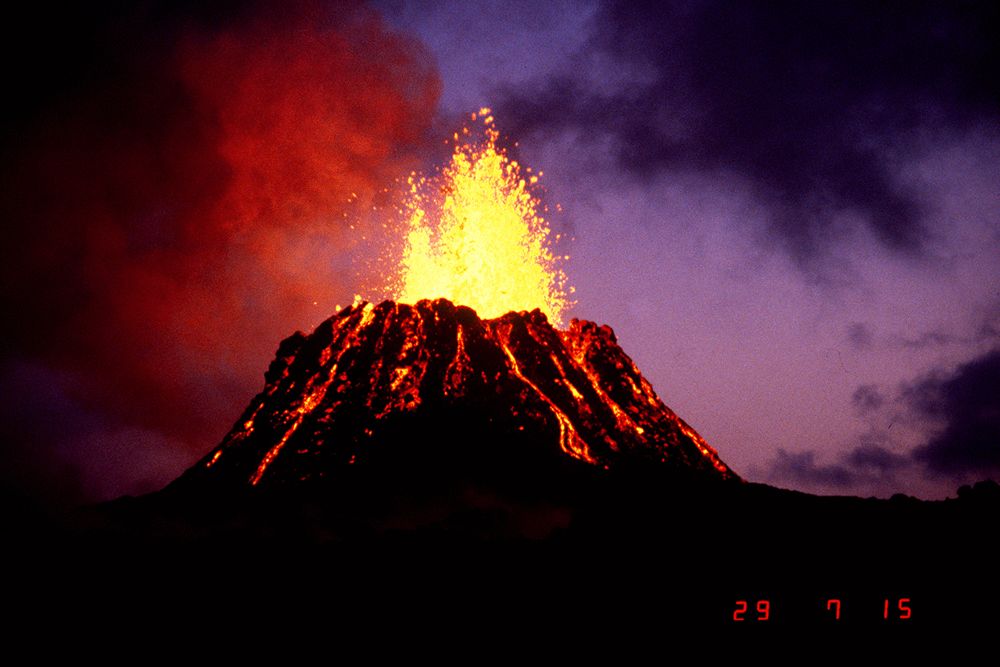
To understand how often volcanoes erupt in this region, one must distinguish between the various stages of volcanic life. While some peaks are extinct and others are dormant, the Big Island remains a hyperactive hub of seismic activity. The frequency of eruptions varies wildly from one mountain to the next, ranging from near-continuous flows to centuries of silence.
The Pulse of the Big Island: Kilauea and Mauna Loa
The Big Island is the youngest in the chain and currently the only island with consistently active volcanoes. Of the five subaerial volcanoes that comprise the island, Kilauea and Mauna Loa are the primary focus of researchers and visitors alike. These landmarks are among the most monitored geological features in the world, overseen by the United States Geological Survey.
Kilauea: The Shield of Constant Flow
Kilauea is often cited as one of the most active volcanoes on Earth. For much of the late 20th and early 21st centuries, it seemed as though the answer to “how often” was “all the time.” From 1983 until 2018, the Puu Oo vent on the eastern rift zone erupted almost continuously, fundamentally altering the geography of the Puna district. This 35-year event was one of the longest-lived eruptions in recorded history, destroying hundreds of homes while simultaneously adding hundreds of acres of new land to the coastline.
The frequency changed in 2018 with a massive collapse of the Halemaumau Crater floor. This event was followed by a brief period of quiet, the first in decades. However, the silence did not last. Since late 2020, Kilauea has entered a cycle of intermittent eruptions, often characterized by lava lakes forming within the summit caldera. These eruptions can occur several times a year, lasting anywhere from a few weeks to several months. This makes Kilauea a landmark of perpetual change, where the map is redrawn almost every year.
Mauna Loa: The Massive Giant
In contrast to its neighbor, Mauna Loa erupts less frequently but with significantly more volume and intensity. As the largest subaerial volcano in the world, Mauna Loa covers half of the Big Island. Historically, it has erupted 34 times since its first well-documented eruption in 1843. On average, this equates to an eruption every five to six years over the long term.
However, Mauna Loa went through a notable period of dormancy between 1984 and 2022. For 38 years, the giant remained quiet, leading some to wonder when the next major event would occur. The silence was broken in late 2022 when lava began flowing from the summit and moved toward the Saddle Road, a critical highway connecting Hilo and Kona. While its eruptions are less frequent than those of Kilauea, they are a stark reminder of the massive scale of Hawaiian volcanism.
Dormant Landmarks Across the Archipelago
As one travels northwest from the Big Island, the volcanoes become older and less active. These landmarks are considered dormant—meaning they have not erupted in recent history but still have the potential to do so—or extinct.
Haleakala: The House of the Sun
On the island of Maui, the massive Haleakala dominates the skyline. Rising over 10,000 feet above sea level, it is a landmark of incredible ecological diversity. Haleakala is considered a dormant volcano. Its last eruption is a subject of some debate among geologists; while local oral traditions and some carbon dating suggested an eruption around 1790, more recent scientific evidence points to a period several hundred years earlier.
The eruption frequency of Haleakala is measured in centuries rather than years. Experts estimate that it has erupted at least ten times in the last 1,000 years. While the likelihood of an eruption in any given year is low, the volcano is not considered extinct. It remains a sentinel of the Maui landscape, characterized by its vast, desert-like cinder cones within the summit basin.
Mauna Kea and Hualalai

Back on the Big Island, Mauna Kea and Hualalai represent the middle ground of volcanic activity. Mauna Kea, the highest point in the state, is currently dormant. It last erupted about 4,500 years ago. Its frequency is so low that it is often treated as a stable site for world-class astronomical observatories.
Hualalai, which looms over the town of Kailua-Kona, is a different story. It last erupted in 1801, sending lava flows that now lie beneath the Kona International Airport. Geologists believe Hualalai will erupt again, likely within the next hundred years, as it typically maintains an eruption cycle of every 200 to 300 years.
Extinct Wonders and the Evolution of Landmarks
The oldest islands in the main chain, Oahu and Kauai, are home to extinct volcanoes. These landmarks have moved far away from the hotspot, and their volcanic fires have long since died out, leaving behind dramatic, eroded landscapes.
Diamond Head and Oahu’s Volcanic Past
Diamond Head, or Leahi, is perhaps the most famous volcanic landmark in Honolulu. While it is a volcanic tuff cone, it is part of the Honolulu Volcanic Series, which represents a later stage of “rejuvenated” volcanism. Diamond Head erupted approximately 300,000 years ago and is now completely extinct. There is no frequency to speak of here; these landmarks serve as historical monuments to the island’s fiery origins rather than active threats.
The Garden Isle: Kauai
Kauai is the oldest of the primary islands, aged at over five million years. The volcanic peaks that formed this island, such as Mount Waialeale, have been dormant for millions of years. The frequency of eruptions here is zero in human timescales. Instead, the “activity” on Kauai is erosional. Landmarks like the Waimea Canyon, often called the Grand Canyon of the Pacific, were carved out of ancient volcanic basalt by rivers and time, showcasing what happens to these massive structures once the lava stops flowing.
Preserving the Volcanic Heritage
The volcanic landmarks of Hawaii are protected within several state and federal parks, most notably Hawaii Volcanoes National Park. This park is a UNESCO World Heritage Site and serves as the primary location for observing the frequency and impact of volcanic activity.
The Role of Hawaii Volcanoes National Park
The park encompasses the summits and rift zones of both Kilauea and Mauna Loa. It is a living laboratory where the frequency of eruptions is documented in real-time. Within its borders, visitors can explore the Thurston Lava Tube, a 500-year-old cave formed by an ancient lava river, or drive the Chain of Craters Road, which descends 3,700 feet to the coast, passing through dozens of historical lava flows.
The park’s infrastructure is frequently tested by the very volcanoes it protects. The former Jaggar Museum, once a premier spot for viewing the summit, was permanently damaged during the 2018 seismic events. This highlights the reality of Hawaiian landmarks: they are not static monuments but dynamic entities that can be reclaimed by the earth at any moment.

The Future Landmark: Kama‘ehuakanaloa
While the older islands erode, a new landmark is currently being formed beneath the surface of the Pacific Ocean. Kama‘ehuakanaloa, formerly known as Loihi Seamount, is an undersea volcano located about 20 miles off the south coast of the Big Island.
This submarine volcano erupts quite frequently, though most of its activity goes unnoticed by those on land. Seismic swarms occur every few years, indicating that magma is moving within the structure. Currently, its summit is about 3,000 feet below sea level. In approximately 10,000 to 100,000 years, it is expected to break the surface, becoming the newest island in the Hawaii chain. It represents the next chapter in the frequency of Hawaiian volcanic life.
The landmarks of Hawaii offer a unique window into the timeline of our planet. From the constant, rhythmic flows of Kilauea to the ancient, weathered cliffs of Kauai, the frequency of eruptions defines the character of each island. Whether an eruption happens once a day or once every few centuries, these volcanic giants remain the defining features of the Central Pacific, drawing millions to witness the birth and rebirth of the land.
LifeOutOfTheBox is a participant in the Amazon Services LLC Associates Program, an affiliate advertising program designed to provide a means for sites to earn advertising fees by advertising and linking to Amazon.com. Amazon, the Amazon logo, AmazonSupply, and the AmazonSupply logo are trademarks of Amazon.com, Inc. or its affiliates. As an Amazon Associate we earn affiliate commissions from qualifying purchases.