
The story of how Hawaii was discovered is not a single event, but a grand saga of human endurance, celestial navigation, and geological evolution. Long before the first European ships appeared on the horizon, this remote archipelago in the middle of the Pacific Ocean was already a thriving civilization with a rich history rooted in the natural landmarks that define its landscape today. Understanding the discovery of these islands requires looking at two distinct timelines: the arrival of the first Polynesia settlers and the subsequent encounter with the Western world.
The Ancient Voyagers: The Polynesian Discovery of the Islands
The initial discovery of the Hawaiian Islands is one of the most remarkable feats of maritime history. Sometime between 400 and 800 AD, a group of intrepid voyagers set out from the Marquesas Islands, traveling over 2,000 miles across open water. These were not accidental travelers blown off course; they were purposeful explorers who utilized advanced knowledge of the natural world to find a new home.

The First Wave from the Marquesas Islands
Archaeological evidence and oral traditions suggest that the first settlers arrived on the shores of the Big Island and Kauai from the Marquesas Islands. These early pioneers traveled in large double-hulled canoes, carrying with them essential supplies for survival, including plants like taro, sweet potatoes, and breadfruit, as well as livestock such as pigs and chickens.
Upon arrival, they encountered a landscape shaped by volcanic activity, where massive landmarks like Mauna Kea served as towering beacons of their new territory. These early settlers established the first villages and built sacred structures known as heiau, many of which remain significant historical landmarks today. The discovery of Hawaii by these Marquesan explorers laid the foundation for a culture that lived in harmony with the island’s unique ecosystems.
The Tahitian Migration and Cultural Evolution
Several centuries later, around 1200 AD, a second wave of voyagers arrived, this time from Tahiti and the Society Islands. This migration brought significant changes to the social and religious landscape of the islands. The newcomers introduced a more rigid social hierarchy and new religious practices, which were reflected in the grand architecture of the period.
One of the most famous landmarks associated with this era is the Puuhonua o Honaunau National Historical Park on the Big Island. This “Place of Refuge” served as a sanctuary for those who had broken sacred laws. The massive stone walls and carved wooden images found here are a testament to the sophisticated engineering and cultural complexity of the Tahitian era of discovery.
Navigating the Unknown: The Mastery of Wayfinding
To understand how Hawaii was discovered, one must appreciate the science behind Polynesian wayfinding. Without the use of compasses, sextants, or charts, these navigators relied on an intimate understanding of nature. This traditional knowledge allowed them to bridge the vast distances within the Polynesian Triangle, a region anchored by Easter Island, New Zealand, and Hawaii.
Reading the Stars and Swells
Master navigators, or wayfinders, memorized the positions of hundreds of stars. They knew exactly where specific stars would rise and set at different times of the year, using them as a celestial compass. By day, they read the sun’s position and the patterns of ocean swells. They could detect the presence of land long before it was visible by observing the flight patterns of birds like the noio (brown noddy) and the refraction of waves against distant island shores.
The discovery of the islands was also aided by the clouds that often gather over high volcanic peaks. Landmarks such as Haleakala on Maui create distinct cloud formations that can be seen from great distances, acting as a natural lighthouse for those navigating the Pacific Ocean.
The Legacy of the Hokulea
In the modern era, the rediscovery of these ancient techniques has become a point of pride. The launch of the Hokulea, a replica of a traditional voyaging canoe, proved that it was entirely possible to navigate from Tahiti to Hawaii using only traditional methods. Today, the Hokulea is considered a floating landmark, symbolizing the resilience and ingenuity of the people who first discovered the archipelago.
The Western Encounter: Captain James Cook and the Sandwich Islands
The world outside of Polynesia remained unaware of the islands’ existence until the late 18th century. In 1778, the British explorer James Cook became the first European to document the islands, an event that forever changed the trajectory of Hawaiian history.
First Contact at Kauai
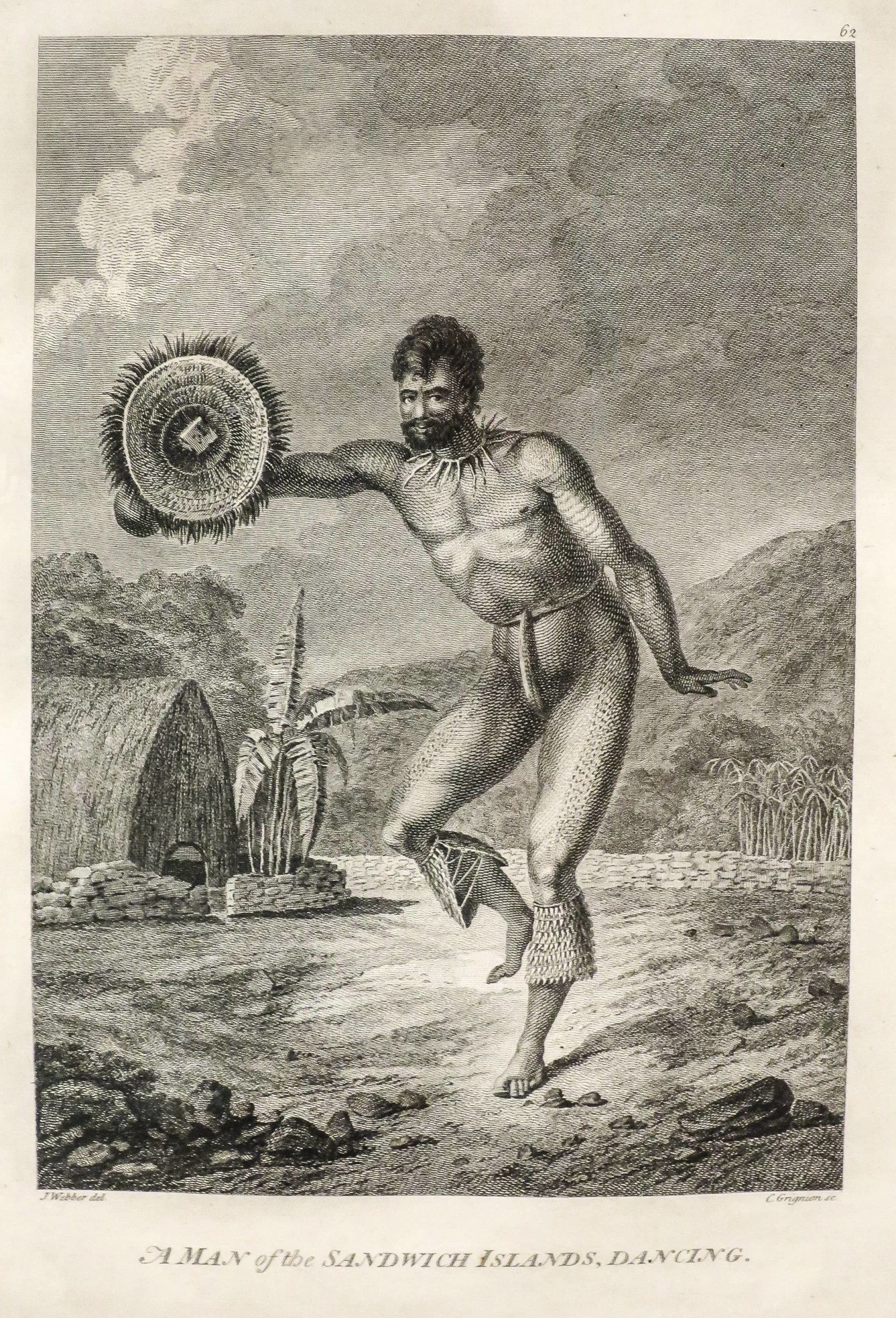
Cook was leading an expedition for Great Britain in search of the Northwest Passage when he sighted the islands of Oahu, Kauai, and Niihau. On January 20, 1778, his ships, the HMS Resolution and the HMS Discovery, anchored at Waimea on the island of Kauai. He named the archipelago the Sandwich Islands in honor of the Earl of Sandwich.
The Waimea Bay area is now home to several landmarks marking this historical encounter, including a statue of Cook in the center of Waimea town. For the Western world, this was the moment of discovery, opening the islands to trade, missionary work, and eventual colonization.
The Significance of Kealakekua Bay
A year later, Cook returned to the islands and anchored at Kealakekua Bay on the Big Island. This landmark location became the site of both celebration and tragedy. Initially greeted as a god, tensions eventually rose between the crew and the Hawaiians. This led to a skirmish in which Cook was killed on the shores of the bay. Today, the Captain Cook Monument, a white obelisk standing on a small plot of British-owned land within the bay, serves as a poignant landmark commemorating the complexities of this first encounter.
The Geological Discovery: Landscapes Shaped by Fire
While humans “discovered” Hawaii in the sense of finding and settling it, the islands themselves were “discovered” by science through the study of plate tectonics and volcanic hotspots. The physical landmarks of the islands provide a chronological map of how the archipelago rose from the sea floor.
The Hotspot Theory and Mauna Loa
Geologists discovered that the Hawaiian Islands were formed by a “hotspot” in the Earth’s mantle. As the Pacific Plate moves slowly to the northwest, magma pushes through the crust, creating a chain of volcanoes. The oldest islands are in the northwest, while the youngest is the Big Island in the southeast.
The massive landmark of Mauna Loa is one of the most significant features of this geological discovery. As the world’s largest subaerial volcano, it occupies more than half of the Big Island. Its neighbor, Kilauea, is one of the most active volcanoes on Earth, continuously adding new land to the island and allowing scientists to witness the “discovery” of new land in real-time.
Preserving History at Hawaii Volcanoes National Park
The geological story of Hawaii is preserved within Hawaii Volcanoes National Park. This UNESCO World Heritage Site is a primary landmark for anyone wishing to understand the elemental forces that created the islands. From the steaming vents of the Halemaumau Crater to the ancient lava tubes of Thurston Lava Tube, the park serves as a living laboratory of discovery.
Modern Landmarks: Honoring the Past and Present
The legacy of Hawaii’s discovery is visible in the architecture and monuments found throughout the modern state. These landmarks bridge the gap between the ancient Polynesian voyagers, the era of the Hawaiian Kingdom, and the modern United States.
Iolani Palace and the Hawaiian Monarchy
In the heart of Honolulu, the Iolani Palace stands as a symbol of the Hawaiian Kingdom. Completed in 1882, it is the only royal palace in the United States. The palace represents a period when Hawaii was a recognized sovereign nation, engaging with global powers while maintaining its unique identity. Visiting this landmark offers a deep dive into the history of the Kamehameha and Kalakaua dynasties, who unified the islands following their initial discovery and settlement.
Near the palace, the Bishop Museum serves as a repository for the cultural artifacts of the Pacific. Its halls house the feather capes of royalty and the tools used by ancient navigators, providing context for the voyaging traditions that first brought people to these shores.

The Natural Wonders of Diamond Head and Haleakala
The natural landmarks of the islands also serve as reminders of their discovery. Diamond Head (known as Leahi), an iconic volcanic tuff cone on Oahu, was used by the United States military as a lookout point, but it was also a sacred site for early Hawaiians. Its silhouette is perhaps the most recognizable landmark in the Central Pacific.
On the island of Maui, Haleakala National Park protects the massive shield volcano that forms more than 75% of the island. Legend tells of the demigod Maui snaring the sun from the summit to slow its passage across the sky. These stories, tied to physical landmarks, are as much a part of the “discovery” of Hawaii as the physical arrival of people, as they represent the human endeavor to understand and name the world around them.
The discovery of Hawaii is a multilayered narrative. It began with the stars guiding the Marquesan canoes and continued through the logs of Captain Cook and the research of modern geologists. Today, the landmarks of the islands—from the heights of Mauna Kea to the halls of Iolani Palace—stand as enduring witnesses to this remarkable journey of exploration and settlement.
LifeOutOfTheBox is a participant in the Amazon Services LLC Associates Program, an affiliate advertising program designed to provide a means for sites to earn advertising fees by advertising and linking to Amazon.com. Amazon, the Amazon logo, AmazonSupply, and the AmazonSupply logo are trademarks of Amazon.com, Inc. or its affiliates. As an Amazon Associate we earn affiliate commissions from qualifying purchases.