
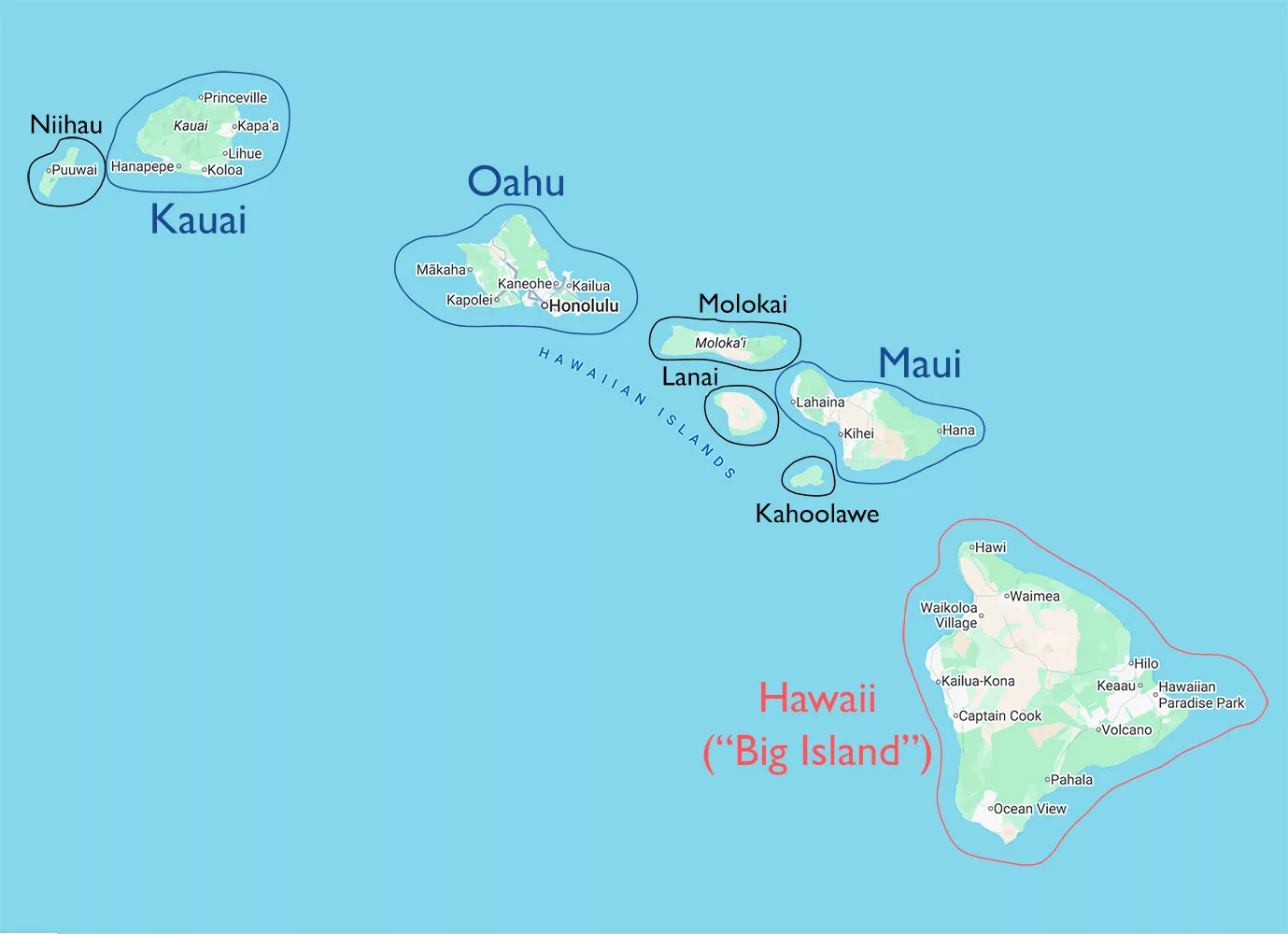
The United States is home to many iconic geographic wonders, but few are as frequently misunderstood as the Hawaiian Islands. When travelers ask the question, “Is the Big Island Hawaii?” the answer requires a bit of nuance. Geographically and politically, the Big Island is indeed named Hawaii Island. However, to distinguish it from the state as a whole, residents and visitors alike use the “Big Island” moniker. This singular destination is the largest landmass in the archipelago, offering a scale and diversity that sets it apart from Oahu, Maui, Kauai, Molokai, and Lanai.
As a premier travel destination in the Pacific Ocean, the Big Island represents the raw, untamed beauty of volcanic creation. It is a place where you can traverse through nearly every climate zone on Earth, from tropical rainforests to arid deserts and snow-capped peaks. Understanding the layout and the distinct identity of this island is the first step in planning an unforgettable journey to this volcanic paradise.
Understanding the Geography: The Island vs. The State
To truly grasp the essence of this destination, one must first understand its sheer scale. The Big Island is not just another island in the chain; it is more than twice the size of all the other Hawaiian Islands combined. Its official name, Hawaii Island, carries the weight of the entire state’s identity, as it was the home of King Kamehameha I, who unified the islands into a single kingdom.
The Scale of Hawaii Island
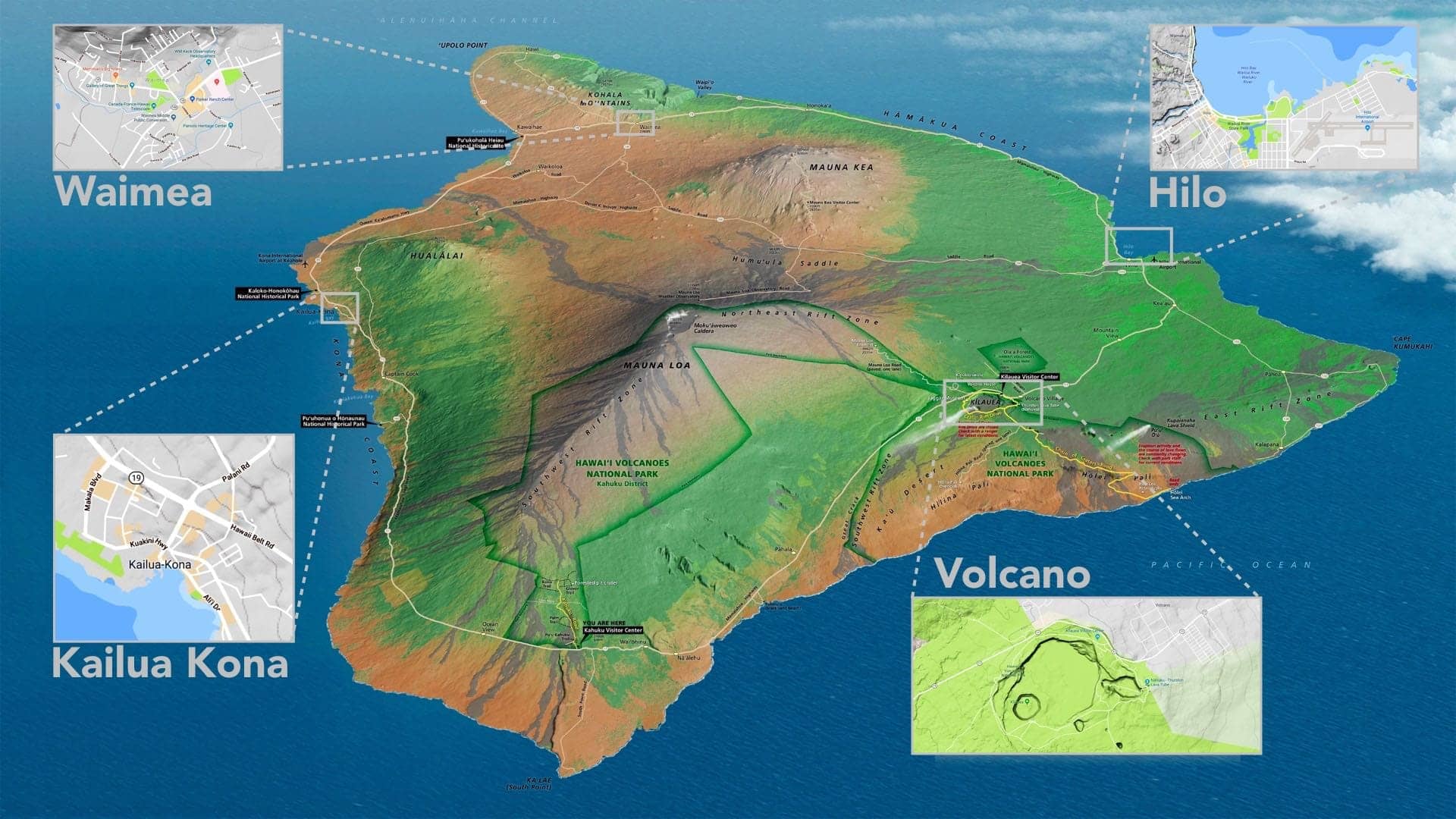
Covering over 4,000 square miles, the island is a testament to the power of volcanic activity. It is the youngest island in the chain and continues to grow today, thanks to the constant movement of the Earth’s crust over a volcanic hotspot. When you land at Kona International Airport or Hilo International Airport, you immediately sense the vastness. Unlike the smaller, more compact islands like Kauai, driving from one side of the Big Island to the other is a multi-hour commitment that takes you through radically shifting landscapes.
The Five Volcanoes
The island is formed by five distinct shield volcanoes: Kohala, Mauna Kea, Hualalai, Mauna Loa, and Kilauea. Each of these peaks contributes to the island’s unique topography. Mauna Kea, if measured from its base on the ocean floor, is technically the tallest mountain in the world. Meanwhile, Mauna Loa remains one of the most massive active volcanoes on the planet, its bulk dominating the island’s interior.
Exploring the Major Regions and Hubs
Because the island is so vast, travelers usually divide their stay between the two main sides: the sunny, volcanic west coast and the lush, rainy east coast. Each side offers a completely different experience, making it feel like two separate trips in one.
Kailua-Kona and the West Coast
The town of Kailua-Kona serves as the vibrant heart of the west side. This area is characterized by ancient lava flows, sunny weather, and some of the best snorkeling in the state. Historically, this region was a favorite of the Hawaiian royalty. Today, it is a bustling hub for tourism, offering access to world-class diving and the famous Kona Coffee farms nestled on the slopes of Hualalai.
Further north along the Kohala Coast, the landscape becomes more dramatic. Here, you will find luxury resorts and high-end golf courses carved directly into the black basalt. This region, often called South Kohala, is home to Hapuna Beach State Park, widely considered one of the most beautiful white-sand beaches in the United States.
Hilo and the East Coast
On the opposite side of the island lies Hilo, the oldest city in the Hawaiian Islands. Hilo is the antithesis of the dry Kona coast. It is one of the wettest cities in the country, resulting in a landscape of emerald jungles, massive ferns, and thunderous waterfalls. Travelers flock to Hilo to experience the Rainbow Falls and the towering 442-foot drop of Akaka Falls State Park.
The Hamakua Coast, stretching north from Hilo, offers some of the most scenic drives in the world. As you wind along the cliffs, you are treated to views of the deep blue Pacific Ocean on one side and the towering peaks of Mauna Kea on the other.
Natural Wonders and Must-See Attractions
The Big Island is a playground for nature enthusiasts and adventure seekers. Its landmarks are not just famous; they are globally significant, representing some of the most important geological and astronomical sites on Earth.
Hawaii Volcanoes National Park
No trip to the Big Island is complete without a visit to Hawaii Volcanoes National Park. This UNESCO World Heritage Site is home to Kilauea, one of the most active volcanoes in the world. Visitors can walk through the Thurston Lava Tube (Nahuku), hike across solidified lava lakes in the Kilauea Iki Crater, and witness the steam vents where groundwater meets heated rock. The park provides an unparalleled look at how the Hawaiian Islands were—and are still being—formed.
Mauna Kea: Stargazing at the Summit
For many, the pinnacle of a Big Island journey is a trip to the summit of Mauna Kea. At nearly 14,000 feet above sea level, the air is thin and the views are celestial. This mountain is home to the Mauna Kea Observatory, where some of the world’s most powerful telescopes peer into the furthest reaches of the universe. Watching the sunset from above the clouds and then staying for a guided stargazing session is a spiritual experience that highlights the island’s connection to the heavens.
Waipio Valley: The Valley of Kings
The Waipio Valley is a place of profound historical and cultural importance. Known as the “Valley of Kings,” it was once the capital and residence of many early Hawaiian rulers. Surrounded by cliffs that rise 2,000 feet high, the valley floor is a lush tapestry of taro patches and wild rivers. While access to the valley floor is currently restricted to residents and tour operators to protect the local environment, the overlook provides a breathtaking vista of the black sand beach and the powerful Pacific surf.
Cultural Landmarks and Historical Sites
The Big Island is deeply rooted in Polynesian history. It is the site of numerous “heiau” (temples) and “pu’uhonua” (places of refuge) that date back centuries.
Pu’uhonua o Honaunau National Historical Park
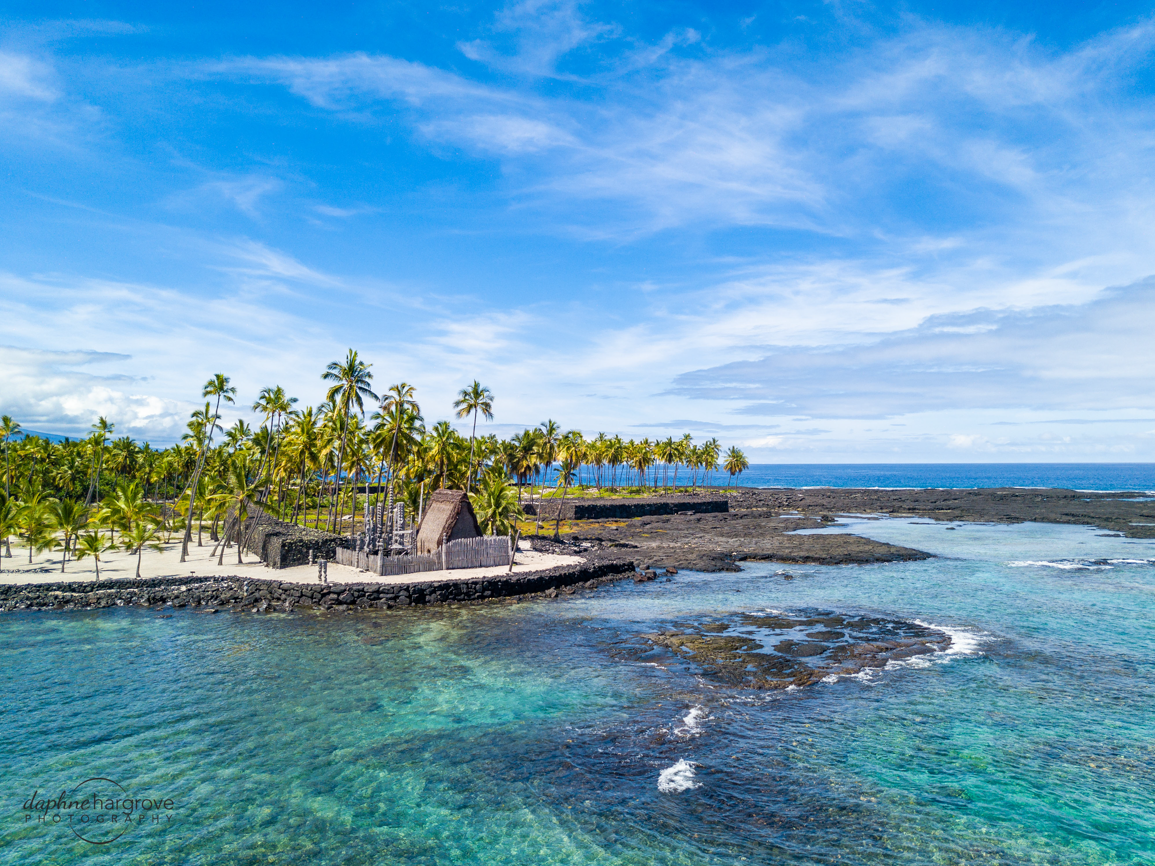
Located south of Kona, Pu’uhonua o Honaunau National Historical Park is one of the most significant cultural sites in Hawaii. In ancient times, if a person broke a “kapu” (sacred law), their only chance for survival was to reach this place of refuge. Today, the park is meticulously preserved, featuring a Great Wall, wooden images of gods (kii), and a royal canoe landing. It offers a window into the complex social and religious structures of ancient Hawaii.
Kealakekua Bay and the Captain Cook Monument
Kealakekua Bay is a marine life conservation district that is as famous for its history as it is for its snorkeling. This is the spot where Captain Cook, the first European to make formal contact with the Hawaiian Islands, first arrived and eventually met his end. A white stone monument marks the spot on the shore, accessible only by boat or a challenging hike. The bay itself is a sanctuary for spinner dolphins and vibrant coral reefs, making it a top destination for eco-conscious travelers.
Practical Travel Tips for the Big Island
Traveling to the Big Island requires more preparation than a typical beach vacation. Due to its size and topographic diversity, a well-planned itinerary is essential.
Transportation and Navigation
Renting a car is non-negotiable on the Big Island. There is no comprehensive public transportation system that can take you between the disparate regions of Kona, Hilo, and the Volcano region. Most travelers choose to fly into Kona International Airport for their arrival and perhaps fly out of Hilo International Airport to save on driving time.
Preparing for Microclimates
The Big Island is famous for its microclimates. You can experience tropical heat at Waikoloa Village, chilly rain in Volcano Village, and freezing temperatures at the summit of Mauna Kea all in the same day. Layering is key. Even if you plan on spending most of your time at a resort in Mauna Lani, you will need a sturdy pair of hiking boots and a waterproof jacket if you intend to explore the interior.
Respecting the Land and Culture
As with any travel to Hawaii, the concept of “Malama Aina” (caring for the land) is paramount. Visitors are encouraged to use reef-safe sunscreens, stay on marked trails in Hawaii Volcanoes National Park, and respect the sacred nature of sites like Mauna Kea and Pololu Valley. By traveling mindfully, you ensure that the raw beauty and cultural integrity of the Big Island remain intact for future generations.
In conclusion, is the Big Island Hawaii? It is the very essence of it. It is the birthplace of the kingdom, the forge of the archipelago, and the most diverse destination in the state. Whether you are seeking the thrill of an active volcano, the serenity of a hidden waterfall, or the historical depth of ancient Hawaiian sites, Hawaii Island offers a travel experience that is as vast as its name suggests.
LifeOutOfTheBox is a participant in the Amazon Services LLC Associates Program, an affiliate advertising program designed to provide a means for sites to earn advertising fees by advertising and linking to Amazon.com. Amazon, the Amazon logo, AmazonSupply, and the AmazonSupply logo are trademarks of Amazon.com, Inc. or its affiliates. As an Amazon Associate we earn affiliate commissions from qualifying purchases.