
To understand the heart of Hawaii, one must look beyond the pristine beaches and volcanic peaks and focus on the dinner table. At the center of traditional Polynesian culture sits a simple, purple, starchy paste known as poi. For many visitors, poi is a curious side dish encountered at a luau in Waikiki, but for the Native Hawaiian people, it is much more than food. It is a sacred connection to the land, an ancestral link, and a symbol of the endurance of their culture. In the realm of tourism and local heritage, understanding poi is the first step toward appreciating the complex identity of the Hawaiian Islands.

The Cultural Significance of Poi in Hawaii
Poi is made from the underground corm of the kalo plant, known elsewhere as taro. While taro is grown throughout the Pacific Islands and parts of Asia, the specific preparation and spiritual reverence for poi are unique to Hawaii. To truly grasp why poi is so vital, a traveler must understand the Hawaiian creation chant, the Kumulipo.
The Sacred Connection to Kalo (Taro)
In Hawaiian mythology, the kalo plant is considered the elder brother of the Hawaiian people. The legend tells of Wakea (the sky father) and Ho‘ohokukalani (the daughter of the stars), whose firstborn son, Haloa-naka, was stillborn. They buried him, and from his grave grew the first kalo plant. Their second son, also named Haloa, became the first human. Because the first Haloa (the plant) provided sustenance for the second Haloa (the man), the Hawaiian people maintain a familial duty to care for the land, while the land provides for them.
When you sit down to a meal featuring poi at a cultural site like the Polynesian Cultural Center, you are not just eating a carbohydrate; you are participating in a multi-generational relationship. This spiritual depth is why it is considered disrespectful to argue or speak harshly when a bowl of poi is open on the table. In the presence of the “elder brother,” only peace and gratitude should prevail.
From Ancient Roots to Modern Tables
Historically, poi was the primary staple of the Hawaiian diet. Before the arrival of Western explorers in the late 18th century, Native Hawaiians cultivated massive terraced pond fields known as lo‘i. These intricate irrigation systems, which can still be seen in places like the Hanalei Valley on Kauai or the Waipio Valley on the Big Island, allowed for the mass production of kalo.
While the introduction of rice by immigrant workers from China and Japan during the plantation era shifted dietary habits, poi never lost its status. Today, it remains a centerpiece of the “plate lunch” and a mandatory component of any celebration, from a child’s first birthday (the lūʻau) to grand weddings. For a tourist, seeking out poi is a way to support local agriculture and keep these ancient traditions thriving.
How Poi is Made: From Harvest to Bowl
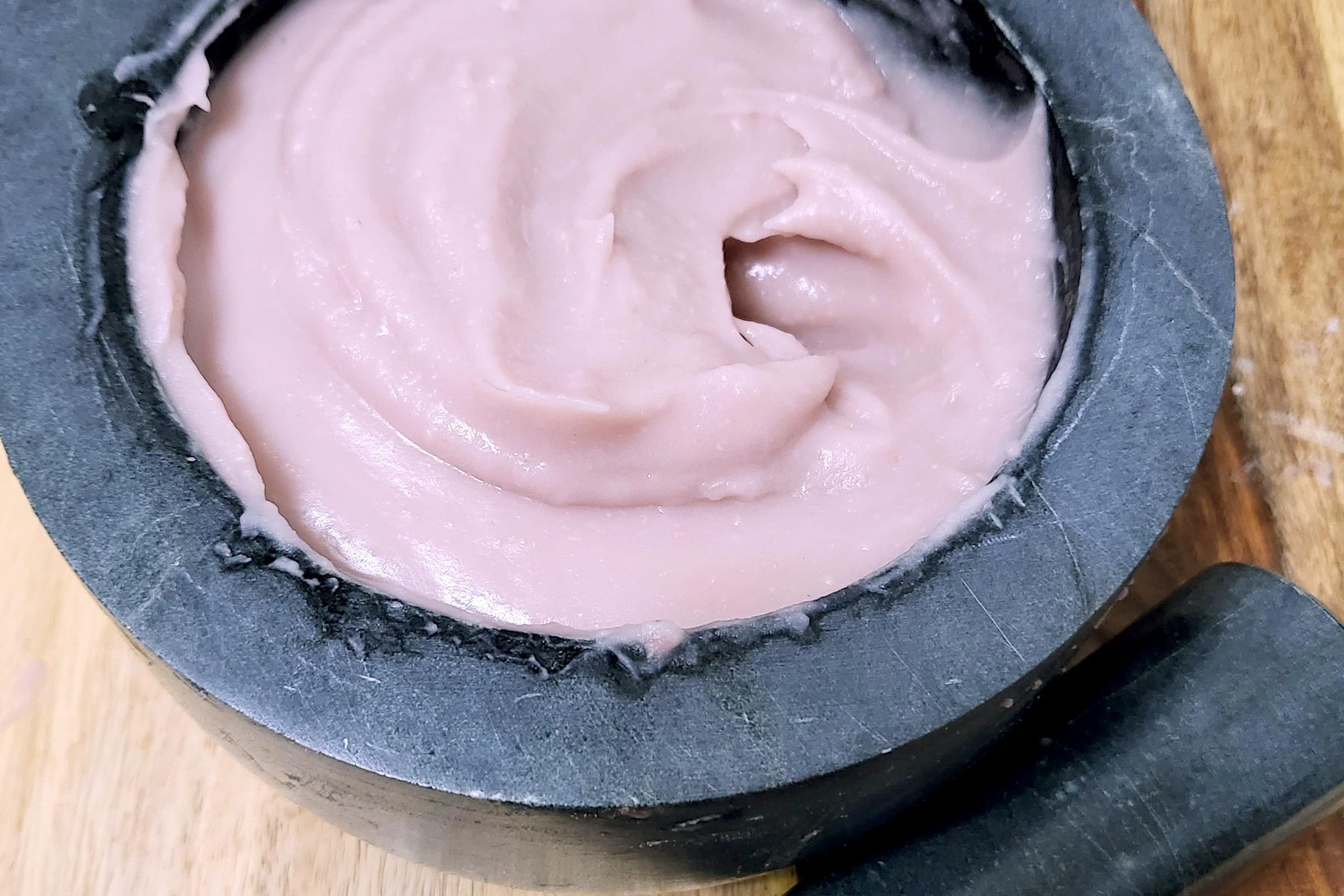
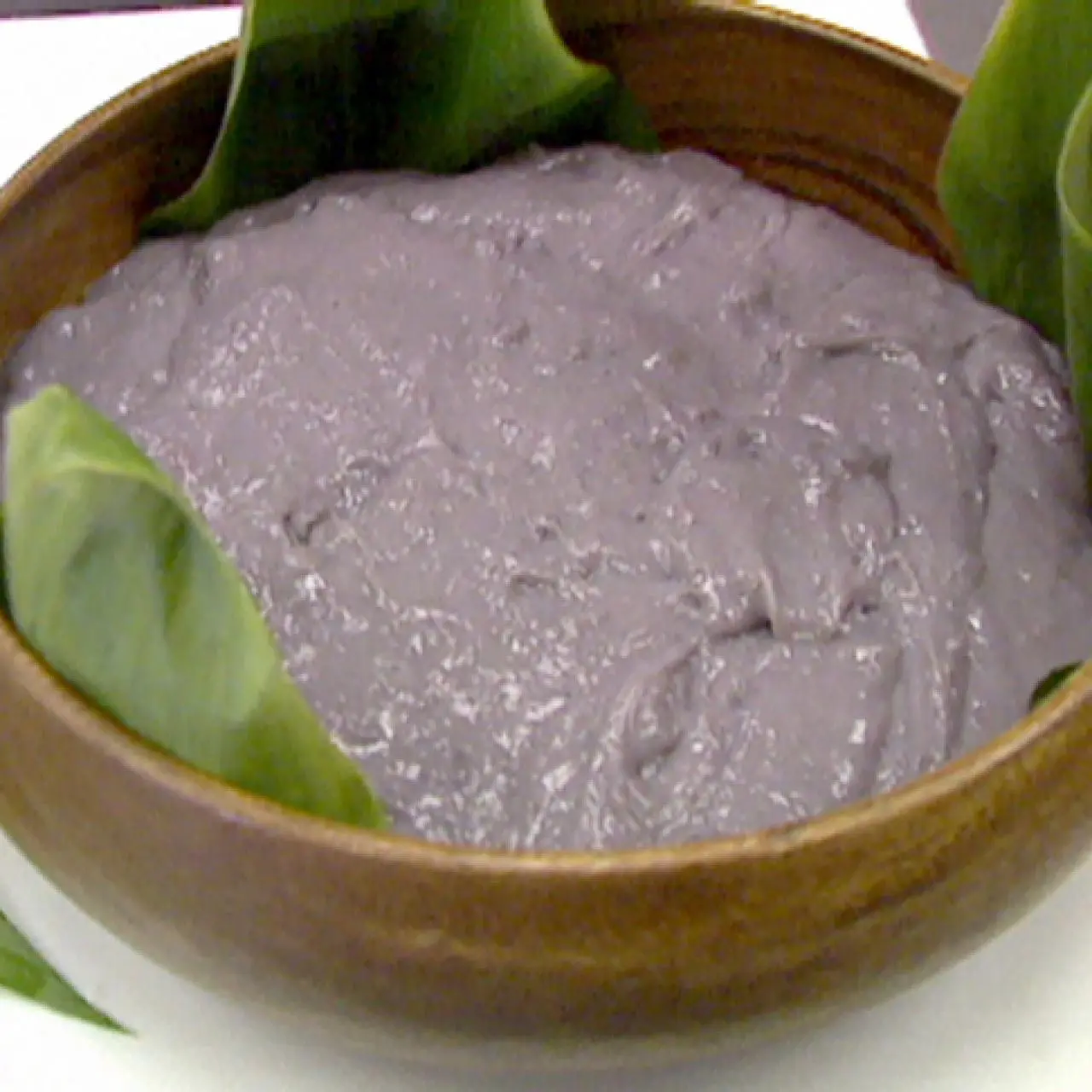
The transformation of a hairy, brown root into a smooth, lilac-colored paste is a labor-intensive process that requires patience and skill. Travelers who visit agricultural hubs like Molokai or the windward side of Oahu may get the chance to witness this process firsthand.
The Traditional Pounding Process (Ku‘i Kalo)
Traditionally, poi is made using a stone pestle called a pōhaku ku‘i ‘ai and a carved wooden board known as a papa ku‘i ‘ai. First, the kalo corms are steamed or baked in an imu (underground oven) until they are soft. Once peeled, the cooked kalo is placed on the board and rhythmically pounded with the stone.
Water is added gradually to achieve the desired consistency. This manual labor is physically demanding and was historically a task performed by men. The resulting product is called pa‘i ‘ai—a thick, dough-like concentrate. When more water is added to thin it out, it becomes poi. In modern times, many families use industrial grinders to speed up the process, but the movement toward “artisanal” or “hand-pounded” poi is seeing a massive resurgence in Honolulu and rural communities.
Fresh Poi vs. Sour Poi
One of the most important things for a visitor to understand is that the flavor of poi changes over time. When it is first made, “fresh poi” is sweet and mild. However, because poi is a living food, it begins to ferment naturally. As it sits for a day or two, it develops a tangy, sour profile.
Many locals prefer “sour poi” because the acidity balances out the richness of salty foods like kalua pig or lomi salmon. If you find yourself at a restaurant like Helenas Hawaiian Food in Honolulu, you might be asked how long the poi has been fermenting. Learning to appreciate the “day-three” sourness is often seen as a sign that you have truly acclimated to the local palate.
Experiencing Poi in Modern Hawaiian Tourism
For most visitors, the first encounter with poi happens at a commercial luau. While these events are a fantastic introduction, there are many ways to engage with poi that offer a deeper educational experience.
Traditional Luaus and Culinary Tours
Attending a luau at a resort like Aulani or the Old Lahaina Luau on Maui provides a curated look at the food. Here, you will see poi served in small cups. The guide or emcee will often explain the “one-finger,” “two-finger,” or “three-finger” poi distinction. This refers to the thickness of the paste; if it is thick enough to be scooped with one finger, it is “one-finger poi,” whereas thinner poi requires more fingers to act as a spoon.
Beyond the luau, culinary tours are becoming increasingly popular. In Kauai, travelers can visit working lo‘i patches to see how the water flows through the fields. These tours often conclude with a poi-pounding demonstration, allowing guests to feel the weight of the stone pestle and taste the pa‘i ‘ai immediately after it is pounded.
Where to Find the Best Poi in Honolulu and Beyond
If you want to eat poi like a local, skip the buffet line and head to a traditional Hawaiian eatery. Highway Inn, located in the Kakaako district of Honolulu, has been serving authentic poi since 1947. Another iconic spot is Helenas Hawaiian Food, a James Beard Award-winning establishment where the poi is always fresh and the atmosphere is unpretentious.
For those staying on the Big Island, a trip to the Waipio Valley lookout offers a view of the most fertile kalo-growing land in the state. In the nearby town of Honokaa, local markets often sell bags of fresh poi produced by small family farms. Buying directly from these sources ensures that your tourism dollars support the preservation of indigenous agriculture.
Health Benefits and Nutritional Value
In recent years, poi has gained recognition as a “superfood” among health enthusiasts in the United States. Its nutritional profile makes it one of the most unique staples in the world.
A Hypoallergenic Superfood
Poi is naturally gluten-free, fat-free, and high in fiber. Perhaps its most remarkable trait is that it is almost universally hypoallergenic. Because it is so easily digested, it has been used for centuries in Hawaii as a primary food for infants and the elderly. In fact, many pediatricians in the islands recommend poi as a baby’s first solid food. For travelers with restrictive diets or food sensitivities, poi is one of the safest and most nutritious things to eat while exploring the islands.
Probiotic Properties of Fermented Poi
Because poi undergoes a natural fermentation process (similar to yogurt or sauerkraut), it is rich in probiotics. These healthy bacteria are essential for gut health and immune function. The lactic acid bacteria that cause poi to turn sour over several days provide a natural preservative effect, which was crucial for ancient Polynesian voyagers who carried kalo paste on long sea journeys across the Pacific Ocean.
Tips for Travelers Trying Poi for the First Time
If you are trying poi for the first time, it is important to manage your expectations. Many tourists find the texture and flavor “bland” or “unusual,” but this is often because they are eating it incorrectly.
Understanding the Texture and Flavor Profile
On its own, poi has a very subtle, earthy flavor. It is not meant to be eaten as a standalone dish in large spoonfuls. Instead, think of it as a cooling agent or a condiment. The texture is smooth and slightly viscous, which is why the “finger” measurement was historically so practical. If you find the texture challenging, try a very small amount paired with a piece of meat.
Proper Etiquette and Pairings
To enjoy poi like a local, you must pair it with something salty or smoky. The classic combination is poi and kalua pig (shredded pork cooked in an earth oven). The starchiness of the poi cuts through the fat and salt of the pork perfectly. Other excellent pairings include lomi salmon (a salad of salted salmon, tomatoes, and onions) or dried fish.
When eating from a communal bowl, which you might experience at a more traditional gathering or a visit to a village on Molokai, remember the cultural rules: stay positive and show respect. Do not make faces or “eww” at the texture. Even if the flavor is not to your liking, acknowledging the effort and history behind the bowl is a key part of being a respectful visitor to Hawaii.
By seeking out poi—whether at a high-end resort in Oahu or a roadside stand in Maui—you are doing more than just trying a new food. You are engaging with a living history that dates back over a thousand years. Poi is the soul of the islands, a humble starch that carries the weight of an entire civilization’s genealogy and resilience. Understanding “What is Poi?” is the key to unlocking a deeper, more meaningful travel experience in the Aloha State.
LifeOutOfTheBox is a participant in the Amazon Services LLC Associates Program, an affiliate advertising program designed to provide a means for sites to earn advertising fees by advertising and linking to Amazon.com. Amazon, the Amazon logo, AmazonSupply, and the AmazonSupply logo are trademarks of Amazon.com, Inc. or its affiliates. As an Amazon Associate we earn affiliate commissions from qualifying purchases.