
While the image of Hawaii typically involves sun-drenched beaches, swaying palm trees, and turquoise waters, the archipelago is home to some of the most diverse climatic conditions on Earth. For those who look beyond the coastline toward the towering volcanic peaks that define the interior of the Big Island and Maui, a different reality exists. In these high-altitude regions, the tropical atmosphere gives way to sub-arctic conditions, making snow a recurring, albeit fascinating, natural phenomenon.
The question of when it last snowed in Hawaii is not met with a single date but rather a series of seasonal occurrences that transform the state’s highest landmarks into winter wonderlands. These events serve as a reminder of the raw power and ecological variety found within the Pacific Ocean region.

The Alpine Giants of the Big Island
The primary locations for snowfall in the state are the twin summits of the Big Island: Mauna Kea and Mauna Loa. These massive shield volcanoes reach heights that pierce the trade wind inversion layer, allowing them to capture moisture from passing storm systems that crystallizes into snow at high elevations.
Mauna Kea: The White Mountain
The name Mauna Kea translates to “White Mountain” in the Hawaiian language, a direct reference to the seasonal cap of snow it wears throughout many winters. Standing at approximately 13,803 feet above sea level, it is the highest point in the state and one of the most significant landmarks in the world for both culture and science.
Snowfall on Mauna Kea is most frequent between December and February, though it is not uncommon for dustings to occur as late as May or as early as October. In February 2023, the mountain experienced a significant winter storm that blanketed the summit in several inches of snow, prompting the National Weather Service to issue winter weather advisories that felt more akin to the United States mainland’s Rocky Mountains than a tropical island.
Mauna Loa: The Long Mountain
Adjacent to its taller neighbor, Mauna Loa stands at 13,678 feet. As the world’s largest subaerial volcano, its massive bulk also plays host to frequent snowfall. Unlike the more accessible Mauna Kea, the summit of Mauna Loa is remote and rugged, often requiring a multi-day hike for those wishing to see the snow up close.
In late 2022, the world watched as Mauna Loa erupted for the first time in nearly four decades. Shortly after the eruption ceased, the cooling lava flows were eventually dusted with snow in early 2023, creating a striking visual contrast between the dark, fresh basalt and the pristine white drifts. This intersection of fire and ice is a hallmark of the Big Island landmarks.
The Rare Frosts of Haleakala
On the island of Maui, snow is a much rarer sight, yet it remains a possibility at the summit of Haleakala. This massive dormant volcano rises to 10,023 feet, and while it lacks the extreme elevation of the Big Island peaks, it is high enough to experience freezing temperatures during intense winter storms.
Maui’s Volcanic Giant
Haleakala National Park is one of the most visited landmarks in Hawaii, famous for its sunrise views and otherworldly volcanic landscape. When snow does fall here, it typically occurs during a “Kona Low,” a type of seasonal cyclone that brings cold air and heavy rain to the islands.
The last major snowfall on Haleakala occurred in February 2019, an event that saw snow levels drop to an unprecedented 6,200 feet—an elevation much lower than the summit. This rare event allowed locals from Kahului and Upcountry Maui to witness a white-capped mountain that dominated the horizon for days.
Historical Frequency at the Summit
Statistically, Haleakala sees snow roughly once every few years. However, these “snows” are often light dustings that melt within hours of sunrise. Significant accumulation that stays for several days is a once-in-a-decade event, making any snowfall on Maui a major news item in the local communities of Honolulu and beyond.

A Timeline of Recent Snowfall Events
To understand the pattern of snow in Hawaii, one must look at the data provided by the Mauna Kea Observatories and the National Weather Service branch in Honolulu.
The 2023 and 2024 Seasons
The most recent notable snowfall occurred in early 2024. During January and February of 2024, multiple cold fronts swept across the North Pacific, bringing freezing levels down to 11,000 feet. Mauna Kea received several inches of snow, which was visible from the towns of Hilo and Waimea.
In 2023, the snow was even more persistent. Throughout the month of February, the Big Island peaks were frequently inaccessible due to blizzard conditions. High winds and heavy drifts created dangerous conditions for the technicians and astronomers working at the Mauna Kea Observatories, emphasizing that while Hawaii is a paradise, its landmarks can be as treacherous as any mountain range in the United States.
The Record-Breaking Event of 2016
One of the most significant snowfall events in recent history took place in December 2016. During this period, more than two feet of snow fell on the summits of Mauna Kea and Mauna Loa. The accumulation was so thick that the access roads were closed for over a week, and the snow remained visible from the coast of Kona for an extended period. This event was particularly notable for the depth of the snow, which allowed for rare (and unofficial) skiing and snowboarding activities by local enthusiasts.
The Meteorological Drivers of Hawaiian Snow
The presence of snow in the tropics is a result of specific atmospheric conditions that override the usual warm trade winds. The most common driver is the Kona Low, a low-pressure system that develops in the central Pacific Ocean and pulls cold air down from the Arctic regions.
The Role of the Kona Low
Unlike the typical rain showers that hit the windward sides of Kauai or Oahu, Kona Low storms are much more intense and widespread. They reverse the wind direction, bringing moisture to the leeward (Kona) sides of the islands. When this moisture meets the cold air trapped at the high elevations of the volcanic landmarks, it results in heavy snow.
Impact on Infrastructure and Access
When snow falls in Hawaii, the impact on local infrastructure is immediate. The Mauna Kea Access Road, which leads to the summit, is managed with extreme caution. Rangers often close the road due to “whiteout” conditions and ice. Because the state does not maintain a fleet of snowplows in the same way as Alaska, clearing the roads can take time, and four-wheel-drive vehicles are mandatory for anyone attempting to reach the snow line.
Cultural and Natural Significance
Snow in Hawaii is not merely a meteorological curiosity; it is deeply embedded in the cultural fabric of the Native Hawaiian people and the unique ecosystems of the mountains.
The Goddess Poliahu
In Hawaiian mythology, Poliahu is the goddess of snow who resides on Mauna Kea. She is often depicted as the rival of Pele, the goddess of fire and volcanoes who dwells in Kilauea. The occurrence of snow on the peaks is seen as the presence of Poliahu, and the summits are considered sacred ground (Wao Akua), the realm of the gods. Landmarks like Lake Waiau, one of the highest lakes in the United States, often freeze over during these snow events, further enhancing the ethereal beauty of the landscape.
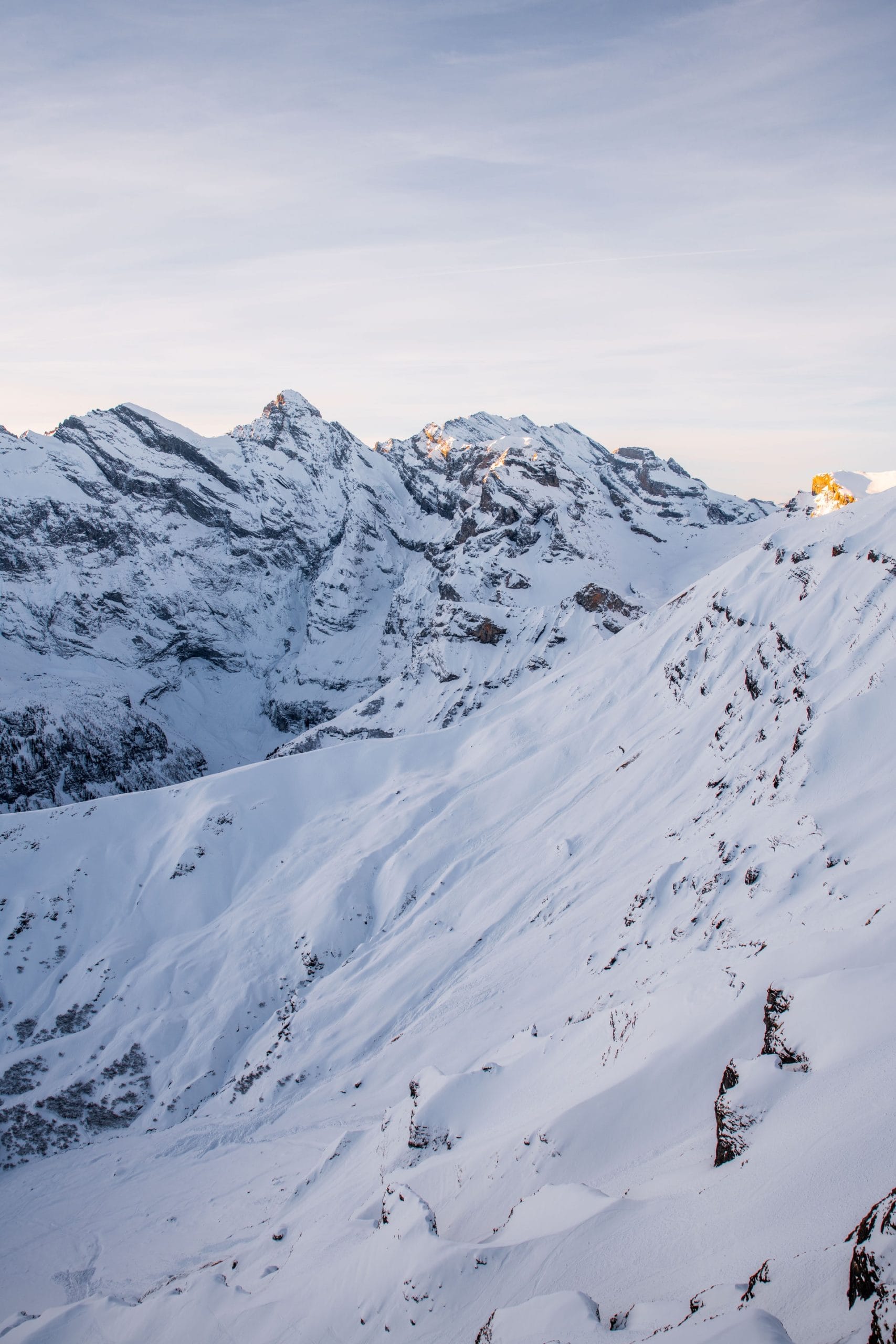
Alpine Ecosystems
The presence of snow and freezing temperatures has led to the evolution of highly specialized flora and fauna. The Hawaiian Silversword, or ‘ahinahina, is a striking plant found on the slopes of Haleakala and Mauna Kea. Its silver hairs are designed to reflect the intense high-altitude sunlight and trap heat, allowing it to survive the frost and snow that occasionally visit its volcanic home.
While the beaches of Waikiki and the cliffs of the Na Pali Coast remain the primary draw for many visitors, the snowy summits of Hawaii represent a vital part of the state’s identity. Whether it is the most recent dusting in early 2024 or the heavy blizzards of years past, the snow on Hawaii’s landmarks continues to captivate the imagination, proving that the Aloha State is a land of infinite environmental surprises.
LifeOutOfTheBox is a participant in the Amazon Services LLC Associates Program, an affiliate advertising program designed to provide a means for sites to earn advertising fees by advertising and linking to Amazon.com. Amazon, the Amazon logo, AmazonSupply, and the AmazonSupply logo are trademarks of Amazon.com, Inc. or its affiliates. As an Amazon Associate we earn affiliate commissions from qualifying purchases.