
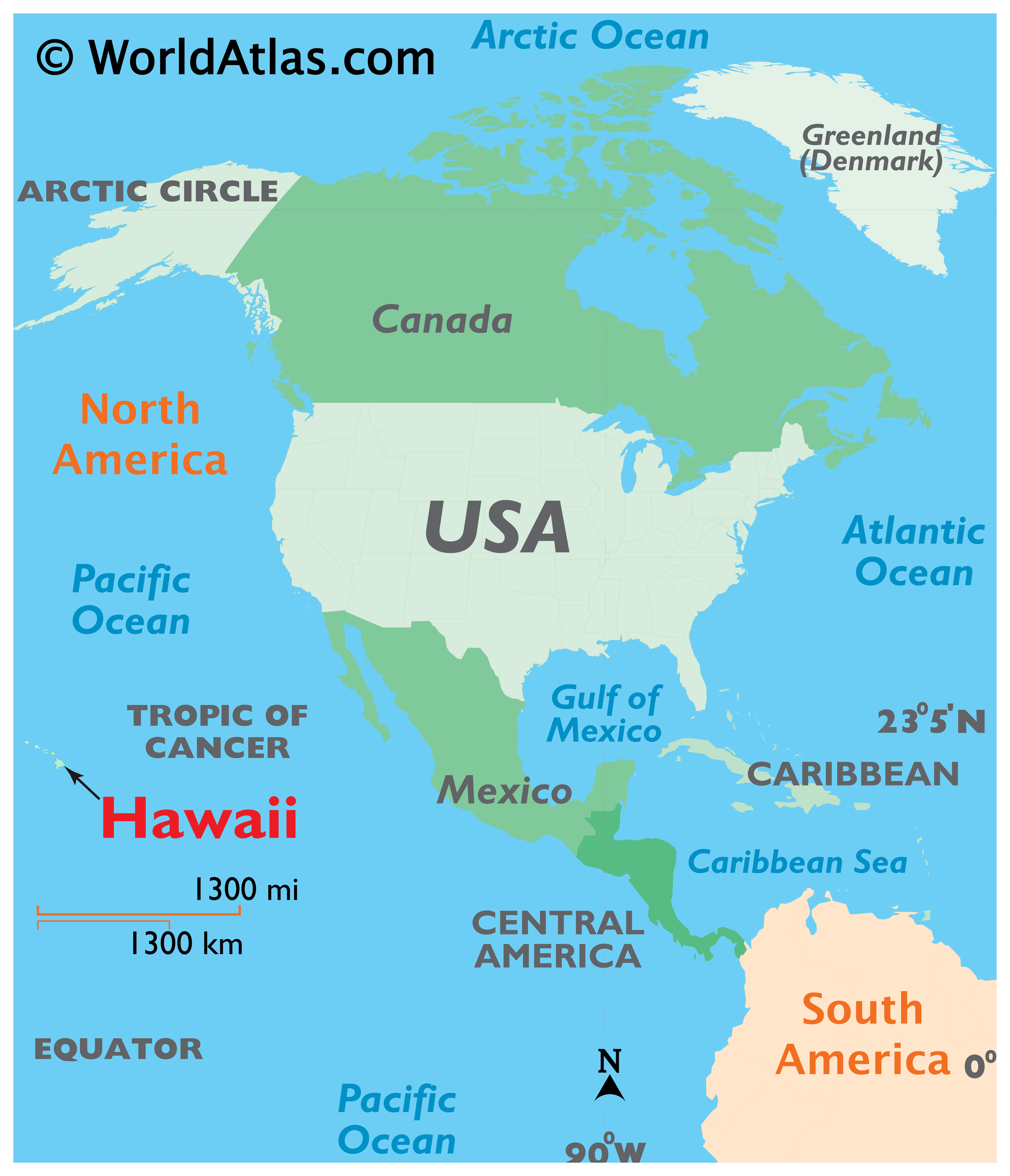
The question of where Hawaii is located on a world map often reveals one of the most fascinating geographic truths of our planet. Positioned in the central Pacific Ocean, this volcanic archipelago stands as the most isolated population center on Earth. When you trace your finger across a map of the Northern Hemisphere, you will find these islands situated approximately 2,400 miles from the west coast of the United States and about 4,000 miles from Japan. This unique positioning makes the state a bridge between North America and Asia, serving as a cultural and recreational crossroads for travelers from every corner of the globe.

Understanding the Geographic Heart of the Pacific
To locate Hawaii accurately on a world map, one must look toward the vast expanse of blue between the Americas and Oceania. The islands are technically part of Polynesia, forming the northern apex of the “Polynesian Triangle,” which connects to Easter Island in the southeast and New Zealand in the southwest. Because the archipelago is so far from any continental landmass, its presence on a map is often highlighted in a separate inset box, yet its physical location is roughly at the same latitude as Mexico City or the Sahara Desert.
The Isolated Jewel of the Northern Hemisphere
The geographic isolation of Hawaii is its defining characteristic. It is the only state in the United States that is not part of the North American continent. This distance from the mainland has allowed for the evolution of a unique ecosystem and a culture that remains distinct from the rest of the country. For the modern traveler, this isolation translates into a sense of profound escape. When you arrive at Daniel K Inouye International Airport in Honolulu, you are entering a world shaped by millions of years of volcanic activity and thousands of miles of ocean buffer.
The Polynesian Triangle Connection
Historically, Hawaii was settled by voyagers from the Marquesas Islands and Tahiti. On a map, this voyage represents a feat of navigation that remains one of the greatest achievements in human history. By understanding the location of the islands within the broader context of Polynesia, travelers can better appreciate the linguistic and cultural ties that link Hawaii to other South Pacific destinations like Fiji or Samoa. This geographic context enriches the travel experience, turning a simple beach vacation into a journey through a vast oceanic heritage.
Exploring the Major Islands of the Archipelago
While the archipelago consists of 137 islands, islets, and atolls, travelers focus their attention on the eight main islands. Each possesses a unique topographical signature that is visible even on detailed topographical maps. From the lush cliffs of the north to the arid lava fields of the south, the diversity of the landscape is staggering.
Oahu: The Gathering Place
Oahu is the most populous island and the primary entry point for international visitors. It is home to the capital city, Honolulu, and the world-renowned Waikiki Beach. On a map of the island, you will notice two major mountain ranges—the Waiianae Range and the Koolau Range—which run parallel to each other. For the destination traveler, Oahu offers a blend of urban sophistication and natural wonder. You can spend your morning visiting the historical site of Pearl Harbor and your afternoon hiking the trail at Diamond Head for a panoramic view of the coastline.
Maui: The Valley Isle
To the southeast of Oahu lies Maui, an island famous for its diverse microclimates. Maui is characterized by the massive dormant volcano Haleakala, which rises over 10,000 feet above sea level. Visitors often flock to Haleakala National Park to witness sunsets that feel as though they are occurring on another planet. The island is also home to the legendary Road to Hana, a winding coastal drive that navigates through rainforests, waterfalls, and black sand beaches. Maui strikes a balance between luxury resort experiences in Wailea and rugged, off-the-beaten-path adventures in East Maui.
Kauai: The Garden Isle
Located to the northwest of Oahu, Kauai is the oldest of the main islands. Geologically, time has carved deep canyons and sharp ridges into its surface, creating the spectacular Na Pali Coast. This coastline, inaccessible by car, is best explored by boat or helicopter, offering some of the most dramatic views in the world. Inland, the Waimea Canyon, often called the “Grand Canyon of the Pacific,” showcases the island’s vibrant red soil and deep green vegetation. Kauai is a sanctuary for those seeking tranquility and outdoor pursuits like kayaking the Wailua River or hiking the Kalalau Trail.
Hawaii Island: The Big Island
The largest and youngest island in the chain is Hawaii Island, commonly referred to as the Big Island. It is nearly twice as large as all the other islands combined and is still growing due to active volcanic activity. Within Hawaii Volcanoes National Park, travelers can witness the power of Kilauea and Mauna Loa. The island features ten of the world’s fourteen climate zones, ranging from tropical rainforests to subarctic tundra on the peaks of Mauna Kea. Whether you are exploring the coffee plantations of Kona or the botanical gardens near Hilo, the Big Island offers an unparalleled variety of experiences.
Planning Your Journey: Connectivity and Travel Logistics
Because Hawaii is situated so far from continental shores, reaching the islands requires strategic planning. Most travelers arrive via long-haul flights that cross the Pacific Ocean. Understanding the logistics of this journey is essential for a seamless travel experience.
Flight Paths from Major Global Hubs
From the United States mainland, the primary gateways are Los Angeles, San Francisco, and Seattle. These flights typically take between five and six hours. For those traveling from the East Coast, cities like New York and Atlanta offer direct flights that can last upwards of ten to eleven hours. Internationally, Tokyo is a major hub for travelers coming from Asia, while Sydney and Auckland serve those coming from Australia and New Zealand. The isolation of the islands means that travel is almost exclusively by air, though some luxury cruises sail from California or Vancouver.
Inter-Island Transportation
Once you have arrived in the archipelago, moving between islands is a common part of the travel itinerary. While there are no passenger ferries between most islands (with the exception of the ferry between Maui and Lanai), inter-island flights are frequent and short. Airlines like Hawaiian Airlines and Southwest Airlines provide “puddle jumper” flights that usually take between 30 and 45 minutes. These quick hops allow travelers to experience the distinct personality of each island without spending an entire day in transit.
Seasonal Considerations and Travel Experiences
The location of Hawaii near the equator ensures a tropical climate year-round, but there are subtle shifts that can influence a traveler’s experience. Understanding the “when” is just as important as the “where.”
When to Visit the Islands
Hawaii essentially has two seasons: summer (kau) from May to October and winter (hooilo) from November to April. During the winter months, the north shores of Oahu and Maui see massive swells that attract professional surfers from around the world. This is also the peak season for whale watching, as thousands of Humpback Whales migrate from Alaska to the warm Hawaiian waters to mate and give birth. Summer offers calmer seas and slightly higher temperatures, making it ideal for snorkeling and families.

Distinctive Regional Experiences
Each region within the islands offers a different pace of travel. The North Shore of Oahu provides a laid-back, surf-centric atmosphere that contrasts sharply with the high-energy luxury of Waikiki. On Kauai, the towns of Hanalei and Poipu offer radically different weather patterns; the north is wetter and greener, while the south is sunny and dry. For those seeking true seclusion, the islands of Molokai and Lanai offer a glimpse into “old Hawaii,” where there are few traffic lights and life moves at a much slower rhythm.
By locating Hawaii on the world map, a traveler begins to grasp the scale of the Pacific Ocean and the incredible allure of these islands. They are more than just a pin on a map; they are a testament to the beauty of geographic isolation. Whether you are drawn by the volcanic peaks of the Big Island or the emerald valleys of Kauai, the journey to this central Pacific paradise remains one of the world’s most rewarding travel experiences. Understanding where the islands sit in relation to the rest of the globe helps frame the sheer wonder of finding such a diverse and welcoming culture in the middle of the world’s largest ocean.
LifeOutOfTheBox is a participant in the Amazon Services LLC Associates Program, an affiliate advertising program designed to provide a means for sites to earn advertising fees by advertising and linking to Amazon.com. Amazon, the Amazon logo, AmazonSupply, and the AmazonSupply logo are trademarks of Amazon.com, Inc. or its affiliates. As an Amazon Associate we earn affiliate commissions from qualifying purchases.