
Choosing the perfect destination within the Pacific Ocean archipelago of Hawaii is a task both enviable and complex. Each island in this United States territory offers a distinct personality, ranging from the bustling urban energy of world-class cities to the silent, emerald cathedrals of ancient rainforests. For travelers seeking a mix of history, adventure, and relaxation, understanding the unique geography and attractions of each island is the first step in crafting an unforgettable itinerary. Whether you are drawn to the fiery spectacles of active volcanoes or the sophisticated charm of historic coastal towns, the islands of the Central Pacific provide a diverse palette of experiences.
Oahu: The Gathering Place of Culture and History
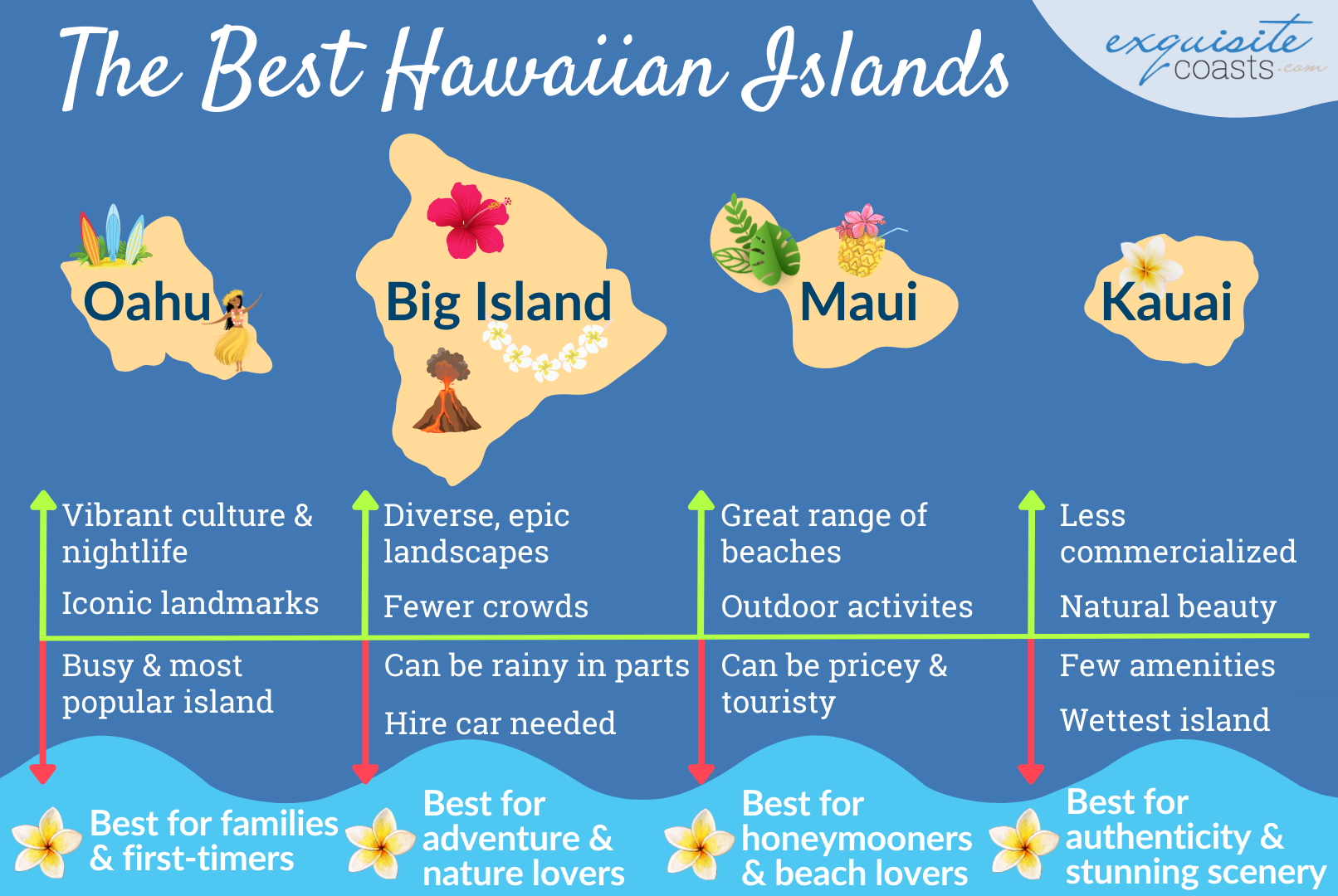
Oahu is often the first point of entry for international travelers, serving as the economic and cultural hub of the state. Known as “The Gathering Place,” it seamlessly blends the conveniences of a modern metropolis with the breathtaking natural beauty that defines the region. It is here where the pulse of the islands is felt most strongly, offering a dense concentration of historical landmarks and iconic beaches.
Urban Sophistication in Honolulu
Honolulu, the state capital, is a vibrant city that offers far more than just a gateway to the sea. The skyline is dominated by architectural marvels and luxury high-rises that overlook the world-famous Waikiki neighborhood. A visit to this area is essential for any traveler; the crescent-shaped Waikiki Beach is framed by the towering silhouette of Diamond Head, a dormant volcanic tuff cone that offers one of the most rewarding hiking trails on the island.
Beyond the surf, Honolulu is home to the only royal palace on United States soil, Iolani Palace. This historic landmark tells the story of the Kingdom of Hawaii and its monarchs. Nearby, the Pearl Harbor National Memorial serves as a poignant reminder of world history, attracting millions of visitors who come to pay their respects at the USS Arizona Memorial.
Surf Culture and Solitude on the North Shore
Contrasting sharply with the city’s pace is the legendary North Shore. During the winter months, this coastline becomes the epicenter of the global surfing community. Massive swells batter the shores of Waimea Bay and the Banzai Pipeline, creating a spectacle of athleticism and nature. In the summer, these waters transform into tranquil turquoise mirrors, perfect for snorkeling and swimming. The town of Haleiwa provides a charming, laid-back atmosphere with its surf boutiques and art galleries, representing the quintessential island lifestyle. Travelers can also explore the Polynesian Cultural Center in Laie, which offers an immersive look into the diverse heritage of the various island nations of the Pacific.
Maui: A Tapestry of Natural Wonders
Maui, the second-largest island, is frequently voted one of the best destinations in the world. It strikes a harmonious balance between developed resort areas and wild, untamed landscapes. Known as “The Valley Isle,” it is characterized by the massive isthmus that connects its two volcanic peaks, creating a unique topography that ranges from alpine deserts to lush jungles.
The Volcanic Majesty of Haleakala
One of the most profound experiences on Maui is witnessing the sunrise from the summit of Haleakala. Standing at over 10,000 feet above sea level, Haleakala National Park protects a massive volcanic crater that looks more like a lunar landscape than a tropical paradise. The silence at the summit is heavy and serene, broken only by the wind. Hiking through the crater’s cinder cones offers a surreal journey through geological time. The “Upcountry” region on the slopes of the mountain, including towns like Kula, provides a cooler climate and panoramic views of the coastline below.
The Scenic Splendor of the Road to Hana
For many, the ultimate Maui adventure is the Road to Hana. This legendary highway snakes along the island’s northeastern coast, featuring over 600 curves and 50 bridges. Each bend in the road reveals a new wonder: a hidden waterfall, a botanical garden, or a dramatic sea cliff. Destination highlights along this route include the Waianapanapa State Park with its striking black sand beach and the Oheo Gulch, also known as the Seven Sacred Pools.
On the western side of the island, the historic town of Lahaina and the shores of Kaanapali offer a different kind of beauty. Kaanapali Beach is famed for its daily cliff-diving ceremony at Black Rock, while the nearby Kapalua region is a haven for those seeking high-end golf courses and sheltered bays like Honolua Bay.
Kauai: The Unspoiled Grandeur of the Garden Isle
Kauai is the oldest and northernmost island in the chain, and its age is reflected in its dramatic, weathered landscapes. Often referred to as “The Garden Isle,” it is a paradise for those who prefer hiking boots to high heels. Much of the island is inaccessible by car, preserving a sense of prehistoric mystery that has made it a favorite filming location for Hollywood epics.
Navigating the Na Pali Coast
The Na Pali Coast is arguably the most spectacular natural feature in all of Hawaii. These emerald-green cliffs rise 4,000 feet straight out of the ocean, punctuated by deep valleys and cascading waterfalls. There are no roads here; the coast must be explored by boat, helicopter, or by foot via the grueling Kalalau Trail. Seeing the jagged ridges of the Na Pali from a catamaran at sunset is a transcendent experience, as the light plays off the folds of the mountains.
Waimea Canyon: The Grand Canyon of the Pacific
On the western side of Kauai lies Waimea Canyon, a geological marvel often called the “Grand Canyon of the Pacific.” Stretching ten miles long and over 3,000 feet deep, the canyon showcases a stunning array of red, brown, and green hues. Nearby, the Kokee State Park offers trails that lead to overlooks of the Kalalau Valley. On the northern shore, the horseshoe-shaped Hanalei Bay provides a picturesque backdrop for paddleboarding, while the southern coast is home to Poipu, a sun-drenched region known for its reliable weather and the Spouting Horn blowhole.
The Island of Hawaii: Adventure on the Big Island
The Island of Hawaii, colloquially known as the Big Island, is nearly twice the size of all the other islands combined. Its scale is matched by its ecological diversity; travelers can find 4 of the 5 major climate zones here, from tropical rainforests to arid tundra.
Witnessing Creation at Hawaii Volcanoes National Park
The primary draw for many visitors to the Big Island is the chance to see the earth in a state of constant creation. Hawaii Volcanoes National Park is home to Kilauea, one of the world’s most active volcanoes, and Mauna Loa. Walking across the vast, hardened lava fields or exploring the Thurston Lava Tube (Nahuku) allows travelers to witness the raw power of volcanic activity. The park is a living laboratory where the landscape changes with every eruption, offering a humbling perspective on the forces of nature.
Stargazing and Coffee Culture in Kona and Hilo
The island is divided into two distinct sides: Kona to the west and Hilo to the east. Kona is famous for its sunny weather and the world-renowned Kona Coffee grown on the slopes of Hualalai. It is also a premier destination for manta ray night dives off the coast of Kailua-Kona. On the other hand, Hilo is the lush, rainier side of the island, home to the spectacular Akaka Falls and the Rainbow Falls.
For a truly celestial experience, one must travel to the summit of Mauna Kea. At over 13,000 feet, this dormant volcano hosts some of the world’s most advanced astronomical observatories. The clarity of the night sky from this vantage point is unparalleled, making it one of the best places on Earth for stargazing.
Lanai and Molokai: The Path Less Traveled
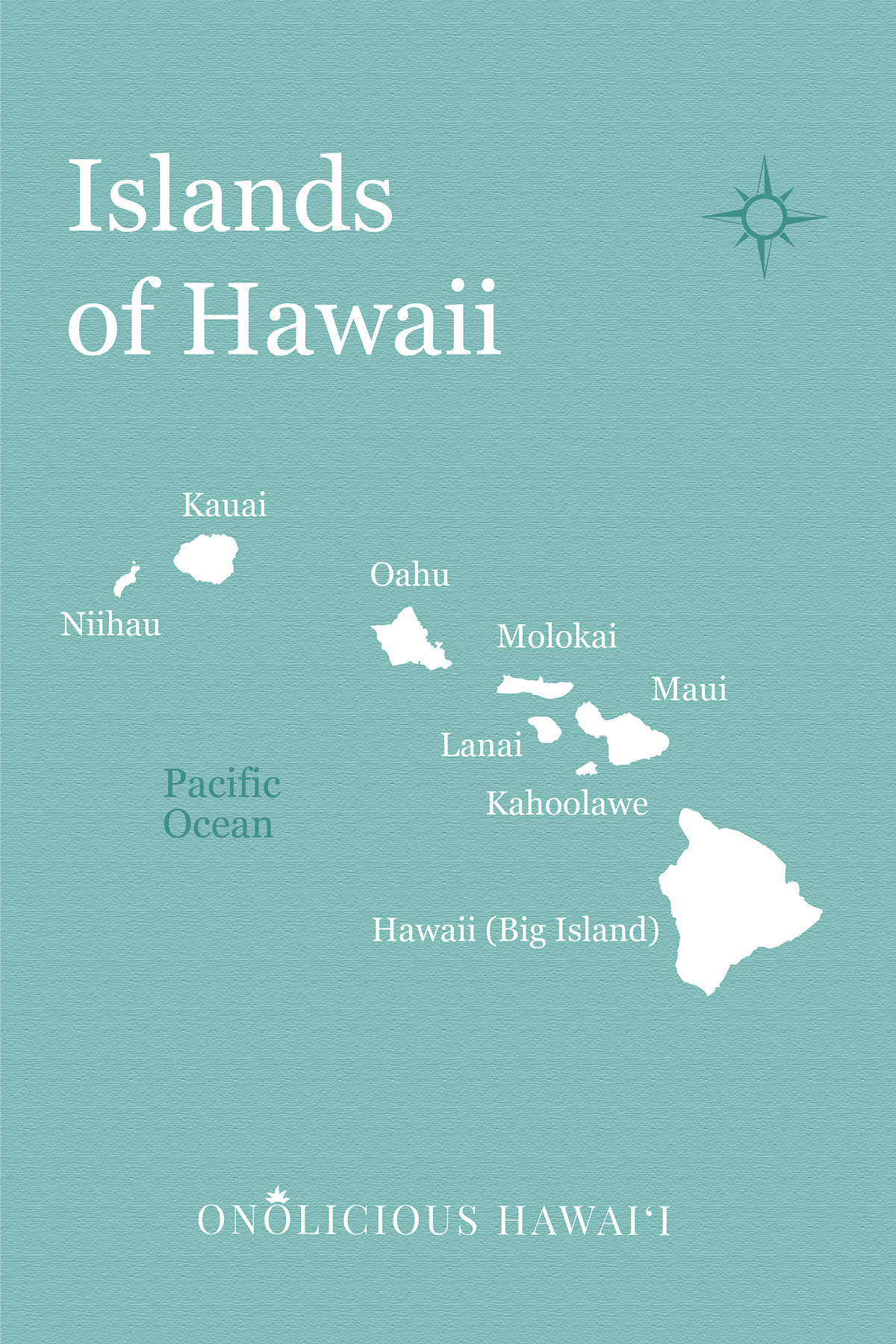
For those who seek true seclusion and a glimpse of “Old Hawaii,” the smaller islands of Lanai and Molokai offer an escape from the tourist crowds. These islands have avoided much of the large-scale development seen elsewhere in the state.
Lanai, once a massive pineapple plantation, is now a destination for luxury and quietude. Visitors can explore the otherworldly rock formations of Keahiakawelo (The Garden of the Gods) or relax at the pristine Manele Bay, a marine preserve where spinner dolphins are frequently spotted. Lanai City, with its towering Cook Pines, feels like a town frozen in time.
Molokai remains the most traditional of the islands. There are no traffic lights and no buildings taller than a coconut tree. The island is home to the world’s highest sea cliffs and the historic Kalaupapa National Historical Park, a site of great spiritual and historical significance. A visit to the main town of Kaunakakai offers a chance to experience the genuine aloha spirit in a setting that feels worlds away from the modern era.
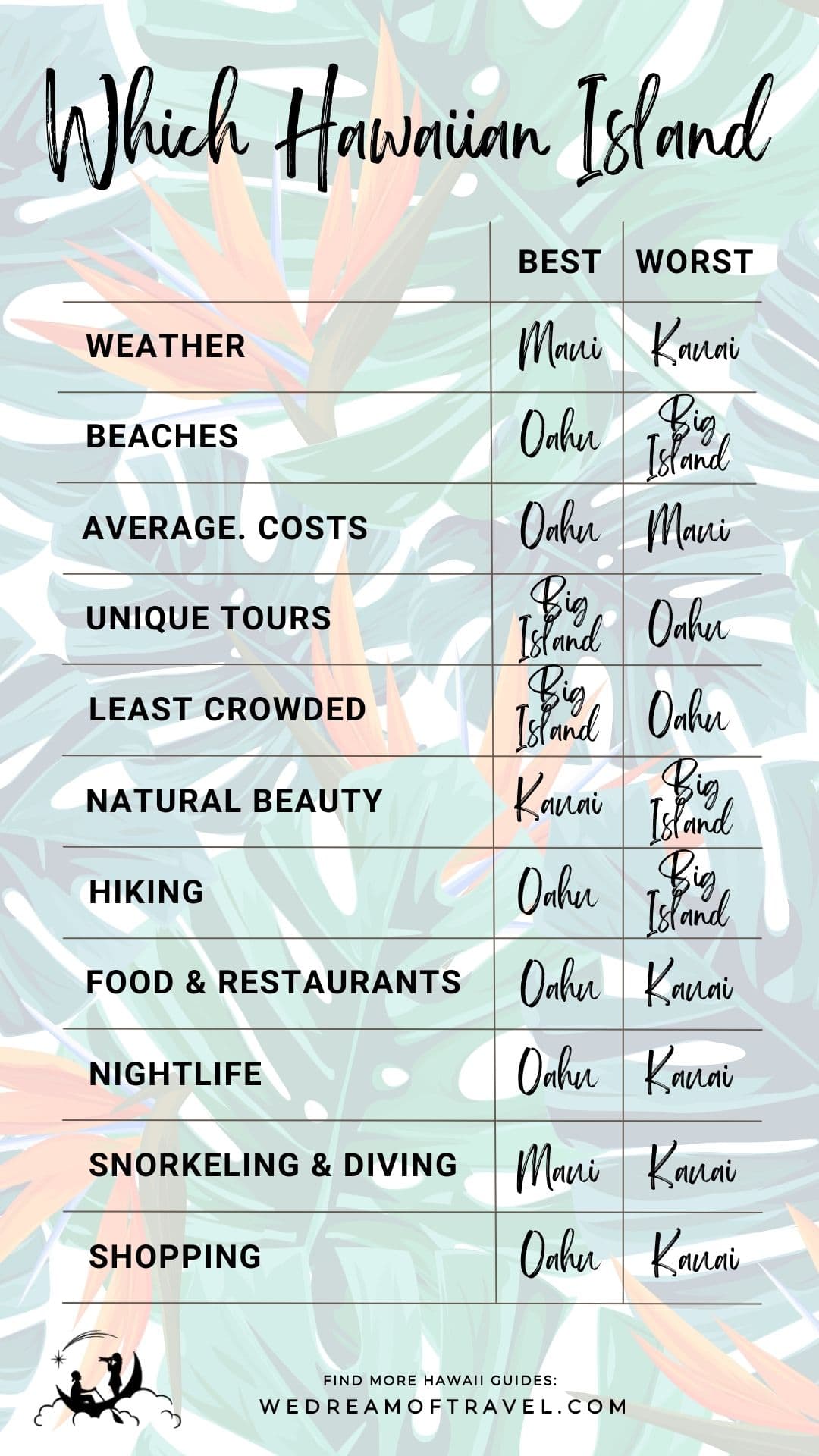
Ultimately, the best island to visit depends on your personal travel goals. Oahu offers the perfect blend of city and beach; Maui provides iconic scenery and romance; Kauai caters to the adventurous spirit; and the Big Island offers a raw, volcanic frontier. Whichever you choose, the magic of the Hawaiian Islands lies in their ability to inspire awe and provide a profound connection to the natural world.
LifeOutOfTheBox is a participant in the Amazon Services LLC Associates Program, an affiliate advertising program designed to provide a means for sites to earn advertising fees by advertising and linking to Amazon.com. Amazon, the Amazon logo, AmazonSupply, and the AmazonSupply logo are trademarks of Amazon.com, Inc. or its affiliates. As an Amazon Associate we earn affiliate commissions from qualifying purchases.