
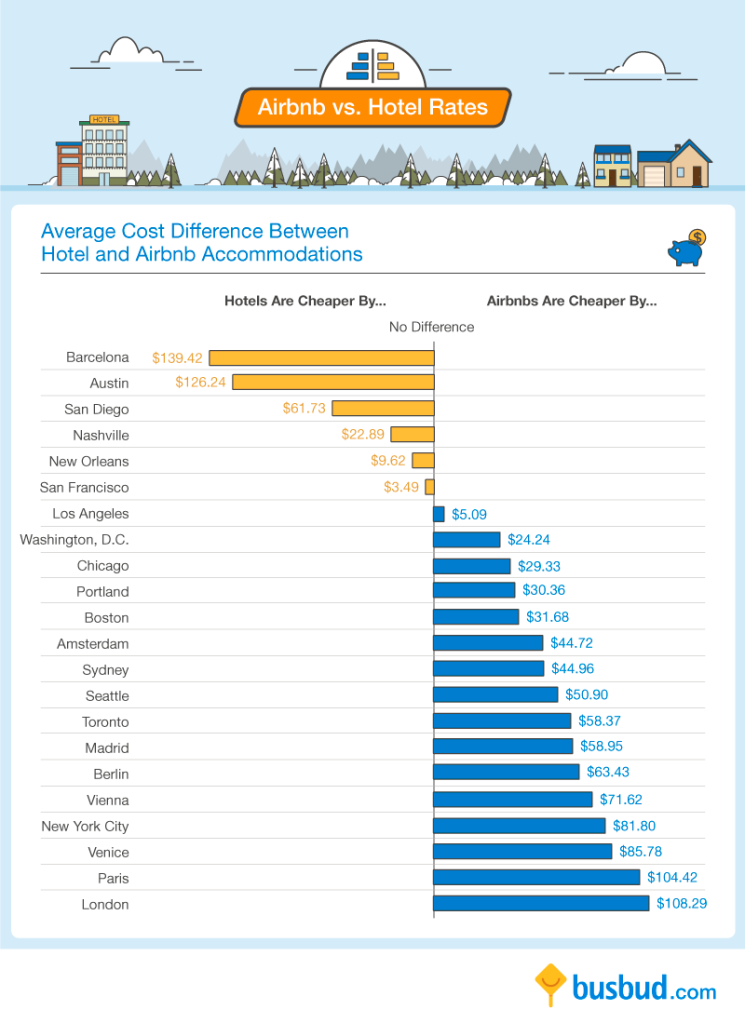
The landscape of global travel has undergone a seismic shift over the last decade, fundamentally altering how travelers approach the concept of a “home away from home.” For years, the prevailing wisdom suggested that private rentals offered a more budget-friendly alternative to the traditional hospitality sector. However, as the market matures and regulatory environments tighten in cities like New York City and Paris, the answer to whether a private rental is truly cheaper than a hotel has become increasingly complex. To understand the current state of accommodation pricing, one must look beyond the initial nightly rate and dive into the granular details of service fees, location premiums, and the evolving value of traveler amenities.
The Evolution of Accommodation Pricing Models
When the concept of peer-to-peer lodging first gained traction, it was marketed as a way to “live like a local” while saving significant sums of money. In the early days, a spare room in Berlin or a studio apartment in Tokyo was almost certainly cheaper than a mid-range hotel. Today, the “Airbnb effect” has led to a professionalization of the short-term rental market, with many properties managed by large corporations rather than individual hosts. This shift has brought pricing parity in many markets, especially as hotel chains like Marriott International and Hilton have adapted their strategies to compete.
Decoding the Hidden Costs of Short-Term Rentals
The most significant factor in the price comparison between rentals and hotels is the “sticker shock” experienced at the final checkout screen. While a hotel in London might display a rate of $200 per night that includes daily housekeeping and access to a gym, a rental property nearby might show a base rate of $150. However, the final price for the rental often includes a guest service fee, which goes to the platform, and a cleaning fee, which is set by the host.
Cleaning fees have become a point of contention for many travelers. Unlike a stay at the Four Seasons, where housekeeping is built into the room rate, rental cleaning fees are often flat rates. This means that a one-night stay in San Francisco could see a $100 cleaning fee applied to a $150 room, effectively doubling the cost. For longer stays, such as a week in Sydney, this fee is amortized over seven days, making the rental much more competitive.
The Impact of Local Taxes and Regulations
Taxation is another area where the gap is closing. Historically, hotels were subject to heavy occupancy taxes that private rentals often avoided. Recently, governments in Italy, Spain, and the United States have leveled the playing field by requiring platforms to collect the same tourist taxes as the InterContinental Hotels Group. In cities like Amsterdam, these taxes can add a significant percentage to the total bill, regardless of the accommodation type chosen.
When Hotels Outperform Private Rentals
Despite the allure of having a full kitchen or a local neighborhood vibe, there are several scenarios where traditional hotels offer superior financial and experiential value. For the solo traveler or the business professional on a short trip to Singapore, the convenience and predictable pricing of a hotel often outweigh the benefits of a private apartment.
The Value of Loyalty Programs and Points
One of the most powerful tools for the frequent traveler is the hotel loyalty program. Brands like Hyatt or Wyndham Hotels and Resorts offer points for every dollar spent, which can be redeemed for free nights, room upgrades, or even airline miles. When factoring in the “return on investment” from these points, a $250 room at a Sheraton may actually be cheaper in the long run than a $200 rental that offers no future travel credit. Furthermore, elite status often confers benefits like free breakfast, which can save a traveler $20 to $40 per day in expensive cities like Zurich or Oslo.
The Premium of Convenience and Service
Hotels provide a suite of services that are rarely matched by private rentals without additional costs. A guest staying at a Holiday Inn in Chicago can leave their luggage at the front desk before check-in or after check-out at no extra charge. In contrast, many rental guests find themselves searching for third-party luggage storage in Rome or Barcelona, adding both cost and logistical stress to their journey. Additionally, the presence of 24/7 security and staff at a hotel provides a safety net that is particularly valuable for those visiting a new country like Egypt or Brazil for the first time.
Regional Price Variations and Market Dynamics

The cost-effectiveness of one accommodation type over another is often dictated by geography. In some parts of the world, the rental market is so saturated that prices remain incredibly low, while in others, the hotel industry is so efficient that private hosts cannot compete.
North American Urban Centers vs. European Capitols
In major North America hubs, the price gap has narrowed significantly. A stay near Central Park in New York will be expensive regardless of the medium. However, in Europe, particularly in cities like Lisbon or Prague, private rentals often provide significantly more space for the same price as a cramped hotel room. This is especially true in historic districts where hotels are restricted by old architecture, while modern apartment renovations allow for more efficient use of space.
Luxury Villas and Tropical Destinations
In luxury-oriented destinations such as Bali, Thailand, or the Maldives, the comparison takes a different turn. In Ubud, for example, a private villa with a pool can often be found for a fraction of the price of a room at a high-end resort like the Ritz-Carlton. In these contexts, the “accommodation” is not just a place to sleep but the destination itself. The value proposition of a rental in Southeast Asia often includes a private chef or driver, services that would cost thousands of dollars at a traditional resort.
Group Dynamics and the Economy of Scale
The most definitive “win” for private rentals occurs when traveling with a group or a family. Booking multiple rooms at a Radisson in Toronto for a family of six is almost always more expensive than booking a three-bedroom house.
Kitchen Facilities and Long-Term Savings
The ability to cook meals is perhaps the greatest “hidden” saving of a private rental. While not strictly an accommodation cost, the price of eating three meals a day at restaurants in Switzerland or Iceland can easily exceed the cost of the lodging itself. A rental property allows travelers to visit local markets and prepare food, a factor that is particularly important for those on a budget or with specific dietary requirements. Even a simple breakfast and coffee at a rental in Montreal can save a couple $30 a day compared to hotel dining or neighborhood cafes.
Long-Term Stays and Digital Nomadism
For stays exceeding 28 days, platforms often offer significant discounts, sometimes up to 40% or 50% off the nightly rate. This makes them the go-to choice for digital nomads moving between Mexico City and Medellin. Hotels have attempted to counter this with “extended stay” brands like Residence Inn, but these often lack the “homely” feel and neighborhood integration that long-term travelers crave.
The Final Verdict: Choosing the Right Stay for Your Budget
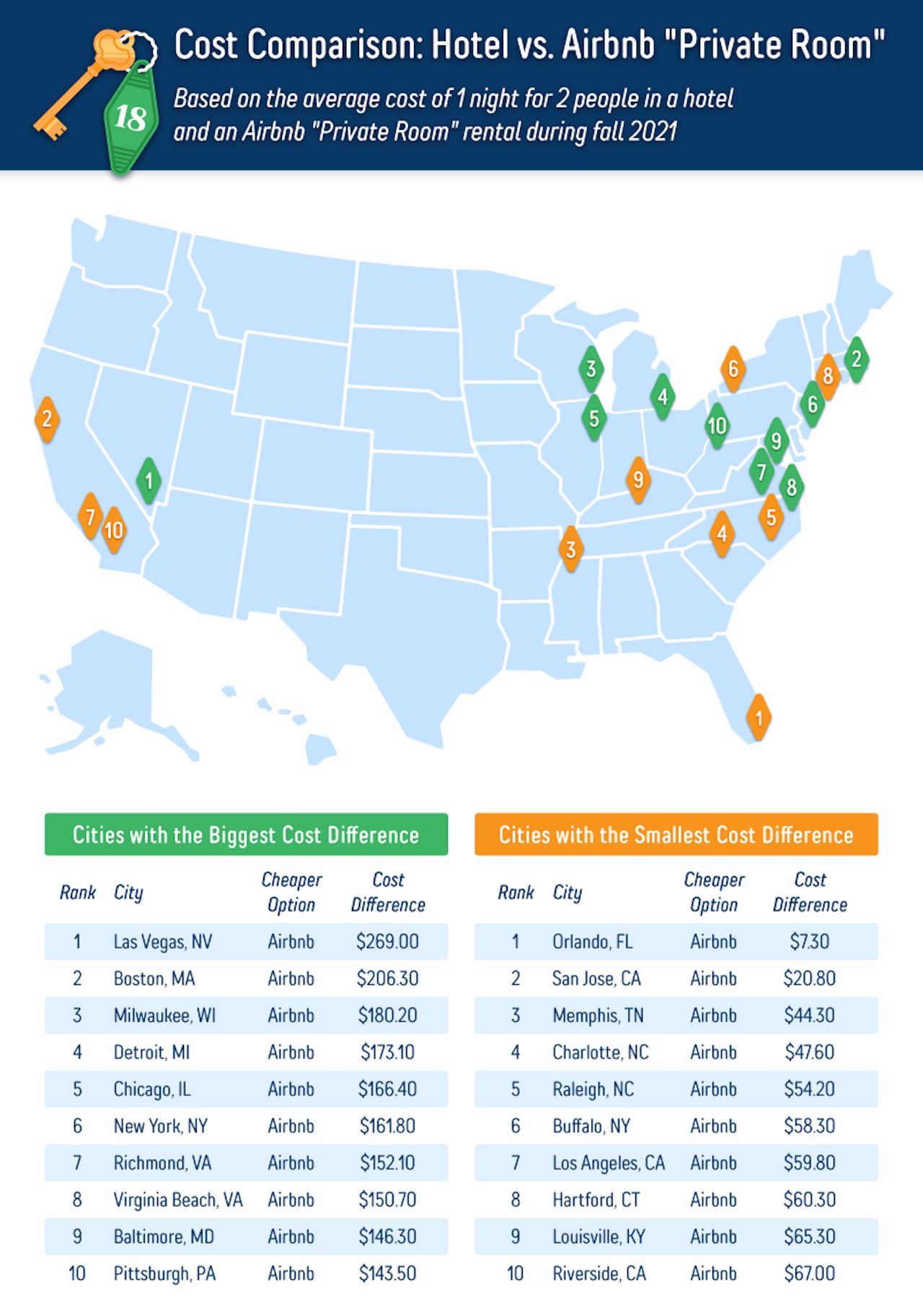
The question of whether Airbnbs are cheaper than hotels does not have a universal “yes” or “no” answer. Instead, it requires a strategic approach based on the duration of the stay, the number of travelers, and the specific destination.
For a two-night solo trip to Las Vegas or Dubai, a hotel will almost certainly offer better value, especially when considering the amenities and the lack of high cleaning fees. The transparency of the pricing and the reliability of the service make hotels the more efficient choice for short, high-intensity trips.
Conversely, for a ten-day family vacation to Greece or a month spent exploring Kyoto, the scale tips heavily in favor of private rentals. The cost per person drops significantly, the kitchen provides a buffer against rising food prices, and the living space offers a level of comfort that a hotel room cannot match.
Ultimately, the modern traveler must be a savvy comparison shopper. Tools that aggregate both hotel rates and rental listings are essential for finding the best deal. As the lines continue to blur—with hotels offering more apartment-style suites and rental platforms introducing “verified” luxury tiers—the distinction between the two will continue to fade. The savvy traveler is no longer loyal to a single type of accommodation but rather to the value proposition that best fits their specific itinerary in the ever-changing global market.
LifeOutOfTheBox is a participant in the Amazon Services LLC Associates Program, an affiliate advertising program designed to provide a means for sites to earn advertising fees by advertising and linking to Amazon.com. Amazon, the Amazon logo, AmazonSupply, and the AmazonSupply logo are trademarks of Amazon.com, Inc. or its affiliates. As an Amazon Associate we earn affiliate commissions from qualifying purchases.