
The hotel double bed is a cornerstone of guest accommodation, yet it remains one of the most misunderstood terms in the hospitality industry. While travelers might assume a “double” provides ample room for two adults, the reality often depends on the geographic location of the property, the age of the building, and the specific branding of the hotel chain. In the context of professional hospitality management, understanding these dimensions is critical for ensuring guest comfort and optimizing room occupancy. Whether you are staying at a luxury Four Seasons or a budget-friendly Travelodge, the “double bed” designation carries specific technical implications that every traveler should know.

The Standard Dimensions: Defining the Hotel Double Bed
In most of the United States and Canada, a standard double bed—often referred to as a “Full” bed—typically measures 54 inches wide by 75 inches long (approximately 137 centimeters by 191 centimeters). This provides approximately 27 inches of personal space per person when shared by two adults, which is significantly narrower than the 38 inches provided by a twin bed. Because of these dimensions, many modern travelers find the traditional double bed to be a tight fit for two adults, leading many hotels in North America to shift toward “Double-Double” room configurations, which feature two of these beds in a single room.
The Technical Evolution of Bed Sizing
Historically, the double bed was the standard for couples until the mid-20th century. However, as the hospitality industry in New York City and other major hubs evolved, consumer preferences shifted toward the Queen and King sizes. Today, properties like the Marriott or Hilton often reserve the standard double for smaller guest rooms or historic wings where architectural constraints prevent the installation of larger furniture. Despite the move toward larger beds, the double remains a vital component of the inventory in urban centers where floor space is at a premium.
Double vs. Full: Clearing the Confusion
In the commercial sector, the terms “Double” and “Full” are essentially interchangeable. When booking a room at a Holiday Inn or a Sheraton, the staff will treat these as the same dimension. The distinction is primarily a marketing choice; “Double” suggests occupancy capacity, whereas “Full” refers to the size class within the mattress industry. For a solo traveler, a double bed offers luxurious sprawl, but for a pair of travelers, it represents the minimum acceptable width for shared sleeping quarters.
Regional Differences: How Location Dictates Bed Size
One of the greatest challenges for international travelers is the lack of a universal standard for bed dimensions. A double bed in London is not necessarily the same size as one in Tokyo. These variations are rooted in cultural norms, regional manufacturing standards, and the average physical stature of the local population.
European and UK Standards
In the United Kingdom, a standard double bed is typically 135 centimeters wide and 190 centimeters long (roughly 53 inches by 75 inches). This is slightly narrower than its American counterpart. If you are staying at a Premier Inn or an Ibis across Europe, you may also encounter the “Small Double,” which measures only 120 centimeters wide. In countries like France and Germany, it is also common for a “Double” to actually consist of two twin mattresses placed side-by-side within a single frame, each with its own individual duvet. This is a standard practice in Paris and Berlin, allowing for greater flexibility in room configuration.
The Asia-Pacific Perspective
In Japan, particularly in high-density cities like Osaka, hotel rooms are famously compact. A double bed in a Tokyo business hotel might be slightly smaller than the Western standard to maximize floor space. Conversely, in Australia, hotels in cities like Sydney generally follow dimensions similar to the [United Kingdom], though luxury resorts in Queensland often default to “King Singles” or “Queen” beds to accommodate the international tourist market.
Mediterranean and Latin American Variations
In Spain and Italy, the “Matrimonial” bed is the local equivalent of a double. While the width usually aligns with the 135-140 centimeter range, the length can vary. In historic properties in Rome or Madrid, you may find beds that are slightly shorter than 190 centimeters, which can be an important consideration for taller guests. When staying at an independent boutique hotel in Mexico or Brazil, it is always advisable to confirm the exact dimensions, as local “Doble” standards can fluctuate between the American Full and the European Queen.
The Role of the Double Bed in Room Configurations
Hotels utilize double beds strategically to manage inventory and cater to different demographics. The way a double bed is positioned within a suite or a standard room can tell you a lot about the intended guest profile of the property.
The Double-Double Room
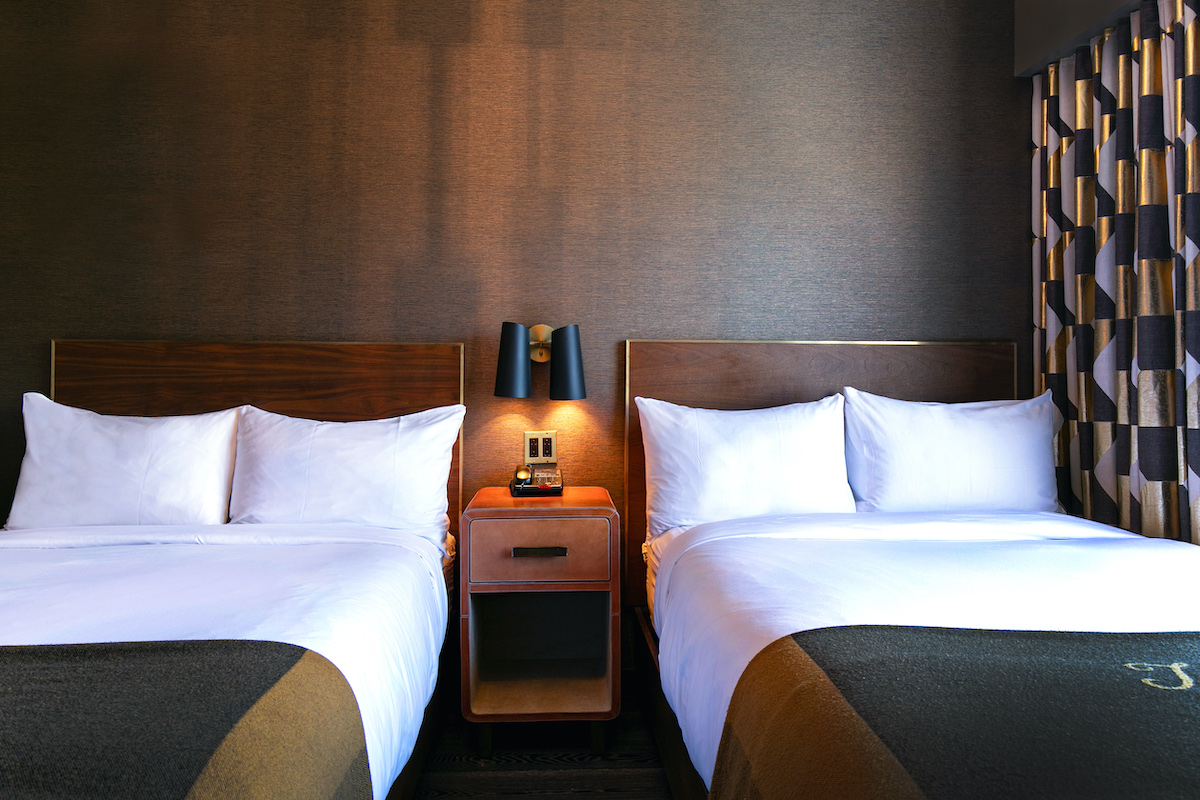
In North America, the “Double-Double” room—containing two double beds—is the gold standard for family travel and business conventions. This configuration allows a room to sleep up to four people. Large-scale resorts in Las Vegas and Orlando rely heavily on this setup. However, it is worth noting that while these rooms are marketed for four guests, the 54-inch width of each bed makes it a cozy experience. Properties like the Hyatt or Westin are increasingly replacing double-doubles with “Queen-Queen” configurations to provide more breathing room.
Small Doubles in Boutique Settings
In the world of boutique hotels, particularly in historic buildings in Amsterdam or Prague, the small double is a tool for efficiency. These beds are often tucked into alcoves or placed against walls. For a solo business traveler, this is an upgrade over a single bed, providing extra space without the footprint of a queen. For the hotelier, it allows them to market the room as a “Double Room” even if the square footage is limited.
Studio and Apartment Hotels
Extended-stay brands and apartment hotels in Singapore or Hong Kong often use double beds to balance living space with sleeping quarters. In a studio apartment setup, a double bed leaves enough room for a kitchenette and a small workspace, whereas a King bed would dominate the entire floor plan. This is a common sight in urban aparthotels across Asia and Europe.
Navigating Bed Sizes When Booking: Tips for Travelers
Understanding the technicalities of hotel bedding can prevent significant discomfort during a trip. Because “double” can mean many things, savvy travelers should look for specific clues in room descriptions and hotel policies.
Check the Square Footage
If a hotel in London lists a “Double Room” but the total room size is only 12 square meters, the bed is likely a standard UK double (135cm) or even a small double. Conversely, a double room in a Texas resort that measures 35 square meters will almost certainly feature two full-sized American double beds or a single Queen. Always correlate the bed type with the total room area to gauge how much space you will actually have.
Look for “Twin-Link” or “Zip-and-Link”
Many upscale hotels, particularly in the United Kingdom and Ireland, use “zip-and-link” beds. These are two single beds that can be zipped together to form a “Super King” or unzipped to create two twins. If you book a “Double” and see a seam down the middle, you are likely sleeping on a zip-and-link system. This is a common feature at the Ritz-Carlton and other high-end brands to allow for maximum flexibility in guest preferences.
Communication with the Concierge
If bed size is a dealbreaker—for instance, if you are traveling with a partner and both require significant space—it is best to contact the hotel directly before arrival. In cities like San Francisco or Boston, where hotels are often situated in vintage buildings, a “Double” might be smaller than what you expect from a modern suburban Marriott. Asking for the specific width in inches or centimeters can save a lot of frustration at check-in.

Bedding and Comfort Layers
The perceived size of a bed can also be affected by the bedding used. A double bed with a thick down comforter and multiple pillows can feel smaller than it actually is. On the other hand, many luxury hotels use high-thread-count linens and streamlined duvets to make the bed feel more spacious. If you are staying at a property in Thailand or Vietnam, you might find that the mattresses are firmer, which can actually make a double bed feel more supportive for two people compared to a soft mattress that causes sleepers to roll toward the center.
In summary, the size of a double bed in a hotel is subject to a wide array of variables including national standards, hotel brand identity, and the architectural history of the property. While the baseline of 54 by 75 inches holds true in much of North America, travelers should remain vigilant when booking abroad. By understanding these dimensions and regional nuances, you can make more informed decisions and ensure that your stay, whether in Europe, Asia, or the United States, is as comfortable as possible.
LifeOutOfTheBox is a participant in the Amazon Services LLC Associates Program, an affiliate advertising program designed to provide a means for sites to earn advertising fees by advertising and linking to Amazon.com. Amazon, the Amazon logo, AmazonSupply, and the AmazonSupply logo are trademarks of Amazon.com, Inc. or its affiliates. As an Amazon Associate we earn affiliate commissions from qualifying purchases.