
The question of age requirements for booking a room is one of the most common hurdles faced by young travelers, students, and early-career professionals. While the transition to adulthood in the United States and many other parts of the world occurs at 18, the reality of the hospitality industry is far more nuanced. Navigating the world of accommodation requires more than just a valid ID and a credit card; it requires an understanding of the legal frameworks and corporate risk assessments that dictate who can and cannot secure a room.

The Intersection of Law and Policy in the Hospitality Industry
To understand why age requirements vary so significantly, one must first distinguish between the legal minimum and the private policies set by individual businesses. In most jurisdictions, the “age of majority” is the point at which an individual gains the legal right to enter into a binding contract. Because booking a room is essentially a short-term lease agreement, the ability to sign a contract is the foundational legal requirement.
Defining Legal Adulthood and Contractual Capacity
In the eyes of the law, once a person turns 18, they are generally considered an adult capable of making financial commitments. However, the hospitality sector often exercises its right to set higher standards for its guests. This is not necessarily a form of illegal discrimination but rather a risk management strategy. Hotels are private properties, and unless local laws specifically mandate that they must serve anyone over 18, they are often permitted to set their own age thresholds—frequently 21—to mitigate concerns regarding liability, noise, and underage drinking.
Why 21 is the Standard for Many Chains
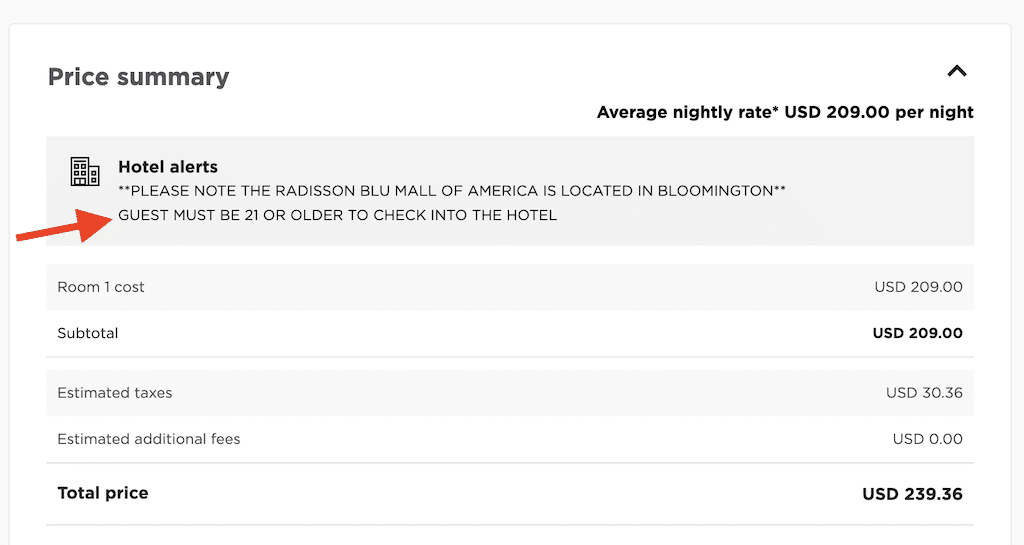
If 18 is the legal threshold for contracts, why do many establishments insist on 21? The primary driver is insurance and liability. Properties that feature in-room minibars stocked with alcohol face significant legal risks if a minor consumes those beverages. Furthermore, insurance premiums for hotels are often lower if they can prove a “mature” guest demographic. Chains like Hilton and Marriott often leave these decisions to the individual franchise owners, which is why you might find a Marriott International property in New York City that allows 18-year-olds to check in, while a similar property in Miami requires guests to be 21.
Regional Variations Across the United States
Geography plays a massive role in how strictly age requirements are enforced. Depending on the city or state you are visiting, the “standard” age can shift dramatically based on local culture and the presence of nightlife industries.
Strict Regulations in Major Metropolitan Hubs
In cities known for high-intensity nightlife and gaming, the age requirement is almost universally 21. For example, if you are traveling to Las Vegas, nearly every major resort on the Las Vegas Strip requires the primary guest to be at least 21. This is largely due to the presence of casinos on the ground floor; the legal gambling age is 21, and the logistical challenge of monitoring underage guests near gaming floors leads most hotels to simply bar anyone younger from booking. Similarly, during “Spring Break” season in Florida, cities like Panama City Beach and Fort Lauderdale often see temporary or permanent shifts to 21+ or even 25+ policies to curb rowdy behavior.
Lenient States and College Towns
Conversely, in states like California or Texas, you may find more flexibility, particularly in regions that cater to university students. In cities like Austin or San Francisco, many boutique hotels and budget chains recognize the 18-year-old demographic as a significant market. Brands like Motel 6 and Red Roof Inn are famous for their 18+ friendly policies nationwide, though even they can be subject to local municipal laws that override corporate guidelines.
Global Perspectives: International Age Requirements
For those traveling outside of North America, the landscape changes once again. International accommodation standards often lean toward the lower end of the age spectrum, though cultural norms still dictate the experience.

Booking in Europe and the United Kingdom
In the United Kingdom and across much of Europe, the minimum age to check into a hotel is almost exclusively 18. In cities like London, Paris, and Berlin, travelers who have reached their 18th birthday rarely face the same “21-and-up” barriers common in the United States. Establishments like Premier Inn or Ibis Hotels are very accustomed to young adult travelers. In France and Germany, the emphasis is on having a valid passport rather than meeting a specific 21+ threshold.
Navigating Restrictions in Asia and Oceania
In Asia, the rules can be more rigid. In Japan, the age of adulthood was recently lowered from 20 to 18, which has simplified things for many travelers visiting Tokyo or Osaka. However, some traditional Ryokan may still require a letter of consent from a parent if the guest is under 20. In Australia, particularly in Sydney and Melbourne, 18 is the standard for check-in, aligning with the country’s legal drinking age.
Essential Considerations for Young Travelers
Meeting the age requirement is only the first step. To successfully “get a hotel,” young adults must prepare for the financial and administrative scrutiny that often accompanies being a younger guest.
Financial Requirements and Deposit Issues
Even if a Hyatt or Radisson allows 18-year-olds to book, they will almost certainly require a credit card in the guest’s name for “incidentals.” This is where many young travelers run into trouble. Most hotels will place a “hold” on the card, which can range from $50 to several hundred dollars. If a traveler is using a debit card, that money is effectively frozen in their bank account and may not be released for several business days after checkout. Without a major credit card, many properties will refuse check-in regardless of the guest’s age.
Valid Documentation and Verification Processes
At check-in, the front desk agent will require a government-issued photo ID. For international travelers, this must be a passport. For domestic travelers in Canada or the United States, a driver’s license or state ID is sufficient. It is important to note that the name on the ID must match the name on the reservation and the name on the credit card. Any discrepancy here is a red flag for fraud, and hotels are often very strict about this with younger guests to prevent “party” bookings made by parents for their children.
Strategic Alternatives for the Under-21 Demographic
If you find yourself in a city like Chicago or Los Angeles where your desired hotel has a strict 21+ policy, there are alternative paths to securing accommodation.
Utilizing Youth Hostels and Short-Term Rentals
Youth hostels are specifically designed for the 18-30 demographic. Organizations like Hostelling International operate properties globally that welcome 18-year-olds with open arms. These are excellent options in expensive markets like Boston or Washington DC. Additionally, platforms like Airbnb allow hosts to set their own rules. While Airbnb itself requires users to be 18 to create an account, individual hosts may occasionally specify a higher age, though many are more flexible than large corporate chains.
Communication Strategies with Hotel Management
If you are 18, 19, or 20 and need to stay at a 21+ hotel for business or a family emergency, communication is key. Calling the property directly—rather than booking through a third-party site like Expedia—can yield results. Speak with the general manager and explain your situation. If you are a member of the United States Armed Forces, many hotels will waive the 21+ requirement upon presentation of a military ID. Likewise, if you are traveling for a corporate event, a letter from your employer may facilitate an exception.
Ultimately, the answer to how old you have to be to get a hotel is rarely a single number. It is a combination of the property’s location, the specific brand’s risk tolerance, and the traveler’s ability to prove financial responsibility. By researching the specific policies of brands like Best Western, Holiday Inn, or Wyndham Hotels & Resorts ahead of time, young travelers can avoid the frustration of being turned away at the door and instead enjoy their journey with confidence.
LifeOutOfTheBox is a participant in the Amazon Services LLC Associates Program, an affiliate advertising program designed to provide a means for sites to earn advertising fees by advertising and linking to Amazon.com. Amazon, the Amazon logo, AmazonSupply, and the AmazonSupply logo are trademarks of Amazon.com, Inc. or its affiliates. As an Amazon Associate we earn affiliate commissions from qualifying purchases.