
Florida, often dubbed the “Sunshine State,” is a premier destination for travelers worldwide, boasting everything from pristine beaches and thrilling theme parks to vibrant cities and serene natural landscapes. Whether you’re planning a family vacation to Walt Disney World Resort in Orlando, a bustling city escape to Miami, or a tranquil retreat to the Florida Keys, navigating the state’s extensive road network is an integral part of the journey. For many visitors and residents alike, understanding Florida’s toll roads is crucial for a smooth, efficient, and budget-friendly travel experience.
The cost of using Florida’s toll roads can vary significantly depending on several factors: the specific road segment, the distance traveled, the type of vehicle, and, most importantly, the payment method used. Unlike many other states that still offer cash payment options, Florida has largely transitioned to an all-electronic tolling system, meaning cash booths are increasingly rare or non-existent on major routes. This shift emphasizes the importance of planning ahead to avoid unexpected fees or delays.
This comprehensive guide aims to demystify Florida’s toll road system, offering insights into its structure, various payment options, estimated costs, and practical tips for both short-term tourists and long-term residents. By understanding these nuances, you can ensure your Florida adventure is as seamless and enjoyable as possible, whether you’re heading to a luxury resort, exploring local culture, or simply cruising along the picturesque coastlines.
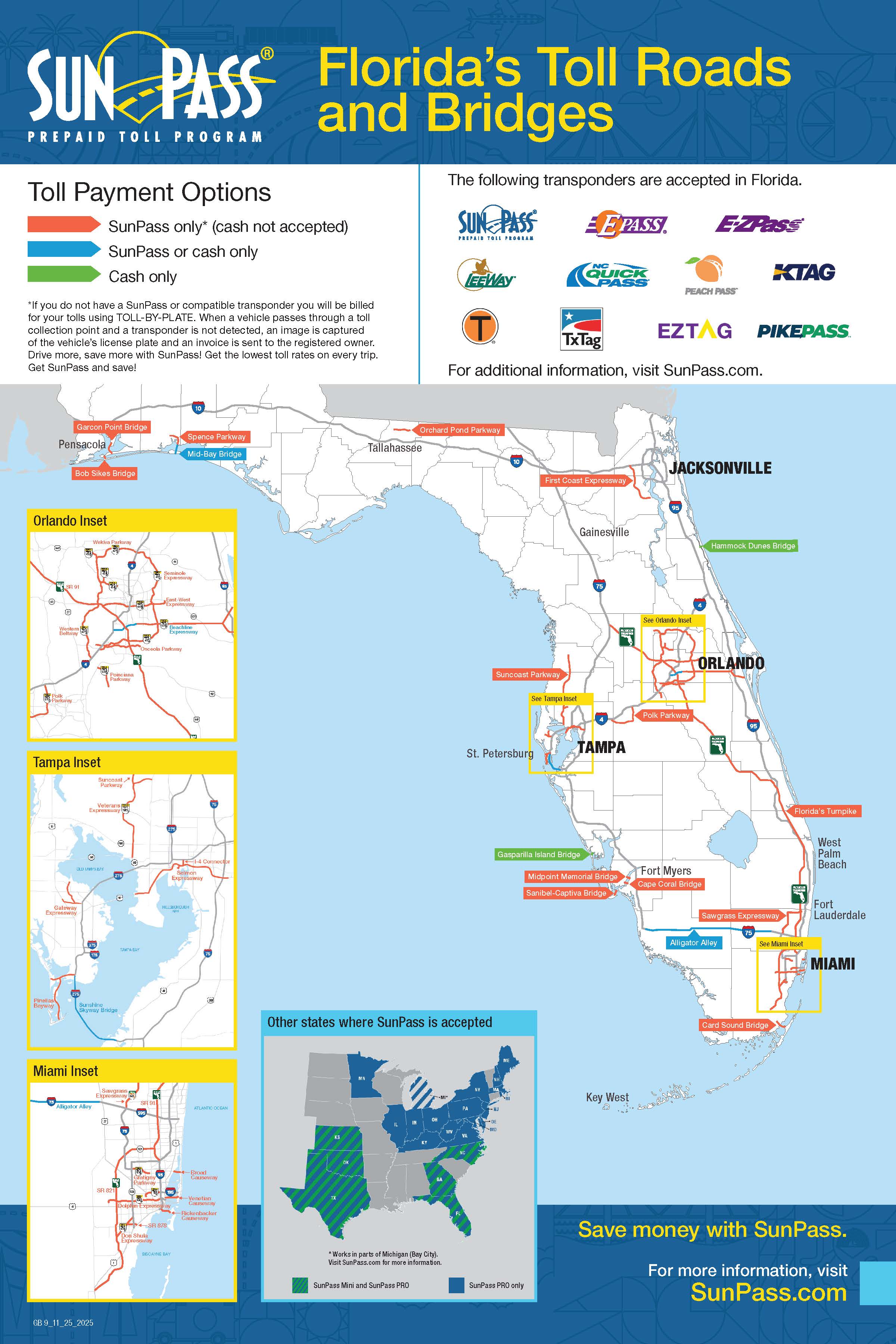
Navigating Florida’s Extensive Toll Road Network
Florida is home to one of the most comprehensive toll road networks in the United States, managed by various authorities, predominantly Florida’s Turnpike Enterprise and the Central Florida Expressway Authority (CFX), along with local county expressways like MDX (now referred to as the Miami-Dade Expressway Authority). These roads are vital arteries connecting major cities, tourist hubs, and airports, often providing the quickest routes across the state.
The backbone of this network is Florida’s Turnpike (SR 91), a nearly 300-mile highway stretching from Miami northwards through Orlando and beyond, eventually splitting into various extensions that reach across the state. It’s an essential route for anyone traveling between South Florida and Central Florida destinations. Other significant toll roads include:

- Alligator Alley (I-75): A crucial segment of I-75 Express that traverses the Everglades National Park between Naples and Fort Lauderdale, connecting the Gulf Coast to the Atlantic.
- Central Florida Expressway Authority (CFX) Roads: Serving the Orlando metropolitan area, these include SR 408 (East-West Expressway), SR 417 (Central Florida GreeneWay), SR 429 (Western Beltway), and SR 528 (Beachline Expressway). These roads are indispensable for reaching Orlando’s theme parks, Orlando International Airport, and Cape Canaveral/Kennedy Space Center Visitor Complex.
- Suncoast Parkway (SR 589): Providing a fast route north from Tampa through Pasco and Hernando counties.
- Sawgrass Expressway (SR 869): A bypass route around congested areas in Broward County.
- I-4 Express and I-75 Express Lanes: These are managed lanes within existing interstates, offering a faster, less congested option for a variable toll fee, particularly during peak hours.
The vast majority of Florida’s toll roads operate on an all-electronic tolling system. This means there are no toll booths where you can stop and pay with cash or credit cards. Instead, tolls are collected either electronically via a transponder or through a “Toll-By-Plate” system where cameras capture your license plate. Understanding these payment methods before you hit the road is key to avoiding fines and ensuring a hassle-free journey.
Understanding Florida’s Toll Payment Methods
Navigating Florida’s cashless toll roads requires familiarity with its primary payment systems. The state offers several options, each with its own advantages, especially for different types of travelers.
Electronic Payment Systems: The Easiest Way to Pay
For frequent travelers or residents, an electronic transponder is by far the most convenient and cost-effective method. These devices affix to your windshield and communicate wirelessly with toll gantries, deducting the toll from a pre-funded account.
- SunPass: This is Florida’s official prepaid toll program and is the most widely accepted transponder across the state. A SunPass transponder works on all toll roads and bridges in Florida, and importantly, users typically receive a discount on tolls compared to other payment methods. There are two types:
- SunPass Mini Sticker: An inexpensive, non-removable sticker transponder ideal for one vehicle.
- SunPass Portable Transponder: A slightly more expensive, removable device that can be moved between vehicles, making it suitable for families with multiple cars or rental car users (if permitted by the rental agreement).
Accounts can be managed online or via the SunPass mobile app, allowing users to check balances, view transactions, and replenish funds.
- E-PASS: Managed by the Central Florida Expressway Authority, E-PASS operates very similarly to SunPass and is fully interoperable with all toll roads throughout Florida. E-PASS also offers discounted tolls on CFX roads and provides various transponder options, including sticker and portable versions. Like SunPass, managing your account is straightforward through their website or app.
- Interoperable Transponders: In a move to enhance convenience for interstate travelers, Florida’s toll roads are now largely interoperable with other electronic toll systems from outside the state. This includes major programs like E-ZPass (widely used in the Northeastern U.S.), Peach Pass (Georgia), and NC Quick Pass (North Carolina). If you have one of these transponders, you can use it on Florida’s toll roads, and the tolls will be charged to your existing account. However, always confirm interoperability and check for any potential surcharges or different toll rates, as SunPass and E-PASS often offer the best rates within Florida.
Toll-By-Plate: For Visitors Without a Transponder
For those without a transponder, Florida’s TOLL-BY-PLATE system serves as the default payment method. When a vehicle passes through a toll gantry without an active transponder, cameras capture an image of the license plate. An invoice for the tolls incurred is then mailed to the registered owner of the vehicle.
While convenient for infrequent users, TOLL-BY-PLATE comes with a few drawbacks:
- Higher Costs: Tolls paid via TOLL-BY-PLATE are typically higher than those paid with a transponder. This often includes administrative fees added to each toll.
- Delayed Invoices: It can take several weeks for an invoice to arrive, which might be problematic for out-of-state visitors or those who have moved.
- Rental Car Issues: This system can become particularly complicated and costly with rental cars, as discussed below.
If you receive a TOLL-BY-PLATE invoice, you can usually pay it online, by mail, or by phone. Prompt payment is essential to avoid additional late fees or even penalties that could affect your vehicle registration in some cases.

Rental Car Considerations: Avoiding Surprise Fees
One of the most common pitfalls for tourists in Florida involves toll road usage with rental vehicles. Rental car companies often have their own toll programs, which can add significant surcharges on top of the actual toll costs.
Major rental companies like Hertz, Enterprise, Avis, Budget, and Alamo generally offer opt-in toll payment services or automatically enroll you in a program if you use a toll road. These programs typically work by:
- Daily Surcharge + Tolls: Charging a daily administrative fee (e.g., $3.95-$15 per day) for every day of your rental period, even if you only use a toll road once, plus the cost of the tolls. These fees can quickly add up, easily exceeding the cost of the tolls themselves.
- Pay-Per-Use Programs: Some offer systems where you only pay the administrative fee on days you use a toll road, plus the tolls.
Tips for rental car users:
- Inquire at the Counter: Always ask your rental car company about their toll policies and associated fees when picking up the vehicle.
- Opt Out if Possible: If you plan to avoid tolls entirely, ask if you can opt out of their toll program. Some companies allow this, while others automatically enroll you.
- Bring Your Own Transponder: If you have a portable SunPass or an interoperable transponder like E-ZPass, you can use it in your rental car. Just be sure to properly mount it and ensure your license plate is correctly linked to your transponder account (if applicable) to avoid duplicate charges or TOLL-BY-PLATE invoices.
- Purchase a Temporary SunPass Mini: For longer trips, it might be more economical to purchase a SunPass Mini sticker transponder at a retail location (such as Publix, CVS, Walgreens, or any Florida’s Turnpike service plaza). Register it to your rental car’s license plate for the duration of your trip, then deactivate it or remove the license plate from the account when you return the car. Remember to pre-load it with funds.
- Avoid Tolls Entirely: Use navigation apps like Google Maps or Waze with the “avoid tolls” option, though this might significantly increase travel time, especially for longer distances or during peak traffic.
Estimating Toll Costs for Your Florida Journey
Accurately predicting your toll expenses in Florida can save you money and headaches. Several variables contribute to the final cost, but with the right tools and a little planning, you can get a good estimate.
Factors Influencing Toll Prices
- Distance Traveled: Generally, the longer you drive on a toll road, the higher the toll. Florida’s major toll highways like Florida’s Turnpike use a barrier or open-road tolling system, where tolls are calculated based on entry and exit points or fixed charges at specific gantries.
- Type of Vehicle: Toll rates are typically based on the number of axles. Standard passenger cars usually have two axles. Trucks, RVs, and vehicles towing trailers will incur higher tolls due to their increased number of axles.
- Payment Method: As mentioned, using a SunPass or E-PASS transponder almost always results in lower toll rates compared to the TOLL-BY-PLATE system, which includes administrative fees.
- Specific Road Segment: Toll rates can vary between different expressways and even different sections of the same expressway. For example, express lanes on I-4 Express or I-75 Express utilize dynamic pricing, meaning tolls fluctuate based on real-time traffic congestion to manage flow. During peak hours, these tolls can be significantly higher than off-peak.
Practical Examples and Resources
To give you a rough idea, here are some hypothetical examples for a 2-axle passenger vehicle using an electronic transponder:
- Miami to Orlando (via Florida’s Turnpike): This popular 230-mile journey can cost anywhere from $20 to $25 using SunPass. Without a transponder (Toll-By-Plate), expect to pay 25% to 50% more, plus potential administrative fees.
- Orlando International Airport to Walt Disney World Resort (using CFX roads like SR 528 (Beachline Expressway) and SR 417 (Central Florida GreeneWay) or SR 429 (Western Beltway)): A shorter trip might incur tolls ranging from $3 to $7 one-way, depending on the exact route and payment method.
- Tampa to Sarasota (via I-75 and local toll bridges): This route might involve a combination of interstate driving and a few dollars for toll bridges, adding up to roughly $3 to $8 depending on bridges taken.
- Crossing Alligator Alley (I-75 between Naples and Fort Lauderdale): This typically costs around $3.50-$4.00 for a 2-axle vehicle with a transponder.
Resources for Calculating Tolls:
- Florida’s Turnpike Enterprise Toll Calculator: The official website provides an excellent tool for estimating costs on Florida’s Turnpike and other state-managed toll roads.
- SunPass Website: Offers a toll calculator that can provide estimates for most Florida toll roads.
- Central Florida Expressway Authority (CFX) Website: Features a similar tool specifically for roads in the Orlando area.
- Navigation Apps: Modern GPS navigation apps like Google Maps and Waze have increasingly integrated toll estimates into their route planning, providing real-time data for express lanes. Make sure to check their settings to either include or avoid tolls.
By utilizing these resources, you can accurately factor toll costs into your travel budget, whether you’re planning a lavish luxury trip or a more budget-conscious adventure.
Strategic Driving and Cost-Saving Tips
Understanding the mechanics of Florida’s toll roads is only half the battle. Strategic planning and smart usage can significantly impact your overall travel expenses and enhance your journey.
Planning Your Route: Avoiding or Minimizing Tolls
While toll roads often offer the fastest routes, sometimes alternative, toll-free roads are available.
- Utilize “Avoid Tolls” Option: Most navigation apps, including Google Maps and Waze, offer an option to “avoid tolls” when planning your route. This is invaluable if you’re on a tight budget or simply prefer scenic routes.
- Consider the Trade-off: Time vs. Money: While avoiding tolls can save money, it often comes at the cost of increased travel time, higher fuel consumption due to more stops, and potentially more traffic lights and congestion. For instance, driving from Orlando to Miami via Florida’s Turnpike is significantly faster than using parallel non-toll roads like U.S. 27 or U.S. 441. Assess whether the time saved is worth the toll cost, especially if you have flight schedules or attraction opening times to consider.
- Local Exploration: For shorter distances within cities like Tampa, St. Petersburg, or Jacksonville, local streets can often get you to your destination without tolls, albeit perhaps a few minutes longer. However, for expressways around Orlando that serve theme parks and the airport, tolls are almost unavoidable for efficiency.
Maximizing Your SunPass or E-PASS Benefits
If you decide to use an electronic transponder (which is highly recommended for most visitors staying more than a few days, especially with a rental car), ensure you get the most out of it:
- Register Correctly: Always register your transponder online and link it to your vehicle’s license plate(s). This is crucial for proper charging and avoiding TOLL-BY-PLATE invoices, especially with rental cars.
- Keep Account Funded: Set up auto-replenishment on your SunPass or E-PASS account using a credit card. This ensures you always have funds, preventing potential fines for insufficient balance.
- Monitor Usage: Regularly check your online account statements to track your tolls and ensure there are no discrepancies. This is particularly important when using a transponder with a rental vehicle, to confirm the rental company isn’t also charging you.
- Explore Discount Programs: Some local toll authorities, especially the Central Florida Expressway Authority with E-PASS, offer frequent user discounts or loyalty programs for those who regularly use their toll roads. While primarily for residents, it’s worth checking if any short-term benefits apply to your travel plans.
Combining Toll Planning with Your Overall Florida Travel Budget
Understanding toll costs should be an integral part of your overall Florida travel budget. Just as you plan for accommodation, flights, dining, and attractions, allocating funds for tolls ensures a stress-free trip.
- Factor into Lifestyle Choices: Whether your Florida trip is a luxurious escape or a budget-friendly family adventure, toll road decisions reflect your lifestyle choices. Opting for toll roads often means luxury of time and convenience, allowing more time at Universal Orlando Resort or lounging on South Beach. Avoiding tolls might align better with a budget travel strategy, prioritizing cost savings over speed.
- Holistic Approach: When booking hotels in Orlando or choosing activities in Key West, consider the transportation costs to and from these places. A hotel slightly further away but cheaper might incur more in tolls and gas, potentially negating savings.
- Flexibility: Be prepared to adjust your route on the fly. Traffic conditions can change rapidly, and sometimes paying a small toll for an express lane might save you hours stuck in congestion, making it a valuable investment in your travel experience.
In conclusion, the cost of toll roads in Florida isn’t a fixed price but rather a variable expense that can be managed effectively with prior knowledge and smart planning. From navigating the state’s extensive network to choosing the right payment method and strategically planning your routes, understanding these elements will ensure your journey through the Sunshine State is as smooth and enjoyable as the destinations themselves. Embrace the electronic tolling system, whether with a SunPass or mindful TOLL-BY-PLATE use, and focus on creating unforgettable memories amidst Florida’s countless attractions, from the vibrant cityscape of Palm Beach to the sandy shores of Panama City Beach. Happy travels!
LifeOutOfTheBox is a participant in the Amazon Services LLC Associates Program, an affiliate advertising program designed to provide a means for sites to earn advertising fees by advertising and linking to Amazon.com. Amazon, the Amazon logo, AmazonSupply, and the AmazonSupply logo are trademarks of Amazon.com, Inc. or its affiliates. As an Amazon Associate we earn affiliate commissions from qualifying purchases.